
Pashupatinath Temple Guide: Evening Aarti, Etiquette and What Non-Hindus Can See

Last updated 3 October 2026. Opening hours, dress and photography rules are from the official website of the Pashupati Area Development Trust (PADT), and the entrance fee is from the Nepal Tourism Board heritage fee page. History is from UNESCO. Where something is our own guides' experience, I say so.
Pashupatinath is the holiest Shiva temple in Nepal, and yes, non-Hindus can visit the complex but not the main temple. You can walk the ghats, the gardens and the shrines, and you can watch the evening aarti (the fire and bell ceremony on the river) from the eastern bank of the Bagmati. The main sanctum is for Hindus only. Foreign visitors pay NPR 1,000, it is a 15 to 20 minute taxi ride from Thamel, and the best way to see it is to arrive in the late afternoon, stay for the aarti and go in with a clear idea of what is, and is not, a tourist attraction.
I am Shreejan Simkhada. My family has guided in Nepal for three generations, and Pashupatinath is a place where we ask our guests to slow down and keep quiet. This is a working temple and a working cremation ground. This guide covers the practical side (fees, hours, how to get there) and the human side (what to wear, where to stand, what not to photograph), and where the official sources differ I give both.
What do you need to know before you go?
| Detail | Information |
|---|---|
| Entry fee, foreign visitors | NPR 1,000 per day per entry (Nepal Tourism Board, read 3 October 2026). The PADT website lists no entrance fee, so confirm at the gate. |
| Main temple hours | 4:00 AM to 9:00 PM daily (PADT, read 3 October 2026). A municipal page lists different hours (10:00 to 17:00), so confirm on the day. The main sanctum is Hindus only. |
| Evening aarti | Viewed from the eastern bank of the Bagmati. The PADT website gives conflicting times (see below), so confirm on arrival. |
| Time to allow | About 2 hours for the complex, longer if you stay for the aarti (our guides' estimate). |
| From Thamel | About 15 to 20 minutes by taxi. Buses 11, 22 and 30 go to Gaushala bus stop, about 5 minutes' walk from the temple (PADT). The Nepal Tourism Board puts the temple 5 km east of the city centre. |
| Photography | Not allowed in the main sanctum or during religious ceremonies. The exterior, ghats and public areas may be photographed respectfully (PADT). |
| Dress | Modest and traditional. No shorts, no sleeveless tops, no western casual wear. Shoes off before any shrine (PADT). |
The Nepal Tourism Board says it publishes fees "as per the information provided by the concerned departments" and asks visitors to report differences to [email protected]. One warning from experience: some websites that look official sell tours but are not the PADT site. The official website is pashupati.gov.np.
Can non-Hindus enter Pashupatinath?
Part of it, yes. The PADT website says: "Non-Hindu visitors are warmly welcome to the Pashupatinath complex, including the ghats, gardens, and surrounding shrines. However, the main sanctum is restricted to Hindus only." The Nepal Tourism Board gives the same rule and adds that non-Hindus can watch from the terraces across the river to the east. The Guhyeshwari temple nearby, one of the Shakti Peeths, is also closed to non-Hindus, according to the Nepal Tourism Board.
It is a rule, not a suggestion. Do not argue at the gate and do not try to talk your way in. From the eastern terraces you can see the temple above the river, and in our guides' view that is the better place to understand the site anyway.
How old is Pashupatinath, and why does it matter?
UNESCO lists the Pashupatinath temple zone as part of the Kathmandu Valley World Heritage Site, inscribed in 1979. The temple's existence is recorded as early as 400 CE, and it is dedicated to Pashupati, a manifestation of Shiva. The ornamented pagoda houses a linga of Shiva, and only four priests may touch the idol. The Nepal Tourism Board calls it the most revered Hindu temple in Nepal.
Pilgrims come from across Nepal and India. The Nepal Tourism Board names Maha Shivaratri, the night of Shiva, as the most important festival, with sadhus and pilgrims from far and wide, and says the temple is also crowded on Teej in mid-September and every fortnight on the Ekadashi, the 11th day of the lunar month. The PADT festivals page says there is a special evening aarti at the Bagmati ghat for Maha Shivaratri.
What is the evening aarti, and when does it happen?
The Nepal Tourism Board calls the Pashupati Bagmati Aarati one of the most engaging rituals at the site. In plain terms, it is an evening ceremony of lamps, bells, chanting and music performed on the river bank, and devotees from all over the country take part. As a non-Hindu visitor you can watch it from the eastern bank, which the PADT says is open to visitors of all backgrounds.
Now the honest part about timing. The PADT home page shows two sets of times that do not agree with each other. One panel lists an evening aarti at 5:00 to 7:00 PM and a night aarti at 7:00 to 8:00 PM. Another panel lists the evening aarti at 6:30 to 7:30 PM. The PADT FAQ gives the Shayan Puja (the bedtime worship inside the temple) at 7:30 PM and the first puja of the day, the Pratakalin Puja, at 4:00 AM. I cannot tell you which aarti time is current, and I would not trust any blog that claims to. Our advice from guiding here is to be on the eastern bank by about 5:30 PM, find a place on the terrace, and ask a guard or a local what time it will start that evening. The ceremony can be longer on festival nights.
How do you get there from Thamel?
The PADT website says Pashupatinath is about 15 to 20 minutes by taxi from Thamel, and that you can take buses 11, 22 or 30 and get off at Gaushala, from where it is about a five-minute walk. The Nepal Tourism Board says taxis, microbuses and three-wheeled tempos all drop at Gaushala, and that the temple lies 5 km east of the city centre. In our guides' experience, late-afternoon traffic can slow the trip a lot, so leave early if you want a place on the terrace.
I do not quote taxi fares because there is no official figure, and prices change. Agree the fare before you get in, and ask the driver whether he will wait or whether you will find another taxi after the aarti. In our guides' experience, taxis can be hard to find after dark on festival days.
What should you wear?
The PADT website is clear: "Modest and traditional dress is required. Shorts, sleeveless tops, and western casual wear are not permitted on temple grounds. Shoes must be removed before entering any shrine." Practical advice from our guides: bring a light shawl or scarf, long trousers or a long skirt, and shoes that slip on and off easily. The older Nepal Tourism Board text says leather items, including shoes, belts and cameras, are forbidden within the main temple complex and must be left outside. The two sources do not agree on cameras, so if you are unsure, leave the camera with your guide or ask at the gate.
What are the photography rules?
Two official sources, two answers. The older Nepal Tourism Board text says photography is strictly prohibited. The PADT website says photography is strictly prohibited inside the main sanctum and during religious ceremonies, and that visitors may photograph the exterior, the ghats and public areas respectfully. Drone photography needs prior written permission from the PADT.
My rule for our guests, and it comes from experience rather than any rulebook, is simple. Do not photograph anyone at prayer. Do not photograph the ceremonies at the ghats. If you are not sure, put the camera away. The aarti is the clearest example: the PADT says photography is not allowed during religious ceremonies, so I would not film it.
What else is there to see besides the main temple?
More than most visitors expect. The Nepal Tourism Board says the Slesh Mantak forest encircles the holy site, with monkeys everywhere, and that deer are kept in captivity there in memory of the animal form Shiva took in the Swasthani Brata Katha. Keep food out of sight and do not tease the monkeys. The PADT monuments page lists a row of fifteen miniature Shiva temples (Pandhra Shivalaya) on the eastern bank, and a stone image of Vishnu in a white-domed temple at Ramghat. The eastern bank is also where non-Hindu visitors watch the aarti from.
How should you behave near the cremation ghats?
Pashupatinath is a place where Hindu families cremate their dead beside the Bagmati. The PADT website describes the Arya Ghat, Bhasmeshwar Ghat, Surya Ghat and Guheshwori Ghat as cremation and ritual ghats, and says its Ghat Service Center manages all cremations at the ghat. A cremation is a funeral, and the family is grieving. You may see it from the eastern bank. The following are our guides' rules, not official rules, and I ask every guest to keep to them:
- Keep your distance and your voice low.
- Do not point a camera at a funeral or at the family.
- Do not pay anyone who offers to let you "get closer" or to take a photograph.
- Do not treat it as a show. If it feels like staring, step back.
People will approach you offering to guide you, to bless you or to sell you something. A polite "no, thank you" is enough. If you want a guide, arrange one before you arrive, with a company you can check.
When is it quietest, and when is it crowded?
These points come from our guides' experience, not from an official source. The temple is busiest on festival days, and the Nepal Tourism Board names Maha Shivaratri and Teej, plus the fortnightly Ekadashi. On those days the complex can be very crowded, and a visit as a non-Hindu observer may mean standing a long time across the river. Early morning gives you the calmest light and fewer groups. Late afternoon into the evening is the best option if you want the aarti, and it is also when the east-bank terraces fill. If you want to see Teej, which falls in mid-September, go knowing the complex will be a sea of red, as the Nepal Tourism Board describes it, and that you will need patience.
What else is near Pashupatinath?
Pashupatinath is one of the seven monument zones of the Kathmandu Valley World Heritage Site, and it can be combined with others. Boudhanath is also on the east side of the city, and our Boudhanath guide covers the stupa and the best time to go. The Kathmandu Durbar Square guide, the Patan guide and our page on Bhaktapur cover the other royal squares. For all seven zones, with fees and a three-day plan, see Kathmandu Valley UNESCO World Heritage Sites.
How do you visit with a guide?
You do not need a guide to walk in, and many people do not take one. But the rituals at Pashupatinath are hard to read without someone to explain who is who, what is being offered and what you are looking at. Our private one-day UNESCO World Heritage Site tour includes an English-speaking guide and a private vehicle (the Standard option also includes lunch and the heritage entrance fees, the Budget option does not). Tell us if you want Pashupatinath in the evening so you can see the aarti. For longer trips, our Kathmandu and Pokhara tour and our 7-day cultural itinerary include Kathmandu's heritage sites.
Before you go, read our Nepal travel etiquette guide, and if you are planning your wider stay, see our Kathmandu travel guide and things to do in Kathmandu beyond Thamel.
WhatsApp: +977 9810351300
Email: [email protected]
We have over 300 reviews on TripAdvisor, Google and Trustpilot. Every booking helps fund our Nagarjun Learning Center.
Written by Shreejan Simkhada, CEO of The Everest Holiday, from a family of guides across three generations. TAAN Member #1586. Last updated 3 October 2026.
Planning a trip to Nepal?
Drop us your details and tell us what you have in mind. We will put together a personalised plan and get back to you.
Not sure which Nepal trek is right for you?
Take our free 2-minute quiz and get personalised recommendations based on your fitness, experience, and travel style.
Find Your Perfect Trek →
Island Peak Itinerary and Summit Day 2027: 14 Days, Base Camp to the Top
The 14-day Island Peak itinerary day by day, what summit day is like from base camp, where sources disagree on heights, best months and 2027 prices.
Read More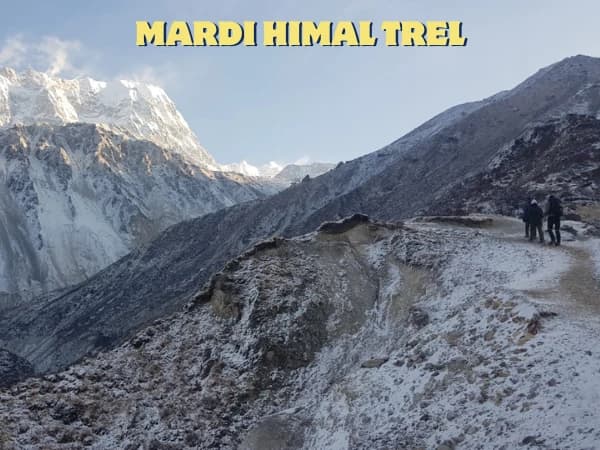
How Difficult Is the Mardi Himal Trek? An Honest Day-by-Day Rating for 2027
An honest day-by-day rating of the Mardi Himal trek: the steep climb to High Camp, the 4,500 m push to Base Camp, altitude risk, who finds it hard and 2027 prices.
Read More
Manaslu Circuit Reopened: What Changed After the 2026 Floods and How to Plan 2027
The Manaslu Circuit over the Larke Pass is open again with extreme caution. What changed in the lower valley after the two 2026 floods, 2027 prices and permits, and how I would plan.
Read More Chat with Shreejan