
The largest stupa in Nepal. Monks chanting at dawn. Butter tea in rooftop cafes. Everything you need to visit Boudhanath, from a local who grew up nearby.
Govt Regd. No.: 147653/072/073
Travel Agency Licence: 2838/072
Boudhanath Stupa: Kathmandu's Spiritual Heart (Complete Visitor Guide)

Short answer: Boudhanath is the largest stupa in Nepal, about 36 m tall, in eastern Kathmandu. It is part of the Kathmandu Valley UNESCO World Heritage listing. You do not go inside a stupa. You walk around it clockwise with the pilgrims and spin the prayer wheels. Early morning and late afternoon are the best times to go. Visit it on our Pashupatinath and Boudhanath day tour.
Boudhanath Stupa: Kathmandu's Spiritual Heart
Written by Shreejan Simkhada, CEO of The Everest Holiday and third-generation Himalayan guide. TAAN Member #1586.
I grew up twenty minutes from Boudhanath. As a kid, I'd ride my bicycle there on Saturday mornings and weave through the pilgrims circling the stupa. The smell of juniper incense, the low hum of monks chanting, the painted eyes of the Buddha staring in all four directions: these are some of my earliest memories of Kathmandu.
Decades later, I still go. Not as a tourist guide. Not to take photos. I go because Boudhanath has a way of slowing everything down. In a city as loud and fast as Kathmandu, that's worth more than you might think.
This guide is everything I'd tell a friend visiting for the first time. Where to stand, when to arrive, what the rituals mean, and where to find the best butter tea within sight of the dome.
What Is Boudhanath Stupa?
Boudhanath is the largest stupa in Nepal and one of the largest spherical stupas in the world. It stands about 36 metres tall, and its massive white dome dominates the skyline of eastern Kathmandu. The stupa is a UNESCO World Heritage Site, listed since 1979 as part of the Kathmandu Valley monuments, a property protected by Nepal's Department of Archaeology.
A stupa is not a temple. You don't go inside it. A stupa is a solid structure containing sacred relics, and you honour it by walking around it clockwise, always clockwise, spinning prayer wheels and reciting mantras as you go. This circumambulation is called kora, and at Boudhanath, thousands of people do it every single day.
The stupa's origins are debated. The most widely accepted history places its construction in the 5th or 6th century, though some scholars argue it could be older. Legend says it was built by a woman named Jadzima, who petitioned the king for just enough land to build a stupa as could be covered by a buffalo hide. She cut the hide into thin strips and enclosed a massive area. The king, bound by his word, let her build.
The Eyes That Watch Over Kathmandu
The most recognisable feature of Boudhanath is the pair of painted eyes on the harmika (the golden tower above the dome). These eyes face north, south, east, and west. Between them, where a nose would be, is a curling symbol that looks like a question mark. It's actually the Nepali numeral for "one," representing the unity of all things.
Above the eyes sit 13 golden rings, symbolising the 13 stages to enlightenment. A golden parasol crowns the top. The entire structure represents the Buddhist cosmological model (earth, water, fire, air, and space) from base to tip.
Why is Boudhanath Stupa so important?
Boudhanath sits along the ancient trade route between Kathmandu and Tibet. For centuries, Tibetan merchants would stop here to pray before crossing the Himalayas. When tens of thousands of Tibetans fled to Nepal after 1959, many settled around Boudhanath. Today, the neighbourhood is the spiritual centre of Nepal's Tibetan community.
More than fifty Tibetan Buddhist monasteries surround the stupa. Some are centuries old. Others were built by refugee communities in the 1960s and 1970s. On any given morning, you'll hear chanting from multiple directions, each monastery following its own schedule.
The stupa suffered significant damage during the 2015 earthquake. The harmika and upper sections cracked badly. A major restoration effort, funded by donations from around the world, was completed in November 2016. The stupa today looks much as it has for centuries, though the fresh paint is a shade brighter than the weathered version many travellers remember from older photographs.
When Is the Best Time to Visit Boudhanath?
Time of Day
Early morning is magical. Arrive between 6:00 and 7:00 AM and you'll find monks in maroon robes doing their morning kora, elderly Tibetan women spinning prayer wheels, and very few tourists. The light is soft. The incense smoke hangs low. It's the closest thing to a private audience with the stupa.
Late afternoon and evening are also special. Around 5:00 PM, hundreds of butter lamps are lit around the base. The golden spire catches the last sunlight. Monks gather for evening prayers. The atmosphere shifts from contemplative morning quiet to something warmer and more communal.
Midday is the busiest and least atmospheric time. Tour buses arrive between 10:00 AM and 2:00 PM. The crowds are thickest, the hawkers most persistent, and the spiritual atmosphere takes a back seat to tourism logistics.
Time of Year
Boudhanath is open year-round. October and November (post-monsoon) offer clear skies and comfortable temperatures. February to April is pleasant but increasingly dusty. The monsoon months (June-August) are quieter, with fewer tourists and a lush green quality to the surrounding neighbourhood, though heavy rain can make the marble platform slippery.
The most extraordinary time to visit is during Losar (Tibetan New Year, usually February) or Buddha Jayanti (Buddha's birthday, usually May). During these festivals, the stupa is decorated with enormous thangka paintings, thousands of butter lamps burn through the night, and the entire community turns out. If your trip coincides with either festival, rearrange your schedule. It will stay with you.
How do you get to Boudhanath Stupa from Thamel?
Boudhanath is about 8 kilometres northeast of central Kathmandu (Thamel). Getting there takes 20-40 minutes depending on traffic.
- Taxi from Thamel: NPR 500-800 (about $4-6 USD). Ask your hotel to arrange one. Agree on the price before getting in.
- Ride-sharing apps: Pathao and inDrive work well in Kathmandu. Usually cheaper than street taxis.
- Local bus: Buses run from Ratna Park to Boudhanath for about NPR 30. Crowded but authentic.
- Walking: About 90 minutes from Thamel on foot, passing through Chabahil. Not the most pleasant walk due to traffic, but doable.
Most of our Kathmandu Valley Tour itineraries include Boudhanath as a key stop. It pairs naturally with Pashupatinath Temple, which is only about 2 kilometres away.
How much is the Boudhanath Stupa entry fee?
| Detail | Information |
|---|---|
| Entry fee (foreigners) | NPR 400 (~$3 USD) |
| Entry fee (SAARC nationals) | NPR 100 |
| Entry fee (Nepali citizens) | Free |
| Opening hours | Open 24 hours (ticketing 6 AM-7 PM) |
| Time needed | 1.5-3 hours |
| Photography | Allowed outside; ask before entering monasteries |
Keep your ticket. Officials sometimes check it if you leave and return. The ticket is valid for the day of purchase only.
What is there to see and do at Boudhanath Stupa?
1. Walk the Kora
The most important thing you can do at Boudhanath is simply walk around it. Always clockwise. Join the flow of pilgrims. Spin the prayer wheels as you pass them. There are hundreds, each containing rolled mantras. One full circuit takes about 15 minutes at a contemplative pace. Many locals do three, seven, or even 108 circuits.
You don't need to be Buddhist to do kora. It's a meditative practice, not a religious test. Walk slowly. Breathe. Watch the faces around you.
2. Visit the Monasteries
Several monasteries around the stupa welcome respectful visitors. Two of the most accessible are:
- Shechen Monastery (south side), one of the most important Nyingma monasteries outside Tibet. Founded by Dilgo Khyentse Rinpoche. Beautiful murals inside.
- Kopan Monastery (about 2 km north, on a hilltop) offers meditation courses for foreigners, from weekend introductions to month-long retreats.
Remove your shoes before entering any monastery. Ask before photographing monks or ceremonies. Silence your phone.
3. Rooftop Cafes and Butter Tea
The buildings circling Boudhanath are packed with rooftop restaurants. They're tourist-oriented but the views are worth it. Sitting on a cushion three storeys above the plaza, looking down at the white dome with the Himalayan foothills behind it on a clear day, is one of Kathmandu's finest experiences.
Recommended spots include the Stupa View Restaurant (reliable food, good elevation) and the cafes on the northern side, which tend to be slightly less crowded. Expect to pay NPR 300-600 for a meal with a view.
4. Shop the Thangka Galleries
Boudhanath is one of the best places in Nepal to buy thangka paintings. These detailed Buddhist artworks, painted on cotton or silk with mineral pigments, can take months to complete. Prices range from $30 for a small machine-printed reproduction to $5,000+ for a hand-painted masterpiece by a trained artist.
If you want to buy an authentic hand-painted thangka, visit the workshops rather than the street stalls. Ask to see the artist's workspace. Genuine thangka painters are happy to show their process. Look for fine detail in the faces and gold leaf applied by hand.
5. Light Butter Lamps
You can buy small butter lamps from vendors around the base of the stupa. Lighting one is a common offering in Tibetan Buddhism, symbolising wisdom dispelling the darkness of ignorance. A small lamp costs NPR 20-50. Light it, place it among the hundreds of others, and stand back to watch the flickering glow against the white dome.
How did the 2015 earthquake damage Boudhanath Stupa?
The earthquake of 25 April 2015 hit Boudhanath hard. The harmika cracked. The golden pinnacle leaned. Large sections of the upper structure had to be dismantled for safety. For months, the stupa stood wounded, wrapped in scaffolding.
The restoration, led by the Boudhanath Area Development Committee with technical support from Nepali and international engineers, was completed in November 2016. It was one of the fastest heritage restorations after the earthquake, partly because Boudhanath is so central to the daily lives of the surrounding community. People didn't wait for government funding. They donated directly.
Today, the scars are invisible from ground level. The fresh paint gleams white. But if you look closely at some of the surrounding buildings, you'll still see cracks and repairs. The earthquake is not forgotten here. It's simply been folded into the stupa's long history of damage and renewal.
Can you visit Boudhanath and Pashupatinath together?
A full day in eastern Kathmandu can cover Boudhanath and Pashupatinath Temple (Nepal's holiest Hindu shrine, where cremations take place along the Bagmati river). The two sites are about 2 km apart and offer a fascinating Hindu-Buddhist contrast.
Our Kathmandu Pokhara Chitwan Lumbini Tour includes both sites and extends to the birthplace of the Buddha in Lumbini. For travellers with a specific interest in Buddhism, our Buddhist Circuit Tour covers Boudhanath, Swayambhunath, Lumbini, and other key sites in a dedicated itinerary.
If you're arriving for a trek and have a free day before departure, Boudhanath is one of the most rewarding ways to spend it. It pairs well with a visit to the Thamel neighbourhood for gear shopping or the Garden of Dreams for quiet reflection.
What are the etiquette rules at Boudhanath Stupa?
- Walk clockwise. Always. This applies to the stupa, the prayer wheels, and any Buddhist monument.
- Dress modestly. Cover your shoulders and knees. This isn't strictly enforced, but locals appreciate it.
- Ask before photographing people. Monks, nuns, and pilgrims deserve the same courtesy you'd want.
- Don't climb on the stupa. The lower levels are open for kora, but don't scale the dome itself.
- Respect the rituals. If people are prostrating, chanting, or meditating, give them space. Don't walk between a person and the stupa during prostration.
- Watch for pickpockets. Boudhanath is generally safe, but crowds attract opportunists. Keep your phone and wallet secure.
- Bring small notes. For butter lamps, donations, and small purchases, NPR 50-100 notes are useful.
Where should you stay near Boudhanath Stupa?
Several guesthouses and hotels sit within walking distance of the stupa. Staying here instead of Thamel gives you the benefit of early morning and evening kora without the taxi ride. The neighbourhood is quieter than Thamel, with good restaurants and a calmer pace.
Budget options start around $15-20 per night. Mid-range hotels with stupa views run $40-80. The Hyatt Regency Kathmandu is nearby for those wanting luxury (from about $150).
Most trekkers stay in Thamel because it's closer to gear shops and trekking agencies, but if spirituality matters more to you than convenience, Boudhanath is the better base.
Beyond Boudhanath: Planning Your Nepal Trip
Boudhanath is one of the three great Buddhist sites of Nepal, and our 7-day Nepal Buddhist Circuit tour ties it to Lumbini and Namobuddha. Boudhanath is just the beginning. If the spiritual atmosphere draws you in, consider extending your Kathmandu stay with our Kathmandu Yoga Tour or the Kathmandu Pokhara Yoga Tour, which combines meditation, yoga, and cultural exploration.
For trekking, Nepal offers everything from gentle walks to high-altitude expeditions. The Everest Base Camp Trek is the classic choice. The Annapurna Circuit Trek offers more cultural variety. The Langtang Valley Trek is the closest major trek to Kathmandu. And for something quick, the Ghorepani Poon Hill Trek packs striking sunrise views into just 4-5 days.
If you prefer wheels to walking, our Nepal Motorbike Tour covers mountain roads and cultural sites across the country. And for a quick Khumbu taste without the full trek, the Short Trek to Namche Bazaar gets you into Everest country in under a week.
However you spend your time in Nepal, make room for Boudhanath. An hour here (watching the pilgrims circle, hearing the prayers, feeling the incense settle on your clothes) will stay with you longer than most mountain views.
Frequently Asked Questions
How long should I spend at Boudhanath?
Plan at least 90 minutes. That gives you time for two or three kora circuits, a visit to one monastery, and a cup of butter tea on a rooftop. If you're genuinely interested in Buddhism or photography, you could easily spend half a day here.
Is Boudhanath worth visiting if I'm not Buddhist?
Absolutely. Most visitors are not Buddhist. The atmosphere, architecture, and cultural experience are compelling regardless of your faith or lack of it. It's one of the most peaceful spots in Kathmandu.
Can I visit Boudhanath and Pashupatinath in the same day?
Yes. They're only about 2 kilometres apart. Most visitors do both in a half-day. Start at Boudhanath early in the morning for the best atmosphere, then walk or take a short taxi ride to Pashupatinath. Our Kathmandu Valley Tour covers both plus other sites.
Is Boudhanath safe for solo travellers?
Very safe. The area around the stupa is well-lit, well-populated, and accustomed to international visitors. Solo women travellers report feeling comfortable here, especially during daylight hours. Exercise normal precautions with valuables in crowded areas.
What's the best cafe near Boudhanath for views?
The rooftop cafes on the northern and eastern sides of the stupa circle tend to be less crowded than those facing the main entrance. Stupa View Restaurant is a reliable choice. For something quieter, walk one street back from the plaza where you'll find smaller cafes with partial stupa views and significantly lower prices.
Visit Boudhanath With Us
We include Boudhanath in many of our Kathmandu itineraries. If you'd like a local guide who can explain the rituals, introduce you to monastery life, and take you beyond the tourist circuit, we're here to help.
WhatsApp: +977 9810351300
Email: [email protected]
Shreejan Simkhada is the CEO and co-founder of The Everest Holiday, a family-run trekking company in Kathmandu, and a third-generation Himalayan guide. TAAN Member #1586. Every booking helps fund our Nagarjun Learning Center.
Travellers wanting Boudhanath and Nepal's cultural heart without the mountain hike will find a complete plan in our Nepal 7-day cultural itinerary.
Boudhanath is on our Kathmandu-Pokhara tour route. Our Kathmandu & Pokhara Tour (7 Days) is private (your group only, no strangers), 2027 dates open, From USD $749. WhatsApp us for tailored 2027 dates and current departures.
Planning a trip to Nepal?
Drop us your details and tell us what you have in mind. We will put together a personalised plan and get back to you.
Not sure which Nepal trek is right for you?
Take our free 2-minute quiz and get personalised recommendations based on your fitness, experience, and travel style.
Find Your Perfect Trek →Need Help? Call Us+977 9810351300orChat with us on WhatsApp
Latest Travel Blogs
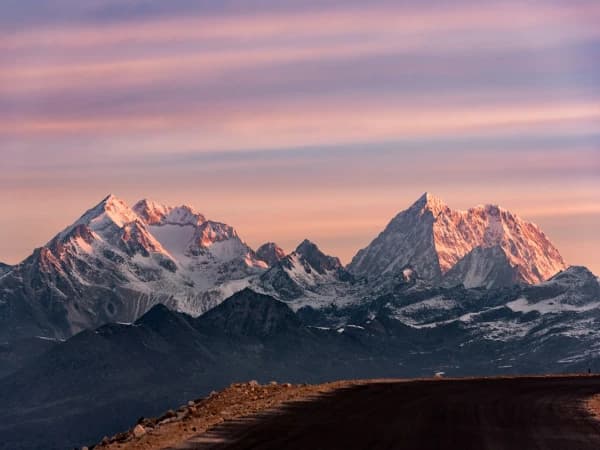
Christmas and New Year Treks from Pokhara 2026/27: 3 to 5 Days
<p>Short treks from Pokhara for Christmas and New Year 2026/27: Panchase 3 days, Poon Hill 4 days and Mardi Himal 5 days. Weather, snow, what is open, and prices by group size.</p>
Read More
Thamdanda and Surke: The Road Head for Everest Base Camp by Road
Thamdanda is the road head where our Everest Base Camp trek by road starts and ends on foot. How to get there from Phaplu and what the first walk to Paiya is like.
Read MorePoon Hill Trek Permits 2027: ACAP, TIMS, Cost and What You Need
Poon Hill needs two permits: ACAP at NPR 3,000 and a TIMS card at NPR 2,000. Who arranges them, where they are checked, SAARC rates and the 2027 trek prices.
Read More Chat with Shreejan