Kanchenjunga Is Now a Teahouse Trek: What Changed and How to Plan It

If you have spent any time researching the Kanchenjunga trek, you have almost certainly read that it is a camping expedition: tents, a kitchen crew, a train of porters, and a price to match. That advice was accurate for decades. It is no longer accurate. Simple lodges now operate along the entire main circuit, including the high, remote stretches that once forced everyone under canvas, and the trek to the base camps of the world's third-highest mountain can now be done teahouse-to-teahouse.
I am Shreejan Simkhada, founder of The Everest Holiday, a family-run trekking company in Kathmandu. We have watched three changes land on Kanchenjunga in quick succession: lodges opening at Sele La, Cheram, Ramche and Lhonak (plus a very basic seasonal hut at Pangpema itself); roads reaching the trailheads at both ends of the circuit; and, on 22 March 2026, Nepal's Department of Immigration scrapping the old two-trekker minimum for restricted-area permits, so solo trekkers can now go with a licensed guide. Most of the internet has not caught up. This post is the current picture, and how to plan a 2027 departure around it.
We arrange Kanchenjunga on request with a tailored itinerary rather than fixed group dates, because on this trek the right plan depends on your time, fitness and which base camp you want. If you would rather just talk it through, message us on WhatsApp and we will reply the same day from Kathmandu.
Is Kanchenjunga now a teahouse trek?
Yes. As of the 2025 and 2026 seasons, the standard Kanchenjunga circuit (north base camp at Pangpema, the Sele La pass crossing, and the south side to Oktang) can be walked staying in lodges every night. Basic teahouses have opened at the places that used to be the camping bottlenecks: Sele La, Cheram (Tseram) and Ramche on the south side, and Lhonak on the north side, with a minimal seasonal hut at Pangpema for those who want to sleep at north base camp itself. Camping is no longer required on the main route.
This matters more than it sounds. Mandatory camping meant a full crew, mule or porter logistics, and trip prices that started well above what most trekkers pay for Everest or Annapurna. A teahouse format needs a guide, ideally a porter, and permits. The cost, the planning and the group-size logic all change with it.
Two honest caveats before you get excited. First, "teahouse" above Ghunsa means something far more basic than it does in Khumbu, and I describe exactly what to expect below. Second, the highest lodges are small and seasonal. In peak weeks a good local guide who can ring ahead matters, and in deep winter some of them close altogether. That is one reason the guide requirement here is genuinely useful rather than box-ticking.
What exactly changed, and when?
Three separate things changed between roughly 2022 and 2026, and together they moved Kanchenjunga from expedition-style trip to a long, hard, but plannable teahouse trek.
| What the old advice says | The position in 2026 |
|---|---|
| Full camping required above Ghunsa | Lodges at Sele La, Cheram, Ramche and Lhonak; basic seasonal hut at Pangpema. Teahouse trekking possible on the whole main route. |
| Minimum two trekkers for the permit | Scrapped 22 March 2026 by the Department of Immigration. Solo trekkers can now get the restricted-area permit through a registered agency, with a licensed guide. |
| Long walk-ins from Taplejung at both ends | Jeep tracks now run to Sekathum/Ranipul on the north side and to Yamphudin on the south side (with a road link out via Phidim), cutting roughly two days of low-altitude walking from older itineraries. |
| Fly to Suketar (Taplejung airstrip) | Suketar flights are infrequent and unreliable. The practical route is the daily 45-50 minute flight to Bhadrapur, then driving up. |
The solo-permit change deserves a date stamp, because it is the fact most websites still get wrong. On 22 March 2026, Nepal's Department of Immigration removed the minimum group-size requirement for restricted-area permits across all restricted districts, Kanchenjunga included. A single trekker can now be issued the permit. What did not change: the permit must still be applied for by a registered Nepali trekking agency, and a licensed guide must accompany you throughout. The new rules also set a ratio of one guide to a maximum of seven trekkers in restricted areas. If a page tells you the law still forces a minimum of two trekkers on Kanchenjunga, it was written before March 2026; the legal minimum is gone, though we and many other operators still set a small-group minimum of two on this trek for cost reasons.
What permits do you need for Kanchenjunga in 2026?
Just two, and they are cheap for what you get. You need the Kanchenjunga Restricted Area Permit (RAP) at US$20 per person per week for the first four weeks, and the Kanchenjunga Conservation Area Permit (KCAP) at NPR 2,000 (roughly US$15). We also arrange a TIMS card for every trekker, for their safety, at NPR 2,000 (roughly US$15). For a typical three-week circuit the two permits come to about US$75, or about US$90 with the TIMS card, which makes Kanchenjunga one of the cheapest restricted areas in Nepal per day, especially compared with Upper Mustang's US$50 per day.
| Permit | Cost | Notes |
|---|---|---|
| Restricted Area Permit (RAP) | US$20 per person per week | First four weeks; rate rises modestly beyond four weeks. Issued via a registered agency; solo trekkers eligible since 22 March 2026. |
| Kanchenjunga Conservation Area Permit (KCAP) | NPR 2,000 (~US$15) | One-off fee for the conservation area. |
| TIMS card | NPR 2,000 for foreign nationals (NPR 1,000 SAARC) | We arrange one for every trekker, restricted areas included, for the safety of guests and staff. |
Practicalities: your agency applies at the Department of Immigration in Kathmandu with your passport, Nepal visa and insurance details, and it is normally issued within a working day. Bring insurance that covers helicopter evacuation up to 6,000 metres. On a route this remote, evacuation is the only fast way out, and a rescue flight billed to an uninsured card can run to five figures.
Do you need a guide for Kanchenjunga?
Yes. Kanchenjunga is a restricted area, so a licensed guide arranged through a registered agency is mandatory, and the March 2026 rule change did not touch that requirement. It only removed the need for a second trekker.
I would defend the rule here even if it were optional. The high lodges are small and unbookable online, route-finding on the Sele La crossing in cloud is not trivial, and if something goes wrong the guide is the person who knows where the nearest working phone signal and the nearest helicopter clearing are. This is not Everest Base Camp, where you pass a bakery every two hours. Between Ghunsa and Cheram there is nothing but the passes.
What are the teahouses above Ghunsa really like?
Very basic, and you should book the trek knowing that. Ghunsa (3,427 m) is the last village with what I would call proper lodges: decent rooms, a stove in the dining room, solar power, hot bucket showers, simple menus. Above Ghunsa, in both directions, expect the following.
- Rooms: plywood or stone huts with two narrow beds and a foam mattress. At Khambachen, Lhonak, Sele La, Cheram and Ramche, rooms are cold and unheated; only the dining room has a stove, usually lit in the evening. Room charges are token (a few hundred rupees, around US$5 at Lhonak) on the understanding you eat where you sleep.
- Food: dal bhat, noodles, soup, eggs, Tibetan bread. Menus shrink as you climb because everything arrives on a porter's back or a mule.
- Washing: above Ghunsa, assume bucket washes or none. Bring wet wipes and accept being grubby for a few days.
- Power and connectivity: limited solar charging for a fee; patchy NTC signal in the villages and effectively nothing higher. Treat the high section as offline and carry a power bank.
- Pangpema: one minimal seasonal hut at north base camp (5,143 m), open mainly in the autumn and spring windows. Many groups still sleep at Lhonak and visit Pangpema as a day walk, which is what we usually recommend.
- Sleeping bag: bring a genuine four-season bag rated to around -15°C or colder. The lodges provide blankets, but not enough of them at 4,800 metres in late autumn.
If you have trekked the Manaslu circuit or upper Dolpo, the standard will feel familiar. If your reference point is the Everest trail, drop your expectations several notches and you will be pleasantly surprised rather than disappointed. What you get in exchange is the closest thing Nepal still offers to trekking as it was thirty years ago: whole days without another foreign trekker, and lodge dining rooms where you eat with the family that built the place.
How do you get to the Kanchenjunga trailhead?
Fly Kathmandu to Bhadrapur, then drive. The Bhadrapur flight goes daily, takes 45-50 minutes, and lands you in the far southeast of Nepal near the Indian border. From there it is a long drive north through the Ilam tea country to Taplejung, roughly 8-10 hours on a mostly paved but slow mountain road, then a rough local jeep stage of a few hours to the trailhead: Sekathum or Ranipul for the north side, Yamphudin for the south side. Most itineraries break the journey with a night in Taplejung or Ilam.
Two notes from experience. First, Suketar, the airstrip above Taplejung, looks tempting on the map, but flights run only a couple of times a week and cancel readily, so we plan around Bhadrapur and treat Suketar as a bonus if it happens to line up. Second, the roadheads keep creeping forward year by year. Older trip reports describe two or more days of walking that a jeep now covers, which is why a modern itinerary runs several days shorter than the classic ones you may have read about. On the south side there is also now a road link from Yamphudin out via Phidim, which is useful for the exit at the end of a circuit.
North or south base camp: which should you choose?
If you can only do one side, the north is the bigger prize; if you have time, the full circuit linking both is the best long trek in Nepal. Here is how we set it out for guests.
| North (Pangpema) | South (Oktang) | Full circuit | |
|---|---|---|---|
| High point | 5,143 m | ~4,730 m | 5,143 m + the Sele La passes |
| Typical duration | 18-22 days | 14-18 days | 18-25 days |
| Character | Remoter, higher, huge glacier scenery; the north face of Jannu (Kumbhakarna) en route is one of the great mountain walls anywhere | Shorter and slightly gentler; Yalung Glacier and the amphitheatre below Kanchenjunga's south face; more village culture lower down | Both base camps, linked by the high crossing from Ghunsa to Cheram over the Sele La pass complex |
| Best for | Trekkers who want the wildest option and can spare three weeks | Those with less time, or slightly less altitude experience | Fit, experienced trekkers who want the whole mountain |
The circuit is the version the new teahouses have really unlocked, because the Sele La crossing was previously the section that forced camping. It is still the hardest stretch of the trek: from Ghunsa you cross a chain of passes in a single long push: Tamo La (about 3,900 m), then Sinion La and Mirgin La at around 4,660 m, with eight to ten hours on your feet and no shelter mid-route. You want settled weather, an early start and a guide who has done it before.
How hard is the Kanchenjunga trek, honestly?
Harder than Everest Base Camp, and it is better to hear that plainly now than to discover it at Khambachen. Grade it strenuous: 18-25 days for the circuit, sustained walking at 4,000 metres and above, six to seven hour days as standard with a couple of longer ones, and a level of remoteness that changes the risk calculation. On the EBC trail, help is a village away; here, the villages above Ghunsa are three or four huts, phone signal is scarce, and helicopter evacuation depends on weather and an established clearing.
It is not a technical climb. There are no ropes, no crampon sections on the standard route in normal conditions, and the trails, while rough, are real trails. The difficulty is the length, the altitude, the passes and the isolation stacked on top of one another. Acclimatisation nights at Ghunsa (3,427 m) and Khambachen (4,050 m) are built into any responsible itinerary as a medical necessity, not padding, and we will not cut them to save you two days.
Who should book it? Trekkers who have already done at least one multi-day trek above 4,000 metres and enjoyed it. If EBC, the Annapurna Circuit or Manaslu went well and left you wanting something quieter and wilder, Kanchenjunga is the natural next step. As a first Himalayan trek, it is the wrong choice, and we will tell you so. Give yourself eight to twelve weeks of hill training either way.
When is the best time to trek Kanchenjunga?
October to November is the prime window, with April to May a strong second. Autumn brings the most stable weather and the clearest views of the season; spring adds rhododendron forest in the lower valleys and slightly warmer nights, at the cost of more afternoon haze.
Avoid the monsoon (June to early September): the lower forests are thick with leeches, the road to Taplejung suffers landslides, and the mountain hides for days at a time. Winter (December to February) is technically possible on the lower sections, but the Sele La crossing and Pangpema are often snowbound and the highest lodges may be shut, so we do not recommend the circuit then. If your dates are fixed in the monsoon months, look at Upper Mustang instead: it sits in the rain shadow and is our standard June-August recommendation.
How should you plan a 2027 Kanchenjunga trek?
Start with your calendar, because time is the real entry fee here. Once flights, drives and contingency are counted, the full circuit needs about three and a half weeks door to door from Kathmandu; a single base camp needs two and a half to three. Then decide north, south or circuit using the table above, and book the autumn window early: the high lodges are few, and the good guides for this region are fewer.
A representative circuit outline looks like this: fly Kathmandu-Bhadrapur, drive to Taplejung and on by jeep to Sekathum/Ranipul; trek up the Ghunsa valley with acclimatisation nights at Ghunsa and Khambachen; Lhonak and the day to Pangpema (5,143 m); back to Ghunsa and over the Sele La passes to Cheram; up to Ramche and Oktang for the south base camp; then out via Yamphudin and the road to Phidim and Bhadrapur. Allow 18-25 days depending on rest days and road conditions.
We build Kanchenjunga itineraries individually rather than selling fixed departures, because the variables (your dates, pace, which side, one base camp or both, porter or not) genuinely change the plan. As a Kathmandu-based, family-run operator we handle the restricted-area permit paperwork, assign a licensed guide who has worked this valley before, and keep the itinerary honest about what the lodges can and cannot provide. You can see the region and our 19-day base camp programme on our Kanchenjunga region page, and read our detailed Kanchenjunga cost breakdown for the full budget picture.
If you are weighing up Kanchenjunga for autumn spring 2027, send us a WhatsApp message with your rough dates and trekking background. We will come back with a straight answer on whether it is the right trek for you, a tailored itinerary, and a quote with the permits, guide and logistics spelled out. No deposit needed to start the conversation.
Planning a trip to Nepal?
Drop us your details and tell us what you have in mind. We will put together a personalised plan and get back to you.
Not sure which Nepal trek is right for you?
Take our free 2-minute quiz and get personalised recommendations based on your fitness, experience, and travel style.
Find Your Perfect Trek →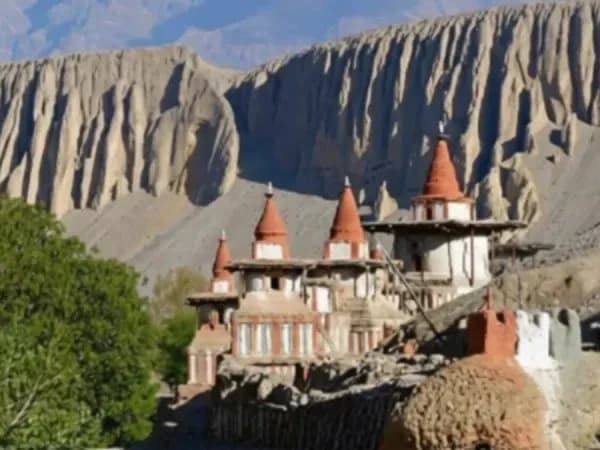
Trekking in Nepal in September 2027: Weather, Best Treks and Departures
Plan a September 2027 trek in Nepal: monsoon-tail weather, why Upper Mustang works, which treks to avoid and our departures on 6, 13, 20 and 27 September.
Read More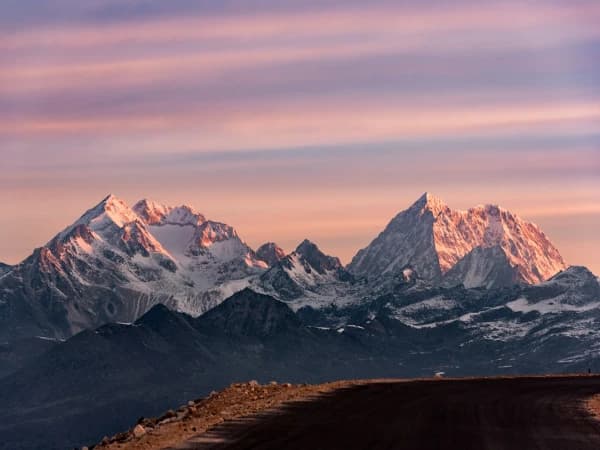
Trekking in Nepal in March 2027: Weather, Best Treks and Departures
Plan a March 2027 trek in Nepal: weather figures, the treks that suit the month, crowds, festivals and our departures on 8, 15, 22 and 29 March.
Read More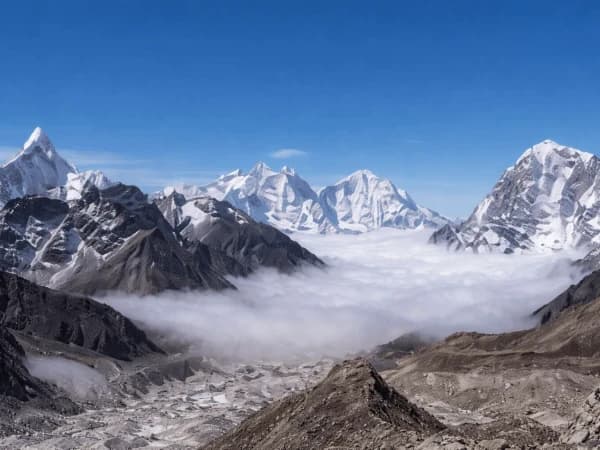
Trekking in Nepal in April 2027: Weather, Best Treks and Departures
Plan an April 2027 trek in Nepal: weather figures, the treks that suit the month, crowds, the Manthali flights and our departures on 5, 12, 19 and 26 April.
Read More Chat with Shreejan