

Update, 26 August 2026: a large flood came down the Bhote Koshi river on 26 August and damaged the Rasuwagadhi border crossing, the customs post and the road through Timure and Syabrubesi. The overland route into Tibet described on this page is not running for the rest of the 2026 season. The western route to Kailash, which flies Kathmandu to Nepalgunj to Simikot and then crosses by helicopter to Hilsa, is in a different part of the country and is unaffected. I have written the full account of what happened, and what it means for each route, here. I will update this page once the crossing has been properly assessed.
2027 dates and prices are confirmed once the Tibet season opens. Join our 2027 priority list on WhatsApp, +977 9810351300.
Kailash Mansarovar is not a casual trip. It is a pilgrimage, an expedition, and for many people the most meaningful journey they will ever take. It is also one of the most expensive treks you can book from Nepal, and the pricing can be confusing because there are three completely different routes, each with different costs, durations, and physical demands.
2026 Pricing Update
Our 14-day overland Kailash Mansarovar Yatra is the only route with private departures arranged on your dates and pricing on request. The helicopter and Simikot-trek routes are being re-quoted for 2026 supplier rates. Please WhatsApp Shreejan for a fresh quote on those two.
I manage the bookings for all three of our Kailash routes, and the first thing most pilgrims ask is: how much will this actually cost me? Here is every rupee and dollar, broken down honestly.
May 2026 price note: Nepal's fuel costs have risen sharply due to the ongoing conflict in West Asia, which pushed global oil prices to record highs. Nepal Oil Corporation hiked aviation fuel by nearly 98% and diesel by over 50%. Internal flight and helicopter prices have increased significantly. The prices below reflect current 2026 rates.
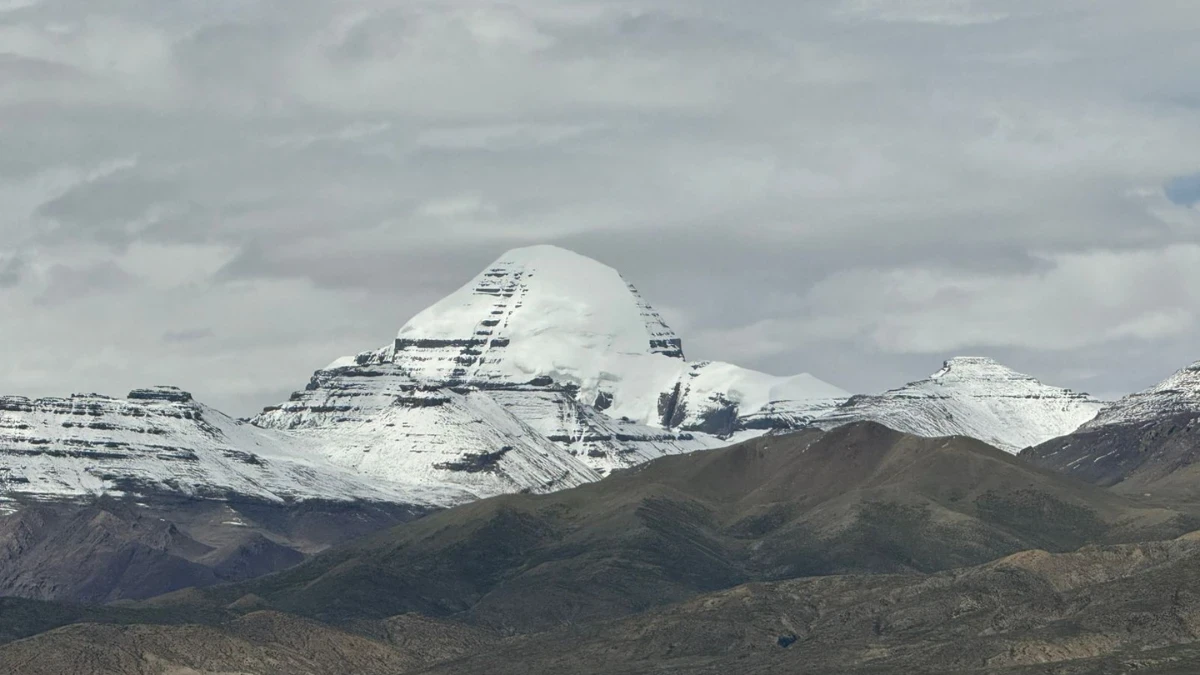
What Are the Three Routes to Kailash and How Much Do They Cost?
There are three ways to reach Mount Kailash from Nepal. Each has a different price, duration, and level of difficulty. Here is the overview before we dig into the details:
| Route | Duration | Starting Price | Difficulty |
|---|---|---|---|
| Overland via Kerung | 14 days | Pricing on request | Strenuous (5/5) |
| Helicopter via Simikot | 11 days | Quote on request | Strenuous (4/5) |
| Trek via Simikot | 20 days | Quote on request | Strenuous (5/5) |
The overland route is the most affordable. The helicopter route saves four to nine days. The Simikot trek is the most remote and physically demanding, crossing the Nara La Pass and trekking through the Humla region of far-western Nepal before entering Tibet on foot.
Route 1: 14-Day Overland via Kerung (pricing on request)
This is our flagship Kailash route in a normal season. It is not running for the rest of 2026, because the Rasuwagadhi crossing was damaged by the flood of 26 August. What follows describes the route as it runs when the border is open. The route runs from Kathmandu to the Rasuwagadhi–Kerung border (a 7-8 hour drive), enters Tibet at Kerung, then crosses the Tibetan Plateau via Saga and Hore to Lake Mansarovar. The full pilgrimage includes the three-day Kora around Mount Kailash, with a pre-Kora ritual bath at Mansarovar.
2026 pricing:
- Twin-share (pricing on request). Three nights Kathmandu hotel, group bus transport, vegetarian meals throughout, mud-house guest house at Mansarovar (the only option at the lake), standard hotels at Saga and Darchen, three-day Kora with yaks for personal bags, Tibet Travel Permit + Alien Permit + Military Permit included, emergency oxygen cylinder on the bus, KTM temple sightseeing.
- Single room (pricing on request). Same package with a private room throughout.
- 25% deposit to confirm a date and begin permit processing. Balance due 60 days before departure. For 2026 that deposit was USD 950 twin sharing and USD 1,200 single for Indian pilgrims, and we are not taking any further bookings for 2026.
The 2026 season is closed to Indian passport holders. The Chinese quota filled and no further permits are being issued this year, so we are adding names to a 2027 list rather than taking 2026 bookings. A non-Indian passport is a different permit route and may still travel, so ask us rather than assuming. The Tibet group visa is processed in Kathmandu and is usually issued in about five working days once the application is complete (our working figure, not an embassy promise). We give you the exact passport timing for your group once your date is confirmed.
Full route detail on our Kailash Mansarovar Overland 14-day page.
Why we no longer print one price. The Tibet side charges four different rates depending on the passport you hold, one for Indian nationals, one for Nepali nationals, one for nationalities that need a Chinese visa and one for those that do not. The figure then moves again with the size of your group, the route you take and the standard of hotel you want. The Tibet side has not yet published its 2027 rates, so any number we printed for next season would be a guess, and we would rather quote you properly than quote you quickly. Related: Kailash Mansarovar Yatra for Indian Citizens: 2027 Guide.
Route 2: Helicopter via Simikot (11 days)
This route flies from Kathmandu to Nepalgunj, then to Simikot in far-western Nepal, then by helicopter across the border to Hilsa in Tibet. From Hilsa, you drive to Mansarovar and Darchen. The helicopter saves days of driving and cuts the total trip from fifteen days to eleven.
2026 pricing: Our helicopter route pricing is currently being updated: Nepal's domestic flight and helicopter rates increased sharply in early 2026 due to fuel cost surges, and our supplier is finalising new quotes. For confirmed 2026 helicopter pricing, please WhatsApp Shreejan at +977 9810351300 with your group size and preferred dates.
Route 3: Trek via Simikot (20 days)
The most adventurous and remote option. You fly to Simikot, then trek for several days through the Humla region, crossing the Nara La Pass at 4,548 metres, before entering Tibet on foot at Hilsa. From there, you continue to Mansarovar and Kailash. This route requires a higher level of fitness and is suited to pilgrims who want the traditional walking pilgrimage.
2026 pricing: Similar to the helicopter route, our Simikot trek pricing is being updated for 2026 supplier rates. WhatsApp Shreejan at +977 9810351300 for a confirmed 2026 quote based on your group size, fitness, and preferred dates. Related: Simikot: Humla's Gateway Town and the Start of the Trail to Limi and Hilsa.
How Much Do Permits and Visas Cost?
Kailash Mansarovar requires more permits than any other trip from Nepal. The paperwork is complex, which is why most pilgrims book with a company rather than trying to arrange it independently (independent travel to Tibet is not permitted anyway).
China Group Visa: the embassy's fee is NPR 2,900 for most passports (about 19 USD), NPR 15,300 for US passports (about 99 USD) and NPR 6,100 for Canadian passports (about 40 USD), and the reduced fees run to 31 December 2026 (see our group visa guide). This is included in the Luxury tier of the overland route but is extra on Budget and Standard.
Tibet Travel Permit + Alien Travel Permit + Military Permit: Arranged by your tour operator. The fees are included in all our packages.
Nepal visa: 30 to 125 USD depending on duration, obtained on arrival at Kathmandu airport.
Humla restricted-area permit (Simikot trek route only): Included in the package price.
The group visa is usually issued in Kathmandu in about five working days once your application is complete, and your physical passport has to be in Kathmandu for it. We give you the exact passport deadline for your group once your date is confirmed.
For more on Nepal's permit system, see our permits guide.
What Is Not Included in Kailash Tour Packages?
- International flights to Kathmandu
- Nepal visa (30 to 125 USD)
- Tibet visa fee on Budget and Standard tiers (the embassy's group visa fee is NPR 2,900 for most passports (about 19 USD), NPR 15,300 for US passports (about 99 USD) and NPR 6,100 for Canadian passports (about 40 USD); the reduced fees run to 31 December 2026, see our group visa guide)
- Travel insurance (150 to 300 USD for Kailash-grade altitude cover)
- Personal riding horse during the Kora (available for hire at Darchen)
- Rescue and emergency evacuation
- Tips for guides, drivers, and staff
- Laundry, phone calls, personal expenses
- Alcohol
How Much Are Flights to Kathmandu?
International flight costs vary by origin:
- From India: 8,000 to 25,000 INR return (95 to 300 USD). Delhi and Mumbai have the most direct options
- From the UK: 500 to 900 GBP return (650 to 1,150 USD)
- From the US: 900 to 1,500 USD return
- From Australia: 800 to 1,300 AUD return (550 to 900 USD)
Most Kailash pilgrims come from India. If you are flying from Delhi, budget 150 to 250 USD return. Book early: the Kailash season is short (May to September) and seats fill fast.
How Much Does Travel Insurance for Kailash Cost?
The Kora crosses Dolma La Pass at 5,630 metres. You need insurance that covers emergency evacuation at extreme altitude. Standard travel insurance will not cover this.
Budget 150 to 300 USD for a policy that covers helicopter evacuation up to 6,000 metres, medical treatment, and trip cancellation. This is more than you would pay for a lower-altitude trek because the Kailash route involves Tibet, which some insurers treat differently.
What Tips Should You Know?
The Kailash tour involves more staff than a typical Nepal trek: a Nepali team leader, a Tibetan guide, drivers, yak handlers, and camp staff during the Kora. Standard tipping:
- Nepali team leader: 10 to 15 USD per day (150 to 225 USD total for 15 days)
- Tibetan guide: 8 to 12 USD per day
- Driver: 5 to 8 USD per day
- Yak handlers and camp staff: 50 to 100 USD total, shared among the group
Tips are not mandatory but are deeply appreciated. For more context on tipping culture in Nepal, read our guide.
How Much Personal Spending Money Do You Need?
Tibet is more expensive than Nepal for everyday items. Budget for:
- Bottled water in Tibet: 10 to 20 CNY (1.50 to 3 USD) per litre
- Snacks and extra food: 5 to 15 USD per day
- Hot showers (where available): 20 to 50 CNY
- Phone SIM or WiFi in Tibet: limited availability, 5 to 10 USD
- Souvenirs at Darchen or Mansarovar: prayer flags, malas, photos
Carry Chinese yuan for spending in Tibet. You can exchange at the Kerung border or in Kathmandu before departure. Your guide will advise on how much to bring, but 200 to 400 USD worth of yuan covers most personal spending.
What Is the Total Budget for Three Scenarios?
Pilgrim Scenario 1: Overland 14-day, Twin-share (from India)
| Return flights Delhi to Kathmandu | 200 USD |
| Nepal visa (15 days) | 30 USD |
| Tibet visa | 125 USD |
| Travel insurance (15 days, altitude cover) | 180 USD |
| 14-day Overland package (twin-share) | On request |
| Meals not included (Kathmandu + transit days) | 150 USD |
| Tips | 200 USD |
| Personal spending (yuan + extras) | 250 USD |
| Total | 4,934 USD |
Pilgrim Scenario 2: Overland 14-day, Single-room (from UK)
| Return flights UK to Kathmandu | 750 USD |
| Nepal visa (30 days) | 50 USD |
| Tibet visa (embassy fee, most passports) | 19 USD |
| Travel insurance | 200 USD |
| 14-day Overland package (single-room) | On request |
| Tips | 250 USD |
| Personal spending | 300 USD |
| Kathmandu accommodation (2 extra nights) | 80 USD |
| Total | 6,448 USD |
Pilgrim Scenario 3: Helicopter route (Premium, from US), quote on request
| Return flights US to Kathmandu | 1,200 USD |
| Nepal visa (30 days) | 50 USD |
| Tibet visa (US passport, embassy fee) | 99 USD |
| Travel insurance (premium) | 280 USD |
| Helicopter 11-day package | Quote on request |
| Tips | 300 USD |
| Personal spending | 350 USD |
| Total | Quote on request |
How Much Does Medical Preparation Cost?
The Kora crosses Dolma La Pass at 5,630 metres. This is higher than Everest Base Camp. Many pilgrims underestimate the physical demands because the Kora is only three days of walking, but those three days are at extreme altitude over rough terrain, and the pass day is genuinely gruelling.
I recommend at least eight weeks of preparation: walking eight to ten kilometres daily over hilly terrain, plus stair climbing for leg strength. If you are over fifty or have any medical conditions, get a fitness assessment from your doctor and carry a letter confirming you are fit for altitude travel. Some travel insurance policies require this.
Budget for pre-trip medical costs:
- Doctor consultation and fitness letter: 50 to 150 USD depending on your country
- Diamox prescription (altitude medication): 10 to 30 USD. We provide Diamox in our first aid kits, but many pilgrims prefer to start taking it a day before reaching altitude
- Vaccinations: check with your doctor. Hepatitis A and typhoid are recommended for Nepal. Some clinics charge 50 to 200 USD for a travel vaccination package
Read our altitude sickness prevention guide for detailed advice on acclimatisation.
What Gear Do You Need and How Much Does It Cost?
The Kailash Kora involves camping at Dirapuk and Zuthul Puk. Your tour operator provides tents and basic camping equipment, but you need your own warm clothing and personal gear. Key items:
- Down jacket: essential for nights at 4,800 metres. Buy one in Kathmandu for 30 to 80 USD or bring your own
- Sleeping bag rated to minus 10 Celsius: rent in Kathmandu for 2 USD per day or buy for 50 to 150 USD
- Good trekking boots: your most important investment. Break them in well before the trip
- Sun protection: the Tibetan Plateau is relentless. Quality sunglasses, SPF 50 sunscreen, and a wide-brimmed hat are non-negotiable
Most pilgrims spend 100 to 300 USD on gear, depending on what they already own. You can rent most items in Thamel. See our packing list guide for a full checklist.
What Currency Do You Need for Kailash?
You need three currencies for this trip: US dollars (for the tour payment and visa), Nepali rupees (for Kathmandu spending), and Chinese yuan (for personal spending in Tibet).
Exchange rates as of April 2026: 1 USD equals roughly 151 Nepali rupees and 7.2 Chinese yuan. Change money at the Kerung border or at exchange counters in Kathmandu. ATMs are not available in Tibet outside of major cities, and card payments are rare.
Carry 200 to 400 USD worth of Chinese yuan in cash for personal spending in Tibet. Your guide will advise on the exact amount. For more details, read our Nepal currency guide.
2026: The Year of the Fire Horse
This matters for pricing. 2026 is a Fire Horse year in the Tibetan calendar, which means completing a single Kora around Mount Kailash carries the spiritual merit of twelve Koras in an ordinary year. Demand is significantly higher than normal, and some departure dates will sell out months in advance.
The Saga Dawa festival falls on 31 May 2026, the most auspicious date for the Kora. Our Kailash Mansarovar guide has details on festival dates and what to expect.
If you are planning a Kailash trip in 2026, book early. We have fixed departure dates from May to September.
Which Route Should You Choose?
Overland via Kerung if you want the most affordable option and do not mind fifteen days of travel. This is the classic pilgrimage route and the one most Indian pilgrims take.
Helicopter via Simikot if you have limited time or want to avoid the long overland drive across the Tibetan Plateau. You still do the full three-day Kora on foot: the helicopter just gets you to Tibet faster. Read our helicopter vs overland comparison for a detailed breakdown.
Trek via Simikot if you are an experienced trekker who wants the full adventure. The Humla region trek is remote, challenging, and genuinely beautiful. This is not for first-time trekkers.
How Do You Book a Kailash Mansarovar Tour?
We require a deposit to secure your place, paid through Himalayan Bank Limited's secure payment gateway. The balance is due before departure.
The group visa is usually issued in Kathmandu in about five working days once your application is complete, and your physical passport has to be in Kathmandu for it. We give you the exact passport deadline for your group once your date is confirmed.
The Kailash season is May to September only, and 2027 dates are set by the Chinese side rather than by us, usually late in the preceding year. If you have questions about which route suits your fitness level, budget, or schedule, message us directly. I will give you an honest answer.
View all Kailash Mansarovar routes and departure dates
For a full cost breakdown and itinerary, see our Kailash Mansarovar Tour (15 days). The Simikot route (20 days) costs more but includes a trek through remote Humla.
The Kailash Mansarovar tour is not cheap. Between the Tibet permits, the group visa, the vehicle costs on the Tibetan plateau, and the logistics of operating in one of the most remote places on earth, the price reflects the complexity. But every person who has done it tells me the same thing: it was worth every rupee.
If you want an exact quote for your dates and group, ask us. We will break down every cost so you know exactly where your money goes.
WhatsApp:+977 9810351300
Email:[email protected]
Written by Shreejan Simkhada, CEO of The Everest Holiday and third-generation Himalayan guide. TAAN Member #1586.
If you're coming directly from India, our India trekkers' country guide also covers Nepal-side trekking add-ons many Indian pilgrims combine with their Kailash trip.
Kailash cost from Nepal in 2026? Our Kailash Mansarovar Overland Yatra (14 Days) is private (your group only, no strangers), private departures on your dates, pricing on request. WhatsApp us for tailored 2027 dates and current departures.
 Chat with Shreejan