Ethical Jungle Safari in Nepal: Why We Don't Sell Elephant Rides

The Everest Holiday does not sell elephant rides, elephant bathing or elephant shows in Chitwan, Bardia or anywhere else. We run walking safaris, jeep safaris and dugout canoe trips only. This is not a marketing pose. It is a decision I made after reading what animal welfare researchers have documented about how riding elephants are trained and kept, and I would rather lose a booking than put a guest on an elephant's back.
I am Shreejan Simkhada, founder of The Everest Holiday, a family-run company in Kathmandu. We have been sending guests to Nepal's jungles since 2016, and for years the standard Chitwan package sold across the industry included an elephant ride as a headline activity. Plenty of packages still do. Ours never will, and this article explains why in plain terms, what you can do instead, and honest answers to the two questions people always ask next: is a walking safari safe, and will I still see the animals?
If you would rather just talk it through, message me on WhatsApp and I will answer directly. Our Kathmandu, Bandipur, Pokhara and Chitwan tour is our most popular way to combine the safari with the rest of Nepal, and Bardia trips are arranged on request.
Why don't we sell elephant rides in Chitwan?
Because an elephant safe enough to carry tourists has almost always been made that way through fear, and kept that way through chains and a bullhook. That is not my opinion; it is what animal welfare organisations have documented across Asia for more than a decade. World Animal Protection's research into elephant tourism found that captive elephants used for rides and shows undergo harsh training in their early years and then spend most of their lives restrained. Once you have read that research, "it's traditional" and "the tourists expect it" stop being good enough answers.
There is also a simpler, practical point that gets lost in the debate: you do not need an elephant to see Chitwan's wildlife. Rhinos, deer, crocodiles, boar, langurs and hundreds of bird species are seen every day from jeeps, canoes and on foot. The elephant ride survives because it is easy to sell, not because it shows you anything the other activities cannot.
Some travellers assume every Nepali operator sells rides and that refusing is a Western import. It is not. A growing number of Nepali guides, lodge owners and conservationists want the industry to move on, and the market is already moving: Intrepid Travel banned elephant rides across all its trips back in 2014 after research it commissioned from World Animal Protection, and hundreds of travel companies worldwide have since followed. We would rather be early on the right side of this than late.
What actually happens to an elephant trained for riding?
A young elephant is separated from its mother and put through a breaking-in process, known in Southeast Asia as the phajaan or "the crush", in which it is restrained, deprived of food and sleep, and subjected to pain until it stops resisting human commands. World Animal Protection and other welfare groups have documented this process in detail, along with the tools used to maintain control afterwards, most visibly the bullhook, a rod with a sharpened metal hook used on sensitive skin. The scars it leaves are often visible on working elephants' foreheads and ears if you know where to look.
This is not only a Thailand story. In Sauraha, the tourist hub on Chitwan's edge, a welfare survey titled "An Elephant Is Not A Machine" assessed 42 privately owned safari elephants and found conditions falling short across restricted movement, shelter, nutrition and healthcare. Nepali press reporting, including the Kathmandu Post, has described captive safari elephants spending long hours on short chains, and during the pandemic, when tourists vanished, many privately owned elephants in Sauraha were left without enough to eat because their only economic purpose was carrying visitors.
Riding also cannot simply be "done kindly" by a better operator. The training that makes an elephant submit to a saddle frame and four strangers on its back has already happened by the time you arrive. Choosing a friendlier-looking camp does not undo it; it funds the next round of it. That is why the serious welfare organisations ask travellers to skip riding and bathing altogether rather than shop around for a gentler version.
Is the Elephant Breeding Centre in Chitwan worth visiting?
For anyone who cares about animal welfare, my honest answer is no, and we route our itineraries around it. Visitor accounts and Nepali media reports describe mothers and calves kept chained for long periods, and many reviews mention elephants rocking and swaying on the spot, which is recognised stereotypic behaviour, a sign of distress in captive animals. Whatever the centre's original conservation intentions, what most visitors actually see is chained elephants at close range, and plenty leave upset by it.
Guests sometimes tell me it is listed in their guidebook or included free in another company's package. That is exactly the problem: it survives on footfall. If you want to see elephants in Nepal, there are two better ways. The first is wild: Bardia National Park in the far west has a genuinely wild elephant population, herds that move across the Indian border, seen from a jeep or on foot at a respectful distance. The second is observation-only: a small number of welfare projects around Sauraha care for retired working elephants and let you watch them forage and bathe themselves, with no riding, no tricks and no bathing sessions with tourists. Watching a free elephant scratch itself against a tree beats sitting on a chained one, every time.
What are the ethical alternatives to an elephant ride?
Jeep safaris, guided walking safaris, dugout canoe trips, birdwatching and Tharu community visits, and between them they cover everything the elephant ride ever offered. This is exactly what our Chitwan programme is built from, and none of it involves a captive animal.
| Activity | What it is best for | Welfare cost |
|---|---|---|
| Jeep safari (half or full day) | Covering ground; the best rhino odds and your only realistic tiger chance in Chitwan | None |
| Guided walking safari | Tracks, birds, close-quarters jungle sense with two licensed guides | None |
| Dugout canoe on the Rapti River | Gharial and mugger crocodiles, kingfishers, a silent float at dawn | None |
| Birdwatching walk | Chitwan records over 500 bird species; guides carry scopes | None |
| Tharu village visit and cultural show | Community-run evening of stick and fire dance; money stays in Tharu villages | None |
| Elephant ride | Nothing the jeep does not do better | High: breaking-in training, chaining, bullhooks |
The canoe trip deserves a special mention because first-timers often skip it for the "bigger" activities. Drifting past basking gharials, a critically endangered fish-eating crocodile that is harmless to humans, with mist on the water and rhinos sometimes grazing the banks, is for many guests the moment Chitwan gets under their skin.
Will I still see a rhino without riding an elephant?
Almost certainly, yes. Chitwan held 694 greater one-horned rhinos at Nepal's 2021 national count, out of 752 nationwide, which makes it the best place on earth to see this species. In the dry season our guests see rhinos from jeeps, from canoes and on foot; it is a rare group indeed that goes home without one. The old sales line that you need an elephant's back to get close to rhinos is simply out of date.
Tigers are a different and more honest story. Chitwan counted 128 tigers at the 2022 census (a new national count is under way, so treat all figures as the latest published), but it is a big park with dense sal forest, and on a typical two-to-three-day visit a sighting is luck, not likelihood. Anyone promising you a tiger in Chitwan is telling you what you want to hear. If a tiger is the animal you are dreaming about, Bardia's open grasslands and near-empty tracks give you far better odds, and I have written a full Bardia tiger tracking guide and an honest Chitwan vs Bardia comparison so you can choose with open eyes rather than reading the same ground twice here.
Is a walking safari in Chitwan safe?
Mostly, but not perfectly, and you deserve the honest version. Walking safaris go out with two licensed nature guides, a strict briefing, and routes and group behaviour designed around the animals most likely to charge, which in Chitwan means rhinos and sloth bears rather than tigers. Serious incidents are rare against the number of people who walk in the park every season. They are not zero: in April 2024 a Chitwan nature guide was killed by a rhino while leading guests near the park's buffer zone; his clients were unharmed. I include that not to frighten you but because I think an operator who hides it does not deserve your trust.
What keeps the risk managed is discipline. Wear neutral colours, stay in single file, keep your voice down, never step off for a better photo, and if a guide says climb that tree or stand behind this trunk, you do it instantly and ask questions afterwards. Guides brief you on exactly this before you set off. Guests who want wildlife with less adrenaline simply weight their itinerary towards the jeep and canoe, which is easy to arrange, and families with young children usually should.
It is worth saying the quiet part aloud: the walking safari is the activity the elephant ride was always falsely sold as. Low to the ground, quiet, alert, reading tracks and listening for alarm calls, you experience the jungle as a participant rather than furniture on an animal's back. Most guests rank it their best hour in Chitwan.
What does an ethical Chitwan safari itinerary actually look like?
Two nights and three days, built entirely from walking, wheels and water. A typical shape: arrive and stretch your legs with a sunset walk on the Rapti riverbank; next morning a dawn canoe float and guided jungle walk, then a jeep safari deep into the park in the afternoon; a Tharu cultural show in the evening; a final birdwatching walk before you leave. Chitwan's foreigner entry fee of NPR 2,000 per person per entry, guides, meals and transfers are included in our packages, and nowhere on the programme, in any tier, will you find an elephant ride.
The easiest way to do it is as part of our 8-day Kathmandu, Bandipur, Pokhara and Chitwan tour, which wraps the safari into Nepal's classic circuit: the temples of Kathmandu, the hilltop bazaar of Bandipur, the lakeside and mountain views of Pokhara, then down into the jungle. If you are trekking, the same 2-3 safari days work beautifully as decompression after Everest Base Camp, Annapurna or Poon Hill; sitting in a dugout canoe watching crocodiles two days after standing at 5,000 metres is a contrast you will not forget. Timing matters too, so read our guide to the best time to visit Chitwan; the short version is October to March, with February and March the visibility peak after the grass cutting.
Does Bardia have elephant rides too, and what do we run there?
Yes, some lodges in Bardia still offer elephant rides, and our position there is identical: we do not sell them, full stop. Our Bardia programmes are built on guided walking safaris (including the full-day tiger tracking that is Bardia's signature), jeep safaris and river trips on the Karnali, where you also have a chance of Gangetic dolphins. The same policy in both parks, because the elephant does not suffer any less in the far west.
Bardia is remoter and takes more planning: the sensible route is the short flight from Kathmandu to Nepalgunj and a drive of around two and a half to three hours to the park, and you want at least three nights to make the journey worthwhile. Because every Bardia trip we run is built around dates, flights and lodge availability, we arrange them on request rather than off a shelf: send me a WhatsApp message with your dates and I will put a Bardia itinerary and quote together for you. If you are torn between the two parks, the comparison article linked above settles it for most people in five minutes.
How can you tell if a safari operator is ethical?
Look at what is actually printed in the itinerary, because that is where a company's real values live. A few checks that take two minutes:
- Does the package include an elephant ride, elephant bathing or an Elephant Breeding Centre visit? If yes, the operator has not thought about welfare, or has thought about it and decided you will not mind.
- Are wildlife odds stated honestly? Anyone guaranteeing tigers in Chitwan is guessing with your money.
- Do walking safaris go out with two licensed guides, and is there a proper safety briefing?
- Is the Tharu cultural content community-run, so the money reaches the villages rather than only the lodge?
- Will the operator answer a hard question directly? Ask them why they do or do not sell elephant rides and see what comes back.
Ask us that last question any time. This page is our answer, and it has been our practice in both parks; we would rather explain our reasoning at length than quietly sell you thirty minutes on a chained animal's back.
Ready to plan a safari you can feel good about?
Then let's build it. Tell me your dates, who is travelling and what you most want to see, and I will recommend Chitwan, Bardia or both, with a day-by-day plan and a clear price, and not a single caged or ridden animal anywhere in it. Message The Everest Holiday on WhatsApp for a reply from a real person in Kathmandu, usually within the hour, or start with the Kathmandu, Bandipur, Pokhara and Chitwan tour and we will shape it around you. The rhinos will still be there. The elephants deserve to be left alone.
Planning a trip to Nepal?
Drop us your details and tell us what you have in mind. We will put together a personalised plan and get back to you.
Not sure which Nepal trek is right for you?
Take our free 2-minute quiz and get personalised recommendations based on your fitness, experience, and travel style.
Find Your Perfect Trek →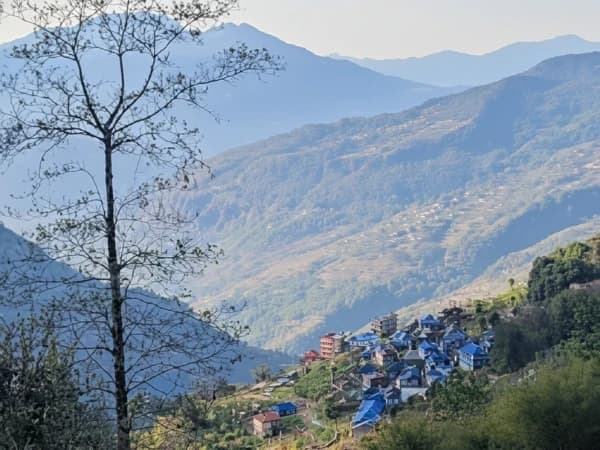
Tikhedhunga: The First Night on the Poon Hill Yoga Trek and the Foot of the Stone Steps
Tikhedhunga is a village at about 1,500 m at the foot of the Ulleri stone steps. Distances to Ghorepani, permits, best months and the trips that pass through.
Read More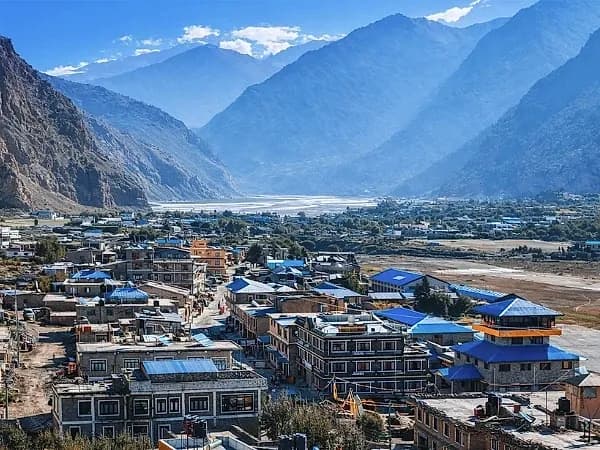
Tukuche: The Thakali Village on the Kali Gandaki Road
Tukuche is a Thakali trading village at about 2,590 m in the Kali Gandaki valley. Distances to Marpha and Kalopani, permits, best months and the trips that pass through.
Read More
Everest Base Camp Trek Cost from Uzbekistan: Soum Prices, Flights, Visa and Payment
Everest Base Camp trek cost from Uzbekistan: trek prices in dollars and soum, Tashkent to Kathmandu fares, visa on arrival, halal food and how to pay.
Read More Chat with Shreejan