
Indian citizens pay significantly less for Nepal trekking than Western tourists. No visa required. National park and conservation area permits cost SAARC nationals 50 to 67 percent less, though restricted-area permits such as Upper Mustang are the same for every foreign national. Domestic flights are charged at the Indian-national fare, which sits well below the foreigner fare. And the proximity, a two-hour flight from Delhi or a bus from the border, means transport costs are a fraction of what Europeans or Americans pay. Here is what a Nepal trek actually costs in Indian rupees.
What Permits Do Indian Citizens Need?
Indian citizens do not need a visa for Nepal. You enter with a valid passport or Voter ID card. That saves the USD 50 thirty-day visa fee (about INR 4,900) which the Department of Immigration charges every other nationality on arrival.
Trekking permits for SAARC nationals (India, Bangladesh, Sri Lanka, Pakistan, Bhutan, Maldives, Afghanistan) are significantly cheaper on national park and conservation area entry and on the TIMS card. National park fees are set by the Department of National Parks and Wildlife Conservation and the TIMS rates are published by the Nepal Tourism Board. Restricted-area permits are the exception: those are charged at the same rate to every foreign national, whatever the passport.
| Permit | SAARC Rate | Non-SAARC Rate | Savings |
|---|---|---|---|
| TIMS Card | NPR 1,000 (INR 625) | NPR 2,000 (INR 1,250) | 50% |
| Sagarmatha NP (Everest) | NPR 1,500 (INR 940) | NPR 3,000 (INR 1,875) | 50% |
| Annapurna ACAP | NPR 1,000 (INR 625) | NPR 3,000 (INR 1,875) | 67% |
| Langtang NP | NPR 1,500 (INR 940) | NPR 3,000 (INR 1,875) | 50% |
| Manaslu Restricted Area | USD 100/week (Sep–Nov), USD 75/week (Dec–Aug) | USD 100/week (Sep–Nov), USD 75/week (Dec–Aug) | None. The same for every foreign national |
| Upper Mustang Restricted Area | USD 50/day | USD 50/day | None. The same for every foreign national |
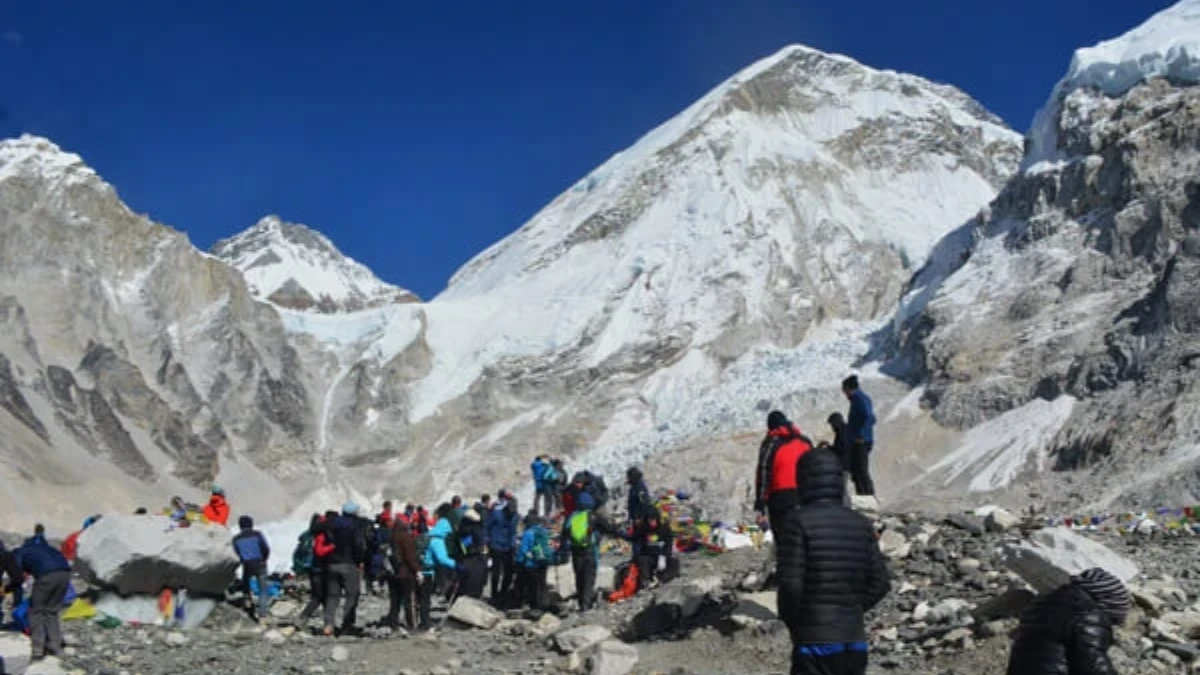
For the standard EBC trek, an Indian citizen pays NPR 5,500 in permits: Sagarmatha National Park NPR 1,500, the Khumbu Pasang Lhamu Rural Municipality fee of NPR 3,000 and a TIMS card at NPR 1,000. A British citizen pays NPR 8,000 for the same three permits. The saving is NPR 2,500, about INR 1,565, because the Khumbu fee is identical for everyone.
How Much Does an EBC Trek Cost for Indian Citizens?
| Item | Budget (INR) | Standard (INR) |
|---|---|---|
| Delhi to Kathmandu flight (return) | 8,000-15,000 | 12,000-20,000 |
| Trek package (12 days) | 1,34,000 | 2,39,000 |
| Kathmandu hotel (2 nights) | 2,000 | 5,000 |
| Daily extras on trail (12 days) | 10,000 | 15,000 |
| Tips (guide + porter) | 15,000 | 20,000 |
| Travel insurance | 3,000 | 5,000 |
| Sleeping bag, down jacket and duffel | 0 (provided free on every package) | 0 (provided free on every package) |
| Total | INR 1,72,000-1,79,000 | INR 2,96,000-3,04,000 |
Be clear about what the SAARC advantage actually is. The trek package itself is built on the same guide, porter and lodge costs whoever you are. What you save is the visa (about INR 4,700), the permit difference above, and cheaper flights because you are two hours away rather than ten.
What About Cheaper Treks?
Not everyone wants EBC. Here are the most popular treks for Indian visitors with budgets in INR:
| Trek | Days | Package (Budget INR) | Total Trip (INR) |
|---|---|---|---|
| Poon Hill | 6 | 47,800 | 86,000-93,000 |
| Mardi Himal | 7 | 43,500 | 82,000-89,000 |
| Langtang Valley | 8 | 34,900 | 73,000-80,000 |
| Annapurna BC | 9 | 47,800 | 86,000-93,000 |
| Everest BC | 12 | 1,34,000 | 1,72,000-1,79,000 |
| Annapurna Circuit | 12 | 69,000 | 1,07,000-1,14,000 |
The Langtang Valley trek is the best value for Indian trekkers who want a serious Himalayan experience. It starts from Kathmandu (no Pokhara transit), takes only a week, and the total trip cost under INR 80,000 is achievable. Poon Hill is the shortest and easiest option for those who just want to see the mountains.
How Do Indian Citizens Get to Nepal?
By air: Delhi to Kathmandu takes 1 hour 45 minutes. Budget airlines (IndiGo, SpiceJet) offer return fares from INR 8,000 to 15,000. Mumbai, Kolkata, Bangalore, and Varanasi also have direct flights. Book two to three months ahead for the best fares.
By land: Multiple border crossings are open to Indian citizens. The most popular are Sunauli/Bhairahawa (from Gorakhpur/Varanasi), Raxaul/Birgunj (from Patna), and Kakarbhitta (from Siliguri/Darjeeling). Cross the border on foot, take a bus or hire a car to Kathmandu. Total cost from Delhi by train + bus: INR 2,000 to 4,000. Time: 18 to 24 hours.
The land route is cheap but exhausting. For most trekkers, the flight is worth the extra money because it saves a full day each way and leaves you fresher for the trek.
Can Indian Citizens Use INR in Nepal?
Indian rupees (INR 100 notes and below) are accepted everywhere in Nepal. INR 200, 500, and 2,000 notes are NOT accepted, because Nepal Rastra Bank prohibits high-denomination Indian notes. Bring INR 100 notes or exchange for Nepali rupees at the border or in Kathmandu.
The exchange rate fluctuates around NPR 1.60 per INR 1. ATMs in Kathmandu dispense NPR and accept Indian debit cards (Visa/Mastercard). On the trekking trail, only cash works: no cards, no UPI, no digital payments above Namche Bazaar.
Carry enough NPR cash for the entire trek plus a reserve. For a 12-day EBC trek, NPR 15,000 to 25,000 (INR 9,000 to 15,000) covers daily extras, hot drinks, charging, and snacks. Withdraw in Kathmandu before departure.
What Is Different for Indian Trekkers vs Western Trekkers?
Altitude acclimatisation: Indian trekkers from plains cities (Delhi, Mumbai, Chennai) are no more acclimatised than European or American trekkers. Coming from India does not give you an altitude advantage unless you live above 2,000 metres already. The same acclimatisation rules apply.
Food: Nepal food is familiar to Indian palates. Dal bhat is essentially dal chawal with Nepali vegetables. Vegetarian options are available at every teahouse. The food on trek will feel more like home than it does for Western trekkers.
Licensed guide rule: Since April 2023, the Nepal Tourism Board rule has required a licensed guide in most trekking areas, including for Indian citizens. Solo trekking without a guide is not permitted in most trekking areas, and the Everest (Khumbu) region does not enforce the rule locally, but we always trek with a licensed guide. This applies equally to SAARC and non-SAARC nationals.
See our complete India to Nepal trekking guide for visa-free entry details, or browse our trekking packages with prices in USD (multiply by about 96 for approximate INR).
WhatsApp:+977 9810351300
Email:[email protected]
Written by Shreejan Simkhada, CEO of The Everest Holiday and third-generation Himalayan guide. TAAN Member #1586.
Booking from India? Two flagship treks for SAARC pricing: Annapurna Circuit 12 Days from USD 720 and Annapurna Base Camp 9 Days from USD 499. All permits arranged. WhatsApp us for INR pricing.
 Chat with Shreejan