Langtang in 2027: Fully Rebuilt, Closer Than You Think

Update, 26 August 2026: this page describes the valley as it was rebuilt after the 2015 earthquake, and all of that still stands. What has changed is the way in. On 26 August a large flood came down the Bhote Koshi and damaged the road and the settlements at Timure and Syabrubesi, which is the town every Langtang trek starts from. The Langtang Khola, the river the trek itself follows, is a different drainage and was not hit, so the trail is very probably fine and the open question is the road and the town rather than the walking. I have set out what is known so far, and the three things that will decide October, here. Please read that alongside this page.
Search for the Langtang Valley trek and you will still find first-page results describing a valley "in recovery", lodges "being rebuilt" and a community "getting back on its feet". Most of those pages were written between 2016 and 2019, and nobody has updated them since. The Langtang you will actually walk into in 2026 is a different place: the village has been completely rebuilt, the lodges are among the newest in Nepal, and in the last fiscal year more than 42,000 people trekked here, making it the country's third busiest trekking region after Annapurna and Everest.
I am Shreejan Simkhada, founder of The Everest Holiday, a family-run company in Kathmandu. I have guided Langtang myself, and I send groups up the valley every season, so what follows is not recycled from other websites. It is the current picture: what is rebuilt, what the new guide rule actually says (with the date it took effect), what the road is really like, and how the 2025 Rasuwagadhi flood did and did not change things.
If you would rather just ask a person, message us on WhatsApp (+977 9810351300). It is my team in Kathmandu, not a call centre, and we answer questions about Langtang every day. Otherwise, read on, this is everything that has changed.
Is Langtang village fully rebuilt in 2026?
Yes. Langtang village has been entirely rebuilt, roughly 100 metres further up the valley from its original site, in a position chosen to be safer from avalanche paths. The rebuild is not half-finished or ongoing: it was completed years ago, and because everything went up at once, Langtang and Kyanjin Gompa now have some of the newest lodge stock anywhere in Nepal. You will find three-storey lodges, bakeries serving fresh apple pie, wifi, solar hot showers and even a helipad. In the first eleven months of fiscal year 2024/25 alone, over 42,000 domestic and international visitors entered the Langtang and Gosaikunda area, comfortably ahead of pre-2015 numbers.
This matters because the "should I go, is it appropriate, is there anywhere to stay" worry still stops people booking. The honest answer in 2026 is that the valley's challenge is no longer recovery. It is managing popularity: peak-season beds at Kyanjin Gompa fill up, and locals now talk about crowd management the way Namche lodge owners do. Trekking here is not an act of charity any more. It is simply one of the best week-long treks in the Himalaya, and your money still goes overwhelmingly to families who own and run every lodge on the trail.
What happened here in 2015, and how should I talk about it?
On 25 April 2015, the Gorkha earthquake released a massive avalanche of ice and rock from the slopes above Langtang village. The village was buried almost entirely. 243 people died at the village itself, among them 175 villagers, 27 Nepali guides and lodge staff, and 41 foreign trekkers, and around 300 people were killed across the valley as a whole. A single house survived. Nearly every family in the valley lost someone.
I include this not for drama but because you will walk past the site, and how you behave there matters. The trail passes the old village, now a debris field left largely untouched, before reaching the new settlement. A memorial mani wall carries the names of all 243 people who died at the village.
Memorial etiquette on the trail
- Pass the memorial wall clockwise, keeping it on your left, as with every mani wall in the valley. Your guide will show you.
- Stay on the trail and off the old debris field. It is a grave site, not a viewpoint.
- Let locals raise 2015 first. Many will talk about it openly; others prefer not to. Follow their lead rather than asking lodge owners about it over dinner.
- The most respectful thing you can do is ordinary: sleep in locally owned lodges, hire Langtang-born guides and porters, and buy the yak cheese at Kyanjin.
Handled this way, the valley's history deepens the trek rather than darkening it. The rebuilt village is, frankly, a remarkable thing to see.
Do I need a guide for the Langtang trek in 2026?
Yes, a licensed guide is officially required. Two rules apply. First, the Nepal Tourism Board requirement for a licensed guide in most trekking areas, in force since April 2023 (the Everest (Khumbu) region does not enforce it locally). Second, and more specifically, Langtang National Park issued its own notice making guided trekking mandatory inside the park with effect from 15 February 2025, covering foreign and Nepali trekkers alike. The army and park checkpoints at Dhunche and Syabrubesi check permits and guide documents, and solo trekkers have been turned around or told to hire a guide on the spot.
You will read on forums that enforcement is uneven, and that is true of most rules in Nepal. My advice is simple: do not build a trekking holiday around hoping a checkpoint is unmanned. Guides can be hired in Syabrubesi, but availability is not guaranteed in October or April, and you get whoever happens to be free. Arranging it from Kathmandu means you know who is walking with you before you leave the city. Our 8-day Langtang Valley trek includes a licensed, English-speaking guide as standard, along with both permits, so the rule is simply not something you have to think about.
What permits do I need, and what do they cost?
Two documents: the Langtang National Park entry permit and a TIMS card. The park permit is NPR 3,000, roughly USD 22, with no VAT added on top. SAARC nationals pay NPR 1,500. The TIMS card is NPR 2,000 and is issued through a registered trekking agency, which fits neatly with the guide rule since the same agency arranges both.
| Item | 2026 cost | Notes |
|---|---|---|
| Langtang National Park permit | NPR 3,000 (flat, no VAT) | Buy in Kathmandu or at Dhunche; checked at every checkpoint |
| Same permit, SAARC nationals | NPR 1,500 | |
| TIMS card | NPR 2,000 | Arranged by your trekking agency |
| Local bus, Kathmandu to Syabrubesi | NPR 1,000–1,500 | 8–10 hours, departs Machhapokhari early morning |
| Shared jeep | NPR 1,500–2,500 per seat | 5–7 hours |
| Private jeep | USD 160–200 per vehicle | Door to door; good value split between 3–4 people |
| Food and lodging on the trail | ~USD 25–35 per day | Dal bhat NPR 600–900 at altitude; rooms NPR 500–800 |
There are no ATMs after Kathmandu, so carry all your cash in rupees, with a margin for wifi, hot showers and charging, which cost NPR 300–500 each at the higher lodges.
How do I get to Langtang, and how bad is the road really?
You drive, which is Langtang's quiet superpower: no Lukla flight, no weather cancellations, no USD 400 airfare. The trailhead at Syabrubesi is about 122 kilometres from Kathmandu. A local bus from Machhapokhari (by the New Bus Park) takes 8–10 hours; a shared jeep takes 5–7; a private jeep is the same road but on your own schedule, with hotel pickup.
Now the honest part, because this is one of the top three worries people message us about. The road is paved as far as Trishuli, then turns to rough, rocky gravel in sections, with a known landslide-prone stretch a few kilometres before Dhunche. It is uncomfortable in places and slow after rain, but thousands of trekkers ride it every month and it is worked on continually. I will not tell you a jeep is "dramatically safer" than the bus, because it is the same road. What the jeep genuinely buys you is two to four hours less of it, a guaranteed seat, and flexibility if a section needs clearing. For a group of three or four splitting USD 160–200, it is an easy decision; solo travellers on a budget still take the bus and arrive fine.
Did the 2025 Rasuwagadhi flood close the Langtang trek?
No, and this is worth stating clearly because the headlines confused a lot of people. On 8 July 2025, a glacial lake outburst flood from Tibet tore down the Bhote Koshi, destroyed the Nepal–China Friendship Bridge at Rasuwagadhi and wrecked the road between Syabrubesi and the Tibetan border. That damaged stretch lies north of Syabrubesi, beyond the trailhead, on the road to China. The road trekkers use, Kathmandu to Syabrubesi, was not the section that was destroyed, and the Langtang trail itself, which climbs east from Syabrubesi up a different valley, was unaffected. The autumn 2025 season ran normally, and access in 2026 is normal.
The one caveat is for anyone planning a side trip north to Timure or the Rasuwagadhi border area itself, which saw long closures after the flood. That is a border-road excursion, not part of the Langtang Valley trek, and we confirm its status with our guides before including it in any itinerary.
Kyanjin Ri or Tserko Ri: which viewpoint should I do?
Do Kyanjin Ri first, and add Tserko Ri only if you have a second night at Kyanjin Gompa and feel strong. That is the short answer; here is the honest comparison.
| Kyanjin Ri | Tserko Ri | |
|---|---|---|
| Height | 4,773 m at the upper summit (lower viewpoint around 4,300–4,600 m) | ~4,984 m, just under the 5,000 m mark |
| Time from Kyanjin Gompa | 2–4 hours round trip | 7–9 hours round trip, pre-dawn start |
| Effort | Steep but short; most trekkers manage it | The hardest optional day in the valley, roughly 1,100 m of gain |
| Views | Superb: Langtang Lirung, Kimshung, the glacier | The full panorama, including peaks hidden from Kyanjin Ri; the bigger payoff |
| Skippable? | Do not skip this one | Entirely optional, and plenty of people rightly skip it |
Both are day hikes from Kyanjin Gompa at 3,870 metres, which is why the altitude profile of this trek is friendlier than the numbers suggest: you climb high but sleep back at the same lodge. If a nearly 5,000-metre summit matters to you, tell us when you book and we will build the extra night in. On heights, one note of honesty: sources put Tserko Ri anywhere from 4,965 to 5,033 metres, so we say "just under 5,000" rather than pretending to precision nobody has.
What are the lodges actually like now?
Better than you expect, with one honest exception. Because everything at Langtang and Kyanjin was built in the last decade, standards are high for a teahouse trek: attached bathrooms in the newer lodges, solar hot showers, good bakeries, NTC phone signal all the way to Kyanjin Gompa, and wifi at most stops. The exception is Lama Hotel, the forest settlement where nearly everyone sleeps on night one. It sits in a shady gorge, the buildings are older and more basic, and no amount of brochure language changes that. One plain night, then it gets better every day, and Kyanjin Gompa even has Nepal's oldest cheese factory, founded with Swiss help in 1955 and rebuilt after 2015. Buy the yak cheese; it is genuinely good and the money stays in the valley.
We keep a fuller lodge-by-lodge rundown in our teahouse guide, and if you want to compare Langtang with the Gosaikunda and Tamang Heritage routes that share the same park and permits, our Langtang region page lays out all the options side by side.
When should I go, and what does the trek cost in 2026?
October–November and March–May remain the reliable windows, with one caveat most operators will not print: in March and April, haze drifting up from the Kathmandu valley can dull the views on the lower days, so if crystal air is your priority, late autumn or even early winter is better. December and January work well to Kyanjin Gompa with proper gear and microspikes for the viewpoint days, and you will have the trail nearly to yourself. Monsoon (June to mid-September) is honestly not worth it for most people: landslide risk on both trail and road, leeches in the lower forest and few views.
On cost, a fair guided package for 7–8 days runs USD 550–900 depending on group size, transport choice and what is included; be wary of any quote that will not itemise. Our Langtang Valley trek covers both permits, a licensed guide, accommodation, meals on the trail and transport from Kathmandu, and the page breaks the price down line by line, because after ten years in this business I know exactly which questions you are going to ask, and "what am I actually paying for" is the first one.
Why Langtang, and why now?
Because it is the trek where reality has overtaken reputation. The websites say "rebuilding"; the valley says otherwise, with new lodges, full dining rooms and 42,000 visitors a year. It is the closest major trekking valley to Kathmandu, the only one of Nepal's big three regions you can reach without a flight, and a week here delivers glacier views, two optional near-5,000-metre summits, Tamang hospitality and a story of recovery that locals are proud to share on their own terms.
If you are weighing it up for 2026, talk to us. Message my team on WhatsApp (+977 9810351300) with your dates and fitness level and we will tell you straight whether Langtang fits, whether to add the Tserko Ri night, and what the road is doing that week. No obligation, and you will be speaking with people who have walked every step of it.
Planning a trip to Nepal?
Drop us your details and tell us what you have in mind. We will put together a personalised plan and get back to you.
Not sure which Nepal trek is right for you?
Take our free 2-minute quiz and get personalised recommendations based on your fitness, experience, and travel style.
Find Your Perfect Trek →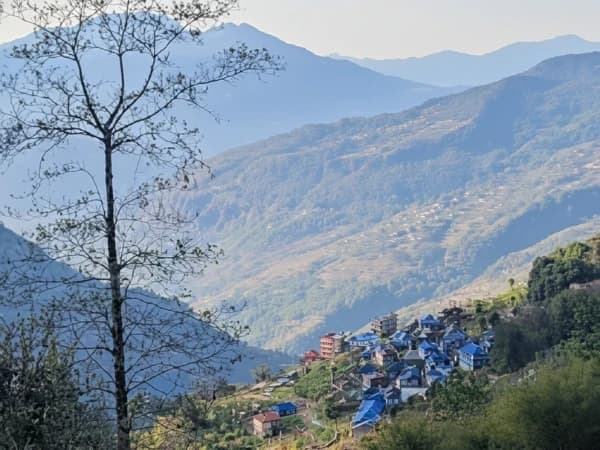
Tikhedhunga: The First Night on the Poon Hill Yoga Trek and the Foot of the Stone Steps
Tikhedhunga is a village at about 1,500 m at the foot of the Ulleri stone steps. Distances to Ghorepani, permits, best months and the trips that pass through.
Read More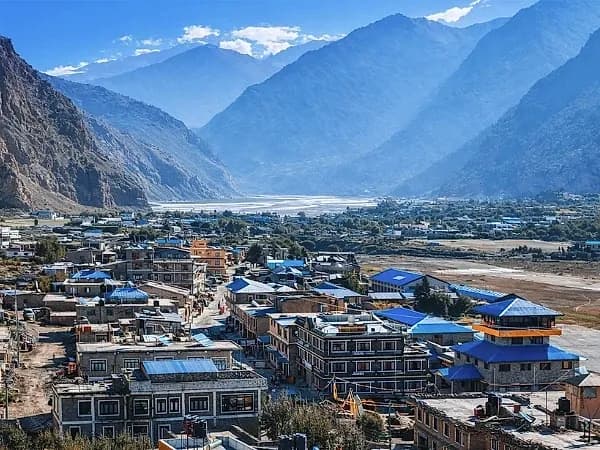
Tukuche: The Thakali Village on the Kali Gandaki Road
Tukuche is a Thakali trading village at about 2,590 m in the Kali Gandaki valley. Distances to Marpha and Kalopani, permits, best months and the trips that pass through.
Read More
Everest Base Camp Trek Cost from Uzbekistan: Soum Prices, Flights, Visa and Payment
Everest Base Camp trek cost from Uzbekistan: trek prices in dollars and soum, Tashkent to Kathmandu fares, visa on arrival, halal food and how to pay.
Read More Chat with Shreejan