Everest Base Camp Trek Cost From Australia: The Real All-In Numbers for 2027

Last updated 7 October 2026. I searched Sydney return fares that morning. Australian dollars are converted at US$1 = AUD 1.432, the European Central Bank rate of 6 October 2026, and they shift daily. You settle with us in US dollars.
Australians get one small break on this trip: the clock gap is short. Sydney has been on UTC+11 since 4 October and Nepal is on UTC+5:45, so Nepal is 5 hours 15 minutes behind you, which keeps jet lag mild even though the flight is long.
The Everest Holiday is a family firm in Kathmandu, registered in 2016, with three generations of guides in the family. For one to four people the Base Camp trek runs US$1,399 (Budget), US$2,499 (Standard) or US$4,999 (Luxury) each, about AUD 2,000, AUD 3,580 and AUD 7,160. The 2027 prices are the same. With flights from Sydney, a visa, insurance and tips, one traveller should budget roughly AUD 4,480 to AUD 5,360 on Budget, AUD 5,810 to AUD 6,530 on Standard travelling solo and AUD 9,570 to AUD 10,370 on Luxury.
The all-in table in Australian dollars
One person, group of one to four. The flight column is the cheapest and dearest Sydney fare I saw. The second-last column bundles the 30-day visa, insurance, tips, and Budget trail meals or Standard and Luxury spending money. Kathmandu hotels are quoted separately in every tier; our own family homestay is US$15 per person per night, about AUD 20.
| Tier (one person) | Trek | Sydney return fare | Visa, insurance, tips and trail costs | Everything |
|---|---|---|---|---|
| Budget | AUD 2,000 | AUD 1,647 to AUD 1,999 | AUD 830 to AUD 1,360 | AUD 4,480 to AUD 5,360 |
| Standard, solo (no porter) | AUD 3,580 | AUD 1,647 to AUD 1,999 | AUD 590 to AUD 950 | AUD 5,810 to AUD 6,530 |
| Luxury | AUD 7,160 | AUD 1,647 to AUD 1,999 | AUD 760 to AUD 1,210 | AUD 9,570 to AUD 10,370 |
Budget trekkers pay for meals as they go, about US$25 to US$40 a day (US$300 to US$480 in all). On Standard and Luxury, meals are covered and NPR 20,000 to 30,000 (US$130 to US$195) handles the extras. Carry rupees from Kathmandu; the Namche cash machines are often empty.
Getting from Sydney to Kathmandu
No nonstop came up in my search (economy, one checked bag, out Sunday 25 October 2026, back Wednesday 11 November, at most one change each way). Four routings kept coming back.
Air India via Delhi both ways was the cheapest at AUD 1,647: you leave Sydney at 22:30 and reach Kathmandu at 16:10 the next day, about 23 hours, and the trip home is about 21 hours. Sichuan Airlines via Chengdu was the quickest outbound at about 18 hours 20 minutes, with a China Southern return, for AUD 1,871. Qatar Airways via Doha out and China Southern via Guangzhou home was AUD 1,859. China Southern out via Guangzhou with Air India home was AUD 1,865. Thai Airways via Bangkok on the return, paired with a China Southern or Sichuan outbound, ran AUD 1,891 to AUD 1,959. The dearest was AUD 1,999.
So the range was AUD 1,647 to AUD 1,999. Any routing through China is a transit, so check the transit rules for your passport before booking. I priced Sydney only; Melbourne, Brisbane and Perth travellers should search their own city.
Visa, in Australian terms
On arrival at Kathmandu airport an Australian passport buys a tourist visa: 15 days for US$30, 30 days for US$50 (about AUD 70) or 90 days for US$125, paid in US dollars. The online form can be done first. Passports normally need six months of validity, plus one photo. Australia is not one of the 12 nationalities that need a visa in advance. More in the e-visa guide.
Medicare stops at the Australian border
Australia's reciprocal health agreements cover a handful of countries, and Nepal is not one. Medicare will not follow you. Buy travel insurance in Australia before you fly, and not in Nepal.
Open the product disclosure statement and find: trekking to 6,000 metres, because the Kala Patthar viewpoint is 5,545 m; helicopter rescue; illness cover; repatriation. Free card cover often excludes altitude trekking. Helicopter evacuation from Base Camp costs US$3,000 to US$5,000, about AUD 4,300 to AUD 7,150. A basic two to three week trekking policy is typically US$50 to US$100 and a full one US$100 to US$180. Send us the wording and we will read it. Read helicopter cover to 6,000 m.
What each tier looks like
Budget is you, your pack, a shared room and your own meals, flying fixed-wing to Lukla. Standard has all meals, private rooms and a porter shared between two. Luxury has a dedicated porter, private ensuite rooms, fruit, nuts and soft drinks, and helicopters to and from Lukla. A licensed guide, permits, airport transfers and a borrowed down jacket and minus 15 sleeping bag come with all three. Solo on Standard, the guide carries up to 10 kg for you. There is no single supplement. Gorak Shep, 5,164 m, is the highest night. Details on the trek page.
Is it hard, and how do you prepare?
Mount Kosciuszko, the highest point on the Australian mainland at 2,228 m, is lower than Lukla (2,860 m), so there is no home rehearsal for the thin air. Walk hills with a loaded pack on consecutive days, and treat the itinerary's two acclimatisation days as part of the plan. Read how fit you need to be.
Group rates
| Tier | 1 to 4 | 5 to 8 | 9 to 12 | 13 to 20 |
|---|---|---|---|---|
| Budget | US$1,399, about AUD 2,000 | US$1,299, about AUD 1,860 | US$1,199, about AUD 1,720 | US$999, about AUD 1,430 |
| Standard | US$2,499, about AUD 3,580 | US$2,449, about AUD 3,510 | US$2,399, about AUD 3,440 | US$2,349, about AUD 3,360 |
| Luxury | US$4,999, about AUD 7,160 | US$4,949, about AUD 7,090 | US$4,899, about AUD 7,020 | US$4,849, about AUD 6,940 |
Same price whether it is just your group or a scheduled departure; the band is all that changes.
School terms and the best two windows
Autumn falls in Term 4, which is a hard sell for families, so it suits couples, solo travellers and anyone with flexible work. For families the April holidays are the thing. Easter 2027 runs from Good Friday, 26 March, to Easter Monday, 29 March. In Victoria and Queensland Term 1 ends on 25 March and Term 2 starts on 12 April; in New South Wales Term 1 ends on 9 April and Term 2 starts on 29 April. April is warm, with rhododendrons in flower, and spring trekking is at its fullest. In Nepal, Dashain is 17 to 23 October and Tihar 8 to 12 November 2026, when offices close; permits need 48 hours in working days.
In the busy windows, about 15 March to 15 May and 25 September to 30 November, fixed-wing flights go from Manthali, four to five hours from Kathmandu by road with a pick-up between midnight and 2 am. Luxury uses the helicopter from Kathmandu.
Payment from Australia
A 10 per cent deposit secures the date. You pay the rest on arrival in Kathmandu in US dollars or euros, by cash or card; cards carry 3.5 per cent and cash does not. We cannot take Australian dollars or Nepali rupees. If your plans change, we will move you free to any date within a year with 72 hours notice (seven days for Tibet, Kailash and restricted areas). If you cancel instead, the deposit is not refunded and nothing else comes back. If we cannot run the trek, you receive what you paid less taxes, charges and spent permit and flight money.
Smartraveller and the embassy
Subscribe to the Smartraveller advice for Nepal before you leave. The Australian Embassy is in Bansbari, about 300 metres north of Narayan Gopal Chowk on the Ring Road, and works by appointment.
Check us
We have been registered since 2016 and sit on the TAAN roll as member 1586; over 300 reviews are on TripAdvisor, Google and Trustpilot. You can verify us at the company registrar, TAAN, the tourism licence office and through our forex certificate. Licences prove little on their own, since licensed operators have also been involved in scams, so ask for a call. Bookings help fund our Nagarjun Learning Center.
For a quote on your own dates, message me on WhatsApp, +977 9810351300 or email [email protected]. I answer myself.
See also the cost guide, Nepal trekking from Australia and permits and fees.
By Shreejan Simkhada, CEO of The Everest Holiday, Kathmandu. TAAN member 1586.
Planning a trip to Nepal?
Drop us your details and tell us what you have in mind. We will put together a personalised plan and get back to you.
Not sure which Nepal trek is right for you?
Take our free 2-minute quiz and get personalised recommendations based on your fitness, experience, and travel style.
Find Your Perfect Trek →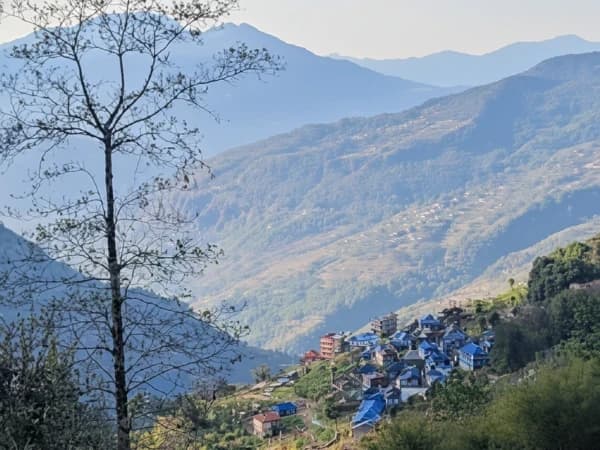
Tikhedhunga: The First Night on the Poon Hill Yoga Trek and the Foot of the Stone Steps
Tikhedhunga is a village at about 1,500 m at the foot of the Ulleri stone steps. Distances to Ghorepani, permits, best months and the trips that pass through.
Read More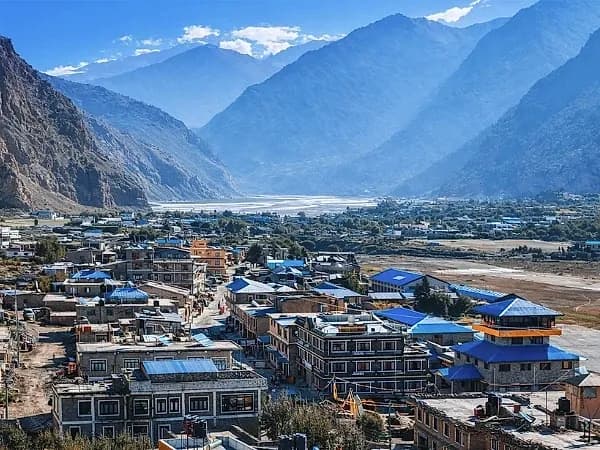
Tukuche: The Thakali Village on the Kali Gandaki Road
Tukuche is a Thakali trading village at about 2,590 m in the Kali Gandaki valley. Distances to Marpha and Kalopani, permits, best months and the trips that pass through.
Read More
Everest Base Camp Trek Cost from Uzbekistan: Soum Prices, Flights, Visa and Payment
Everest Base Camp trek cost from Uzbekistan: trek prices in dollars and soum, Tashkent to Kathmandu fares, visa on arrival, halal food and how to pay.
Read More Chat with Shreejan