
Everest Base Camp Trek Cost From the USA: The Real All-In Numbers for 2027
Last updated 7 October 2026. Fares were checked that day for return trips from New York. Everything here is in US dollars, the same currency you pay us in, so there is no exchange rate to worry about.
I'm Shreejan, and my family's company, The Everest Holiday, was registered in 2016. We are three generations of family guides. If you are calling from the United States, the number I would want first is this: for one traveller on Standard, flights from New York included, the whole trip comes to about US$4,200 to US$4,850. Budget lands near US$3,300 to US$4,000 and Luxury near US$6,800 to US$7,500. Our 12-day trek is US$1,399, US$2,499 or US$4,999 per person (Budget, Standard, Luxury) at group sizes of one to four, held for 2027.
Where do the dollars go?
This table is for one person and shows the lowest and highest New York fare I found. The next column covers the 30-day visa, insurance, tips and either trail meals (Budget) or pocket money (Standard and Luxury). Kathmandu hotels are quoted separately in every tier; our own family homestay is US$15 per person per night.
| Tier, one person | Package | Flight | Visa, insurance, tips, extras | Total |
|---|---|---|---|---|
| Budget | US$1,399 | US$1,296 to US$1,668 | US$600 to US$950 | US$3,300 to US$4,000 |
| Standard, solo (no porter) | US$2,499 | US$1,296 to US$1,668 | US$400 to US$650 | US$4,200 to US$4,850 |
| Luxury | US$4,999 | US$1,296 to US$1,668 | US$550 to US$850 | US$6,800 to US$7,500 |
Budget travellers buy their own meals on the trail: US$25 to US$40 a day, so roughly US$300 to US$480. Standard and Luxury have meals included, and NPR 20,000 to 30,000 (US$130 to US$195) is enough for showers, charging and snacks. Change money in Kathmandu, as the only ATMs are in Namche and often empty.
Tips are US$15 to US$20 a day for the lead guide and US$10 to US$15 for a porter, handed over on the last day.
New York to Kathmandu on 7 October
You cannot fly nonstop from the United States to Nepal. I searched economy for one traveller, leaving Sunday 25 October 2026 and returning Wednesday 11 November, with at most one change each way. The cheapest result was US$1,296.
That fare was Air India both ways. You leave JFK at 12:55, reach Delhi at 14:25 the next afternoon and land in Kathmandu at 20:40 that evening, about 22 hours door to door. Coming home you fly to Delhi and on to Newark, arriving at 06:55 the next morning. Two checked bags were included. Qatar Airways via Doha out of JFK took about 17 hours 30 minutes and landed at 14:35; with an Air India return it cost US$1,667 to US$1,668.
So the New York range that day was US$1,296 to US$1,668. I did not price Los Angeles, San Francisco or Seattle. From the West Coast you add a leg at the front, so search your own airport and expect a longer day.
Entry rules
US citizens get a tourist visa on arrival at Kathmandu airport. The Department of Immigration charges US$30 for 15 days, US$50 for 30 days and US$125 for 90, in dollars. Fill in the online form first if you like and print the receipt. Bring a passport with roughly six months of validity and one photo. Nepal's list of 12 nationalities that must apply in advance does not include Americans. See the visa on arrival guide.
Enrol in the State Department's Smart Traveler Enrollment Program before you go so the embassy can reach you.
What your health plan will not do in Nepal
Your employer plan and Medicare generally pay little or nothing outside the United States, and none of them covers a helicopter in the Khumbu. Buy a travel policy at home; we do not recommend buying one in Nepal.
Four lines must appear in the policy: trekking up to 6,000 metres (19,685 feet), which clears Kala Patthar at 5,545 m (18,192 feet); helicopter evacuation; coverage for illness, not only injury; and medical repatriation. Card benefits often exclude high-altitude trekking and many standard plans cap at 3,000 or 4,000 metres. Some travellers pair an ordinary travel policy with a separate evacuation membership, which works if both documents say what you need. Evacuation from Base Camp to Kathmandu is US$3,000 to US$5,000. Basic trekking cover runs about US$50 to US$100 for two to three weeks, a full policy US$100 to US$180. See helicopter cover to 6,000 m.
How high is Base Camp next to home?
Base Camp is 5,364 m, about 17,600 feet, higher than any mountain in the lower 48 states. You sleep as high as Gorak Shep at 5,164 m, about 16,940 feet, and the Kala Patthar viewpoint is 5,545 m. Lukla, where you start, is 2,860 m. That is why the 12 days include two acclimatisation days, and I will not cut them to suit a short holiday.
Which package should an American pick?
- Budget: you carry your pack, shared rooms, no meals, fixed-wing flight to Lukla.
- Standard: all meals, private rooms, one porter between two trekkers.
- Luxury: a porter just for you, deluxe ensuite rooms, fruit, nuts, unlimited soft drinks, helicopter to Lukla and back.
All three bring a licensed guide, all permits (about NPR 8,000 in total, roughly US$52), airport pick-up and a loaned down jacket and minus 15 sleeping bag. Travelling alone on Standard means no porter and the guide takes up to 10 kg of your gear; Luxury solo keeps its own porter. No single supplement on this trek: the guide meets you in Lukla. See the trek page and the day-by-day itinerary.
Is it hard, and how do you prepare?
If a full day in the Rockies or the Adirondacks leaves you tired but happy, you are fit enough. Patience matters more than speed at altitude, and the two acclimatisation days are not negotiable. Read how fit you need to be.
Group prices
| Group size | Budget | Standard | Luxury |
|---|---|---|---|
| 1 to 4 | US$1,399 | US$2,499 | US$4,999 |
| 5 to 8 | US$1,299 | US$2,449 | US$4,949 |
| 9 to 12 | US$1,199 | US$2,399 | US$4,899 |
| 13 to 20 | US$999 | US$2,349 | US$4,849 |
Private or group, same price per person; only the size band moves it.
How many days off, and when?
Plan 17 or 18 calendar days for the autumn snapshot, because the long routes eat two days each way. Until Sunday 1 November 2026, when US clocks go back, Nepal is 9 hours 45 minutes ahead of New York and 12 hours 45 minutes ahead of Los Angeles; after that the gap grows by an hour. Land, sleep, and take a full day in Kathmandu before the Lukla flight.
Two American dates help. Thanksgiving is Thursday 26 November 2026, when the trails are cold, clear and quiet. In spring, Memorial Day is Monday 31 May 2027, near the end of the season. Nepal's own Dashain is 17 to 23 October and Tihar 8 to 12 November 2026, when offices close, and permits need 48 hours in government working days, so send dates early. From late September to the end of November Lukla flights leave from Manthali, four to five hours by road with a pick-up between midnight and 2 am.
Paying from the United States
The 10 per cent deposit goes on a card through our website, and the rest is paid in Kathmandu in dollars or euros, cash or card (3.5 per cent extra on card, none on cash). If a card is declined, a call to your bank usually clears it, since some US banks block a first payment to Nepal. No Nepali rupees from foreign clients. Plans change: free rescheduling with 72 hours notice (seven days for Tibet, Kailash, restricted areas) to any date inside a year. Client cancels: the deposit is not refunded. We cancel: you get back what you paid minus taxes, bank or card charges and sums already spent.
If you need your embassy
The U.S. Embassy in Kathmandu is in Maharajgunj, and its American Citizen Services unit handles lost passports and emergencies.
Trust, but check
Trekking scams in Nepal are real, so do not take my word for it. We were registered in 2016, TAAN member number 1586, with over 300 reviews on TripAdvisor, Google and Trustpilot. The registers are public: company registrar, TAAN, tourism licence, central bank forex certificate. Even licensed firms have been caught in scams. Ask for a video call before sending a deposit. A share of every booking funds our Nagarjun Learning Center.
If you would rather ask than read, message me on WhatsApp, +977 9810351300 or email [email protected]. I answer myself.
More: the full cost guide, Nepal trekking from the USA and permits and fees.
This guide was written by Shreejan Simkhada, CEO and co-founder of The Everest Holiday, a company registered in 2016 by a family with three generations of guides.
Planning a trip to Nepal?
Drop us your details and tell us what you have in mind. We will put together a personalised plan and get back to you.
Not sure which Nepal trek is right for you?
Take our free 2-minute quiz and get personalised recommendations based on your fitness, experience, and travel style.
Find Your Perfect Trek →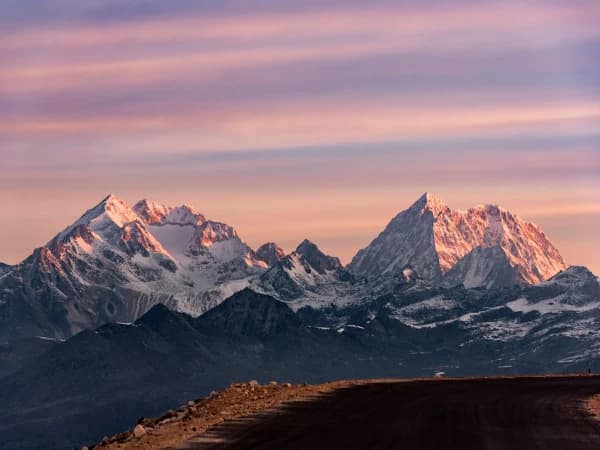
Swanta: The Magar Village on the Khopra Danda Descent, and What the Walk Down Is Like
Swanta is a Magar village at 2,214 m on the way down from the Khopra ridge to Ghorepani. The long descent, the night in the village, the walk to Ghorepani and the treks that stop here.
Read MoreDobato on the Khopra Danda Trail: The Tree-Line Night Stop Above Tadapani
Dobato is a handful of lodges at the tree line, 3,420 m, on the Khopra Danda trail. The climb from Tadapani, the Dhaulagiri evening view, the Muldai sunrise and why we sleep here.
Read More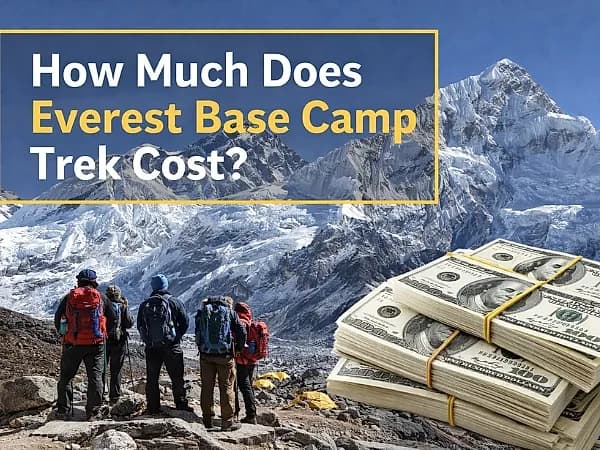
Everest Base Camp Trek Cost from Argentina: Peso Prices, Flights, Visa and Payment
Everest Base Camp trek cost from Argentina: trek prices in dollars and pesos, Buenos Aires to Kathmandu fares and journey time, visa on arrival, Spanish on the trail and how to pay.
Read More Chat with Shreejan