Everest Base Camp Trek Cost From Canada: The Real All-In Numbers in CAD for 2027

Last updated 7 October 2026. Toronto fares were searched on the day. I convert at US$1 = CAD 1.425 (European Central Bank, 6 October 2026), and expect that to drift. Our own prices are in US dollars.
A Canadian has two currencies to keep in mind. The trek is priced in US dollars, which you pay in Kathmandu in cash or by card, and your flight is priced in Canadian dollars.
My family has guided in the Himalayas for three generations, and we registered The Everest Holiday as a company in 2016. The trek costs US$1,399 on Budget, US$2,499 on Standard and US$4,999 on Luxury per head for groups of one to four, so about CAD 1,990, CAD 3,560 and CAD 7,120 in your currency. 2027 prices are unchanged. Add flights from Toronto, a visa, insurance and tips and one person pays about CAD 5,720 to CAD 7,250 on Budget, CAD 7,050 to CAD 8,410 on Standard travelling solo, and CAD 10,780 to CAD 12,230 on Luxury.
Where the Canadian dollars go
Everything is per person. Flights show the lowest and highest Toronto fare. Then come the 30-day visa, insurance, tips, and either meals on the trail (Budget) or spending money (Standard and Luxury). Kathmandu hotels are quoted separately in every tier; our own family homestay is US$15 per person per night, about CAD 20.
| Per traveller | Package | Toronto fares | Visa, insurance, tips, extras | All in |
|---|---|---|---|---|
| Budget | CAD 1,990 | CAD 2,904 to CAD 3,905 | CAD 830 to CAD 1,350 | CAD 5,720 to CAD 7,250 |
| Standard, solo (no porter) | CAD 3,560 | CAD 2,904 to CAD 3,905 | CAD 580 to CAD 950 | CAD 7,050 to CAD 8,410 |
| Luxury | CAD 7,120 | CAD 2,904 to CAD 3,905 | CAD 760 to CAD 1,200 | CAD 10,780 to CAD 12,230 |
For the trail itself: meals are your cost on Budget, US$25 to US$40 a day, or US$300 to US$480 in total. They are included on Standard and Luxury, where NPR 20,000 to 30,000 (US$130 to US$195) covers extras. Withdraw rupees in Kathmandu, because the Namche cash machines are often empty.
Toronto to Kathmandu is a long day, and sometimes two
No flight is nonstop. For the search I chose economy, one checked bag, a Sunday 25 October 2026 departure, a Wednesday 11 November return and no more than one stop each way.
The cheapest, CAD 2,904, was Air India both ways via Delhi, with two checked bags included. You leave Toronto at 12:15, reach Delhi at 13:30 the next day and land in Kathmandu at 20:40, about 22 hours 40 minutes. The way back is about 20 hours 45 minutes. Air India out with Cathay Pacific home via Hong Kong was CAD 2,951. Qatar Airways out via Doha was CAD 3,160 to CAD 3,601 with a return on Air India, Cathay Pacific or Qatar, and several of those landed a full day later because of a long wait in Doha. Emirates out via Dubai, landing in Kathmandu at 23:30, was CAD 3,244 to CAD 3,608. The dearest, CAD 3,831 to CAD 3,905, mixed Air India or Qatar out with a Qatar return.
The range was CAD 2,904 to CAD 3,905. I priced Toronto only. Vancouver, Calgary and Montreal travellers should search their own city, because the route and the price can change a lot.
Arriving with a Canadian passport
A Canadian passport gets a tourist visa at Kathmandu airport on arrival. The Department of Immigration price list is 15 days US$30, 30 days US$50 (about CAD 70), 90 days US$125, in US dollars. The online form can be completed in advance. Keep six months of validity on your passport and carry one photo. Canada is not on the list of 12 nationalities needing a visa in advance. Steps in the e-visa guide.
Your provincial plan stops at the border
Provincial health plans pay little or nothing outside Canada, and none pays for a helicopter in Nepal. Buy a travel policy in Canada before you leave. We do not recommend insurance bought in Nepal.
In the policy wording look for trekking up to 6,000 metres (Kala Patthar is 5,545 m), emergency helicopter evacuation, illness and not only injury, and repatriation. Credit card and employer benefits frequently cap altitude or exclude trekking. A Base Camp to Kathmandu helicopter costs US$3,000 to US$5,000, about CAD 4,300 to CAD 7,100. For two to three weeks, basic trekking cover is typically US$50 to US$100, full cover US$100 to US$180. We read the wording if you send it. More: helicopter cover to 6,000 m.
What the tiers change
Here is what changes between tiers. Porters: none on Budget, one per two trekkers on Standard, one each on Luxury. Meals: not included on Budget, all included on the other two, with fruit, nuts and soft drinks on Luxury. Rooms: shared, private, private deluxe ensuite. Lukla: fixed-wing, fixed-wing, helicopter both ways. What does not change: a licensed guide, the three permits (NPR 3,000, NPR 3,000 and NPR 2,000), airport transfers, and a loaned down jacket and minus 15 sleeping bag. Alone on Standard, no porter; the guide carries up to 10 kg. No single supplement on Standard or Luxury. On Budget, a solo Everest Base Camp trekker pays US$2,275 instead of US$1,399. The highest night is Gorak Shep, 5,164 m. See the trek page.
Is it hard, and how do you prepare?
Canadians from the Rockies and British Columbia know hills; Ontario's highest point, Ishpatina Ridge, is 693 m, so Toronto trekkers should add stair and weekend-hill training. We grade the trek strenuous, with five to seven hours a day and a night at 5,164 m. Read how fit you need to be.
Group rates in Canadian dollars
- 1 to 4 travellers: Budget CAD 1,990, Standard CAD 3,560, Luxury CAD 7,120 each (US$1,399, US$2,499, US$4,999).
- 5 to 8 travellers: Budget CAD 1,850, Standard CAD 3,490, Luxury CAD 7,050 each (US$1,299, US$2,449, US$4,949).
- 9 to 12 travellers: Budget CAD 1,710, Standard CAD 3,420, Luxury CAD 6,980 each (US$1,199, US$2,399, US$4,899).
- 13 to 20 travellers: Budget CAD 1,420, Standard CAD 3,350, Luxury CAD 6,910 each (US$999, US$2,349, US$4,849).
Private or shared, the rate depends only on how many of you there are.
Fitting it around a Canadian calendar
Thanksgiving was Monday 12 October 2026 and will not help this autumn. Remembrance Day is Wednesday 11 November, the day our snapshot flies home. For spring 2027, Good Friday is 26 March and Victoria Day is Monday 24 May, which bracket a long and good trekking season. Nepal has Dashain on 17 to 23 October and Tihar on 8 to 12 November 2026, when offices close, and permits need 48 hours in government working days.
Toronto is on daylight time until Sunday 1 November 2026. Until then Nepal is 9 hours 45 minutes ahead of Toronto and 12 hours 45 minutes ahead of Vancouver; after that the gap grows by an hour. Put a spare night in Kathmandu between landing and the Lukla flight.
Paying from Canada
Ten per cent confirms the booking. Pay the remainder in Kathmandu, in US dollars or euros, cash or card; the card adds 3.5 per cent and your bank may add its own fee. We do not take Canadian dollars or Nepali rupees. Rescheduling is free with 72 hours notice (seven days for Tibet, Kailash and restricted areas) within a year. If you cancel instead, the deposit and anything else you have paid are not refunded. If we are the ones who cannot run it, you get back what you paid less taxes, charges and expenses already incurred.
Canada's consulate in Kathmandu
The Government of Canada lists a consulate in Kathmandu led by an honorary consul, with the High Commission in New Delhi managing the relationship with Nepal. Read the travel advice for Nepal and note the 24-hour emergency line published there.
Verify us first
Registered in 2016, TAAN member 1586, and reviewed by more than 300 travellers across TripAdvisor, Google and Trustpilot. Verify us at the company registrar, with TAAN, through the tourism licence and our forex certificate, then talk to me. Being licensed does not prove honesty, because licensed operators have been involved in scams too. Each booking helps fund our Nagarjun Learning Center.
To get real figures for your group, message me on WhatsApp, +977 9810351300 or email [email protected]. I answer myself.
See also the cost guide, Nepal trekking from Canada and permits and fees.
Written by Shreejan Simkhada. The Everest Holiday, Kathmandu; family guides across three generations; TAAN 1586.
Planning a trip to Nepal?
Drop us your details and tell us what you have in mind. We will put together a personalised plan and get back to you.
Not sure which Nepal trek is right for you?
Take our free 2-minute quiz and get personalised recommendations based on your fitness, experience, and travel style.
Find Your Perfect Trek →
Kathmandu Yoga Tour in 2 Days: How It Runs and What It Costs (2027)
Two days of asana, breathwork, meditation and yoga philosophy in Kathmandu with a certified instructor: how it runs, what each tier includes and 2027 prices.
Read More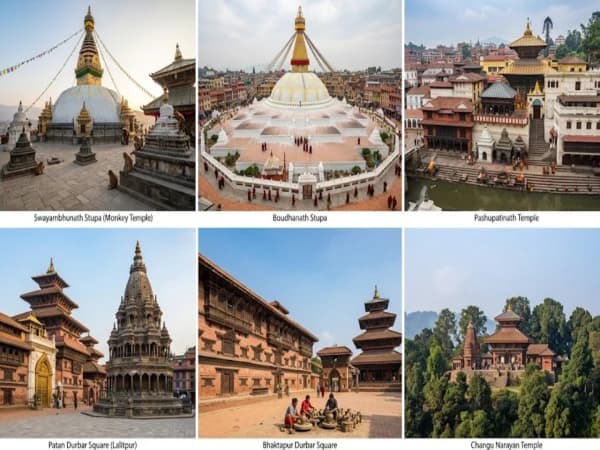
Swayambhunath and Kathmandu Durbar Square in One Day: How the Tour Runs and What It Costs (2027)
Swayambhunath in the morning, Kathmandu Durbar Square after lunch: how our private day tour runs, what each tier includes, the best months and 2027 prices.
Read More
Kakani: The Hill Above Kathmandu with Ganesh Himal and Langtang Views
Kakani is a cool hill village at about 2,030 m on the north-west rim of the Kathmandu Valley, with Ganesh Himal and Langtang views. Here is what it is like and how to visit.
Read More Chat with Shreejan