
Tsarang (Charang): The Monastery, the Dzong and the Quietest Afternoon in Upper Mustang

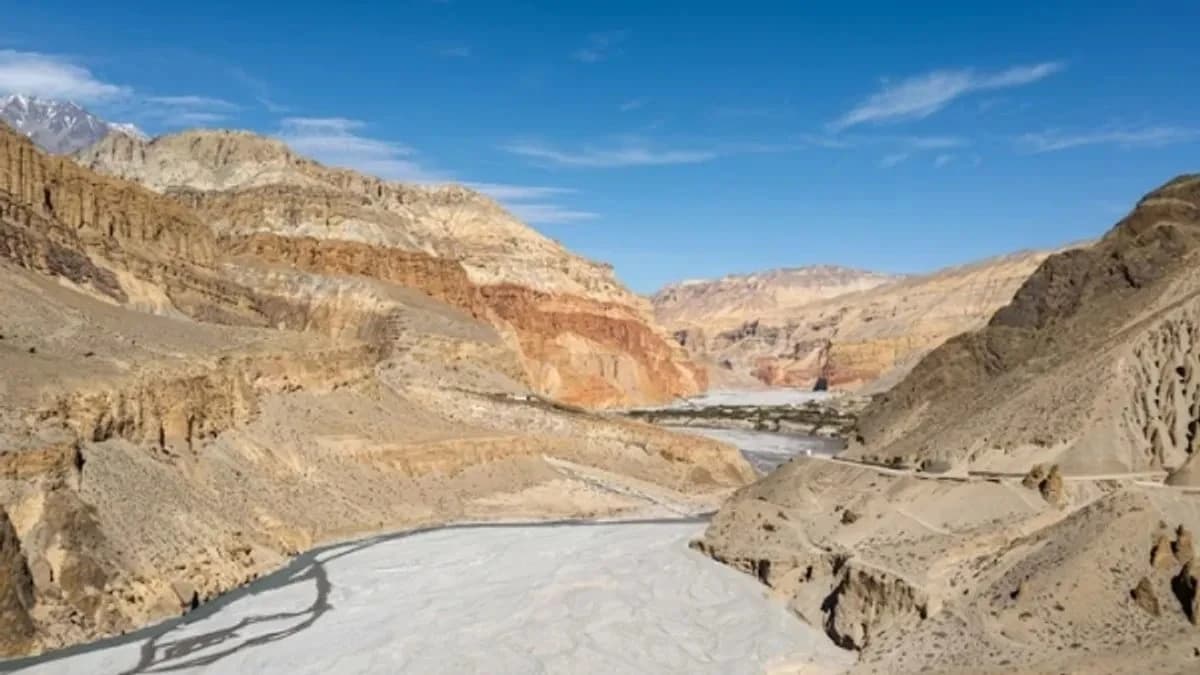
Tsarang is the village most Upper Mustang trekkers walk through without stopping properly, which is a mistake. It has the second great monastery of the old Kingdom of Lo, a five-storey fortress standing beside it, and none of the crowd that gathers inside the walls of Lo Manthang a few hours to the north. If you want an afternoon where nobody is selling you anything, this is it.
It is also spelled Charang, and you will see both on maps and permits. Same village.
Tsarang at a glance
| Also spelled | Charang, Tsarang, Chharang |
| Altitude | 3,570 m / 11,713 ft |
| Where | Upper Mustang, between Ghami and Lo Manthang, Mustang district |
| Population | 682 people in 130 households at the 1991 census, the last figure published for the old village unit |
| The monastery | Tsarang Gompa, Sakya school; sponsored by Amepal, first king of Lo, in the first half of the fifteenth century |
| The fortress | Samdrub Gephel Palace, a five-storey dzong beside the gompa, seat of the royal house of Lo |
| Known for | Murals, an old library of manuscripts and thangkas, the dzong, irrigated barley fields |
| On our trek | Day 7, on the way south from Lo Manthang to Ghami over the Lo La |
| Permit | Upper Mustang restricted-area permit, USD 50 per person per day, plus ACAP and TIMS |
Where is Tsarang and when do you reach it?
Tsarang sits south of Lo Manthang on the main line through Upper Mustang. On our Upper Mustang Trek it falls on day seven, the return leg. You leave Lo Manthang, cross the Lo La, drop to Tsarang, and carry on to sleep at Ghami at 3,520 metres. Twenty-three kilometres and seven to eight hours, which sounds heavy until you remember that by day seven you are properly acclimatised and walking downhill more than up.
We route the return over the Lo La deliberately, because you came north over the Choku La past Ghar Gompa. New ground both ways, no repeated valley. Walking south the mountains are now in front of you: Nilgiri, Annapurna and Dhaulagiri lined up at the end of the Kali Gandaki.
Some itineraries overnight in Tsarang on the way north instead. Either works. What matters is that you stop long enough to get inside the gompa, which usually means arriving before the caretaker disappears for the afternoon.
Tsarang Gompa: the red monastery
The gompa is the reason to be here. A large ochre-red building on the edge of the village above the gorge, belonging to the Sakya school, the tradition that has shaped religious life in Lo since the kingdom was founded. You will see it called a Gelug monastery on a good many travel sites. That is wrong, and the scholarship is not ambiguous about it.
On the date, be careful of the confident numbers. You will read 1378 and you will read 1395, and neither traces back to anything solid. What the record supports is that Amepal, the first king of Lo, sponsored its construction in the first half of the fifteenth century, after taking vows with Ngorchen Kunga Zangpo, the founder of the Ngor branch of the Sakya school. Its full Tibetan name is Lo Tsarang Tubten Shedrub Dargye Ling, and it once housed a large community of monks and students.
Inside there are wall paintings, statues, and a collection of manuscripts and thangkas that is significant by any standard and largely unknown outside the region. The main hall is dim, the way these halls are meant to be. Bring a head torch and use it discreetly rather than photographing with flash.
It is quieter than the three great monasteries of Lo Manthang, and in my experience it is also the one where the caretaker has time to talk. Ask your guide to translate rather than photographing and walking out. That fifteen minutes is the difference between having seen a building and having been somewhere.
Tsarang Khar, the five-storey dzong
Next to the monastery stands the old fortress, properly the Samdrub Gephel Palace, five storeys of whitewashed mud-brick and timber built on the edge of the drop. It was the seat of the royal house of Lo. There are two building phases here: an older palace, and a newer one raised beside the ruins of the first by King Dongrub Dorje, who ruled in the 1580s and 1590s.
Be realistic about going inside. The UNESCO-published heritage survey of Lo is blunt that the palace at Tsarang is in the worst condition of any building in the kingdom, with the oldest section a ruin and large cracks across the facade, and it has been reported closed to visitors since the 2015 earthquake. I will always ask on your behalf, but I am not going to promise you a door that may not open.
Even from the outside it is worth the walk. Stand at the base and look up, then look out at the gorge it was built to watch. This is what a fortified frontier settlement on the Tibet trade route actually looked like, and there are not many left that have not been tidied up for visitors.
The village itself
Tsarang is one of the larger settlements in Upper Mustang and one of the greener, because it has water. Irrigation channels run off the Tsarang Khola and feed barley fields and orchards, so in late summer and early autumn the village is a band of green in a landscape that is otherwise ochre, grey and red. Flat-roofed houses are stacked with firewood and brushwood, which is both fuel store and a quiet statement of a household's wealth.
You enter past a painted chorten, and there are mani walls to walk on the correct side of, which is clockwise, keeping them on your right. Your guide will point it out. It costs you nothing and it matters to the people who live here.
The population figure worth quoting is old: 682 people in 130 households at the 1991 census. Nepal has reorganised its local units since, and Upper Mustang has lost people steadily to Kathmandu and abroad, so treat that number as history rather than a headcount.
What to do with an afternoon here
- The gompa, with enough time to go inside rather than around.
- The dzong, at least from the outside, and from below if you can get down.
- The chorten and mani walls on the village approach.
- The fields and irrigation channels, if you want to understand how anyone farms at 3,570 metres in a desert.
- The long mani wall at Ghami, further down the day's walk. At about 305 metres it is the longest in Upper Mustang, first built in 1512 by King Tashigon and lengthened since. You will see it called the longest in Nepal; nobody official says so, and it does not need the exaggeration. Local legend ties it to the demoness subdued by Guru Rinpoche near Ghar Gompa.
Permits and access
Tsarang is inside the restricted area, so the same rules apply as everywhere north of Kagbeni: a restricted-area permit at USD 50 per person per day, no ten-day minimum since December 2025, plus the Annapurna Conservation Area permit and a TIMS card. A restricted-area permit does not replace TIMS.
The permit is issued by the Department of Immigration through a registered agency, and a licensed guide is compulsory. Solo trekkers have been able to hold one since March 2026, but they still book through an agency with a guide. Current rules are published by the Department of Immigration, and the conservation area is run by the National Trust for Nature Conservation through the Annapurna Conservation Area Project.
What that adds up to on a real trip: Upper Mustang trek cost.
When to go
Upper Mustang lies in the rain shadow behind Annapurna and Dhaulagiri, so it stays dry and walkable through the monsoon months that shut down the rest of Nepal. The season runs roughly March to November. May and June bring warmth and the Tiji festival crowd. September and October are clear, cold after dark and the best light of the year on the red cliffs. In winter much of the village moves down to lower ground and the gompa may be shut.
The wind is the constant. It gets up early in the afternoon almost every day, blowing up the valley, and it is the reason every sensible itinerary here starts at dawn.
Common questions
Is Tsarang worth an overnight or is it a lunch stop?
An overnight if your itinerary allows it. The gompa and the dzong take an unhurried afternoon, and Tsarang is a far quieter place to sleep than Lo Manthang. On our ten-day route it is a long stop on the way to Ghami, which works if you get there with the afternoon still in hand.
How high is Tsarang and is altitude a problem?
3,570 metres, which is lower than Lo Manthang at 3,840 metres and lower than both passes on the route. By the time you reach it you are acclimatised. It is not where people have trouble.
Charang or Tsarang, which is correct?
Both. Tsarang is closer to the Tibetan pronunciation; Charang is the older romanisation you will see on maps and older permits. Use whichever your paperwork uses.
Can I get there by jeep?
Yes, the road reaches Tsarang, and a jeep tour will stop here. The permit cost is identical either way, which is worth thinking about before choosing the vehicle.
Nearby on the same route
- Lo Manthang, the walled capital a few hours north
- Ghar Gompa, the eighth-century site on the western approach
- Kagbeni, where the restricted area begins
- Upper Mustang distances and difficulty, day by day
Lo Manthang gets the photographs. Tsarang gets the afternoon I would rather have.
WhatsApp:+977 9810351300
Email:[email protected]
Written by Shreejan Simkhada, CEO of The Everest Holiday and third-generation Himalayan guide. TAAN Member #1586.
Tsarang is on day seven of our Upper Mustang trek. Our Upper Mustang Trek (10 Days) is private (your group only, no strangers), 2027 dates open, From USD $1290. WhatsApp us for tailored dates and current departures.
Planning a trip to Nepal?
Drop us your details and tell us what you have in mind. We will put together a personalised plan and get back to you.
Not sure which Nepal trek is right for you?
Take our free 2-minute quiz and get personalised recommendations based on your fitness, experience, and travel style.
Find Your Perfect Trek →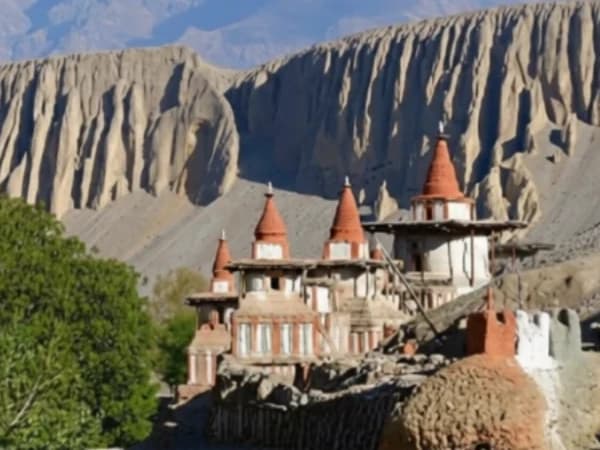 US$1,290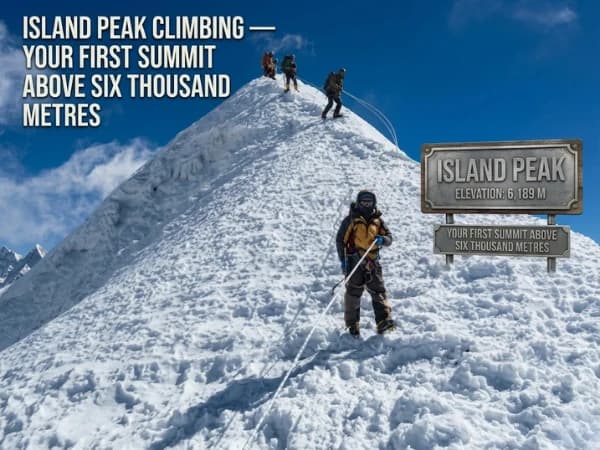
Island Peak Itinerary and Summit Day 2027: 14 Days, Base Camp to the Top
The 14-day Island Peak itinerary day by day, what summit day is like from base camp, where sources disagree on heights, best months and 2027 prices.
Read More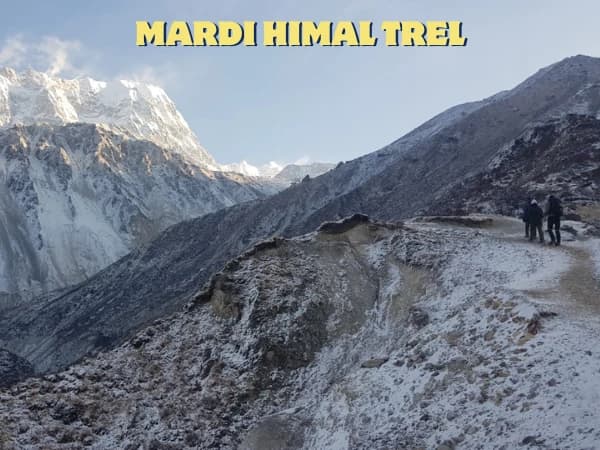
How Difficult Is the Mardi Himal Trek? An Honest Day-by-Day Rating for 2027
An honest day-by-day rating of the Mardi Himal trek: the steep climb to High Camp, the 4,500 m push to Base Camp, altitude risk, who finds it hard and 2027 prices.
Read More
Manaslu Circuit Reopened: What Changed After the 2026 Floods and How to Plan 2027
The Manaslu Circuit over the Larke Pass is open again with extreme caution. What changed in the lower valley after the two 2026 floods, 2027 prices and permits, and how I would plan.
Read More Chat with Shreejan