
Pokhara Culture and Temples: Bindhyabasini, Tal Barahi and the Peace Pagoda

Last updated 6 October 2026. Tour prices are per person in US dollars and come from our live tour pages.
Pokhara has three sacred places worth your time: Bindhyabasini temple on its hill above the Old Bazaar, Tal Barahi temple on an island in Phewa Lake, and the Peace Pagoda (Shanti Stupa) on Anadu Hill south of the lake. Half a day covers the first two. A full day lets you add the Peace Pagoda, one cave, Davis Falls and the International Mountain Museum. Bindhyabasini is also spelt Bindyabasini, and you will see both on signs and maps.
We run The Everest Holiday from Nepal. We registered the company in 2016 and we come from three generations of family guides. Pokhara is where our short Annapurna and Mardi Himal treks begin, so we know the town well on both sides of a trek. This guide explains what each site is, how to reach it, how long to allow and how to fit it into a day.
What are the best temples and sacred sites in Pokhara?
The three that matter most are Bindhyabasini, Tal Barahi and the Peace Pagoda. They are three different settings. Bindhyabasini is a hilltop Hindu temple above the old town. Tal Barahi is a small Hindu temple on an island that you reach only by boat. The Peace Pagoda is a white Buddhist stupa on a forested hill.
Pokhara is Nepal's second largest city, with 600,051 people at the 2021 census, and the capital of Gandaki Province. It sits at about 820 metres, roughly 200 kilometres from Kathmandu, so it is warm and easy underfoot. That is why temple days here feel gentle. You climb a few steps, ride a boat, and sit with tea by the lake.
If you only have a morning, choose Bindhyabasini and Tal Barahi. Our Sarangkot sunrise and Pokhara tour does exactly that after the sunrise. If you have a full day and like caves and mountains, our Pokhara city day tour adds the Seti gorge, Davis Falls, one cave and the museum. For the lake itself, read our Fewa Lake guide, and for more ideas see things to do in Pokhara.
What is Bindhyabasini temple like?
Bindhyabasini is one of the oldest and best known Hindu temples in Pokhara. It stands on a small hill above the Old Bazaar and is dedicated to Goddess Bindhyabasini, a form of Durga. The complex also holds shrines to Saraswati, Shiva, Hanuman, Ganesha and Vishnu. The temple was established around the 1760s, and the present building is in the shikhara style. Two golden metal lions stand by the gate and gong bells ring through the courtyard. A local committee, the Bindhyabasini Dharmik Chhetra Bikas Samiti, looks after it.
The story goes that a king of Kaski sent envoys to India to bring the goddess's statue to his kingdom. When it reached this hilltop it could not be moved, and people took that as a sign that she had chosen the place. The temple was built there. The goddess is regarded as a form of Yogamaya, the infant who was exchanged for Krishna and who later made her home in the Bindhya mountains of India. Accounts differ on which king sent the envoys, so we tell it as a story and not as a record.
You climb stone staircases from the east, north or south-east. The climb is short and steep in places, so take it slowly. A lift for disabled pilgrims and seniors was opened on 7 March 2019, so if stairs are a problem tell us and we will plan around it. The fire of 1949 destroyed much of Pokhara and is said to have started at this temple during an offering. That is part of why the hill matters to local people beyond the religion.
We pair the temple with the Old Bazaar below it. The bazaar shows you the old trading street of the city and the hill shows you the living faith. Walk the bazaar first, then climb. Allow about 30 to 60 minutes at the temple, longer if you like to sit and watch.
What is Tal Barahi temple like?
Tal Barahi, the Lake Temple, is a Hindu temple of the goddess Barahi on a small island in Phewa Lake. The only way to reach it is by boat. It is often called the most important religious monument in Pokhara. Barahi is seen as a form of the female force that Nepalis call Ajima. The original building is stone with a two-storey pagoda-style roof.
Devotees come through the year, and especially in the Nepali months of Baisakh (April to May) and Kartik (November to December). On those days expect families, offerings and a busy landing. Go early for quiet. Go mid-morning to see the temple in full flow.
The boat is half of the visit. The island looks small from Lakeside and larger as you near it. Allow 60 to 90 minutes in total, including the crossing both ways and 30 to 60 minutes on the island. Our sunrise tour uses a private boat. On our city tour the boat is not included, but we can add it on the spot.
What is the Peace Pagoda above Pokhara?
The Shanti Stupa, also called the World Peace Pagoda, is a Buddhist monument on Anadu Hill, at about 1,100 metres, south of Phewa Lake. Monks of the Japanese Nipponzan-Myohoji order built it with local supporters, under the guidance of Nichidatsu Fujii. The foundation stone, with relics of the Buddha, was laid on 12 September 1973. The authorities halted the work for years. It resumed after the stone was laid again on 21 May 1992, and the stupa was inaugurated on 30 October 1999. Nepal has two peace pagodas, this one and one in Lumbini.
It is a white stupa with two tiers to walk around, and the upper tier shows four statues of the Buddha. You walk clockwise and people speak softly. The views are why many visitors climb: Phewa Lake, the city and the Annapurna range, with Machhapuchhre and Annapurna South among the peaks. Clouds come and go, so we never promise the mountains, but the lake and the forest are good on any morning. Ask at the site before you film, as video is restricted.
Most visitors take a taxi to the base of the hill. If you prefer to walk, cross to the south side of the lake by boat or road, then take the steep forest path up. Wear shoes with grip, carry water, and in the monsoon expect leeches on the forest path. Allow two to three hours with the walk and time on the terrace, and 30 to 60 minutes at the stupa itself. This stop is not part of our two day tours, so tell us if you want it added to your day.
Which caves and museum fit in the same day?
Gupteshwor Mahadev cave, Mahendra cave, Davis Falls and the International Mountain Museum are short stops and sit well beside the temples.
Gupteshwor Mahadev cave is south of Damside in Chhorepatan, opposite Davis Falls. It has two caverns and a large stalagmite that is honoured as a form of Shiva. Water from Davis Falls passes through the cave, and bats live inside. A British karst expedition first surveyed it in the 1970s.
Mahendra cave is in north Pokhara near Batulechaur. It is a limestone cave with stalagmites and stalactites, and a statue of Shiva stands inside.
Davis Falls, known in Nepali as Patale Chhango, is where the water drops into a tunnel about 150 metres long. It is named after a Swiss tourist who drowned there on 31 July 1961.
The International Mountain Museum is at Ghari Patan. It covers the 14 highest peaks, the expeditions that climbed them and the people of the Himalayas, and the Nepal Mountaineering Association manages it. It means more after a trek, when you have seen the mountains close up. On our city tour we choose one of the two caves on the day, Gupteshwor Mahadev or Mahendra, and spend an hour or two at the museum after lunch.
What is a good one-day order?
Keep the lake and the old town together, and leave the farthest stop for the end.
- Early morning: Sarangkot sunrise if the weather looks kind, then a boat across Phewa Lake to Tal Barahi. Our Sarangkot guide explains the morning.
- Mid-morning: the Old Bazaar and Bindhyabasini temple.
- Midday: Seti gorge, Davis Falls and one cave, then lunch.
- Afternoon: the International Mountain Museum, or the Peace Pagoda if you would rather have views than exhibits.
With only half a day, take Bindhyabasini in the morning and Tal Barahi by boat before lunch. Leave the Peace Pagoda for a second half day. To plan your nights, read our Kathmandu to Pokhara guide and our Pokhara hotels guide. If you want to fly as well, see our paragliding guide.
How much time do you need at each site?
The times below are our own guidance for a relaxed visit with photos.
| Site | What it is | How to reach it | Time to allow |
|---|---|---|---|
| Bindhyabasini temple | Hilltop Hindu temple to Durga above the Old Bazaar | Stone staircases from three sides, plus a lift for seniors and disabled pilgrims | 30 to 60 minutes |
| Tal Barahi temple | Island temple to Barahi in Phewa Lake | By boat only | 60 to 90 minutes with the crossing |
| Peace Pagoda | White Buddhist stupa on Anadu Hill, about 1,100 m | Taxi to the base, or boat across and a steep forest walk | Two to three hours with the walk |
| Gupteshwor Mahadev cave | Cave shrine to Shiva opposite Davis Falls | Short drive to Chhorepatan | 30 to 60 minutes |
| Mahendra cave | Limestone cave near Batulechaur | Short drive in north Pokhara | 30 to 60 minutes |
| Davis Falls | Waterfall that drops into a tunnel | Short drive, with Seti gorge | About 30 minutes |
| International Mountain Museum | Peaks, expeditions and Himalayan peoples | Short drive | One to two hours |
What is the right temple etiquette?
Take your shoes off before you enter a temple courtyard or shrine. Cover your shoulders and knees. Walk clockwise around shrines and stupas. Photography and leather items may be restricted inside inner shrines, so ask first, and always ask before you photograph a person. Small offerings are optional.
Speak softly, do not touch statues, and do not stand in front of someone who is praying to take a picture. If you are unsure, watch what local families do and follow them. At Tal Barahi step into the boat carefully and sit where the boatman shows you. At the Peace Pagoda keep your voice low and walk clockwise on both tiers. To see how these customs work in Kathmandu, read our Pashupatinath guide and our Swayambhunath guide.
When is the best time of day and year to visit?
Early morning is best. The lake is calm, the temples are active and the mountains show more often before the clouds build. Caves and the museum suit the middle of the day because they are shaded. The Peace Pagoda is pleasant in the afternoon when the light on the lake is soft.
Through the year, Tal Barahi is busiest in Baisakh (April to May) and Kartik (November to December). Choose those months for festival feeling and a weekday morning for quiet. On a cloudy morning our sunrise tour still goes ahead, because the lake and the old bazaar are worth the early start, but we cannot promise the peaks.
Can you combine this with a trek?
Yes. A temple and museum day suits the day before or after a trek. Before a trek it gives you time to settle in, check your boots and daypack and sleep well. After a trek it lets you stretch your legs, take a boat and eat properly.
Our short treks start from Pokhara: the Mardi Himal trek, 5 days from Pokhara, the Annapurna Base Camp trek, 5 days from Pokhara and the Annapurna Base Camp trek, 7 days from Pokhara. A licensed guide walks with you on every trek. For Annapurna Base Camp buy travel insurance at home before you travel, with helicopter rescue and evacuation cover to 4,500 metres.
What are our two Pokhara day tours?
Both tours include a licensed English-speaking guide, a private car or van with driver from and back to your hotel, bottled water, government taxes and our service charge. We take 1 to 20 people on each. Prices fall as the group grows.
The Pokhara city day tour starts in the Old Bazaar and at Bindhyabasini temple above it. It continues to the Seti gorge and Davis Falls, then one of the two caves, then the International Mountain Museum after lunch. Entrance fees for the museum, falls and cave are included, and so is lunch on Standard and Luxury. Stops can change with the weather and the water level in the gorge.
The Sarangkot sunrise and Pokhara tour picks you up from your hotel at about 5:00 am and drives to Sarangkot, at about 1,600 metres, for sunrise on the Annapurna range and Machhapuchhre, with breakfast. A private boat then takes you across Phewa Lake to Tal Barahi, and you walk through the Old Bazaar and up to Bindhyabasini. You are back at your hotel by late morning. The boat and small entries are included, and breakfast is included on Standard and Luxury.
| Tour, per person in USD | Group | Budget | Standard | Luxury |
|---|---|---|---|---|
| Pokhara city day tour | 1 person | 140 | 165 | 215 |
| Pokhara city day tour | 2 to 4 | 95 | 125 | 145 |
| Pokhara city day tour | 5 to 8 | 55 | 80 | 100 |
| Pokhara city day tour | 9 to 12 | 45 | 75 | 90 |
| Sarangkot sunrise and Pokhara tour | 1 person | 155 | 165 | 200 |
| Sarangkot sunrise and Pokhara tour | 2 to 4 | 100 | 110 | 115 |
| Sarangkot sunrise and Pokhara tour | 5 to 8 | 55 | 65 | 70 |
| Sarangkot sunrise and Pokhara tour | 9 to 12 | 45 | 55 | 60 |
Choose the city tour if you want falls, caves and the museum in one easy day. Choose the sunrise tour if you want the mountains at dawn, the lake temple by private boat and the old town afterwards. You pay a 10 per cent deposit to book. Plans change? You can reschedule free of charge with at least 72 hours' notice to any date within one year. The deposit itself is not refunded if you cancel. If we cannot run the tour, we refund what you paid less taxes, bank or card charges and money already spent. You pay the balance on arrival in USD or EUR, in cash or by card (card carries a 3.5 per cent charge). We do not take Nepali rupees from foreign guests.
Quick answers
Do I need a full day for the three sites? Half a day covers Bindhyabasini and Tal Barahi. A full day adds the Peace Pagoda, one cave and the museum.
How do I reach Tal Barahi? Only by boat. We arrange a private boat on the sunrise tour, and on the city tour we can add one on the spot.
How hard is the climb to Bindhyabasini? It is a short stone staircase, steep in places, with a lift for seniors and disabled pilgrims.
How do I reach the Peace Pagoda? Most people take a taxi to the base of the hill. You can also cross the lake and walk up the steep forest path.
What should I wear? Cover shoulders and knees, and wear shoes that slip off easily. Wear shoes with grip for the Peace Pagoda path.
Can I take photographs? Outside the inner shrines, usually yes. Ask first inside, ask before photographing people, and ask at the Peace Pagoda before filming.
Is it a good rest day around a trek? Yes, the day before or after our Mardi Himal trek or either Annapurna Base Camp trek from Pokhara.
Tell us your dates and your hotel and we will suggest the order that suits the weather. WhatsApp +977 9810351300.
Written by Shreejan Simkhada, CEO of The Everest Holiday, from a family of three generations of family guides. TAAN Member #1586. WhatsApp +977 9810351300.
Planning a trip to Nepal?
Drop us your details and tell us what you have in mind. We will put together a personalised plan and get back to you.
Not sure which Nepal trek is right for you?
Take our free 2-minute quiz and get personalised recommendations based on your fitness, experience, and travel style.
Find Your Perfect Trek →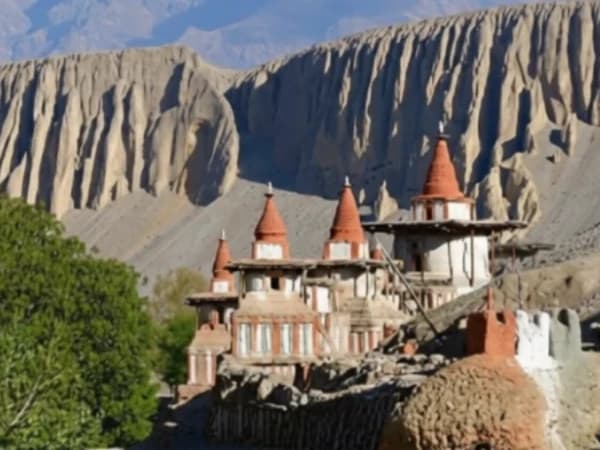
Upper Mustang Itinerary: 10, 12 or 14 Days? What Each Extra Day Adds for 2027
Our live 10-day Upper Mustang itinerary day by day, plus suggested 12 and 14 day outlines, with the USD 50 a day permit worked out for each length.
Read More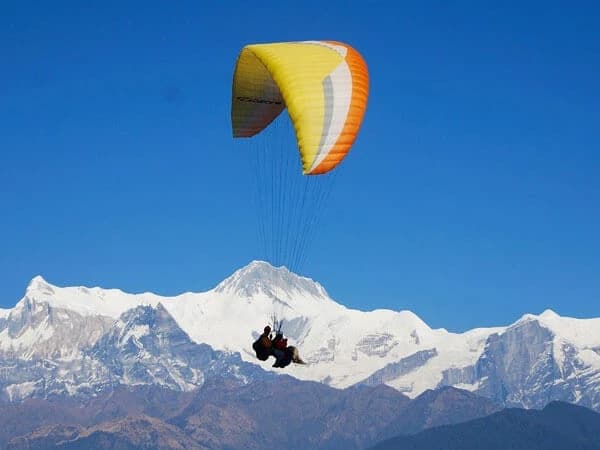
Nepal Weather Month by Month for 2027: Kathmandu, Pokhara and Namche
Average highs, lows and rainfall for Kathmandu, Pokhara and Namche Bazaar, the normal monsoon dates, and which of our treks suit each month in 2027.
Read More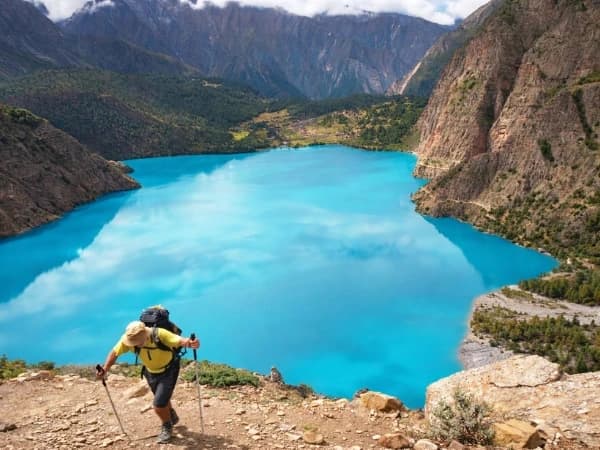
Dunai Village Guide: Height, What Is There and the Trail North for 2027
Dunai is the district town of Dolpa where the Lower Dolpo walk starts. Its height, what is there, the 7 km walk from Juphal, the trail north, best months and 2027 prices.
Read More Chat with Shreejan