
Phortse Village: The Sherpa Climbing Village on the Gokyo Route


Short answer: Phortse is a Sherpa farming village on the Gokyo side of the Khumbu valley, off the main Everest trail and known for its climbing families and the Khumbu Climbing Center, founded there in 2003. On our Everest Base Camp with Gokyo Ri trek you walk from Pheriche to Phortse on day 9, about 9 km and four to five hours, before heading up to Gokyo. See our Everest Base Camp with Gokyo Ri trek.
Written by Shreejan Simkhada, CEO of The Everest Holiday and third-generation Himalayan guide. TAAN Member #1586.
Most people who trek to Everest Base Camp never see Phortse. The main trail runs up the other side of the valley, through Tengboche and Pangboche, and the village sits off it on a shelf of farmland above the Dudh Koshi gorge. From the Tengboche side you look across the valley at it, and that is as close as most trekkers get. We route through it on purpose. On our Everest Base Camp with Gokyo Ri trek, Phortse is the night that links the Base Camp side of the Khumbu to the Gokyo valley, and it is also one of the villages the Everest climbing world depends on most.
Phortse at a glance
| Altitude | 3,840 metres on our itinerary (other published figures round it to about 3,800 m) |
| Region | Khumbu, Solukhumbu district, inside Sagarmatha National Park |
| On the trail | Off the main Base Camp trail, reached by a high contouring path that branches off below Pangboche; the way on to Dole and Machhermo in the Gokyo valley |
| Why you stop | It is the natural overnight when you cross from the Base Camp side into the Gokyo valley |
| The views | Ama Dablam, and Tengboche monastery on its ridge across the valley |
| Facilities | A few small teahouse lodges, quieter than any stop on the main trail |
| Trek it on | Everest Base Camp with Gokyo Ri Trek (day 9) |
Where is Phortse?
Phortse is a Sherpa farming village in the Khumbu, inside Sagarmatha National Park. It sits on a broad shelf high above the Dudh Koshi gorge, where two valleys meet. On the map it is only about four kilometres west of Pangboche and roughly two kilometres from Tengboche as the crow flies, but Tengboche is across the valley on its own ridge, which is why the village feels so apart from the main trail.
There are two ways in. From the Base Camp side, a path leaves the main trail below Pangboche and contours along the hillside to Phortse without dropping to the river. From the Gokyo side, the trail from Mong La drops steeply to Phortse Thanga, a small riverside hamlet on the Dudh Koshi below the village, then climbs the far bank towards Dole. Phortse Thanga and Phortse are not the same place, and it is worth knowing that before you read an itinerary.
Why do so many climbing Sherpas come from Phortse?
Ask anyone who has worked on Everest expeditions and Phortse comes up quickly. A 2023 feature in the South China Morning Post described it as the village with more Everest summiteers than anywhere else, and named individual climbers from Phortse with double-figure summit counts. The same article describes a father, son and daughter from the village who reached the summit together in spring 2021. I will not add numbers I cannot check, but expedition work clearly runs in Phortse families.
There is no single reason for it. The village is a day's walk from Namche and a short distance from the approach to Base Camp, so its families were close to the expedition trade from the start. My own reading, from years of working in the Khumbu, is that once a few people from a village are working on the big peaks, they bring in relatives and neighbours, and experience builds on experience. Since 2003 the village has also had its own climbing school.
It is worth being plain about what this work is. High-altitude climbing Sherpas carry loads, fix ropes and make the route safe for paying clients, and they take on far more exposure to risk than the people they guide. When you stay here you are a guest in a working village whose livelihood is closely tied to Everest. Most families also still farm, and the terraced fields and yak pastures around the houses matter as much to village life as the expedition season does. If you want the wider picture, our piece on the Sherpa people beyond the mountain myth is a good place to start.
What is the Khumbu Climbing Center?
The Khumbu Climbing Center was founded in Phortse in 2003 by Jennifer Lowe-Anker and Conrad Anker, through the Alex Lowe Charitable Foundation. It trains Nepali climbers and high-altitude workers in safe, responsible climbing, with courses covering climbing, rescue and medical skills alongside English lessons.
An American Alpine Club report on the February 2004 course describes 32 students, two classroom days and four days in the field. Ice climbs on the northern flank of Khumbila, within a few hours' walk of the village, gave the course its training ground, and that was a large part of why Phortse was chosen. The course is deliberately held in winter, in the expedition off season, when climbers are at home and free to attend.
According to The Juniper Fund, more than a thousand Nepali men and women have now trained there. In December 2024 the Alex Lowe Charitable Foundation concluded its work in the Khumbu and handed financial stewardship and oversight of the centre to The Juniper Fund, which now supports it. Our trekkers pass through in spring and autumn, outside the winter course season, so do not expect to watch a class. The centre has its own building in the village, and your guide can point it out.
How does Phortse fit into the route to Gokyo?
This is where our route differs from most. On the Everest Base Camp with Gokyo Ri Trek, you reach Base Camp first, climb Kala Patthar at sunrise on day 8 and drop to Pheriche. Then, instead of retracing the main trail to Tengboche and Namche, you turn off.
- Day 9, Pheriche to Phortse: about 9.1 kilometres, four to five hours. You branch off the main trail below Pangboche and follow the high path along the hillside, with Tengboche on its ridge across the valley and Ama Dablam above it.
- Day 10, Phortse to Machhermo: about 8 kilometres, four to five hours, climbing to 4,470 metres. The trail heads up the Dudh Koshi into the Gokyo valley towards Dole and on to Machhermo.
- Day 11 onwards: Machhermo to Gokyo at 4,790 metres, then Gokyo Ri at sunrise (5,357 m) and down to Dole, Namche and Lukla.
Without Phortse there is no easy way to join the two halves of this trek. The alternative is to walk all the way back to Namche and start up the Gokyo valley from there, which adds days and repeats a stretch you have already walked. Phortse turns the trek into a loop.
Our shorter Gokyo Valley Lakes Trek takes the other line: it goes from Namche over Mong La and down to Phortse Thanga on the river before climbing to Dole. It passes below Phortse but does not stay in the village.
Altitude and acclimatisation in Phortse
By the time you reach Phortse on this route, you have already slept at Gorak Shep and stood on Kala Patthar at 5,545 metres. Phortse, at 3,840 metres, is a descent of about 400 metres from Pheriche, and many people sleep better here than they have for a week. Thicker air, a quiet lodge and a lower night are a good reset before the climb back up into the Gokyo valley.
That descent does not cancel the rules. The next day gains about 630 metres to Machhermo, and Gokyo sits higher again. Your body keeps much of what it gained on the Base Camp side, which is the whole reason this direction works so well, but the usual signs of altitude sickness still matter. Headache that will not shift, loss of appetite and unusual breathlessness at rest are reasons to tell your guide, not to push on. Our guide to acclimatisation on Nepal treks explains how the body adjusts and what to watch for.
What facilities does Phortse have?
Phortse has a handful of small teahouse lodges, enough for the trekkers who come through, but nothing like the choice in Namche or Dingboche. Rooms are simple, the dining room is the warm place to be, and the menu is the standard trekking one built around dal bhat. Because so few groups stay, you may well be the only guests at dinner, sharing the stove with the family who runs the lodge.
Charging and hot showers cost extra, as they do across the Khumbu, and phone signal comes and goes. Carry up what you need from Namche. For altitude medical help, the Himalayan Rescue Association runs a seasonal aid post at Pheriche, which you leave that morning. There is no doctor ahead of you in the Gokyo valley, so tell your guide about any symptoms early.
When is the best time to visit Phortse?
Phortse follows the same seasons as the rest of the Khumbu. October is the most reliable month, with clear, settled weather and the best views of Ama Dablam. From mid-November into early December the nights are colder but the skies stay clear and the trails are quiet. Late March to May is the warmer spring season and also a good time to trek. Winter is clear and very cold and many lodges close, although that is when the climbing school runs. The June to mid-September monsoon hides the peaks and is not a season we recommend.
Common questions about Phortse
How high is Phortse? Our itinerary puts it at 3,840 metres, and other published figures round it to about 3,800 metres. It is lower than Pangboche and well below Pheriche, which is why it makes such a good recovery night on the way to Gokyo.
Can I visit the Khumbu Climbing Center? You can see it as you walk through the village, and your guide can show you where it is. The courses run in winter, so on a spring or autumn trek you will not see a class in progress.
Do I need a permit to trek to Phortse? Yes. Phortse is inside Sagarmatha National Park, so you need the park entry permit (NPR 3,000 for foreign nationals), the Khumbu Pasang Lhamu Rural Municipality permit (NPR 3,000) and a TIMS card (NPR 2,000 for foreign nationals). A licensed guide is required on the route. We arrange all of it.
Is Phortse on the standard Everest Base Camp trek? No. The standard route goes through Tengboche and Pangboche on the other side of the valley. You only stay in Phortse on an itinerary that crosses to the Gokyo valley, like our Everest Base Camp with Gokyo Ri trek.
Phortse is the link between Everest Base Camp and the Gokyo lakes. We stay here on day 9 of the Everest Base Camp with Gokyo Ri Trek, private, with Base Camp, Kala Patthar and Gokyo Ri in one loop, 2027 dates open. WhatsApp us for current departures.
Phortse sits within Sagarmatha National Park, established in 1976 and inscribed as a World Heritage Site in 1979, according to the Sagarmatha National Park office. The park is managed by Nepal's Department of National Parks and Wildlife Conservation.
Shreejan Simkhada is the CEO and co-founder of The Everest Holiday, a family-run trekking company in Kathmandu, and a third-generation Himalayan guide. TAAN Member #1586. Every booking helps fund our Nagarjun Learning Center.
Planning a trip to Nepal?
Drop us your details and tell us what you have in mind. We will put together a personalised plan and get back to you.
Not sure which Nepal trek is right for you?
Take our free 2-minute quiz and get personalised recommendations based on your fitness, experience, and travel style.
Find Your Perfect Trek →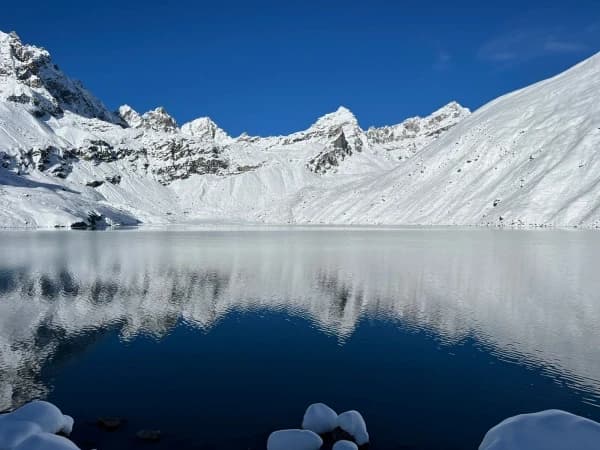 US$1,699
Everest Base Camp with Gokyo Ri Trek - 15 Days
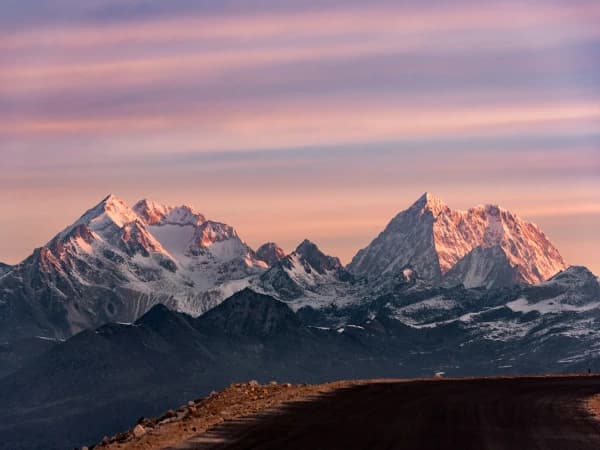
Christmas and New Year Treks from Pokhara 2026/27: 3 to 5 Days
<p>Short treks from Pokhara for Christmas and New Year 2026/27: Panchase 3 days, Poon Hill 4 days and Mardi Himal 5 days. Weather, snow, what is open, and prices by group size.</p>
Read More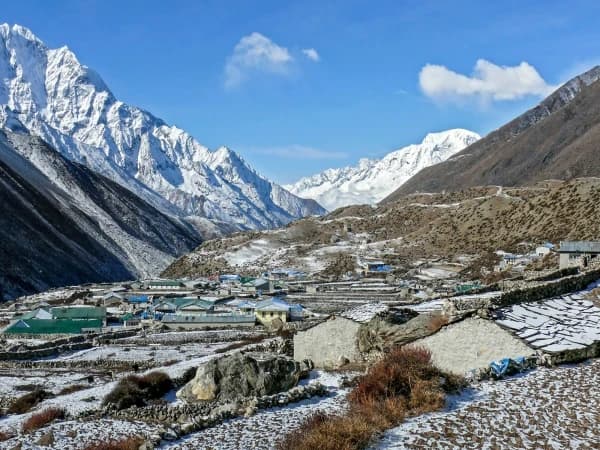
Thamdanda and Surke: The Road Head for Everest Base Camp by Road
Thamdanda is the road head where our Everest Base Camp trek by road starts and ends on foot. How to get there from Phaplu and what the first walk to Paiya is like.
Read MorePoon Hill Trek Permits 2027: ACAP, TIMS, Cost and What You Need
Poon Hill needs two permits: ACAP at NPR 3,000 and a TIMS card at NPR 2,000. Who arranges them, where they are checked, SAARC rates and the 2027 trek prices.
Read More Chat with Shreejan