
Pheriche Village: The Everest Trek's Descent Stop and HRA Aid Post


Short answer: Pheriche sits at about 4,250 m in the valley below Dingboche, and it is where most Everest trekkers sleep on the way down, a drop of roughly 900 m from Gorak Shep. It is also home to the Himalayan Rescue Association aid post, staffed by volunteer doctors in the trekking seasons. You can sleep there on the descent of our 12-day Everest Base Camp trek.
Written by Shreejan Simkhada, CEO of The Everest Holiday and third-generation Himalayan guide. TAAN Member #1586.
Pheriche is the village most Everest trekkers sleep in on the way down. On the ascent, nearly every group turns right above Pangboche for Dingboche, and Pheriche is just a line of stone lodges on a flat valley floor seen from the ridge. Then, a day after Kala Patthar, tired and glad of the thicker air, they walk into it. It is also where the Himalayan Rescue Association opened its first aid post, in a rented yak hut in 1973, and the post still runs every spring and autumn. This guide covers where Pheriche is, why it is the descent night and not the ascent night, what the aid post does, and which of our treks stop there.
Pheriche at a glance
| Altitude | 4,250 m (13,944 ft), the figure in the Himalayan Rescue Association's 2026 aid-post notice |
| Region | Khumbu, Solukhumbu district, inside Sagarmatha National Park |
| On the trail | Above Pangboche and below Thukla and Lobuche, one ridge west of Dingboche |
| Why you stop | The first night down after Kala Patthar, and the HRA aid post in season |
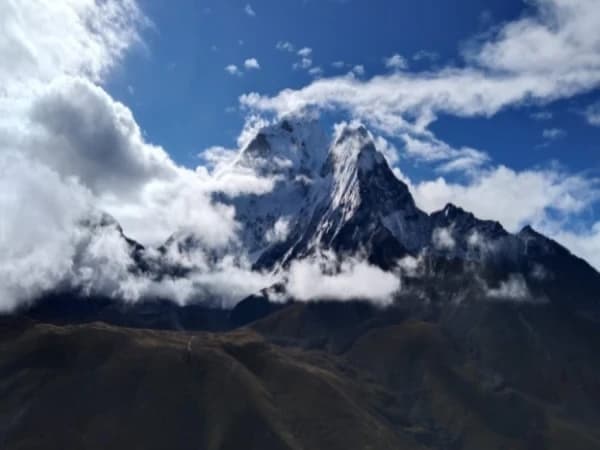
| The views | Taboche and Cholatse above the valley, Ama Dablam down the valley to the south-east |
| Facilities | Teahouse lodges with mostly shared bathrooms, and the HRA aid post in spring and autumn |
| Trek it on | Everest Base Camp with Gokyo Ri, Everest Two Passes, EBC with helicopter return, Jiri to EBC, EBC by road |
Where is Pheriche?
Pheriche sits in the upper Khumbu, the Sherpa homeland below Everest, inside Sagarmatha National Park. Coming up from Namche Bazaar and Tengboche, you pass through Pangboche, one of the oldest villages in the Khumbu. Above Pangboche the trail divides. The right-hand branch climbs into the Imja valley to Dingboche. The left-hand branch follows a long, flat, open valley north to Pheriche, and beyond it to Thukla at the foot of the Khumbu Glacier moraine.
The two villages are close. A short path over the ridge between them links Dingboche and Pheriche, and both trails meet again at Thukla before the climb to Lobuche. So the choice between them is never about the route to Base Camp. It is about where you spend the night, and when.
Pheriche itself is small: a cluster of lodges, stone-walled yak pastures and the aid post. The valley is wide and exposed, and in the afternoon the wind comes down it hard. Pack your warm layers where you can reach them before you arrive.
Pheriche vs Dingboche: which one do you sleep in?
On the way up, Dingboche. On the way down, Pheriche. That is how we plan our Everest itineraries, and it is how most guides in the Khumbu do it.
| Pheriche | Dingboche | |
| Altitude | 4,250 m | 4,410 m |
| Valley | The Pheriche valley, on the direct line to Thukla | The Imja valley, towards Chhukung and Island Peak |
| We use it for | The first night down after Kala Patthar | The acclimatisation stop on the way up |
| Medical help | HRA aid post in spring and autumn | None of its own; Pheriche is the nearest aid post |
On the ascent, Dingboche wins for acclimatisation. It is slightly higher, and the ridge above it gives you the best acclimatisation hike on the trail: you climb high in the morning and come back down to sleep, which is exactly what your body needs before Lobuche and Gorak Shep. Dingboche also opens the side trip east to Chhukung.
On the descent, Pheriche wins on geography. Coming down from Thukla, the valley trail runs straight to Pheriche and then on towards Pangboche. Going back to Dingboche would mean turning off into the next valley for no gain once your high days are done. And your first night down from Gorak Shep (5,164 m) to Pheriche is a drop of roughly 900 metres. That is where most people finally sleep properly, eat properly and lose the altitude headache.
There is one exception on the way up. If someone in the group is showing altitude symptoms at Dingboche, our guides can take them over the ridge to Pheriche to be seen at the aid post. It is a short walk, and it is downhill.
The HRA aid post at Pheriche
The Himalayan Rescue Association is a Nepali non-profit set up in 1973 to cut deaths from altitude illness in the Nepal Himalaya. Its Pheriche Aid-Post began that same year. According to the HRA's own history, a French volunteer nurse, Daniele Laigret, rented a yak hut in Pheriche in the early autumn of 1973 and started teaching trekkers about acute mountain sickness (AMS). It had dirt floors and stone walls.
In 1975 the post moved into a proper building. The HRA worked with Prof. Hayata of Tokyo Medical College, US$50,000 was raised, and the aid post has worked from that building ever since, upgraded over the years. The HRA also records that Dr Peter Hackett spent three seasons there from 1975. When he saw how few trekkers knew the post existed, he started walking round the lodges to give talks on AMS. Those talks still run today.
Why Pheriche? The HRA's answer is simple: it is around this altitude that most AMS symptoms start to show, and evacuations in those early years came through Pheriche.
What the aid post does now:
- Volunteer doctors in season. For spring 2026 the HRA announced two international doctors and one Nepali doctor at Pheriche, with two support staff.
- A daily altitude talk. The HRA announced daily altitude-illness talks at 3:00 pm at its aid posts for spring 2026. A new lecture hall, built in 2021 by Human Outreach Project, seats about 35 people.
- Treatment and assessment for trekkers, climbers and porters with AMS and other mountain illness, with satellite radio links for coordinating rescues.
- Care for local people. The Nepali government recognises the post to give free medicines to local communities.
It proved its worth in the 2015 earthquake. The HRA says Pheriche was used as a base to coordinate rescues, injured people were brought down from Base Camp for treatment, and 72 people were evacuated safely to Kathmandu.
Two honest points. It is an aid post, not a hospital: serious cases still go down the valley or out by helicopter, which is one reason good travel insurance with helicopter evacuation matters. And it is staffed in the spring and autumn seasons only. In winter or the monsoon, do not count on a doctor being there. The HRA also runs Everest ER, a clinic at Base Camp itself during the climbing season.
Altitude and acclimatisation at Pheriche
Published altitudes for Pheriche vary, and you will see figures from about 4,240 m up to 4,371 m. We use 4,250 m (13,944 ft), the figure in the HRA's 2026 season notice and the one that matches terrain data for the village floor. The higher 4,371 m comes from an old conversion of the HRA's 14,343 ft. Whichever number you read, you are sleeping well above 4,000 m.
On the way down, altitude at Pheriche is rarely a problem. You have already slept at Lobuche and Gorak Shep, so your body has adjusted to far more than this. The long descent is harder on the knees than on the lungs. On our 10-day helicopter-return itinerary, the Kala Patthar sunrise and the walk down to Pheriche add up to seven to eight hours.
On the way up, the rules are the ones we use on every trek. Climb slowly, drink plenty, sleep low after going high, and never go higher with symptoms that are getting worse. A headache that goes with rest and water is normal. Confusion, breathlessness at rest or loss of balance are not: that person goes down, today. At this stretch of the trail, "down" often means Pheriche and the doctors. Our full approach is in acclimatisation on Nepal treks.
Which treks stop at Pheriche?
Five of our Everest itineraries sleep in Pheriche, all on the descent after Kala Patthar:
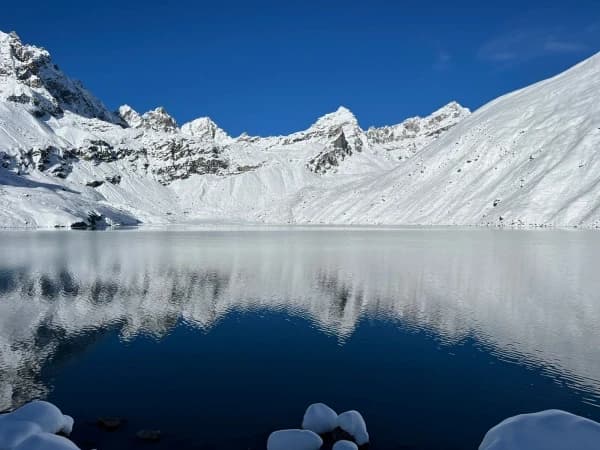
- Everest Base Camp with Gokyo Ri Trek (15 days): day 8 is Kala Patthar at sunrise and down to Pheriche. On day 9 you leave the main trail for Phortse, then climb to Machhermo and Gokyo. Pheriche is the hinge that turns an out-and-back trek into a loop.
- Everest Two Passes Trek (Renjo La and Cho La) (15 days): day 12 is Kala Patthar and Pheriche, then day 13 is the long walk down to Namche.
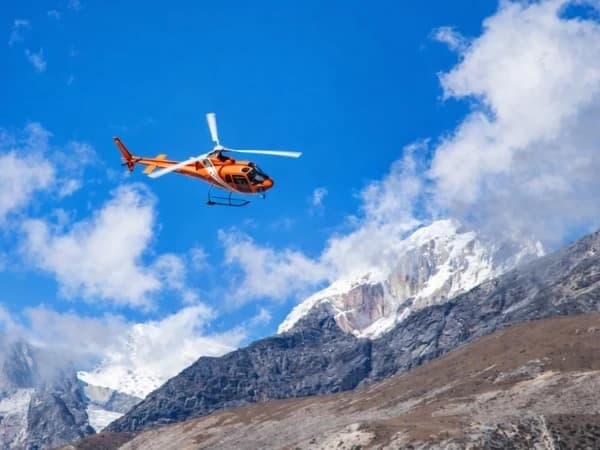
- Everest Base Camp trek with helicopter return (10 days): Pheriche on day 8, Lukla on day 9, and a helicopter to Kathmandu on day 10.
- Jiri to Everest Base Camp: Pheriche on day 14.
- Everest Base Camp by road: Pheriche on day 11.
Our 12-day Everest Base Camp trek is different. It comes down to Pangboche instead, which saves time on the shorter itinerary. If a night in Pheriche matters to you, pick one of the five above or ask us to build it into a private trek.
Facilities in Pheriche
Pheriche is a trekking village, so everything is simple and everything is carried up. Expect:
- Teahouse lodges with twin rooms and mostly shared bathrooms. On our itineraries Pheriche is a standard-room stop.
- Hot food from the lodge kitchen: dal bhat, noodles, soups and potatoes. Eat the dal bhat. It refills.
- Showers, charging and wifi at most lodges, usually for an extra charge. Prices change from season to season, so we do not quote them.
- The HRA aid post in spring and autumn.
Bring enough Nepali rupees from Kathmandu for the whole trek, and do not plan on finding a cash machine above Namche. Your permits are checked lower down, at Lukla and Monjo, not in Pheriche.
When to go to Pheriche
Pheriche follows the Everest seasons:
- October is the most reliable month and the busiest. The aid post is staffed.
- Mid-November to early December brings clear skies, cold nights and quieter trails.
- March and April are warmer, with rhododendrons lower down, and are the second-busiest time. The aid post is staffed.
- December to February is clear and empty but very cold. By mid-winter, do not count on the aid post being staffed.
- June to mid-September is monsoon. We do not recommend it.
Late October has also brought the tail end of cyclones into the Khumbu in recent autumns. We watch the forecast and keep a spare day where we can.
Common questions about Pheriche
Is Pheriche on the way up or the way down to Everest Base Camp? Usually the way down. Most itineraries, ours included, sleep in Dingboche on the ascent for its acclimatisation hike and in Pheriche on the descent, because the trail from Thukla runs straight down to it.
Is the Pheriche aid post open all year? No. The Himalayan Rescue Association staffs it with volunteer doctors in the spring and autumn trekking seasons. Outside those months, plan as if there is no doctor above Namche.
What permits do I need to reach Pheriche? Three: the Sagarmatha National Park entry permit (NPR 3,000 for foreign visitors, NPR 1,500 for SAARC nationals, plus 13% VAT), the Khumbu Pasang Lhamu Rural Municipality fee (NPR 3,000) and a TIMS card (NPR 2,000 for foreign visitors, NPR 1,000 for SAARC nationals). The Nepal Tourism Board licensed-guide rule from April 2023 covers the Khumbu region too, and we always trek with a licensed guide. We arrange all of it.
Can I stay in Pheriche on the way up instead of Dingboche? Yes, it is a normal teahouse stop, and we sometimes route a trekker through it for the aid post. For a trekker who is acclimatising well, though, Dingboche is the better ascent night because of the hike on the ridge above it.
Want Pheriche as your first night down from Kala Patthar? We run it on the Everest Base Camp with Gokyo Ri Trek and the Everest Two Passes Trek (Renjo La and Cho La), both as private treks with a licensed guide, and 2027 dates are open. WhatsApp us for current departures.
Pheriche sits within Sagarmatha National Park, managed by Nepal's Department of National Parks and Wildlife Conservation.
Shreejan Simkhada is the CEO and co-founder of The Everest Holiday, a family-run trekking company in Kathmandu, and a third-generation Himalayan guide. TAAN Member #1586. Every booking helps fund our Nagarjun Learning Center.
Planning a trip to Nepal?
Drop us your details and tell us what you have in mind. We will put together a personalised plan and get back to you.
Not sure which Nepal trek is right for you?
Take our free 2-minute quiz and get personalised recommendations based on your fitness, experience, and travel style.
Find Your Perfect Trek →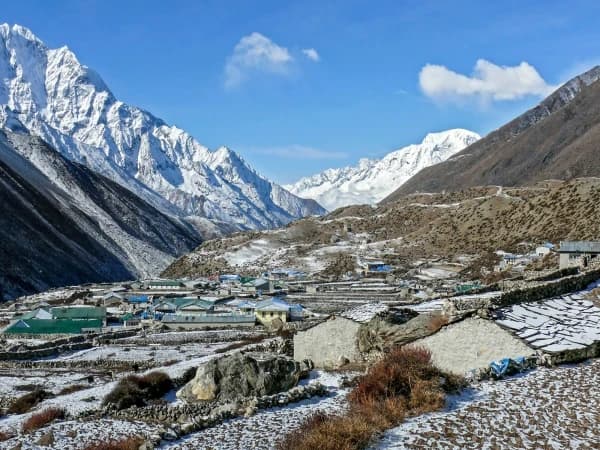 US$1,399
Everest Base Camp Trek By Road Trip - 15 Days Itinerary and Cost
 US$1,599
Historical Jiri to Everest Base Camp Trek - 18 Days Itinerary & Cost
 US$1,699
Everest Base Camp with Gokyo Ri Trek - 15 Days
Thamdanda and Surke: The Road Head for Everest Base Camp by Road
Thamdanda is the road head where our Everest Base Camp trek by road starts and ends on foot. How to get there from Phaplu and what the first walk to Paiya is like.
Read More
Poon Hill Trek Permits 2027: ACAP, TIMS, Cost and What You Need
Poon Hill needs two permits: ACAP at NPR 3,000 and a TIMS card at NPR 2,000. Who arranges them, where they are checked, SAARC rates and the 2027 trek prices.
Read More
Mera Peak Climbing Itinerary 2027: 14 Days, Day by Day
Mera Peak in 14 days, night by night. The Hinku valley, a full rest day at Khare, Mera High Camp at 5,780 m, summit day, 2027 prices and the best months.
Read More Chat with Shreejan