

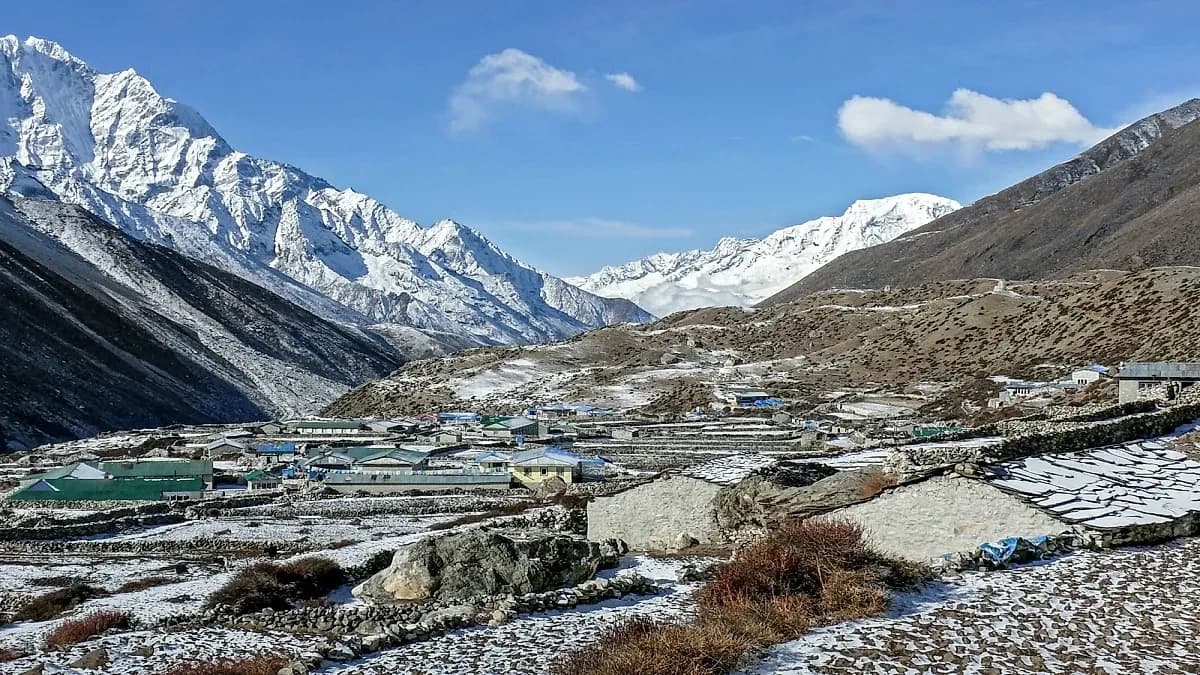
Short answer: Dingboche (4,410 m) is where almost every Everest Base Camp itinerary takes its second acclimatisation day, because the next stretch, up to Gorak Shep (5,164 m), is the biggest altitude gain of the trek. The rest day, usually with a walk higher up the valley, gives your body time to adapt and is the most important day of the whole trek. It is day 6 of our 12-day Everest Base Camp trek.
At Dingboche, the mountain decides. Not you. Not your fitness. Not your expensive gear or your twelve-week training plan. The mountain, or rather, the altitude that the mountain imposes, decides whether you continue to Everest Base Camp or turn back to Namche with a headache and a story about the trek you almost did. This is not melodrama. It is physiology. At 4,410 metres, your body has roughly sixty percent of the oxygen it needs, and the acclimatisation day at Dingboche, Day 6 of the standard EBC itinerary, is the day your body either demonstrates that it can adapt or reveals that it cannot.
Every EBC itinerary includes a rest day at Dingboche. Every guide insists on it. Every trekker who has done EBC and returned to advise the next trekker says the same thing: do not skip Dingboche. The acclimatisation day is not a day off. It is the most important day of the trek, the day when your body, stressed by four days of ascending altitude, gets twenty-four hours to catch up, to produce red blood cells, to recalibrate its breathing, and to decide whether the next roughly 750 metres of altitude gain, from 4,410 to Gorak Shep at 5,164, is something it can handle.
Why Do Trekkers Stay in Dingboche Instead of Pheriche?
The EBC trail splits above Tengboche into two parallel valleys. The left valley leads to Pheriche (4,250 metres). The right valley leads to Dingboche (4,410 metres). Both rejoin above for the push to Lobuche and Gorak Shep. Both offer acclimatisation days. The question, Dingboche or Pheriche?, is one that every EBC trekker encounters and that most answer the same way: Dingboche.
The reasons are practical. Dingboche is about 160 metres higher than Pheriche, which means slightly better altitude exposure for acclimatisation. Dingboche's acclimatisation hike, to Nangkartshang Peak or the ridge above, reaches approximately 5,000 metres, providing a dress rehearsal for the altitude at Gorak Shep. And Dingboche's setting, a broad, flat valley surrounded by some of the most dramatic peaks on the trail, is widely considered more scenic than Pheriche's bleak, wind-exposed valley floor.
Pheriche has the Himalayan Rescue Association clinic, a medical facility staffed by volunteer doctors during trekking season that provides altitude sickness assessment and treatment. If you are experiencing significant altitude symptoms, Pheriche's medical clinic is a genuine advantage. Some guides route symptomatic trekkers through Pheriche specifically for the clinic's presence. But for trekkers who are acclimatising normally, Dingboche is the standard choice.
The Acclimatisation Hike
The acclimatisation day hike from Dingboche is the second-most-important walk of the entire EBC trek (after the Kala Patthar sunrise). It follows the "climb high, sleep low" principle, ascending to approximately 5,000-5,100 metres during the day and returning to 4,410 metres to sleep. This altitude exposure triggers the adaptive responses that your body needs to function at Gorak Shep two days later.
The most popular hike is to Nangkartshang Peak (5,083 metres), a ridge directly above Dingboche that offers panoramic views of the Khumbu. The climb takes approximately two hours from the village, steep but not technical, following a trail that switchbacks up the grassy hillside above the village. The altitude makes the climb feel disproportionately hard, you stop every fifty steps to breathe, and the final section to the ridge feels like climbing stairs in a building with the windows open at thirty thousand feet.
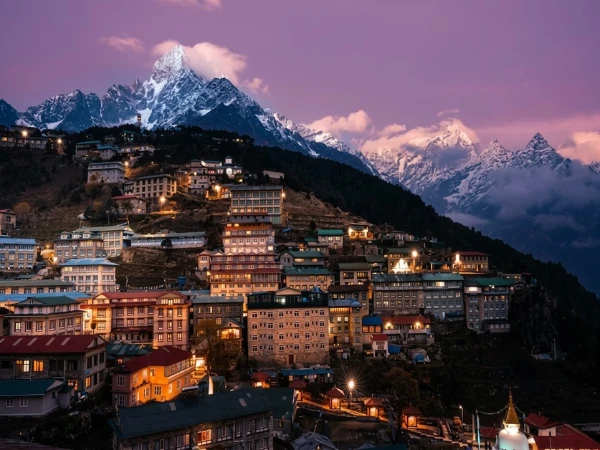
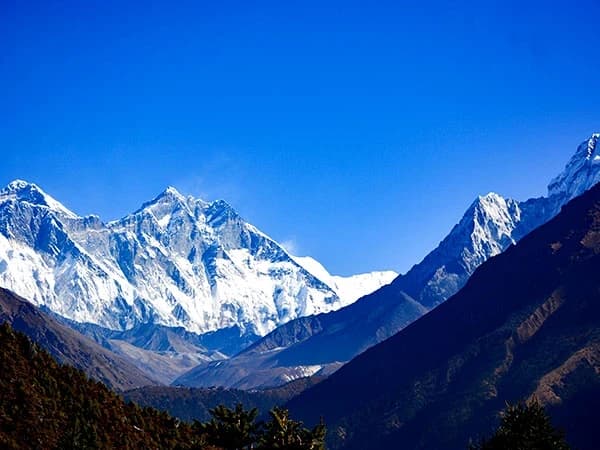
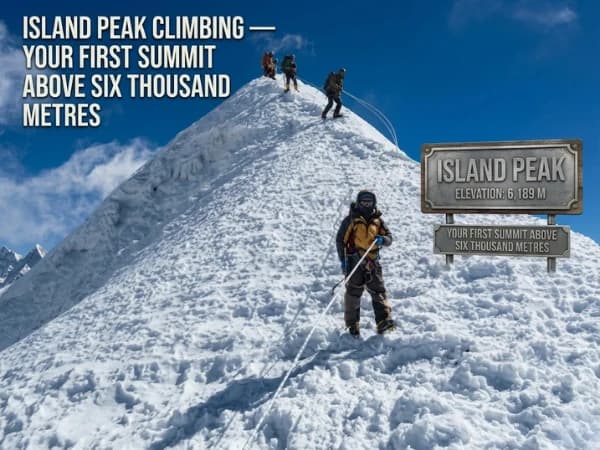
The views from Nangkartshang justify every gasping step. Island Peak (Imja Tse, 6,165 metres) fills the eastern view, a steep, triangular summit that is the most popular trekking peak in Nepal. Ama Dablam dominates the south, its perfect pyramid visible from an angle that emphasises its steepness and its beauty. Lhotse's massive south face fills the north, and on clear days, the summit of Makalu (8,485 metres, the world's fifth highest) is visible to the east. You are surrounded by four of the world's highest mountains, standing at five thousand metres, and the views are simultaneously the reward for the climb and the reason you are doing it, because your body needs this altitude exposure, and the Himalaya, in its characteristic generosity, provides it wrapped in the most spectacular scenery on earth.
What Does Altitude Feel Like at 4,410 Metres?
Dingboche is where altitude stops being an abstract concept and becomes a physical experience. At Namche (3,440 metres), most trekkers feel mild effects, slight breathlessness on stairs, occasional headache. At Tengboche (3,860 metres), the effects deepen, headache is more common, appetite decreases, sleep quality drops. At Dingboche (4,410 metres), the effects are unmistakable.
The headache. It arrives in the late afternoon of the day you arrive, a dull pressure behind the eyes and across the forehead that paracetamol reduces but does not eliminate. It is worse in the morning. It is worse after poor sleep. And it is worse if you are dehydrated, which, at 4,410 metres where the air is dry and your breathing rate is elevated, you almost certainly are unless you have been disciplined about drinking three to four litres per day.
The breathlessness. Walking at Dingboche feels normal until you encounter stairs or a slight incline. Then the breathing shifts, deeper, faster, more deliberate. You become aware of each breath in a way that sea-level breathing never requires. Talking while walking becomes difficult. Laughing makes you cough. And the specific sensation of reaching the top of the teahouse stairs and needing to stand still for thirty seconds to recover is one that every Dingboche trekker knows.
The appetite. It decreases. Not dramatically, most trekkers still eat full meals, but the enthusiasm for food fades. The dal bhat that was delicious at Namche is functional at Dingboche. You eat because your body needs fuel, not because you are hungry. Your guide encourages you to eat more. They are right. The calories you consume at Dingboche power the next three days of the hardest walking on the trek.
The sleep. This is the hardest part. At 4,410 metres, periodic breathing begins in earnest for many trekkers. You fall asleep. Your breathing slows and pauses. Your brain jolts you awake. You gasp, readjust, and fall asleep again. The cycle repeats every few minutes throughout the night. The result is sleep that feels like a series of interrupted naps rather than continuous rest. This is normal. It is not a sign of illness. And it improves, slightly, after the acclimatisation day, when your body has had the additional twenty-four hours to adapt.
What Is Dingboche Village Like?
Dingboche is a farming village, one of the highest permanent settlements in the Khumbu, with stone-walled fields where potatoes are grown in the short summer season. The fields are enclosed by dry stone walls that protect the crops from yaks and from the wind that pours through the valley with a constancy that makes Dingboche one of the windiest stops on the trail.
The village has approximately a dozen teahouses, a small shop selling basic goods (chocolate, batteries, toilet paper at altitude-appropriate prices), and a handful of stone houses occupied by the farming families who tend the potato fields when they are not running teahouses. The teahouses are standard Khumbu fare, twin rooms, shared bathrooms, common room with a stove, but at 4,410 metres, the cold is more aggressive than at lower stops. The stove in the common room becomes the centre of evening social life, and the trekkers who secure seats closest to it guard those seats with the territorial instinct that altitude and cold produce.
The evenings at Dingboche are cold and early. The sun drops behind the western ridge by four o'clock, and the temperature falls immediately, from perhaps five degrees in sunshine to minus five in shadow within thirty minutes. By six o'clock, every trekker is in the common room, wearing every layer they packed, drinking tea, and having the quiet, altitude-muted conversations that characterise the upper EBC trail. The topics are consistent: how is the headache. How much water did you drink. What did the guide say about tomorrow. Did you sleep last night.
What Should You Do on Your Acclimatisation Day in Dingboche?
Beyond the acclimatisation hike, the rest day at Dingboche offers time for activities that the walking days do not allow.
Laundry. Some teahouses offer a hand-wash laundry service, your base layers and socks washed in cold water and dried on the sunny terrace. The drying is altitude-dependent, the intense UV at 4,410 metres dries clothes faster than you would expect, but the cold wind adds a chill factor that makes the dried clothes feel like they were stored in a freezer.
Photography. The acclimatisation day provides the best photography opportunities of the trek's middle section. The morning light at Dingboche, low angle, warm colour, the peaks catching fire while the valley is still in shadow, is exceptional. Ama Dablam from Dingboche is one of the classic Khumbu photographs. And the walk to Nangkartshang provides elevated vantage points that the valley floor does not offer.
Rest. Genuine rest. Lying in your sleeping bag with a book or a podcast, letting your body do the invisible work of adaptation. The trekkers who rest most effectively on the acclimatisation day, who resist the urge to walk all day, who drink four litres of water, who nap in the afternoon, are the trekkers who arrive at Gorak Shep two days later feeling strongest.
What Happens After Dingboche on the EBC Trek?
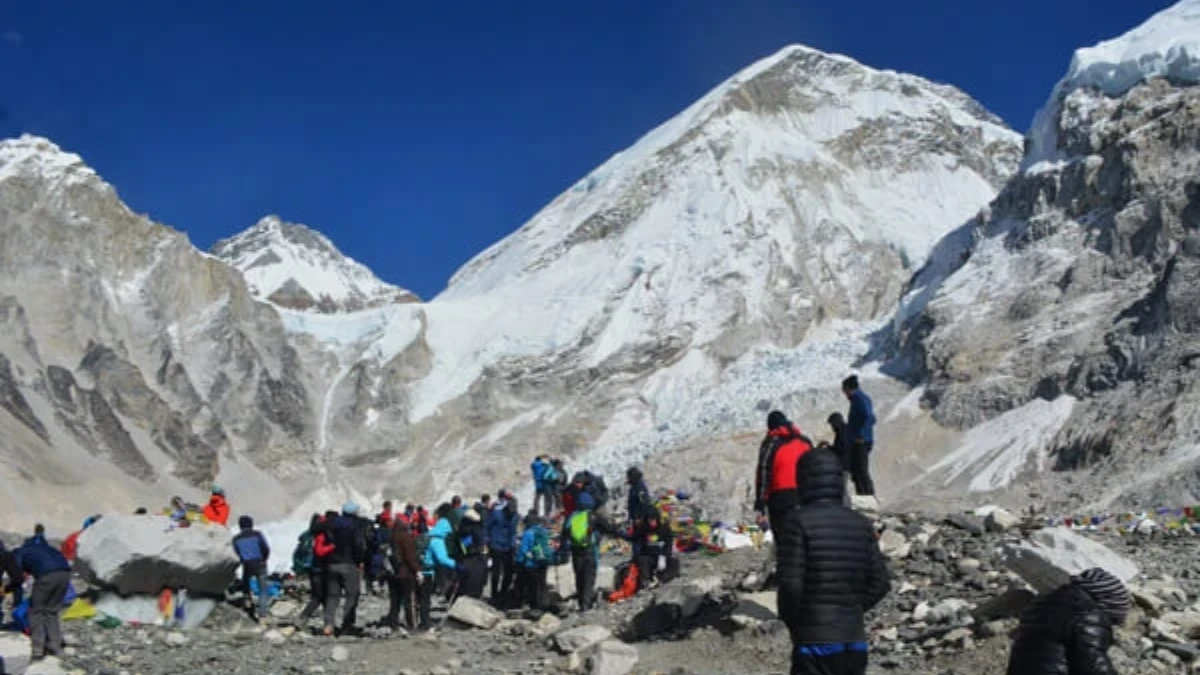
The morning you leave Dingboche, Day 8, heading for Lobuche, is the morning the trek enters its final phase. Above Dingboche, the landscape becomes progressively more austere. The vegetation thins. The colour drains from the world. The grey moraine of the glacier system dominates every view. And the altitude, 4,410 to 4,940 at Lobuche, 5,164 at Gorak Shep, 5,364 at Base Camp, 5,545 at Kala Patthar, increases with each day in increments that your now-acclimatised body handles because of the day you spent at Dingboche doing nothing visible and everything essential.
The acclimatisation day does not feel important when you are living it. It feels like waiting. Like wasting a day. Like the mountains are up there and you should be walking toward them. But the acclimatisation day is the reason you reach them. The rest day at Dingboche is the foundation on which the summit days at Base Camp and Kala Patthar are built. Without it, the summit days are a gamble. With it, they are an achievement. And the difference, between gambling and achieving, is the twenty-four hours at 4,410 metres that your body used to teach itself how to breathe in air that is barely enough.
Dingboche is the second acclimatisation stop on the Everest Base Camp Trek. Spending an extra day here at 4,410 metres is essential before pushing to Lobuche and base camp. For the route that includes Gokyo Lakes and Cho La Pass alongside EBC, see our EBC with Gokyo Lakes Trek.
Dingboche is the acclimatisation village on the EBC trek, and the extra day here is not optional: it is essential. You will walk up to Nangkartshang Peak (5,083m) for views, come back down, eat dal bhat, and sleep. Your body needs this day to build the red blood cells that will carry you to base camp. Do not skip it. The trekkers who skip acclimatisation days are the ones who do not make it.
Dingboche is day seven on our Everest Base Camp Trek. We never skip the acclimatisation day.
WhatsApp:+977 9810351300
Email:[email protected]
Written by Shreejan Simkhada, CEO of The Everest Holiday and third-generation Himalayan guide. TAAN Member #1586.
Charging your phone and connecting above Dingboche has its own cost and reliability rules: see our wifi, electricity, and phone-charging on Nepal treks guide for the details.
From Dingboche, trekkers with the high passes or a summit in mind branch east up the Imja valley to Chhukung, the staging village for the Kongma La and for Island Peak.
Dingboche is your second acclimatisation day on EBC. Our Everest Base Camp Trek (12 Days) is private (your group only, no strangers), 2027 dates open, From USD $1399. WhatsApp us for tailored 2027 dates and current departures.
 Chat with Shreejan