Periods and Hygiene on the Everest Base Camp Trek: A Practical Guide for 2027

Updated 25 October 2026.
Short answer: You can trek to Everest Base Camp on your period. Pack all the supplies you need for the whole trip, because you cannot count on buying anything above Namche (3,440 m). Pack every used product out in sealed bags to Lukla, as teahouses have very little waste disposal. A menstrual cup is the lightest thing to carry, but only if you are happy using one with limited water. Estimated night lows at Dingboche (4,410 m) are around minus 2 to minus 7 degrees in the main trekking months, so plan for warmth and pain relief too. Our 12-day Everest Base Camp trek costs USD 1,399 Budget, USD 2,785 Standard and USD 4,999 Luxury per person for two to four people.
I am Shreejan. I am a man, so I do not have first-hand knowledge of this, and I want to say that plainly. What I can tell you is how the trail works, what the teahouses have and do not have, and what women guests and women I work with have told me over the years in general terms. I have added what medical sources say where there is a source, and left things out where there is not.
Quick facts for a period on the Everest trek
| Question | What to plan for |
|---|---|
| Where to buy supplies | Kathmandu and Pokhara before you go. Namche Bazaar (3,440 m) has shops, but stock is small. Do not rely on anything above it |
| Waste | Carry used products out in sealed bags. Do not leave them to the lodge bins |
| Toilets | Mostly flush toilets lower down. Above about 4,000 m, squat toilets with a bucket of water are the norm |
| Washing | Hot showers cost extra and get scarcer with height. Wet wipes and a small bottle of boiled water do most of the work |
| Cold | Dingboche night lows estimated at minus 2 to minus 7 degrees in the main months. Gorak Shep (5,164 m) is colder again |
| Cycle changes | Possible. The research is small and mixed. Pack as if it could come on any day |
| Trek length and top point | 12 days, Base Camp 5,364 m, Kala Patthar 5,545 m |
Should I use a menstrual cup, pads or tampons on the trek?
There is no single right answer. It depends on what you already use and trust at home.
A cup produces the least to carry out. That is its big advantage on a 12-day trek where every gram is counted. Leave No Trace, the outdoor ethics group, makes the same point in its period guide: a cup can reduce the packaging you need to pack out, but it can also bring challenges with bacteria, dirt and sweat when washing facilities are limited. Wherever you are, wash your hands before you handle it and clean it with water you trust. In a teahouse that means water that has been boiled and cooled, which you can ask for. Our water guide says teahouses fill a bottle with boiled water for 50 to 200 NPR.
Do not try a cup for the first time at 4,000 m. Practise at home for at least two cycles.
Pads are the easiest for most people, and the heaviest to carry out. Tampons are fine if you change them on time. The NHS notes that toxic shock syndrome can come from tampons or cups, and advises not to leave them in longer than recommended. If you feel suddenly ill with a fever while using one, take it out and get medical help. At altitude it is easy to blame any headache or tiredness on the height and miss other causes, so I mention it.
Period underwear works as a backup for any of these, and dries slowly in cold air, so bring more than one pair.
What can I buy in Kathmandu, Pokhara and Namche, and what can't I?
Kathmandu and Pokhara are the safe places to buy. Pharmacies and supermarkets stock pads in several sizes. Tampons are harder to find and the choice of brands and absorbency is smaller than at home. Cups are not something I would count on finding at all. If you use tampons or a cup, bring all of what you need from home.
Namche Bazaar has small shops and pharmacies, and trekkers have bought supplies there. But the stock is limited and I cannot promise you will find your brand or size. Above Namche, treat it as nothing. The lodges are not shops, and a restocking run means a day or more of someone's time.
My rule: pack one more cycle's worth than you think you need, plus painkillers and a spare pair of underwear in a sealed bag in your daypack. Your daypack stays with you. Your main bag is with the porter and may be hours behind. Our Everest Base Camp packing list covers the rest of the kit, and the package page lists feminine hygiene products and toilet paper in a ziplock bag under toiletries.
What do I do with used pads, tampons and cup waste?
Pack it out. This is the part I feel strongest about.
The Khumbu does have a waste system. The Sagarmatha Pollution Control Committee has worked on it since 1991, with segregation bins along the trails. Its 2025 annual report says burnable waste is handled in the Khumbu and recyclables go to Kathmandu. It does not say what to do with sanitary products, so I do not ask anyone to leave them to that system. At that altitude nothing breaks down quickly.
Here is what I suggest.
Carry two or three small ziplock bags per day, double-bagged, plus a small opaque pouch so it does not show. Some guides suggest a tea bag or a crushed aspirin in the bag to cut the smell, which is an outdoor tip I have not tested myself. Keep the bag at the bottom of your daypack, not outside it.
Carry it down to Lukla, or back to Kathmandu if you prefer, and bin it there. Do not bury, burn or flush anything. Your guide will know where to put it in Lukla. The longer piece on responsible trekking in Nepal explains why we do this on every trek.
For cup contents, outdoor guides disagree about burying them in a hole away from water. Above the tree line the ground is thin and animals dig things up. I would not do it near any village or stream in the Khumbu. If you use a cup, ask your guide where to empty it before you do, because the right place changes from village to village.
How do I keep clean when there is little hot water?
Below Namche most lodges offer a hot shower, usually solar or gas heated, for a fee. Above Dingboche it is a different story, and many people stop showering for the last four or five days, as I wrote in our teahouse guide. That is normal and nobody minds.
What matters more than showers is your hands. Use wet wipes or alcohol gel before and after you change anything, and keep a small bottle in your pocket, not in the main bag. Wipe from front to back. A small bottle of boiled water, cooled, for rinsing is worth the 50 to 200 NPR. Do not use water from a tap or stream unless it has been treated, and our trekking water guide covers how.
Plan on around USD 20 a day for snacks, hot showers and charging, which is the figure on our package page.
What are the toilets like on the Everest trail?
Lower down, many lodges have a Western flush toilet in the room or just down the corridor. Above about 4,000 m the norm is a squat toilet in a separate block, flushed with a bucket from a barrel. The path to it at 3 am can be dark and icy. Keep a head torch by your bed and your boots next to the door.
Toilet paper does not always go down the pan. Many lodges ask you to put it in the bin beside the toilet. Check before you flush. Carry your own paper in a ziplock bag, because lodges do not always supply it.
Standard and Luxury guests on our trek get a private room, and Budget is shared. If privacy for changing matters to you, that is a point to weigh up when choosing a tier.
Does altitude change your period?
It might. What the research says is that nobody is sure.
A 2017 study in Physiological Reports followed seven healthy, regularly menstruating women on a 14-day trek in the Khumbu, up to a research site at 5,050 m. It recorded no change in cycle length or regularity during the trek. Progesterone levels suggested that none of the women ovulated during the expedition, which the authors tied to the trek and altitude. The authors call their own results preliminary, with a very small group.
So what I tell guests is simple. Your period may come early, late or not at all, and it may be lighter or heavier. If you take hormonal contraception or want to delay a period for the trek, speak to your own doctor before you leave. I cannot give medical advice on that.
How do I deal with cold and period pain at altitude?
Cold makes cramps feel worse for most people. Teahouse dining rooms are only warm near the stove, and bedrooms are not heated.
A hot water bottle is the best thing I know of. Ask the kitchen for hot water at bedtime, and put the bottle in your sleeping bag. Expect to pay a little for the water. If you do not own a sleeping bag or down jacket, we lend you one for the trek, and Luxury includes bed heaters where available. Thermal leggings help, and so does a layer over your lower back.
For pain relief, bring what you already take at home and know suits you. Ibuprofen is commonly used for altitude headache too, and the Wilderness Medical Society altitude guidelines (2024 update) list it for that purpose. I am not a doctor, so I will not give doses. Ask your own doctor, particularly if you have a stomach, kidney or asthma problem. Our first-aid kit guide lists what your guide carries.
A headache with nausea or dizziness on a high day may be altitude sickness and not your period. Tell your guide either way. The altitude sickness guide explains the signs.
When is the best time of year, for cold and water?
The figures below are estimates for night lows, from magicalnepal.com, which states they are derived from the Base Camp station with a standard temperature drop per 1,000 m, not measured in each village. Other sources give different numbers, so read them as a guide and not a promise.
| Month | Namche night | Dingboche night | Gorak Shep night |
|---|---|---|---|
| March | -2 | -7 | -10 |
| April | 0 | -5 | -8 |
| May | 3 | -2 | -5 |
| October | 3 | -2 | -5 |
| November | -1 | -6 | -9 |
| December | -3 | -8 | -11 |
| January | -6 | -11 | -14 |
My view from guiding: October and May are the gentlest for cold and washing, because nights are mildest in the table above. March and November need a warmer sleeping bag and more patience with water. December and January are very cold, and washing at altitude becomes mostly wipes. Our month-by-month weather guide goes further on each month.
Getting there and what it costs
The Everest Base Camp trek, 12 days starts with the flight from Kathmandu to Lukla (2,860 m). You sleep at Phakding (2,610 m) on day 1, then Namche (3,440 m) with a rest day, Tengboche (3,860 m), Dingboche (4,410 m) with a second rest day, Lobuche (4,940 m) and Gorak Shep for Base Camp at 5,364 m. Kala Patthar (5,545 m) is the sunrise hike on day 9. Two more walking days take you back to Lukla and you fly to Kathmandu on day 12.
For two to four people, the price per person is USD 1,399 Budget, USD 2,785 Standard and USD 4,999 Luxury. A solo traveller on Budget pays USD 2,275. The permits, TIMS card and Lukla flights are included. Meals are not included on Budget, and teahouse meals in the Everest region run about NPR 2,000 each. Kathmandu hotels are not in the price.
Insurance is yours to arrange at home. Make sure it covers you up to 6,000 m, which is the trek's highest point (Kala Patthar, 5,545 m) rounded up to the next 500 m.
Standard has one porter for every two guests, so your bag weighs about 10 kg each. Luxury has your own porter, with up to 20 kg for you. Budget has no porter, so you carry your own bag, and that includes your supplies.
FAQ about periods on the Everest trek
What do I do with used sanitary products on the trek?
Seal them in bags and carry them out to Lukla or Kathmandu. Do not bury, burn or flush them. The lodges have no dependable way to take them away.
Is a menstrual cup better than pads at altitude?
A cup is lighter and leaves almost nothing to carry out. It needs clean hands and clean water, and takes practice. Try it at home first. If you have not used one before, pads are the safer first choice for a long, cold trek.
Will the altitude make my period come early or late?
It may, but the evidence is thin. The small studies we found show mixed results. Plan for either, and see your doctor before the trip if you want to delay a period.
Can I buy tampons or pads in Namche Bazaar?
Possibly, but do not count on it. Stock is small. Buy in Kathmandu or Pokhara, or bring your own, and pack extra.
What are the toilets like above Namche?
Mostly squat toilets in a separate block, flushed with a bucket of water. Bring your own paper and a head torch.
Is there hot water for washing at high altitude?
Sometimes, for a fee, and it gets rarer with height. Some lodges above Dingboche have gas-heated showers. Many have none. Wet wipes and boiled water in a bottle work well enough.
If you want to talk through any of this before you book, message me on WhatsApp at +977 9810351300.
Planning a trip to Nepal?
Drop us your details and tell us what you have in mind. We will put together a personalised plan and get back to you.
Not sure which Nepal trek is right for you?
Take our free 2-minute quiz and get personalised recommendations based on your fitness, experience, and travel style.
Find Your Perfect Trek →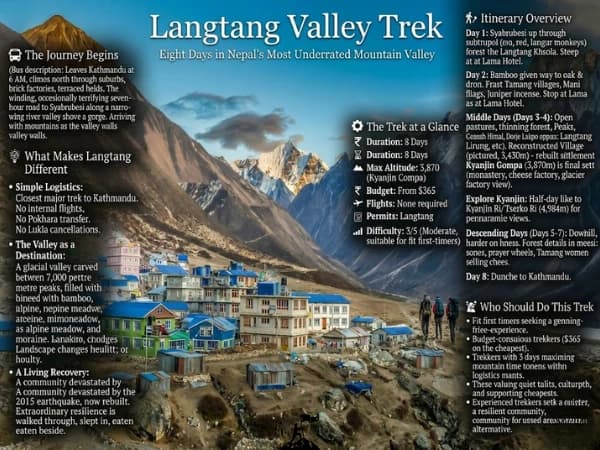
Langtang Trek in 5, 6 or 7 Days: What You Can Cut and What You Cannot (2027)
What a 5, 6 or 7 day Langtang trek really looks like: where you sleep, what you cut, how fast is too fast, Kyanjin Ri or Tserko Ri, and the road to Syabrubesi.
Read More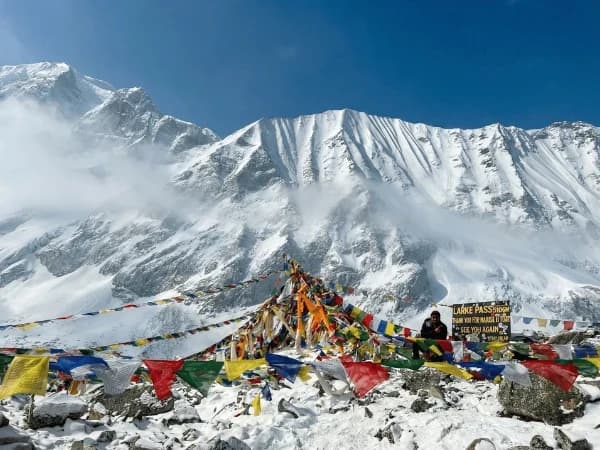
Larkya La and the Manaslu Circuit Altitude Profile, Night by Night for 2027
Night-by-night sleeping heights and gains on the 12-day Manaslu Circuit, the rest day, the one night above 4,000 m, pass day numbers, AMS warning signs and 2027 prices.
Read More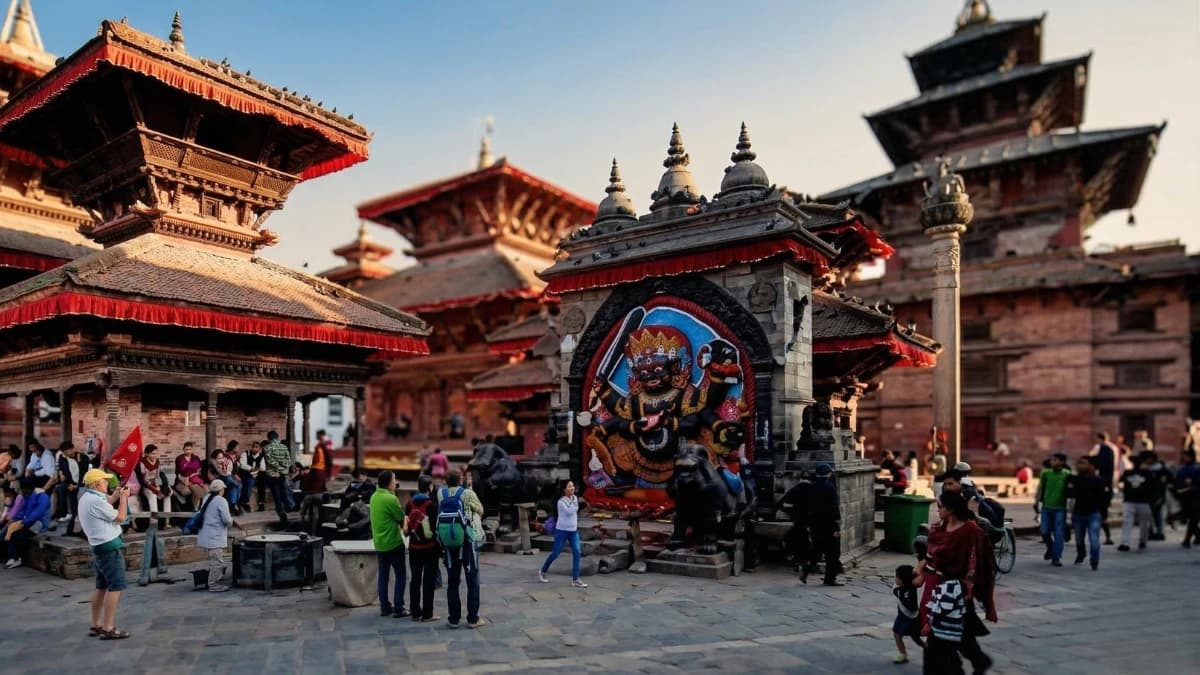
Kumari, the Living Goddess of Kathmandu: Kumari Ghar, Visiting Rules, Photos and Indra Jatra 2027
Who the Kumari of Kathmandu is, where she lives, how and when visitors may see her, why you cannot photograph her, Indra Jatra, the Durbar Square ticket and Kathmandu weather by month.
Read More Chat with Shreejan