
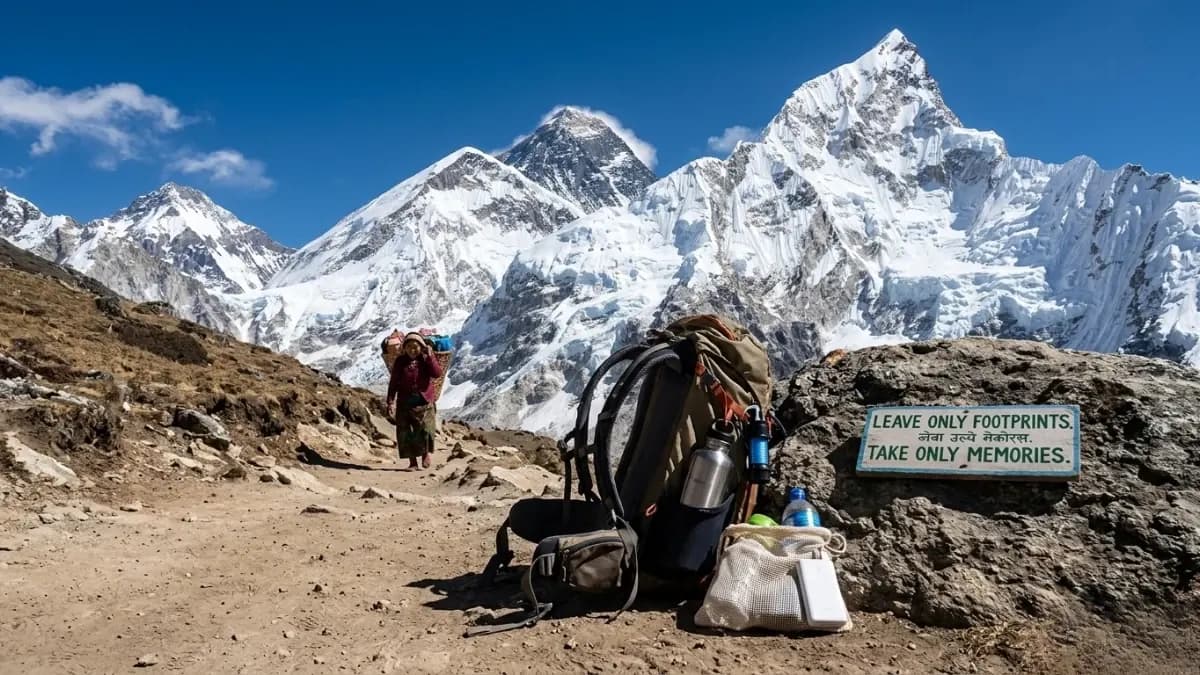
The Khumbu Glacier is retreating. The trail between Namche and Tengboche is eroding. The forests above Chhomrong on the Annapurna Base Camp route have been stripped of firewood faster than they can regenerate. And the waste (the plastic bottles, the battery packs, the toilet paper, the abandoned trekking gear) accumulates at a rate that the mountains' slow, cold decomposition processes cannot match.
These are not future problems. They are current realities. And they are caused, in part, by the same trekkers who come to Nepal because they love mountains. The irony is not lost on the people who live here. The Sherpa who guides you to Everest Base Camp walks through a landscape that his grandparents knew as untouched and that his grandchildren may know as degraded. The teahouse owner who cooks your dal bhat burns firewood from forests that are visibly thinner than they were twenty years ago. The porter who carries your bags walks past plastic waste that was not here when his father walked the same trail.
Responsible trekking is not a marketing phrase. It is a set of specific behaviours that reduce your impact on a fragile ecosystem that is already under pressure from climate change, population growth, and, yes, tourism. The mountains will survive regardless. They have survived ice ages. The question is whether the communities and ecosystems that make trekking possible will survive the trekkers who come to enjoy them.
How Big Is the Waste Problem on Nepal Treks?
Waste is the most visible impact of trekking and the one that individual trekkers can most directly control.
Plastic bottles. The single biggest source of trekking waste. A twelve-day EBC trek generates approximately twelve to twenty plastic water bottles per trekker, more at altitude where hydration demands are higher. Most of these bottles cannot be recycled on the trail and are either burned (releasing toxic fumes), buried, or left in growing piles behind teahouses.
The solution is simple: carry a reusable water bottle and use purification. Water purification tablets (chlorine dioxide, Aquamira or Katadyn brands work well), a SteriPEN (UV purification), or a filter bottle (LifeStraw, Grayl, or Sawyer) eliminates the need for purchased bottles entirely. The investment, twenty to sixty dollars for a system that lasts the entire trek, pays for itself within three days at altitude, where bottled water costs two to four dollars per litre.
Some teahouses and lodges along the trail offer safe drinking water refills for a small fee. The "Safe Drinking Water" stations, initiated by various NGOs, provide filtered water at points along the EBC and Annapurna trails. Ask your guide about their locations.
Batteries and electronics waste. Headlamp batteries, power bank batteries, and camera batteries are toxic waste that should never be left on the trail. Carry all dead batteries out and dispose of them in Kathmandu where proper waste processing exists (the tourist area in Thamel has designated collection points).
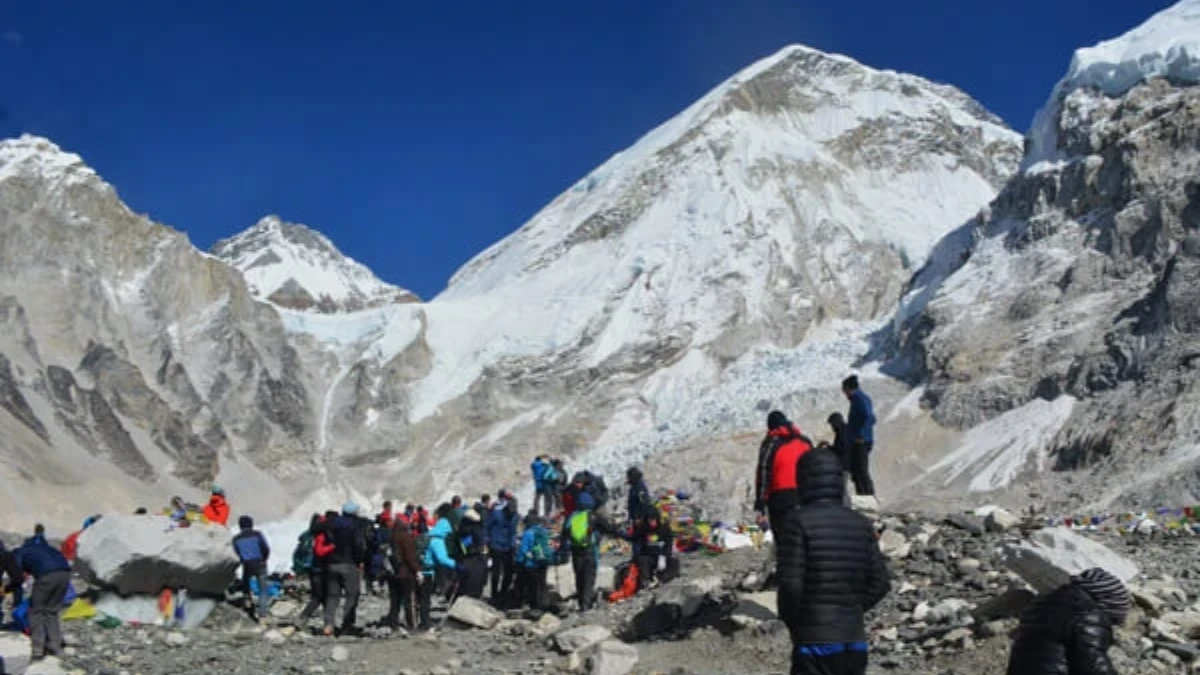
Toilet paper and human waste. Above the tree line, where there is no vegetation to absorb organic matter, human waste and toilet paper persist for years. The trail to EBC above Lobuche, and the area around Gorak Shep, show the consequences of decades of inadequate toilet facilities and trekker carelessness.
Use the teahouse toilets where they exist. When nature calls on the trail between teahouses, move at least fifty metres from any water source and thirty metres from the trail. Dig a hole if possible (difficult above the tree line where the ground may be frozen). Carry out your toilet paper in a zip-lock bag, this sounds unpleasant but is the responsible choice in environments where paper does not decompose. Some treks now require trekkers to use WAG bags (portable toilet bags) above certain altitudes.
General waste. Everything you carry in, carry out. This includes food packaging, medical waste (blister plasters, medication packaging), and any other non-biodegradable material. The principle is simple: leave nothing on the trail that was not there when you arrived.
What is Carry Me Back, and can I take part?
Carry Me Back (CMB) is a waste campaign run in the Khumbu by the Sagarmatha Pollution Control Committee (SPCC), a non-profit founded in 1991, with Sagarmatha Next and other local partners. Trekkers, guides and local people volunteer to carry bags of semi-processed recyclable waste (aluminium cans, PET bottles, tins and glass) from upper Khumbu villages such as Namche and Pangboche down to Lukla airport. From Lukla the waste is flown to Kathmandu to be recycled.
We take part, and you are welcome to join in. On our Everest Base Camp trek the walk down passes through Pangboche, Namche and Lukla, which is the same route the bags take. We brief every guest before departure, and if you would like to carry a bag down, ask your guide. It is an invitation, never a requirement, and it does not replace carrying out your own waste. We explain the campaign in full in Carry Me Back: how our Everest trekkers help keep the Khumbu clean.
On 2 October 2026 the SPCC team wrote to us:
"On behalf of the Sagarmatha Pollution Control Committee (SPCC), we extend our heartfelt gratitude for your participation in the Carry Me Back (CMB) campaign. The Everest Region faces a unique challenge in managing waste due to the lack of local recycling facilities and convenient transportation options. Your dedication to the CMB campaign plays a vital role in addressing this issue and brings us one step closer to a cleaner Everest."
The SPCC Team, Sagarmatha Pollution Control Committee, email to The Everest Holiday, 2 October 2026
What Is the Energy Problem in Nepal's Mountains?
Heating and cooking in mountain teahouses consumes firewood and, increasingly, gas and electricity. The impact varies by region and altitude.
Below the tree line, firewood is the traditional fuel. Decades of harvesting have visibly thinned the forests around popular trekking villages, the rhododendron forests above Namche, the pine forests on the Annapurna Circuit's eastern approach, and the oak forests of the Langtang valley. Reforestation programmes exist but cannot keep pace with demand during peak season.
What you can do: minimise your energy demands. Do not ask for heated water for washing when cold water is available. Do not leave lights on in your room. Share the common room stove rather than requesting individual room heating (which most teahouses cannot provide anyway). Order from the same menu items as other trekkers, when the kitchen makes one large batch of dal bhat rather than five individual Western meals, the fuel consumption is lower.
The most impactful choice: order dal bhat. Not because it is cheaper (though it is). Not because it is traditional (though it is). But because it is the most fuel-efficient meal a teahouse can produce. A large pot of dal and a large pot of rice serve twenty trekkers with a single cooking session. Twenty individual orders of pizza, pasta, and pancakes require twenty individual cooking sessions. The fuel difference is significant and multiplied across the thousands of trekkers on the trail each day.
How Does Trekking Affect Nepal's Water?
Everything you put into the water at altitude flows downstream to communities that depend on that water for drinking, irrigation, and daily life. Soap, even biodegradable soap, should never be used directly in streams or rivers. Sunscreen and insect repellent, when washed off skin into water sources, introduce chemicals that affect aquatic ecosystems.
Wash using a basin provided by the teahouse, not in the stream. If you must wash in moving water, use plain water only, no soap, no detergent, no shampoo. The "biodegradable" label on your soap means it breaks down eventually. At altitude, in cold water, "eventually" is measured in months, not days.
Do not wash clothes in streams or rivers. Use a basin and dispose of the wash water on land, away from water sources. Some trekkers carry a small amount of biodegradable travel soap for emergencies, if you do, use it on land, at least fifty metres from any water source, and pour the wash water into soil rather than running water.
How do I respect local culture and customs while trekking in Nepal?
The trails pass through communities, not theme parks. The people you meet, the teahouse families, the porters, the farmers, the monks, are living their lives in the place you are visiting. Responsible trekking includes respecting the cultural norms of these communities.
Photography. Ask before photographing people. A smile and a gesture toward the camera is sufficient, if the person shakes their head or turns away, respect the refusal. Do not photograph religious ceremonies without permission. Do not photograph children without the permission of a parent or guardian. The "cute Nepali kid" photo that fills Instagram feeds is, in many cases, taken without consent from a family that would prefer their child not be a tourism commodity.
Religious sites. Remove shoes before entering monasteries and temples. Walk clockwise around Buddhist stupas, chortens, and mani walls (keeping them to your right). Do not touch religious objects, statues, prayer wheels, butter lamps, without permission. Do not sit on or lean against mani walls. These are not decorative structures. They are sacred objects that hold deep significance for the communities that built and maintain them.
Dress. Modest clothing is appropriate in Nepali villages. Shoulders and knees covered in village settings. What you wear on the trail between villages is less consequential, but what you wear in village centres, teahouse dining rooms, and near religious sites matters. Nepal is a conservative country despite its openness to tourists, and dressing respectfully is a small act of cultural recognition.
Giving to children. Do not give sweets, money, or gifts to children on the trail. The intention is generous. The effect is to teach children that foreigners are sources of free things, a lesson that erodes self-reliance and creates begging behaviour that did not exist before tourism. If you want to help children, donate to a school or a community programme. Your trekking company can advise on reputable local organisations.
Bargaining. Bargaining is appropriate in Kathmandu markets and Thamel shops. It is not appropriate at trail teahouses, where prices are set by local agreement and reflect the genuine cost of providing services at altitude. The teahouse owner who charges four hundred rupees for a cup of tea at Gorak Shep is not overcharging, the tea leaves were carried on someone's back from Namche. Pay the asking price. Tip if the service was good. The money stays in the community.
Should I book with a local trekking company in Nepal?
The way you spend money on a trek determines who benefits from your visit. Choices that direct money toward local communities are inherently more responsible than choices that extract money from the trekking economy.
Book with a local company. When you book through a Nepali trekking company, the money stays in Nepal. When you book through a Western agent who subcontracts to a Nepali company, a significant portion, twenty to forty percent, leaves Nepal as the agent's margin. The same trek, the same guides, the same service, but a different distribution of the money you spend.
Eat local food. Dal bhat uses locally sourced ingredients. Pizza uses imported cheese and flour. The dal bhat money stays in the local agricultural economy. The pizza money, mostly, does not.
Buy local products. Handmade woollen goods, local honey, yak cheese, Tibetan singing bowls, these are products made by the communities you are visiting. Buying them supports local artisans directly. The mass-produced "North Fake" jacket from a Thamel shop supports a factory, not a community.
Tip fairly. Guides and porters depend on tips as a significant portion of their income. The convention, fifteen to twenty-five dollars per day for guides, eight to twelve dollars per day for porters, exists because base wages in the trekking industry are low. Tipping is not charity. It is the completion of a compensation structure that, without tips, would not support the families that depend on it.
How do I check porter welfare before booking a Nepal trek?
The ethics of porter employment in Nepal trekking deserve specific attention because the history includes exploitation that the industry is still correcting.
Porters carry trekkers' gear, typically fifteen to twenty-five kilograms per porter, along the same trails you walk, often in lesser gear and lesser footwear. Historically, porters were paid minimally, carried excessive loads, and had no insurance or medical support. Deaths among porters from exposure, falls, and altitude sickness were, and occasionally still are, more common than deaths among the trekkers they serve.
Responsible trekking means ensuring your porters are treated ethically. Your trekking company should provide: fair wages (the government minimum plus tips), adequate clothing and footwear for the conditions (including above the snow line), proper shelter (not sleeping outside while trekkers sleep in teahouses), insurance coverage, and load limits (the International Porter Protection Group recommends a maximum of twenty kilograms per porter in mountainous terrain).
Ask your company about their porter policy before booking. A company that is transparent about porter wages, load limits, and insurance is a company that takes the welfare of its staff seriously. A company that cannot answer these questions, or that offers suspiciously low prices, may be cutting costs on the backs of its porters.
How much does it cost to offset my flight to Nepal?
The flight to Nepal generates carbon emissions. The helicopter that evacuates sick trekkers generates carbon emissions. The generators that power teahouse lights generate carbon emissions. Trekking in Nepal has a carbon footprint that cannot be eliminated.
It can be reduced. Fly direct (fewer connections = less fuel). Take the road route rather than flying to Lukla. Choose teahouses that use solar power (increasingly common on the EBC and Annapurna routes). Support reforestation initiatives, some trekking companies plant trees for each trekker, and the Nepal government has various reforestation programmes accepting donations.
And it can be offset. Carbon offset programmes vary in quality and credibility, but legitimate ones, Gold Standard, Verified Carbon Standard, fund renewable energy, forest conservation, and clean cooking projects in developing countries, including Nepal. The cost of offsetting a return flight from London to Kathmandu is approximately twenty to thirty dollars. This is not a solution to climate change. It is a specific, affordable action that partially addresses the specific emissions of your specific trip.
What does responsible trekking in Nepal actually mean?
Responsible trekking sounds like a burden. One more thing to think about. One more set of rules. One more way to feel guilty about a holiday.
It is not a burden. It is a recognition. A recognition that the mountains you are walking through are not a product. The communities you are walking through are not a service. The ecosystem you are walking through is not infinite. And the privilege of walking through one of the most beautiful landscapes on earth carries a responsibility to leave it, the mountains, the communities, the ecosystems, no worse than you found it.
The Sherpa proverb says it simply: "The mountain does not need us. We need the mountain." The trails, the teahouses, the peaks, the glaciers, the forests, they exist no matter if you visit. Your visit is a privilege they extend, not a right you exercise. And the way you walk, the waste you carry, the money you spend, the culture you respect, the resources you conserve, determines whether the privilege remains available for those who come after you.
Walk lightly. Spend locally. Carry out what you carry in. And leave the mountains exactly as the mountains would leave themselves, clean, quiet, and enduring.
Responsible trekking is built into every trek we run. A portion of every booking supports the Nagarjun Learning Center.
Responsible trekking is not about grand gestures. It is about small decisions repeated hundreds of times. Carrying your water bottle instead of buying plastic ones. Tipping your porter properly. Eating at the teahouse instead of bringing imported food. These things add up, and the trails notice.
Every one of our treks follows responsible trekking practices. Our porters are paid above industry rates, our guides carry out all waste, and we brief every guest on trail etiquette before departure.
WhatsApp:+977 9810351300
Email:[email protected]
Written by Shreejan Simkhada, CEO of The Everest Holiday and third-generation Himalayan guide. TAAN Member #1586.
Responsible trekking starts with private group. Our Everest Base Camp Trek (12 Days) is private (your group only, no strangers), 2027 dates open, From USD $1399. WhatsApp us for tailored 2027 dates and current departures.

 Chat with Shreejan