

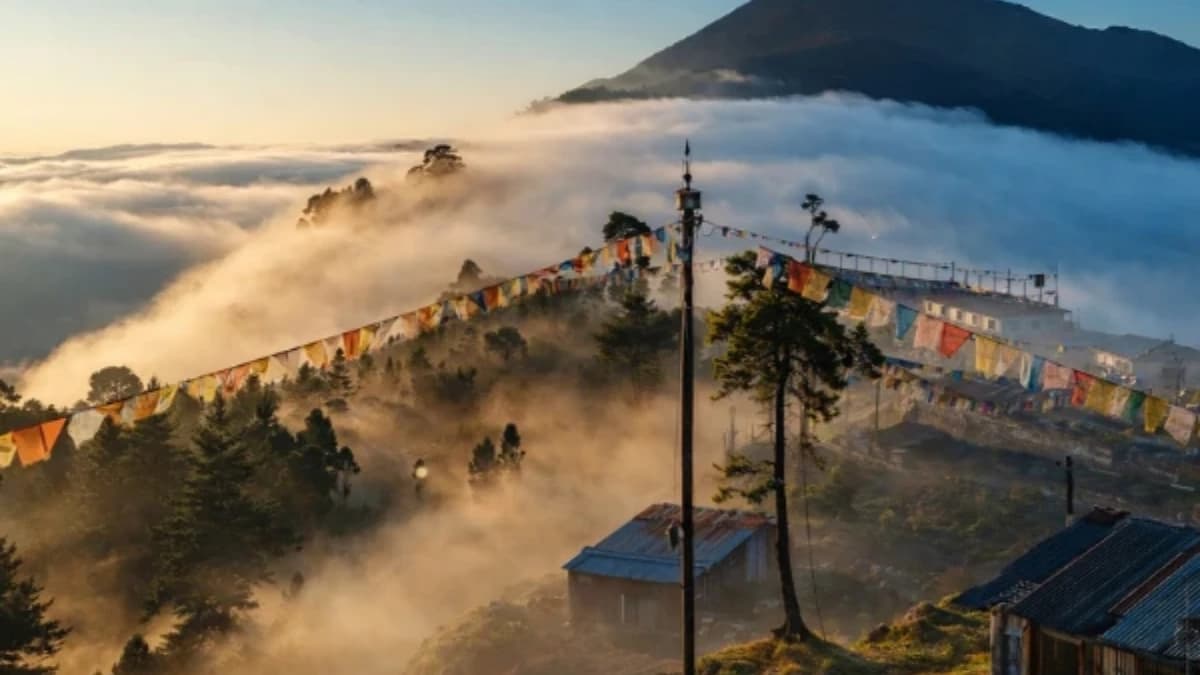
Short answer: Helambu is a trekking region on the edge of the Kathmandu Valley that starts at Sundarijal, thirty minutes by taxi from Thamel, and reaches Chisapani (2,165 m) on the first evening, with views of the Langtang and Ganesh Himal ranges. It suits people with less time and no flights. Combine it with our Langtang Valley trek.
The trail begins at the rim of the Kathmandu Valley. Not at an airport. Not at a bus station in a distant hill town. At Sundarijal, a suburb of Kathmandu, reachable by taxi in thirty minutes from Thamel, where a concrete water treatment plant marks the boundary between the city and the hills, and a trail climbs steeply into a forest that, within an hour, makes the capital feel like a rumour from a previous life. By the time you reach Chisapani on the first evening, three to four hours of walking, a gain of a thousand metres, you are standing on a ridge at 2,165 metres, looking north at the Langtang and Ganesh Himal ranges, and south at the Kathmandu Valley spread below you like a map that someone lit from within.
Helambu is the trekking region that nobody talks about. Not because it is bad, it is beautiful, culturally rich, and logistically convenient. But because the Everest and Annapurna brands dominate the conversation so completely that a trekking region accessible by taxi from Kathmandu, requiring no domestic flights and no restricted permits, simply does not generate the same excitement. The irony is that Helambu delivers exactly what many trekkers want, mountain views, cultural immersion, moderate altitude, and a genuine Himalayan experience, in a duration (five to seven days) and at a cost (significantly less than EBC or Annapurna) that makes it the most practical trek in Nepal for travellers with limited time or budget.
Who are the Hyolmo people of the Helambu region?
Helambu is the homeland of the Hyolmo (also written Yolmo) people, an ethnic group of Tibetan origin whose culture, language, and religious practices are distinct from both the Sherpa of the Khumbu and the Tamang of the Langtang. The Hyolmo are Buddhist, primarily Nyingma tradition, and their villages, monasteries, and daily rituals reflect a Tibetan heritage that has been adapted to the specific landscape of the hills north of Kathmandu.
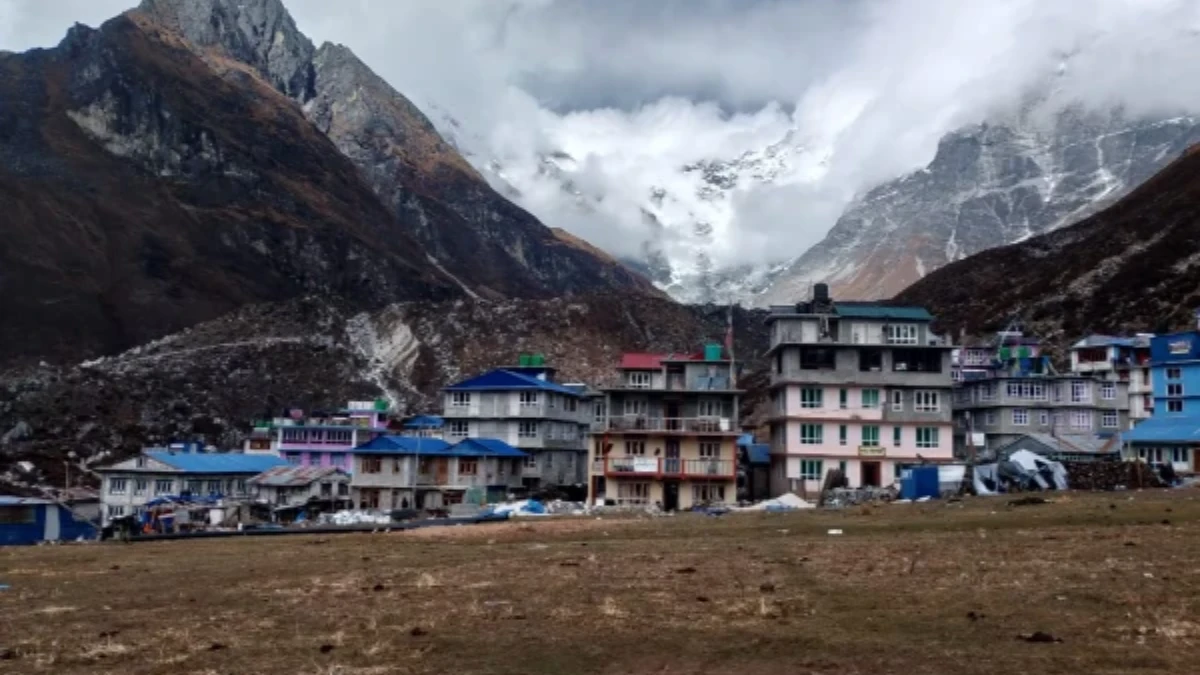
The Hyolmo villages on the trek, Tarkeghyang, Sermathang, Melamchi Gaon, are characterised by large, prosperous-looking houses with carved wooden windows and balconies. Many Hyolmo families have histories of trade with Tibet and, more recently, of work in India and abroad. The resulting prosperity is visible in the village architecture, houses that are larger and more ornate than typical hill villages, with prayer rooms, carved doorframes, and courtyards that suggest a level of wealth unusual at this altitude.
The monastery at Tarkeghyang is one of the oldest and most important in the Helambu region. Founded in the seventeenth century, it contains wall paintings, statues, and religious texts that scholars consider significant for the study of Himalayan Buddhism. The monastery hosts a festival (usually in spring) that draws Hyolmo families from across the region, a celebration of dance, music, and communal prayer that trekkers are welcome to observe. Related: Tarkeghyang: The Hyolmo Village of Helambu, a Day from Kathmandu.
What trek routes are available in the Helambu region?
Helambu Circuit (5-7 days): The classic Helambu trek starts at Sundarijal (Kathmandu rim), climbs to Chisapani, traverses the ridge through Kutumsang and Tharepati, descends to the Hyolmo villages of Tarkeghyang and Sermathang, and exits at Melamchi Bazaar (accessible by road back to Kathmandu). Maximum altitude: approximately 3,650 metres at Tharepati. This circuit provides mountain views, forest walking, and Hyolmo cultural immersion without extreme altitude.
Helambu to Gosaikunda (7-10 days): An extension that climbs from the Helambu ridge to the Laurebina La pass (4,610 metres) and crosses to the sacred Gosaikunda lakes. This route raises the maximum altitude significantly and adds the sacred lake experience. Recommended for trekkers who want more altitude challenge than the basic Helambu circuit provides.
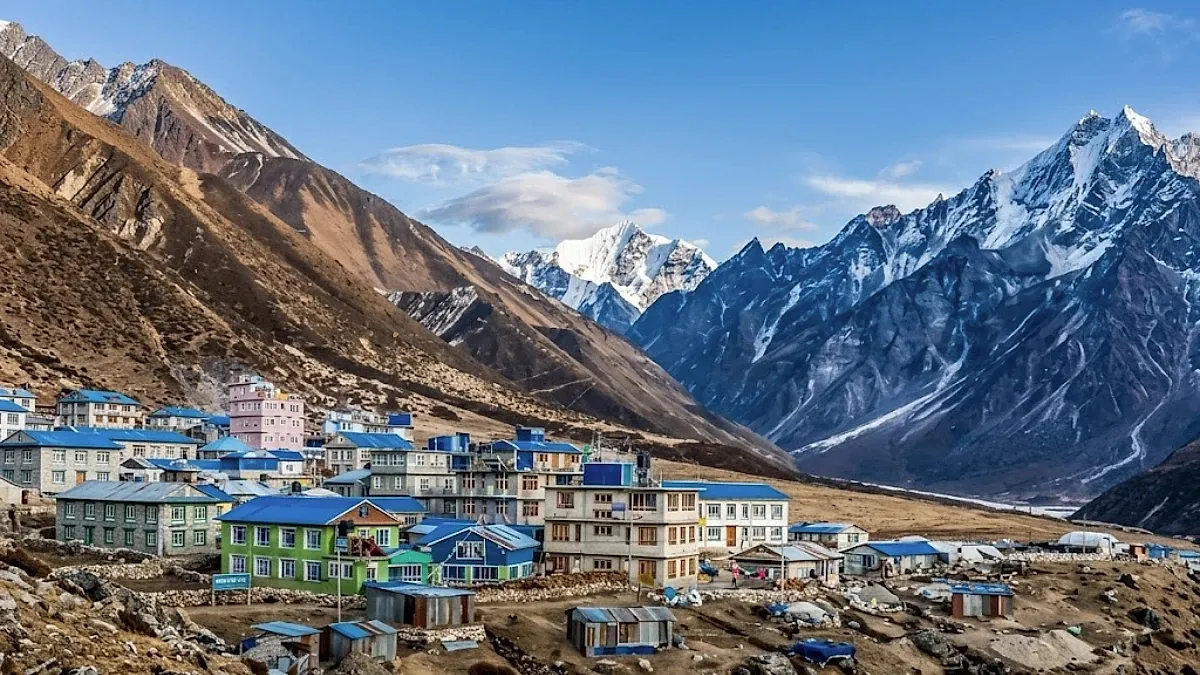
Helambu-Langtang Connection (12-16 days): The complete route that connects Helambu, Gosaikunda, and the Langtang Valley into a single circuit. This is the full Langtang region experience, three distinct landscapes (hills, sacred lakes, high valley) in two to three weeks.
What makes the Helambu trek different from other Nepal treks?
No flights. Every other major trek in Nepal requires either a domestic flight (EBC, Kanchenjunga) or a long bus ride (Annapurna, Manaslu, Langtang). Helambu starts at Sundarijal, thirty minutes from Thamel by taxi. You can eat breakfast in Kathmandu and be walking in the hills by nine AM. This accessibility is Helambu's greatest practical advantage and, paradoxically, the reason it is overlooked: trekkers associate "real" Himalayan trekking with remote trailheads, and Sundarijal does not feel remote enough to feel real.
Moderate altitude. The Helambu circuit reaches a maximum of approximately 3,650 metres at Tharepati, well below the altitude where serious AMS occurs. Trekkers who are concerned about altitude, or who have medical conditions that preclude extreme altitude, can do Helambu safely. The views of the Langtang and Ganesh Himal ranges from the ridge trail are comparable to the views from Poon Hill or Nagarkot, wide, panoramic, and framed by the specific clarity of Himalayan air.
Cultural richness. The Hyolmo villages are culturally distinct from anything on the EBC or Annapurna routes. The architecture is different. The food is different (Hyolmo cuisine includes distinctive noodle soups, fermented vegetables, and yak-butter tea). The religious practices are different. And the interaction with the community, smaller, less touristic, more personal, provides a cultural immersion that the busier routes, for all their grandeur, have diluted.
Rhododendron forests. The forest sections of the Helambu trek, between Chisapani and Tharepati, pass through some of the finest rhododendron forests in the Kathmandu region. In spring (March-April), the blooms are spectacular, crimson, pink, white, and magenta flowers covering trees that grow up to fifteen metres tall. The forest floor is carpeted in fallen petals. The light filtering through the canopy is tinted red. And the sound, birdsong from species that thrive in rhododendron habitat, creates a soundtrack that the barren, above-tree-line landscapes of the high treks do not provide.
What Do You Need to Know About Helambu?
Duration: five to seven days for the basic circuit. Seven to ten for the Gosaikunda extension. Twelve to sixteen for the full Langtang connection.
Maximum altitude: 3,650 metres (basic circuit), 4,610 metres (Gosaikunda extension).
Difficulty: easy to moderate (basic circuit), moderate to challenging (Gosaikunda extension).
Permits: Shivapuri-Nagarjun National Park entry (NPR 1,000, or NPR 600 for SAARC nationals) at Sundarijal, Langtang National Park entry (NPR 3,000, or NPR 1,500 for SAARC nationals) and a TIMS card (NPR 2,000, or NPR 1,000 for SAARC nationals). We arrange all three on our guided treks.
Access: taxi from Kathmandu to Sundarijal (thirty minutes, five hundred to one thousand rupees). Exit at Melamchi Bazaar (bus to Kathmandu, two to three hours).
Accommodation: teahouses throughout. Quality varies, some are comfortable, some are very basic. The Hyolmo villages have the best teahouses. The ridge sections (Kutumsang, Tharepati) have simpler lodges.
Best season: October-November (clear views, comfortable temperatures). March-April (rhododendron bloom, the best reason to choose Helambu). December-February (cold but clear, very quiet).
Is the Helambu trek suitable for beginners and families?
First-time trekkers who want to see Himalayan walking without the commitment of a twelve-to-fifteen-day trek. Families with children (the moderate altitude and short daily walking times are suitable for children over eight). Travellers with limited time (five to seven days, no flights, start and end in Kathmandu). Budget travellers (no flight costs, shorter duration, lower permit fees). Cultural enthusiasts who want to see the Hyolmo community. Photographers in spring (the rhododendron bloom is one of the best in Nepal). And repeat visitors who have done EBC and Annapurna and want to see a different Nepal, the Nepal that exists thirty minutes from Thamel, on the other side of the valley rim, in the hills that most trekkers fly over on their way to somewhere more famous.
Helambu does not compete with Everest. It does not try. What it offers is something that Everest does not: proximity, accessibility, and the specific pleasure of discovering that the Himalaya begins not at Lukla or Pokhara but at the edge of Kathmandu, where the city stops and the hills start and the trail climbs into a landscape that has been there all along, waiting for anyone willing to walk thirty minutes from their hotel and look north.
Plan Your Helambu Trek
Helambu is the closest serious trek to Kathmandu and the heart of the Hyolmo culture. If this guide has convinced you to walk the hills above the city, here are the treks that include Helambu and the related guides for the surrounding region.
- Gosaikunda Trek - 5 Days : the short alpine route from Sundarijal that climbs into the Helambu hills and on to the sacred lakes.
- Langtang with Gosaikunda Trek - 13 Days : the full traverse that links Langtang Valley, Gosaikunda and the Helambu hills in one walk.
- Langtang Trek - 8 Days : the regional alternative for trekkers who want a longer commitment than the basic Helambu circuit.
- Hyolmo Community Guide : the highland Buddhist culture you walk through on every Helambu trek.
- Gosaikunda Lake Guide : the sacred alpine lake at 4,380 metres on the extended Helambu route.
Helambu is trekking for people who do not like the idea of altitude. The highest point is 3,650 metres, the Tamang and Hyolmo villages are culturally rich, and the whole trek is close enough to Kathmandu that you can start walking on day one without a domestic flight. It is the most underrated trek in Nepal.
We offer the Langtang region treks which can include a Helambu extension. Ask us about combining the two.
WhatsApp:+977 9810351300
Email:[email protected]
Written by Shreejan Simkhada, CEO of The Everest Holiday and third-generation Himalayan guide. TAAN Member #1586.
Helambu is the lower Langtang loop. Our Langtang Trek (8 Days) is private (your group only, no strangers), 2027 dates open, From USD $490. WhatsApp us for tailored 2027 dates and current departures.
 Chat with Shreejan