

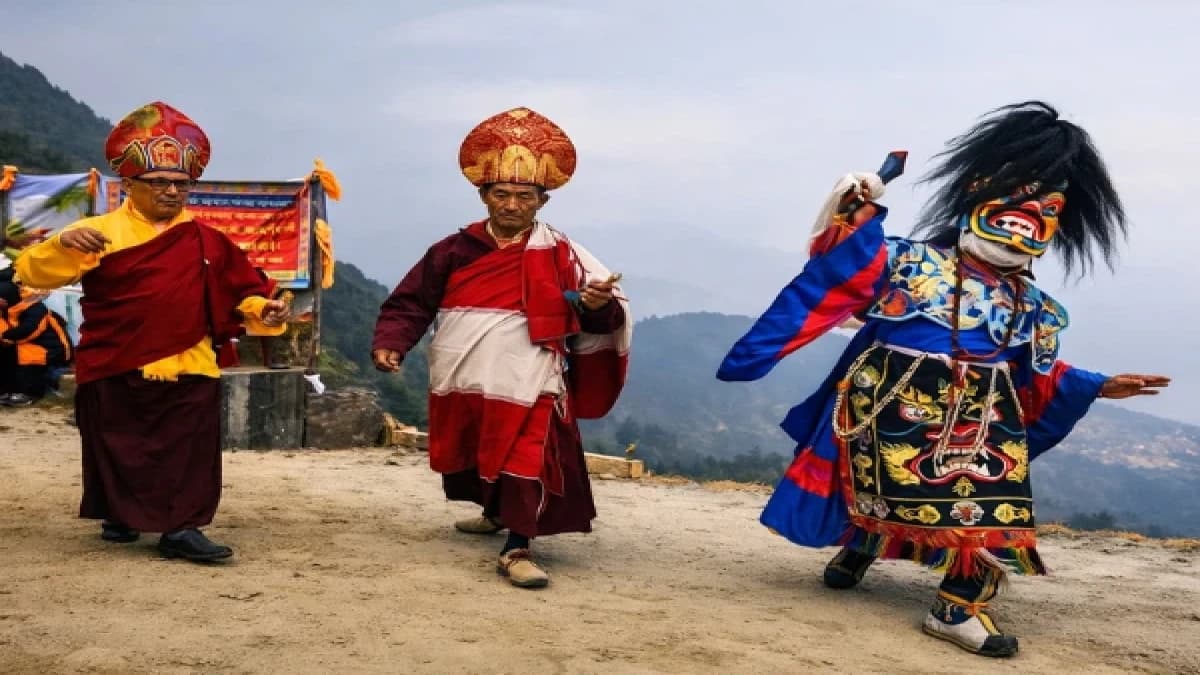
Short answer: The Hyolmo, also written Yolmo, are a small Tibetan-origin community of about ten thousand people living in the Helambu highlands north of Kathmandu, in ridge villages between 2,000 and 3,500 m, with their own blend of Buddhist and local tradition. You meet them on Helambu treks, less than two hours by road from Kathmandu. Pair Helambu with our Langtang Valley trek.
Forty kilometres north of Kathmandu, less than two hours by road, less than a day on foot from the valley rim, there is a community that most visitors to Nepal never encounter. The Hyolmo people live in the highlands of the Helambu region, in villages perched on ridges between 2,000 and 3,500 metres, where the air is cooler than the capital below, the forests are denser, and the culture is a specific blend of Tibetan Buddhism and local tradition that is distinct from the Sherpa culture of the Khumbu and the Tamang culture of the Langtang.
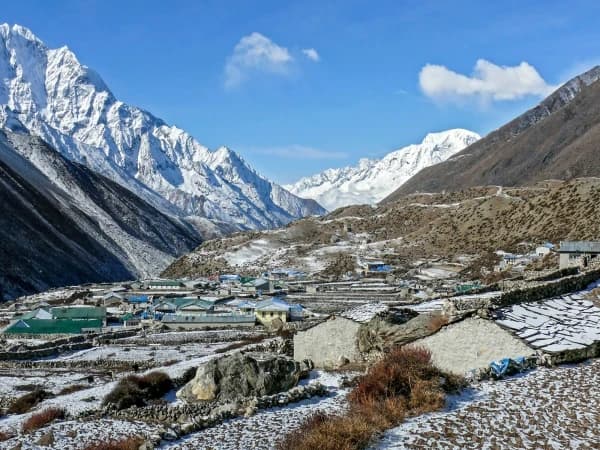
The Hyolmo, also written Yolmo, are a small ethnic group of Tibetan origin, numbering approximately ten thousand people. Their homeland is the Helambu region: the highland area between the Kathmandu Valley and the Langtang range, accessible by road from Kathmandu to Melamchi Bazaar and then on foot to the ridge villages above. The proximity to Kathmandu, closer than any other trekking region, makes Helambu the most accessible highland cultural immersion in Nepal. And yet the Hyolmo villages receive a fraction of the visitors that the Khumbu or Annapurna receive, because the region lacks the marquee mountain names that draw trekkers to the higher, more dramatic, more famous routes.
What the Hyolmo villages have instead is depth. Cultural depth that comes from centuries of relative isolation, the villages are on ridges, not on trade routes, which means they were bypassed by the commerce that shaped Namche and Manang. Religious depth, the monasteries of Helambu are among the oldest in the Kathmandu region, and the practise of Buddhism within them has a continuity that newer, more touristic monasteries lack. And architectural depth, the Hyolmo houses, with their carved wooden windows, their painted doorframes, and their prayer rooms on the upper floors, are among the finest examples of Himalayan domestic architecture in Nepal.
Who are the Hyolmo people of Nepal?
The Hyolmo trace their origin to Tibet, specifically to the Kyirong valley on the Nepal-Tibet border. The migration to Helambu occurred approximately four to five centuries ago, earlier than the Sherpa migration to the Khumbu, and into a different ecological zone. While the Sherpas settled in the high valleys above 3,000 metres, the Hyolmo settled on the mid-altitude ridges between 2,000 and 3,500 metres, a zone of temperate forest, terraced agriculture, and a climate that supports year-round habitation without the extreme cold of the Khumbu.
The Hyolmo language is Tibeto-Burman, related to Tibetan but not mutually intelligible. The religion is Nyingma Buddhism, the oldest school of Tibetan Buddhism, associated with Guru Rinpoche. The social structure is clan-based, with marriage rules that govern interaction between clans. And the artistic tradition, particularly the tradition of religious painting and sculpture, is considered among the finest in the Himalaya, producing thangka painters and sculptors whose work is found in monasteries throughout Nepal and Tibet.
The Hyolmo are famous within Nepal as healers. The jhankri (shaman) tradition is strong in Hyolmo culture, and Hyolmo healers are sought by communities across the Kathmandu region for illness, misfortune, and spiritual disturbance. The healing ceremonies, which involve drumming, chanting, trance, and the invocation of protective spirits, are one of the oldest continuous spiritual practices in the Himalayan region.
What are the main Hyolmo villages in the Helambu region?
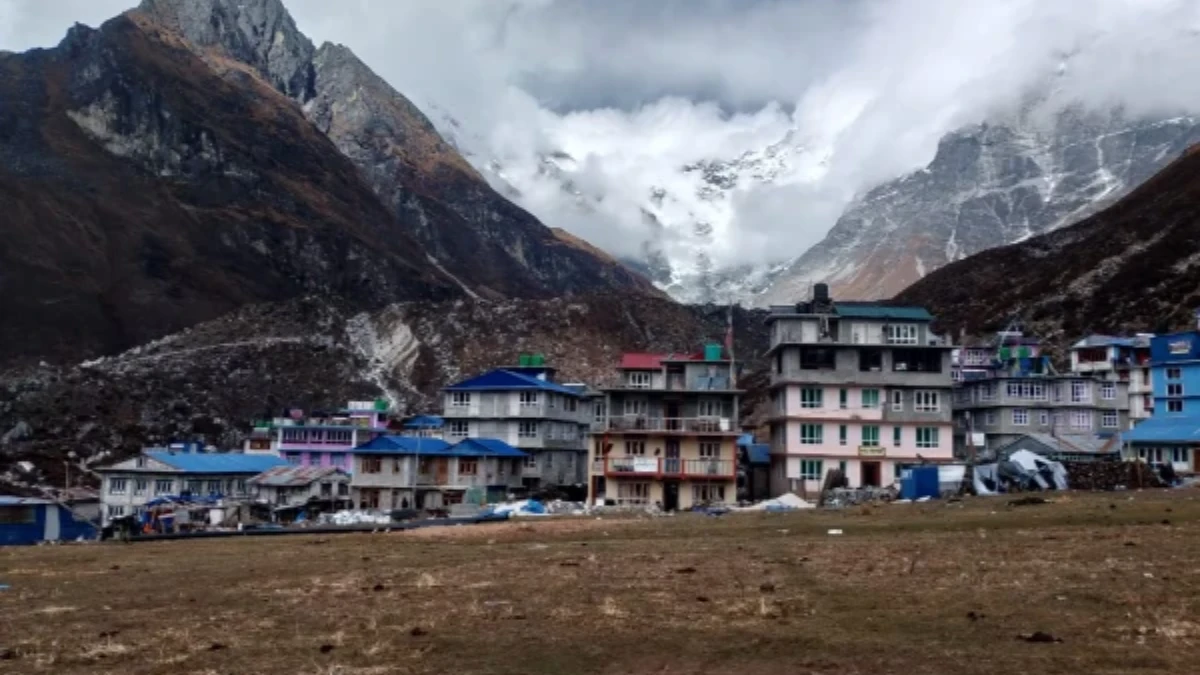
Tarkeghyang (2,560 metres): The largest and most culturally significant Hyolmo village. The monastery at Tarkeghyang, one of the oldest in the Helambu region, was damaged in the 2015 earthquake and has been partially restored. The village architecture is exceptional: large stone houses with carved wooden windows, prayer rooms on upper floors, and courtyards where families gather for festivals and daily work. The annual monastery festival (typically in spring) draws Hyolmo families from across the region.
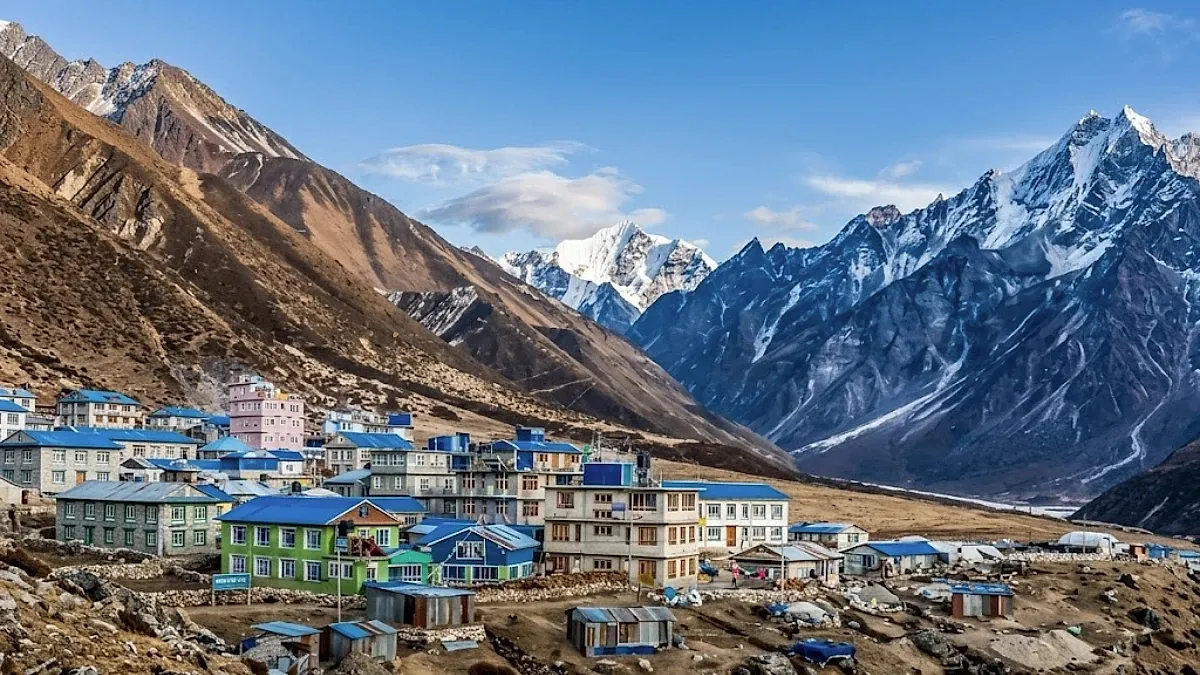
Sermathang (2,620 metres): A ridge village with spectacular views of the Langtang and Jugal ranges. The cheese factory at Sermathang, similar to the one at Kyanjin Gompa, produces yak cheese using methods introduced by Swiss development projects. The village is quieter than Tarkeghyang and offers a more intimate cultural immersion.
Melamchi Gaon (2,530 metres): The eastern gateway to the Helambu circuit, accessible from Melamchi Bazaar (on the road from Kathmandu). The village sits on a ridge with views east toward the Jugal Himal and provides a gentler introduction to Hyolmo culture than the higher, more remote villages further west.
Is the Helambu circuit trek good for first-time hikers?
The Helambu circuit is one of Nepal's easiest and most accessible multi-day treks, and one of the least walked. The standard route takes five to seven days, starts from Sundarijal on the Kathmandu Valley rim (thirty minutes by taxi from Thamel), crosses the ridge at Chisapani (2,165 metres), traverses through the Hyolmo villages, and exits at Melamchi Bazaar (bus back to Kathmandu, two to three hours).
The maximum altitude is approximately 3,650 metres at Tharepati pass, well below the altitude threshold where serious AMS occurs. The walking is moderate, four to six hours per day on well-maintained trails. The accommodation is teahouse, basic but comfortable. And the cultural reward, three to four days walking through Hyolmo villages, staying in lodges run by Hyolmo families, eating Hyolmo food, and visiting monasteries that receive almost no foreign visitors, is disproportionate to the effort and the cost.
The Helambu trek works particularly well for: first-time trekkers who want a genuine Himalayan experience without extreme altitude. Families with children (the moderate altitude and short daily distances suit children over eight). Travellers with limited time (five to seven days, no flights, start and end in Kathmandu). Culture enthusiasts who prioritise community interaction over mountain spectacle. And spring visitors who come for the rhododendron bloom, the forests between Chisapani and Tharepati bloom crimson in March-April in one of the finest displays in the Kathmandu region.
What traditional music and instruments are part of Hyolmo culture?
The Hyolmo musical tradition is one of the richest in Nepal. The hyolmo selo, a genre of folk song specific to the community, is performed at festivals, weddings, and gatherings, and addresses themes of love, loss, the beauty of the homeland, and the specific longing of Hyolmo people who have migrated to Kathmandu or abroad. The songs are accompanied by the damphu, a flat, circular drum that is the signature instrument of the Hyolmo and that produces a resonant, rhythmic beat that carries across the highland valleys.
If you visit a Hyolmo village during a festival, particularly the Lhosar (New Year) celebration, which includes communal feasting, dancing, and singing, the musical tradition is visible and audible in its full expression. The singing is communal, men and women together, the songs passed from generation to generation by oral tradition rather than written notation. And the dancing, circular, rhythmic, accompanying the damphu beat, is participatory. Visitors who are present during a festival are invited to join. The invitation is genuine, not performative, and the thrill of dancing in a circle in a Hyolmo village at 2,500 metres, with the Langtang range visible to the north and the damphu beat vibrating through the ground, is something that no museum exhibit or cultural performance can replicate.
Why the Hyolmo Matter
The Hyolmo community is small, ten thousand people, concentrated in a single region. Their language has no standard written form. Their villages, while beautiful, are not on any "worth seeing" list. Their treks, while rewarding, do not offer the altitude drama of EBC or the panoramic variety of the Annapurna Circuit. In the hierarchy of Nepal tourism, where Everest sits at the top and everything else arranges itself by altitude and fame below, the Hyolmo barely register.
And this is exactly why they matter. Because the Nepal that most visitors experience, the EBC trail, the Annapurna Circuit, the Kathmandu temples, is a curated version of a country that contains dozens of communities, each with its own language, its own traditions, and its own relationship with the mountains. The Hyolmo are one of those communities. Their culture is genuine. Their hospitality is warm. Their monasteries are ancient. And their homeland, forty kilometres from Kathmandu, accessible by taxi and a day of walking, is close enough that the excuse of distance does not apply.
The trekker who walks through Helambu discovers a Nepal that the popular routes have made invisible. Not inferior to the Nepal of Everest and Annapurna. Different. Quieter. Closer. And deeper in the specific way that a culture with centuries of continuity, maintained on a ridge above the capital in full view of the highest mountains on earth, is always deeper than the passing visitor expects.
Experience Hyolmo culture on the Tamang Heritage Trail (12 days), which visits Hyolmo and Tamang communities in the Langtang region.
The Hyolmo people are the soul of the Helambu region. Their monasteries, their masked dances, and their connection to Tibetan Buddhism run deeper than most visitors realise. UNESCO recognised Hyolmo culture as intangible heritage, and trekking through their villages is one of the most culturally rich experiences available close to Kathmandu.
Helambu is accessible from the Langtang region. Ask us about combining a Langtang trek with a Helambu extension.
WhatsApp:+977 9810351300
Email:[email protected]
Written by Shreejan Simkhada, CEO of The Everest Holiday and third-generation Himalayan guide. TAAN Member #1586.
Hyolmo community sits on Helambu loop. Our Langtang Trek (8 Days) is private (your group only, no strangers), 2027 dates open, From USD $490. WhatsApp us for tailored 2027 dates and current departures.
Continue planning your trek
This is one stop on the Langtang and Helambu trail. For the full route, read our Helambu region guide. When you are ready for dates and prices, see the Langtang Trek (8 days) or WhatsApp us directly. We reply personally.
 Chat with Shreejan