Everything about trekking to Everest Base Camp in November. Weather by week, gear for cold nights, crowd levels, and why the Kala Patthar sunrise is best this month.
Govt Regd. No.: 147653/072/073
Travel Agency Licence: 2838/072
EBC Trek in November: Cold Skies, Clear Views, Fewer Crowds

Is the Everest Base Camp Trek Good in November?
Short answer: Yes. November is one of the best months for Everest Base Camp, with the clearest skies of the year and far fewer people than October. Go in the first half for the warmer, safer window, and in the second half only if you have serious cold-weather gear. Our 12-day Everest Base Camp trek is from USD 1,399 Budget, USD 2,499 Standard and USD 4,999 Luxury for one traveller.
| October | Early November (1 to 15) | Late November (16 to 30) | |
|---|---|---|---|
| Skies | Good, but less sharp than November | Clear, crisp, occasional high cloud | Clear, with more chance of snow flurries |
| Crowds | Peak season, busy trail | Thinning out | Quietest |
| Cold | Warmer than November | Well below freezing at night | Severe at Gorak Shep, water bottles freeze |
| Teahouses | All open | Open | Some above Lobuche begin closing for winter |
| Sunset | About 5:45pm | About 5:00pm | About 5:00pm |
November is one of the best months for Everest Base Camp, but it comes with caveats that October does not. The first half of November offers clear skies, thin crowds, and crisp mountain views. The second half brings dropping temperatures, shorter days, and the real possibility of snow above 5,000m. Knowing which week to go makes all the difference.
I send trekkers to base camp in November every year, and the ones who time it right consistently report it as the best trek of their lives. Fewer people on the trail, sharper mountain views than monsoon-washed October, and an atmosphere that feels genuinely wild rather than busy.
What Is the Weather Like in November?
November sits in the transition between autumn and winter. The monsoon has fully cleared, the atmosphere is dry, and visibility is at its annual peak. You can see Everest from Namche Bazaar on a good November day, something that rarely happens in cloudier months.
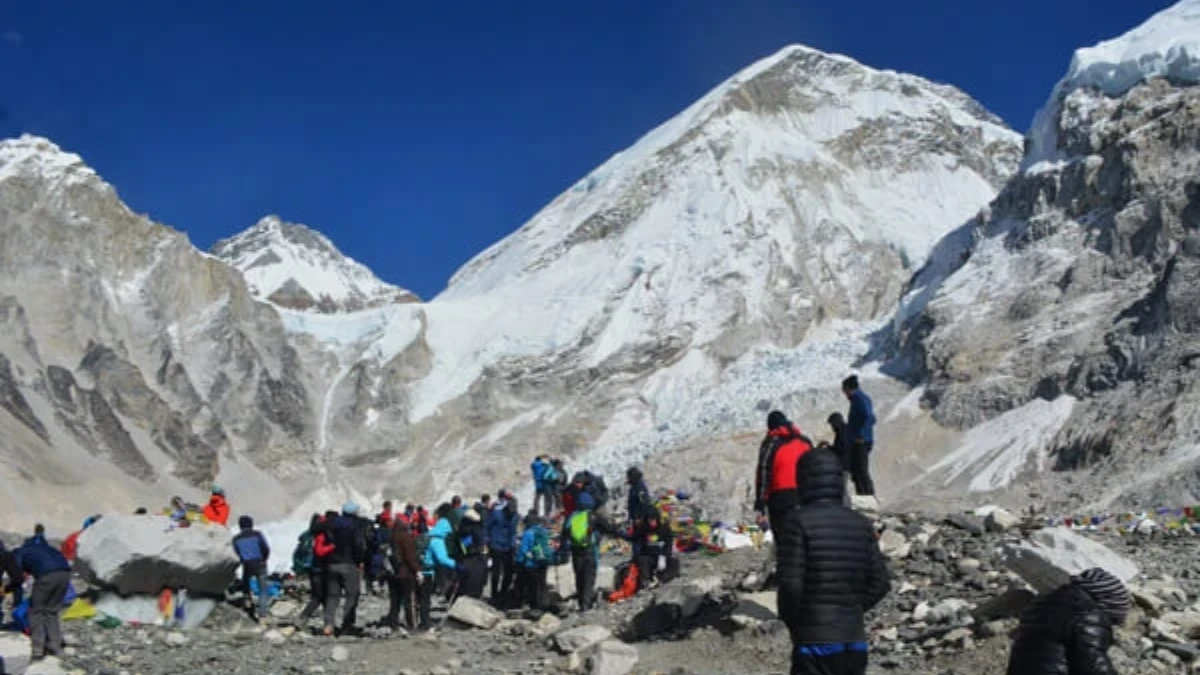
Early November (1st to 15th): Days at base camp are cold but usually sunny, and nights are well below freezing. Skies are typically clear with occasional high cloud. Snow above 5,000m is possible but rare. Trail conditions are dry and firm. This is the sweet spot.
Late November (16th to 30th): Temperatures drop further, and nights at Gorak Shep are severely cold. Daylight hours shorten noticeably. Snow flurries are more likely, and some teahouses above Lobuche begin closing for winter. Still trekable, but you need better cold-weather gear and flexibility in your itinerary.
For a month-by-month comparison, see our best time to trek in Nepal guide.
How Crowded Is the Trail in November?
Significantly less crowded than October. October is peak season: the trail between Namche and Gorak Shep can feel congested, with queues at popular viewpoints and fully booked teahouses. November thins the crowd dramatically, especially after the first week.
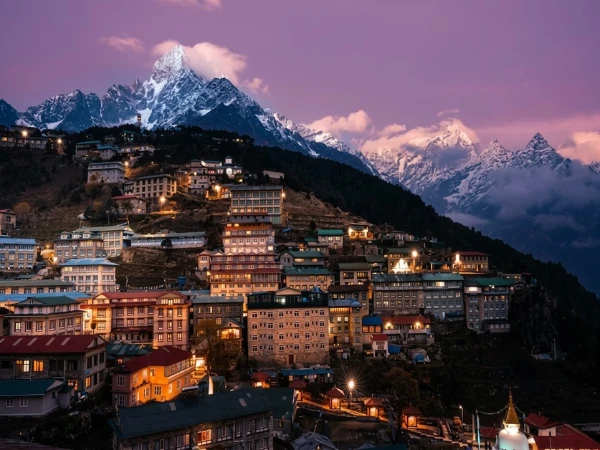
By mid-November, you might walk for an hour without seeing another group. Teahouses are quieter, dining rooms are less crowded, and there is a genuine sense of solitude that October cannot offer. If you dislike crowds, November is your month.
The trade-off is teahouse availability. Some smaller lodges close after mid-November, reducing your options above Dingboche. Our guides know which teahouses stay open through the month and book accordingly.
What Should You Pack for November?
Everything you would pack for an October trek, plus serious cold-weather layers. The difference between a comfortable November trek and a miserable one comes down to gear.
Must-haves for November:
A warm down jacket (we provide one free of charge). Thermal base layers: merino wool, not cotton. A fleece mid-layer. Insulated trekking trousers for above 4,000m. A warm hat that covers your ears. Liner gloves plus insulated outer gloves. A warm sleeping bag (we provide one free of charge) or a liner to boost your existing bag.
The gear mistake: Most November trekkers underestimate how cold the evenings get. At Gorak Shep, water bottles freeze overnight inside your room. Your warm layers are not optional above Dingboche; they are survival equipment. If you skimp on insulation, you will spend every evening shivering in the dining room waiting for the stove to heat up.
We also provide a sleeping bag and a down jacket free on every tier, and a duffel bag on the Standard and Luxury packages, so your main packing list is lighter than you might expect. See our full EBC packing list.
Is the EBC Trek Harder in November?
Slightly harder than October, but not dramatically so. The main differences are cold and daylight. You start walking earlier because sunset comes at 5:00pm rather than 5:45pm. You layer up more carefully in the morning. And you spend more time in the dining room because the rooms are freezing.
The trail itself is in excellent condition: dry, stable, and free of monsoon mud. Snow is possible above 5,000m but rarely enough to block the trail. Our guides carry microspikes just in case, but in most November treks, they stay in the pack.
Altitude remains the real challenge regardless of month. The acclimatisation schedule is identical: rest days at Namche Bazaar and Dingboche, gradual ascent, "climb high, sleep low." Read our altitude sickness prevention guide before you go.
What About Kala Patthar Sunrise in November?
This is where November genuinely outshines October. The dry, clear atmosphere in November means Kala Patthar sunrises are sharper, more vivid, and more likely to be cloud-free than any other month. The light hits Everest's summit at around 6:15am, turning the snow gold against a deep blue sky.
The catch: it is brutally cold. You leave Gorak Shep at 4:30am in bitter cold and darkness and climb 380m of rocky moraine by headtorch. Your hands will be numb. Your face will sting. But when you reach 5,545m and watch the sun light up the highest point on earth, you forget about the cold entirely.
Wear everything you have. Bring hand warmers. And bring a fully charged camera battery: cold drains batteries fast. Keep a spare battery in your jacket pocket, against your body heat.
How Much Does the EBC Trek Cost in November?
Our prices are the same in November as in October, and flights to Lukla are easier to book because demand drops. One honest caveat for November: our fixed-wing flights to Lukla leave from Manthali, a four to five hour drive from Kathmandu with a pre-dawn start, rather than direct from the capital. We build that early start into the plan, and on our Luxury tier you fly by helicopter straight from Kathmandu instead.
Our EBC trek packages are priced the same year-round because we believe quality should not change with the season. Your guide, permits and teahouse accommodation are included on every tier regardless of when you trek, while porters and meals depend on the tier, as set out below. Check our Nepal trekking cost guide for a full breakdown.
What each tier costs. The 12-day Everest Base Camp trek is USD 1,399 on Budget, USD 2,499 on Standard and USD 4,999 on Luxury, per person for one traveller; larger groups pay less each. The tier decides what is included. Budget has no porter and meals are not included, so you carry your own bag and pay for food as you go. Standard includes all meals and one porter for every two trekkers (a solo trekker on Standard has no porter, and the guide carries part of the load). Luxury gives you your own porter, all meals with fruit and nuts, and the helicopter from Kathmandu to Lukla and back. Sagarmatha National Park, Khumbu local fees and TIMS are included in every tier. Kathmandu hotels are not included in any trek tier, so we quote them separately.
Should You Choose October or November?
If this is your first Himalayan trek and you want the safest, most predictable conditions: go in October. The weather is warmer, teahouses are all open, and you have the widest margin for error.
If you have trekked before, own good cold-weather gear, and value solitude over convenience: go in November. You will see fewer people, sharper mountains, and experience the Khumbu in a quieter, more authentic way.
Both months are excellent when trekkers follow the acclimatisation schedule and listen to their guides.
Ready to Trek EBC in November?
We run departures throughout November, with the last groups typically starting around November 20th. Early November fills up fastest, so if you prefer the warmer window, book early.
Message us on WhatsApp to check availability or ask about November conditions. Our guides have walked to base camp in every month of the year and can give you honest, current advice about what to expect.
November EBC has the clearest skies of the year. Our Everest Base Camp Trek (12 Days) is private (your group only, no strangers), 2027 dates open, From USD $1399. WhatsApp us for tailored 2027 dates and current departures.
Planning a trip to Nepal?
Drop us your details and tell us what you have in mind. We will put together a personalised plan and get back to you.
Not sure which Nepal trek is right for you?
Take our free 2-minute quiz and get personalised recommendations based on your fitness, experience, and travel style.
Find Your Perfect Trek →Need Help? Call Us+977 9810351300orChat with us on WhatsApp
Latest Travel Blogs
Tikhedhunga: The First Night on the Poon Hill Yoga Trek and the Foot of the Stone Steps
Tikhedhunga is a village at about 1,500 m at the foot of the Ulleri stone steps. Distances to Ghorepani, permits, best months and the trips that pass through.
Read More
Tukuche: The Thakali Village on the Kali Gandaki Road
Tukuche is a Thakali trading village at about 2,590 m in the Kali Gandaki valley. Distances to Marpha and Kalopani, permits, best months and the trips that pass through.
Read More
Everest Base Camp Trek Cost from Uzbekistan: Soum Prices, Flights, Visa and Payment
Everest Base Camp trek cost from Uzbekistan: trek prices in dollars and soum, Tashkent to Kathmandu fares, visa on arrival, halal food and how to pay.
Read More Chat with Shreejan