
Best Time to Climb Island Peak 2027: Month by Month, Weather and Royalty

Updated 27 October 2026.
Short answer: The best time to climb Island Peak in 2027 is April and early May, or October and November. Spring is warmer on the summit slope, and the Nepal Mountaineering Association (NMA) royalty is USD 350. Autumn is clearer and colder, and the royalty is USD 175. The summit is at 6,165 m. Our 14-day climb costs USD 3,900 Budget, USD 5,175 Standard and USD 9,999 Luxury per person for two to four people. Avoid June to mid-September.
I am Shreejan. Guests usually write to me with a month already in mind, often October or April, and ask if it is the right one. Below is the month-by-month picture, what I can back with a record, and what I only know from our guides.
My Island Peak itinerary and summit day post covers the day-by-day plan. This one is only about when to go.
Island Peak best time at a glance
| Question | Answer |
|---|---|
| Best months | April and early May, then October and November |
| Warmest summit slope | Spring. Our trip page describes April as stable snow on the summit slope |
| Clearest skies | Autumn. Lukla gets 6.2 mm of rain in November |
| Cheapest royalty | Autumn, winter and summer: USD 175. Spring (March to May) is USD 350 |
| Avoid | June to mid-September (monsoon). December to February only for experienced, well-equipped teams |
| Summit height | 6,165 m on our page. Other sources say 6,160 m or 6,189 m |
| Trip | 14 days, Kathmandu to Kathmandu, summit on day 9 from base camp at 5,087 m |
| Price, 2 to 4 people, per person | USD 3,900 Budget, USD 5,175 Standard, USD 9,999 Luxury. Solo USD 5,005, USD 6,135, USD 9,999 |
Is spring or autumn better for Island Peak?
Both work. Published guides agree on that. One operator article I read describes spring as often bringing warmer climbing conditions, and autumn as bringing clear post-monsoon views and colder nights. The same article says the month alone cannot promise good weather, snow or route quality. I agree with that last part.
I lean towards autumn if you want clean air, and towards April if you feel the cold badly. A cold, still night at base camp is easier than a mild, windy one. Wind on the headwall and the ridge can end a summit day, and no month is free of it.
The rain numbers show why autumn skies are reliable. The Lukla figures on our trip pages are from the Department of Hydrology and Meteorology record for 1991 to 2020. August gets 641.8 mm. September still gets 419.0 mm. By October it drops to 102.9 mm, and in November it is 6.2 mm.
Month-by-month guide for 2027
The royalty, Lukla rain and Dingboche night lows are from our trip pages. The Dingboche lows are modelled data, so treat them as a guide and not a forecast. I do not have instrument readings for Island Peak Base Camp or the summit, so I will not give you invented numbers for them.
| Month | Dingboche night low | Lukla rain | Royalty | What to expect |
|---|---|---|---|---|
| January | -15.3 C | Not on our page | USD 175 | Very cold, high wind on the summit. Experienced teams only |
| February | -14.2 C | Not on our page | USD 175 | Same as January. Dry, but wind decides the day |
| March | -10.5 C | 45.3 mm | USD 350 | Spring starts. Cold early in the month, warming |
| April | -7.0 C | 58.7 mm | USD 350 | Main spring month. Stable snow on the summit slope. Busiest at base camp |
| May | -3.5 C | 127.6 mm | USD 350 | Good early in the month. Rain and cloud build later |
| June | 1.1 C | 324.8 mm | USD 175 | Monsoon. I do not run it |
| July | 2.9 C | 529.8 mm | USD 175 | Monsoon |
| August | 2.3 C | 641.8 mm | USD 175 | Wettest month |
| September | 0.3 C | 419.0 mm | USD 175 | Clearing, but the approach is still wet. Late September is better |
| October | -5.3 C | 102.9 mm | USD 175 | Clear and cold. Second climbing season |
| November | -11.0 C | 6.2 mm | USD 175 | Driest month, much colder nights |
| December | -13.4 C | Not on our page | USD 175 | Dry and very cold. Winter conditions |
Does the monsoon always end on time?
No. The Department of Hydrology and Meteorology gives 2 October as the normal withdrawal date for eastern Nepal. For 2025 a search summary of its bulletins puts the withdrawal at 10 October, about eight days late. I could not open the DHM PDF myself when I tried, so please read that as reported and not as something I checked on the page.
What I do with it: I would not plan a summit day for the first days of October. Late October and November are safer, and in a late monsoon year November is the safer one.
What is Island Peak like in October and November?
Clear and cold. Long dry days on the walk to Dingboche, then the Chhukung valley, which is quieter than the main Everest trail. Nights at Dingboche drop to about -5 C in October and about -11 C in November on our modelled figures. Base camp at 5,087 m is higher than Dingboche, so expect colder than that.
Late November is the cold end of the season. A warm sleeping bag matters more than anything else you pack. If you do not own one, tell us at the online briefing, as our trip page says we can lend you one.
What is Island Peak like in April and May?
Warmer, and busier. Our page calls April the main climbing season. The big difference for you is on the headwall, the last steep slope below the summit ridge, which is about 100 m and climbed on fixed rope.
A crevasse crosses most of that headwall. Wikipedia says it has sometimes made teams turn back, and that a 5 m fixed aluminium ladder has been used to cross it since at least the 2016 autumn season. I have no way to say whether spring or autumn is better for crossing it. Snow, ice and rope placement change from one expedition to the next. Your climbing Sherpa will tell you what is there that week.
Can you climb Island Peak in winter?
It can be done. I do not recommend it for a first 6,000 m peak. Dingboche nights are -13 to -15 C on our figures, wind on the headwall and ridge can end the day at any hour, and daylight is short. If you want December to February, write to me with your experience first.
How the Lukla flights change your dates
Our page says that in the busy windows, roughly 15 March to 15 May and 25 September to 30 November, flights may leave from Manthali (Ramechhap) instead of Kathmandu. That means a midnight pickup and a 4 to 5 hour drive. My Manthali airport guide has the detail.
These are also the two months you will most want to climb. The 14-day plan has one spare day, at Lukla on day 13. There is none between base camp and summit. If wind stops us on day 9, the buffer is gone, and the Lukla day also has to cover a cancelled flight. My advice is to keep two spare days after the climb and make sure your visa covers them. If you want a second summit chance, ask me for a longer plan.
What does Island Peak cost in 2027?
On our Island Peak climbing page, for two to four people, per person: USD 3,900 Budget, USD 5,175 Standard, USD 9,999 Luxury. Solo is USD 5,005, USD 6,135 and USD 9,999. Every climb is private, and the price is the same in spring and autumn. We include the royalty, so in spring it simply costs us more.
In the price: the NMA climbing permit, Sagarmatha National Park entry, the local fee, TIMS, the USD 500 garbage fee, technical gear and emergency oxygen. On our page the official fees are NPR 3,000 for the park, NPR 3,000 for the Khumbu Pasang Lhamu Rural Municipality fee and NPR 2,000 for TIMS (NTB). Meals on the climbing days above base camp are included on every tier.
Not in the price: international flights, your Nepal visa, your Kathmandu hotel, tips and your travel insurance. Buy insurance at home. It must cover helicopter evacuation to 6,500 m, which is the summit height rounded up to the next 500 m, with climbing included.
A 10% deposit confirms your dates (about USD 390 on Budget). The balance is paid in Kathmandu in US dollars or euros, cash or card. Card payments carry a 3.5% bank charge. For the full breakdown read the Island Peak cost guide.
Frequently asked questions
What is the best month to climb Island Peak?
April for warmth and stable snow, or late October to November for clear skies and a lower royalty. Both are busy, so book early.
Is October or November better for Island Peak?
November is drier, with 6.2 mm of rain at Lukla against 102.9 mm in October. It is also much colder, around -11 C at Dingboche on our modelled figures. Late October is a good middle choice, unless the monsoon leaves late.
Why does the Island Peak permit cost change by season?
The NMA charges USD 350 in spring and USD 175 in autumn, winter and summer, per person. That is its published rate for Island Peak. Our price does not change, because we include it.
Can I climb Island Peak in the monsoon?
I do not run it. Lukla gets 529.8 mm in July and 641.8 mm in August, and our trip page lists snow, cloud and avalanche risk on the approach. The permit is cheaper, but the trade is not worth it.
How cold is summit day on Island Peak?
Very cold in every season. You leave base camp in the dark, usually around 2 to 3 am. I do not have a measured figure for the summit, so I will not guess one. Pack as if it is colder than you expect.
Is Island Peak easier in spring or autumn?
I cannot say that either season is technically easier. Spring is warmer, autumn is clearer. Fitness, acclimatisation and wind matter more than the month. See can a beginner climb Island Peak and the training plan.
Should I do Island Peak or Mera Peak first?
Both go in the same two seasons. I compare them in Mera Peak vs Island Peak, and the Mera dates are in my Mera Peak best time post.
Can I combine Island Peak with Everest Base Camp?
Yes. Our 18-day Everest Base Camp and Island Peak climb does both in one trip. Read the combination guide before you choose.
If you tell me the month you have in mind, your trekking experience and how many of you are coming, I will tell you what I think on WhatsApp, +977 9810351300.
Planning a trip to Nepal?
Drop us your details and tell us what you have in mind. We will put together a personalised plan and get back to you.
Not sure which Nepal trek is right for you?
Take our free 2-minute quiz and get personalised recommendations based on your fitness, experience, and travel style.
Find Your Perfect Trek →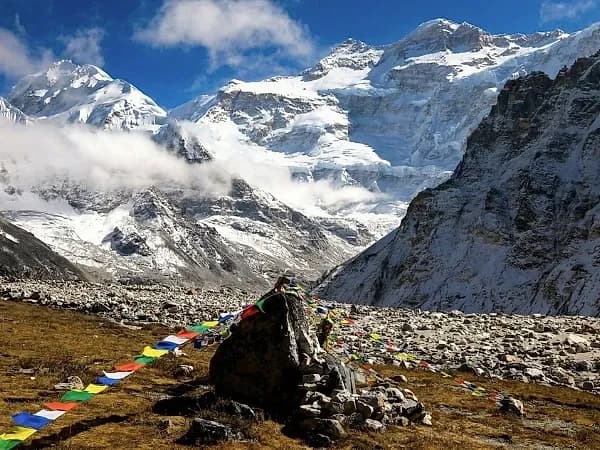
Best Time for the Kanchenjunga Base Camp Trek: Month by Month for 2027
Month by month for 2027: when to trek Kanchenjunga base camp, what winter and monsoon do to the route, how the Taplejung flight stands, and what the 19-day trek costs.
Read More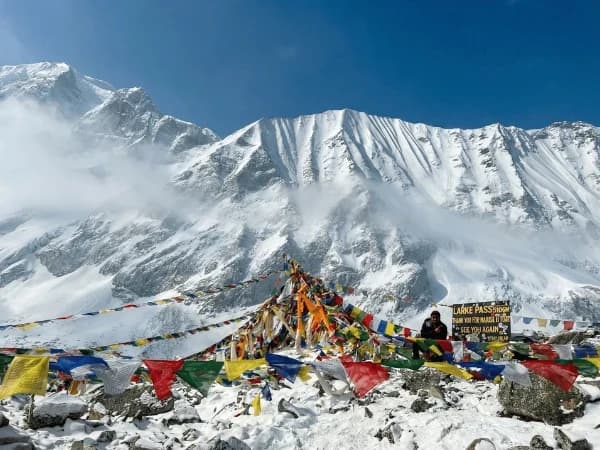
How Hard Is the Manaslu Circuit? A Plain Rating for 2027
A plain rating of the Manaslu Circuit: the day-by-day effort, the Larkya La day, remote lodges, how it compares with the Annapurna Circuit, who should skip it and 2027 prices.
Read More
Best Time for the Langtang Valley Trek: Month by Month for 2027
Month by month for 2027: when to trek the Langtang Valley, how cold Kyanjin Gompa gets, what rain does to the Syabrubesi road, and what the 8-day trek costs.
Read More Chat with Shreejan