Upper Mustang Best Time 2027: Month by Month, Tiji and the Monsoon
Updated 18 October 2026.
Short answer: The best time for Upper Mustang is September to November, with October the clearest and most stable month. March to May is the second season, and it includes the Tiji festival in Lo Manthang in late May or early June. The surprise is the monsoon. Upper Mustang sits behind the Annapurna and Dhaulagiri ranges in the rain shadow, so June to August is dry, warm and quiet, and one of the few Nepal treks that works in summer. We do not run it from December to February, because it is bitterly cold and many families move down the valley.
I am Shreejan. I wrote this for anyone choosing a month for Upper Mustang in 2027. Here is how each season feels on the trail, what the wind and the cold are really like, when Tiji falls, and what the trek costs.
Upper Mustang best time at a glance
| Season | Months | What it is like | My verdict |
|---|---|---|---|
| Autumn | September to November | Clear air and stable weather, the classic window | Best overall |
| Spring | March to May | Clear and warming, afternoon wind, Tiji in late May or early June | Great |
| Summer and monsoon | June to August | Rain shadow, so dry and warm, with an empty trail | Good, and quiet |
| Winter | December to February | Bitterly cold, families move down the valley | We do not run it |
The numbers behind this are on our 10-day Upper Mustang trek page. That trek sleeps no higher than Lo Manthang at 3,840 m, and the highest point you walk over is the Choku La at about 4,290 m.
What is Upper Mustang like month by month?
| Month | On the trail | My view |
|---|---|---|
| January | Bitterly cold, and many families move down the valley | We do not run it |
| February | The same as January | We do not run it |
| March | Clear and warming. The spring season opens, and the afternoon wind builds | Yes |
| April | Clear and warming | Yes |
| May | Warm and clear. Tiji is held in Lo Manthang in late May or early June, and rooms fill early | Yes, and book early for Tiji |
| June | Dry behind the Annapurna and Dhaulagiri ranges. Warm days, a windy afternoon and clear skies | Yes, a good monsoon trek |
| July | Dry rain shadow, with one or two brief showers a week at most. Warm sunshine and an empty trail | Yes |
| August | The same as July. Warm and quiet | Yes |
| September | Clear air and stable weather. The start of the classic window | Yes, one of the best |
| October | Clear air and stable weather | Yes, the best |
| November | Clear air and stable weather, with cold nights at this height | Yes, wrap up warm |
| December | Bitterly cold, and many families move down the valley | We do not run it |
When is the best time to trek Upper Mustang?
If you can choose freely, choose October. The air is clear, the weather is stable and you get long views of Dhaulagiri and Nilgiri across the high desert. September and November are close behind. Daytime temperatures run about 15 to 25 C in autumn, and nights drop to around -5 C. November is the coldest of the three, so pack for it.
The trade-off is simple. Autumn is the busiest season in Nepal, so book early. Upper Mustang itself stays far quieter than the main trekking routes, because the permit fee funds local development and has kept the region from being overrun. If you want a deeper look at the trek and the kingdom, read Upper Mustang, the last forbidden kingdom.
Is spring a good time for Upper Mustang, and when is Tiji?
Yes. March to May is clear and warming, with daytime temperatures of about 15 to 22 C and nights that drop to around -4 C. The one thing to know is the wind. In the high desert the wind builds in the afternoons from March onwards, so pack a windproof shell and sun cream.
Tiji is the three-day festival in Lo Manthang, held in late May or early June. The date moves each year because it follows the Tibetan lunar calendar, and rooms fill early, so book early if Tiji is the reason for your trip. Our Tiji festival guide explains what happens on each day. I do not give a date here, because I would rather you check it with me when you book than plan around a date that moved.
Can you trek Upper Mustang in the monsoon?
Yes, and it is the reason many people choose it. The trail is behind the main Himalaya, so the rain that soaks the Annapurna side falls short of Lo Manthang. In July and August you can expect warm sunshine, one or two brief showers a week at most, and an almost empty trail.
What I watch in summer is the road, not the trail. The drive to Kagbeni runs through the lower valleys where the rain does fall. As of 14 October 2026 the Beni to Jomsom road is repaired and open to vehicles again. We check it 48 hours before departure, and if it is not open we move your dates free. For the full story on summer, read Upper Mustang in the monsoon.
What does it cost, and does the price change by season?
The price does not change by month. These are the prices on the trip page for 1 to 4 people, per person.
| Group size | Budget | Standard | Luxury |
|---|---|---|---|
| 1 to 4 people | USD 1,290 | USD 1,930 | USD 3,500 |
| 5 to 8 people | USD 1,240 | USD 1,880 | USD 3,450 |
| 9 to 12 people | USD 1,190 | USD 1,830 | USD 3,400 |
| 13 to 20 people | USD 1,140 | USD 1,780 | USD 3,350 |
The price includes the restricted-area permit. The government charges USD 50 per person per day for the days you are inside Upper Mustang, and our itinerary has 8 of them, so USD 400. You also need the Annapurna Conservation Area Permit (NPR 3,000) and a TIMS card (NPR 2,000). The restricted-area permit does not replace TIMS. We buy all three. Read Upper Mustang trek cost and the new permit rates for the full breakdown.
Not in the price: your international flights, your Nepal visa (USD 50 for 30 days on arrival), travel insurance bought at home with helicopter cover, your Kathmandu hotel, tips for the team, and on Budget your meals, which run about USD 20 to 30 a day because almost everything is carried in. A 10 per cent deposit, about USD 129 on Budget, confirms your dates.
Getting there
The itinerary starts with one long day by road from Kathmandu to Kagbeni (2,804 m), about 10 to 14 hours. The next morning your guide registers the permits at the Kagbeni checkpoint and you walk north to Chele, Syangboche, Dhakmar and Lo Manthang. After a full exploration day in Lo Manthang you walk back to Kagbeni and drive to Kathmandu on day 10. No flights are needed, but we can arrange the Jomsom flight if you ask. Our guide on flying to Jomsom or driving helps you choose.
Questions people ask
What is the best month for Upper Mustang? October. September and November are almost as good. All three have clear air and stable weather, and November has the coldest nights.
Can I trek Upper Mustang in June, July or August? Yes. It is in the rain shadow, so it stays dry, warm and quiet. I watch the road to Kagbeni rather than the trail.
When is the Tiji festival? In late May or early June in Lo Manthang. The date moves each year, so check with me before you book flights, and book early because the rooms fill.
Can I do Upper Mustang in winter? We do not run it from December to February. It is bitterly cold and many families move down the valley.
Is Upper Mustang windy? Yes, in the afternoons from spring into summer. Pack a windproof shell and sun cream.
How cold does it get at night? Around -4 C in spring and about -5 C in autumn, in the high villages. Bring a warm sleeping bag and a down jacket.
How early should I book? The restricted-area permit needs 48 hours in government working days, so Nepali weekends and public holidays do not count. For October or for Tiji, book early, because rooms fill early.
Is the permit fee different in different seasons? No. It is USD 50 per person per day all year, for the days you are inside Upper Mustang.
What are the booking terms?
Group size is 1 to 20, and solo travellers are welcome. The deposit is 10 per cent. It is non-refundable and there is no refund if you cancel, but you can move your trip free of charge to any date within one year with at least 72 hours notice (7 days for restricted areas). If we cannot run the trip ourselves, we refund what you paid, less taxes, bank or card charges and any money already spent on permits and flights. The balance is paid in Kathmandu, in US dollars or euros, cash or card. Card carries a 3.5 per cent bank charge and cash carries none. We do not take Nepali rupees from foreign guests.
How do you plan this with us?
Message me on WhatsApp on +977 9810351300 with the month you want to go and how many of you there are. I will check the dates and send you the exact quote.
Written by Shreejan Simkhada, CEO of The Everest Holiday, from a family of three generations of family guides. TAAN Member #1586. WhatsApp +977 9810351300.
Planning a trip to Nepal?
Drop us your details and tell us what you have in mind. We will put together a personalised plan and get back to you.
Not sure which Nepal trek is right for you?
Take our free 2-minute quiz and get personalised recommendations based on your fitness, experience, and travel style.
Find Your Perfect Trek →
Annapurna Circuit Permits 2027: ACAP, TIMS Cost and What You Need
The Annapurna Circuit needs two permits, the ACAP and a TIMS card, NPR 5,000 in total for a foreigner. What they cover, who arranges them and what is not included.
Read More
Bungee Jumping in Pokhara: 80 m Jump, Cost, Safety and Best Time (2027)
How the Pokhara bungee jump works: the 80-metre jump at Hemja, the morning step by step, who can jump, what the price includes and the best months.
Read More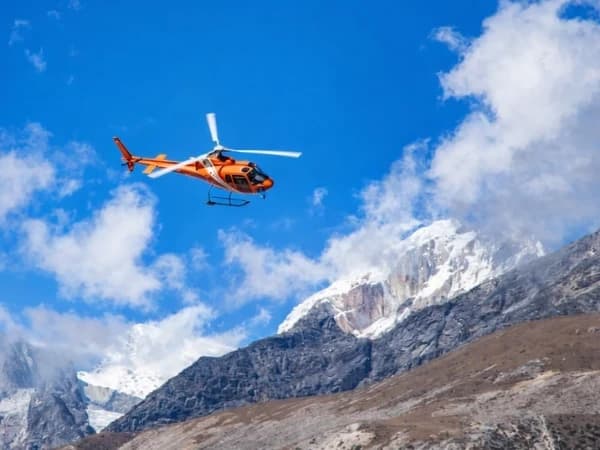
Short Trek to Namche with an Everest Base Camp Helicopter in 5 Days: Route, Cost and Who It Suits (2027)
The 5-day trip that combines two days of Khumbu trekking to Namche with a private helicopter to Everest Base Camp: the day-by-day plan, tiers, permits, best months and the cost.
Read More Chat with Shreejan