
Lukla flights moved to Ramechhap Airport. A 4-5 hour drive before your flight. Or skip Lukla via the road route.
Govt Regd. No.: 147653/072/073
Travel Agency Licence: 2838/072
Ramechhap vs Lukla Flight: Your EBC Trek Now Starts Differently (2027 Guide)

Short answer: In the busy seasons, roughly mid-March to mid-May and late September to the end of November, most Lukla flights leave from Manthali airport in Ramechhap, not Kathmandu. Ramechhap is a 4 to 5 hour drive, so you usually leave Kathmandu between midnight and 2 am. In the quieter months some flights still go from Kathmandu. We arrange the transfer on our 12-day Everest Base Camp trek.
Update, 7 October 2026: The Everest region is open and unaffected by the floods, as at our 29 September update. We check 48 hours before departure; if the road is not open we move your dates free.
Where does the EBC trek actually start from in 2027?
If you're planning to trek to Everest Base Camp in 2027, there's something the old guidebooks don't mention: your flight to Lukla probably won't leave from Kathmandu. Since 2019, domestic flights to Lukla have been progressively shifted to Manthali Airport in Ramechhap, a small town 4-5 hours east of Kathmandu by road.
This change catches hundreds of trekkers off guard every season. You book an "early morning flight to Lukla," set your alarm for 5am, and then discover you need to leave Kathmandu between midnight and 2 am to reach Ramechhap before your flight. Understanding this logistics shift is essential for planning your EBC trek.
Why did Lukla flights move from Kathmandu to Ramechhap?
Tribhuvan International Airport (TIA) in Kathmandu is Nepal's only international airport and one runway handles everything: international jets, domestic turboprops, and helicopters. The congestion is extreme. During peak trekking season, Lukla flights were competing with international arrivals for runway time.
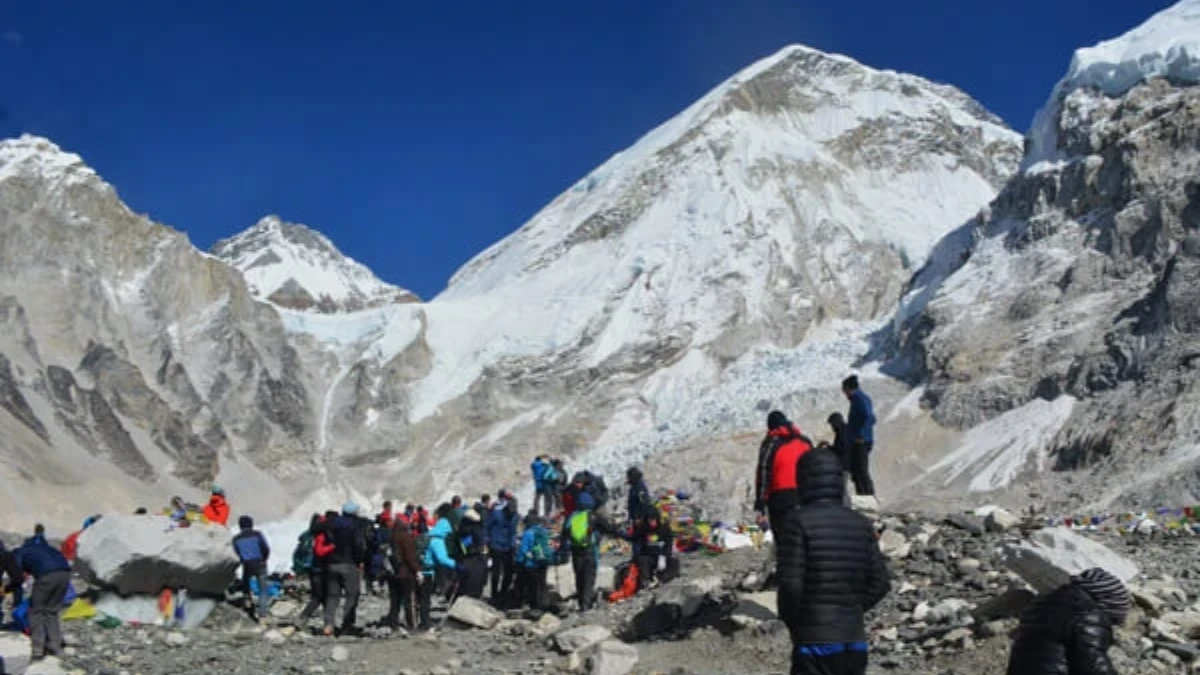
The Nepal government's solution: move domestic Lukla flights to Manthali Airport in Ramechhap during the two peak windows, roughly 15 March to 15 May and 25 September to 30 November. Off-peak months (December-February and June-September), some flights still operate from Kathmandu's domestic terminal. But don't count on it. The trend is firmly toward Ramechhap.
What should I expect at Ramechhap Manthali Airport?
Manthali Airport is a small airstrip with a terminal building that handles Lukla flights and not much else. The runway is shorter than Kathmandu's but longer than Lukla's. Facilities are basic: a waiting area, a small shop, and toilets. There is no restaurant, no lounge, and no Wi-Fi.
The drive from Kathmandu to Ramechhap:
- Distance: approximately 130km
- Time: 4-5 hours by private vehicle, longer by bus
- Road quality: paved but winding through hills. Can be bumpy in sections.
- Departure time: most trekking companies pick you up from your hotel at 1:00-2:00am for early morning flights
- Cost: included in guided trek packages. Independent travellers pay $30-50 for a shared jeep or $100-150 for a private vehicle.
The middle-of-the-night wake-up is the part nobody enjoys. You drive through the night on mountain roads, arrive at Manthali at dawn, check in, and hope the weather cooperates for your flight to Lukla. It adds fatigue before your trek even starts.
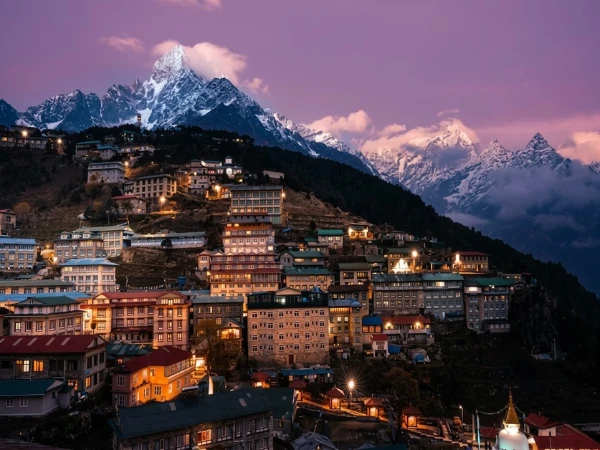
Kathmandu Flights: Still Possible?
Some flights to Lukla still operate from Kathmandu's domestic terminal, particularly in off-peak months and for helicopter services. But availability changes each season based on government directives, and you cannot guarantee a Kathmandu departure when booking months in advance.
Fixed-wing airlines operating Lukla flights: Tara Air, Summit Air and Sita Air. These are small turboprop aircraft, Twin Otter or similar, carrying 15 to 19 passengers. Several helicopter operators fly the same route, and they work to different rules, which is covered further down.
Is it better to fly to Lukla from Ramechhap or Kathmandu?
| Factor | Fly from Ramechhap | Fly from Kathmandu |
|---|---|---|
| Transfer to airport | 4-5 hours (pick-up between midnight and 2 am) | 20-30 minutes |
| Flight to Lukla | 20-25 minutes | 25-35 minutes |
| Availability (peak season) | Guaranteed (all peak flights here) | Limited/unpredictable |
| Availability (off-peak) | Variable | More likely |
| Airport comfort | Very basic | Better facilities |
| Weather delays | Similar frequency to Kathmandu | May have more congestion delays |
| Cost | USD 208.65 per person per sector, plus the road transfer | USD 254.00 per person per sector, minimal transfer |
| Fatigue impact | High (overnight drive before trek) | Low |
The flight from Ramechhap is not the same price as the flight from Kathmandu, and almost every guide online says it is. On the fare list our own ticketing agent works from, effective 3 August 2026, a foreign passport holder pays USD 254.00 per sector Kathmandu to Lukla and USD 208.65 per sector Ramechhap to Lukla. Both figures are all in, with VAT, fuel surcharge and airport tax already inside them. That is USD 45.35 cheaper each way, USD 90.70 on a return. It is the one line in the table above where Ramechhap wins, and it very nearly pays for the vehicle that takes you there. Fares are set by the airlines and change with fuel, so check the figure of the day rather than this page; the Civil Aviation Authority of Nepal is the regulator for all of it.
Can I trek to Everest Base Camp without flying to Lukla?
This is the option most trekking companies don't promote because it's less profitable for airlines. But it's worth serious consideration.
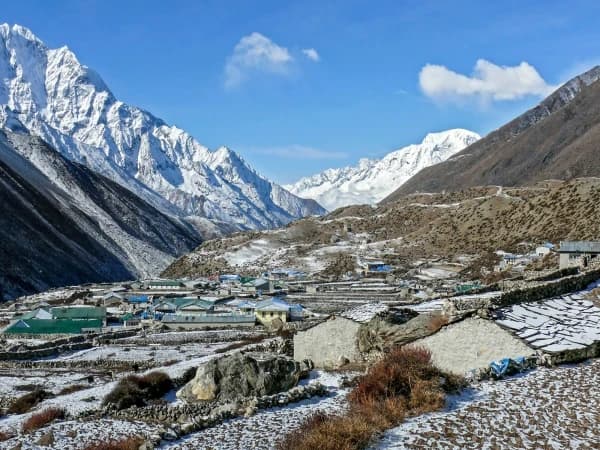
Our Everest Base Camp by Road (15 days) route drives from Kathmandu to Salleri/Phaplu and joins the classic trekking trail without ever boarding a Lukla flight. You walk through beautiful mid-hill country for the first two days before reaching the main Everest trail at Phakding.
Advantages of the road route:
- No Lukla flight to buy at all. A return from Kathmandu is USD 508 per person and from Ramechhap USD 417.30, so that is what the road route takes off an independent trekker's bill
- No Ramechhap 1am transfer
- No flight delays or cancellations (the #1 cause of lost trekking days)
- See rural Nepal that flight-route trekkers miss
- Better acclimatisation (you start lower and ascend more gradually)
- More relaxed start to the trek
Disadvantages:
- 2-3 extra days of travel compared to the flight route
- The drive to Salleri is long (8-10 hours)
- Less dramatic arrival (Lukla's mountain runway is genuinely exciting)
One thing we should say plainly, because it is our own pricing and you can check it in a minute. Our road trek and our flying trek are the same price at every group size. The flight saving does not come back to you as a discount, because the road route spends it on three more days of guide, porter, food and lodging. What the road route actually buys you is not money. It is the removal of the one thing that ruins more Everest itineraries than altitude does, which is a Lukla flight that does not go.
For budget-conscious trekkers, nervous fliers, or anyone who doesn't want to gamble on Lukla weather, the road route is the logical choice. It's what we recommend to first-time EBC trekkers who have the extra days.
How do I handle the early morning drive to Ramechhap airport?
If you are flying from Ramechhap, here's how to make it as painless as possible:
- Sleep early. Go to bed by 7pm the night before. You'll be woken between midnight and 2 am.
- Pack the night before. Have everything ready to grab and go. Your large bag goes in the vehicle; keep a small bag with snacks, water, and a warm layer accessible.
- Eat before leaving. Kathmandu hotels will prepare an early breakfast or packed meal. There's minimal food available at Manthali Airport.
- Charge everything. Phone, camera, power bank. The drive is a good time to rest, not scroll.
- Take motion sickness medication if you're prone to car sickness. The mountain road is winding.
- Carry snacks and water. The Manthali terminal has one small shop. If your flight is delayed, you'll wait with whatever you brought.
Our guided treks include private vehicle transfer from your Kathmandu hotel to Manthali Airport. You don't need to arrange anything yourself.
What About Helicopters?
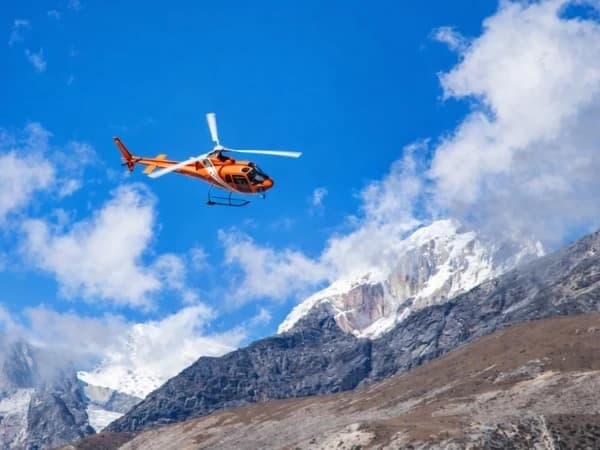
Helicopters are exempt from the Ramechhap diversion altogether. They are not covered by the directive that moves fixed-wing flights, so they fly Kathmandu to Lukla direct, all year, in peak season and out of it. If the middle-of-the-night drive is the part you cannot face, this is the only way to remove it completely. As a guide, a shared seat costs about USD 640 per person from Kathmandu to Lukla and about USD 710 from Lukla to Kathmandu, including tax, bank charges and the fuel supplement. A private charter costs far more than that. What that buys you:
- Depart from Kathmandu (no Ramechhap transfer)
- More flexible scheduling (can fly in slightly worse weather than fixed-wing)
- Faster (15-20 minutes to Lukla)
- Available when fixed-wing flights are cancelled
The downside is cost and availability. Helicopter seats are limited and prices increase during peak season delays when demand spikes.
Frequently Asked Questions
How do I know if my flight is from Kathmandu or Ramechhap?
Your trekking company or airline will confirm the departure airport. If you are trekking between roughly 25 September and 30 November, or 15 March and 15 May, assume Ramechhap unless you are told otherwise. Late September catches people out; it is inside the window even though it does not feel like peak season yet. We confirm the departure point for all our clients before the trek starts.
What if my Ramechhap flight is cancelled?
Weather cancellations happen. Options: wait for the next available flight (could be same day or next day), switch to a helicopter (if available, at extra cost), or drive further toward Phaplu and walk in (our guides can manage this logistics change). We always have a contingency plan.
Can I drive to Ramechhap the day before and stay overnight?
Yes, and some trekkers prefer this. There are basic hotels in Manthali town ($10-15/night). You avoid the overnight drive and sleep before your flight. We can arrange this if preferred.
Is the Lukla flight actually dangerous?
Lukla Airport (Tenzing-Hillary Airport) has a short runway on a slope with a cliff at one end. Pilots who fly this route are among the most experienced in Nepal and are specifically trained for Lukla approaches. Accidents have occurred but are rare relative to flight volume. Weather-related cancellations are far more common than safety incidents. Read our complete Lukla Airport guide.
Is the road route available year-round?
Yes. The road to Salleri/Phaplu is open all year, including monsoon (though conditions are rougher June-August). Our EBC by Road trek runs in all seasons.
The Ramechhap shift is an inconvenience, not a problem. Once you're on the trail, you'll forget the middle-of-the-night wake-up within hours. But if you prefer to avoid it entirely, the road route is there. Either way, Everest Base Camp is waiting.
WhatsApp:+977 9810351300
Email:[email protected]
Written by Shreejan Simkhada, CEO of The Everest Holiday and third-generation Himalayan guide. TAAN Member #1586.
Ramechhap vs Lukla? October starts Ramechhap. Our Everest Base Camp Trek (12 Days) is private (your group only, no strangers), 2027 dates open, From USD $1399. WhatsApp us for tailored 2027 dates and current departures.
Planning a trip to Nepal?
Drop us your details and tell us what you have in mind. We will put together a personalised plan and get back to you.
Not sure which Nepal trek is right for you?
Take our free 2-minute quiz and get personalised recommendations based on your fitness, experience, and travel style.
Find Your Perfect Trek →Need Help? Call Us+977 9810351300orChat with us on WhatsApp
Related Trek Packages
 US$1,399
15 DaysMax 20
(6 reviews)
Everest Base Camp Trek By Road Trip - 15 Days Itinerary and Cost
Starts From
ExploreUS$1,399
Everest Base Camp with Gokyo Lakes Trek via Chola Pass - 15 Days
Starts From
ExploreUS$1,699
Latest Travel Blogs
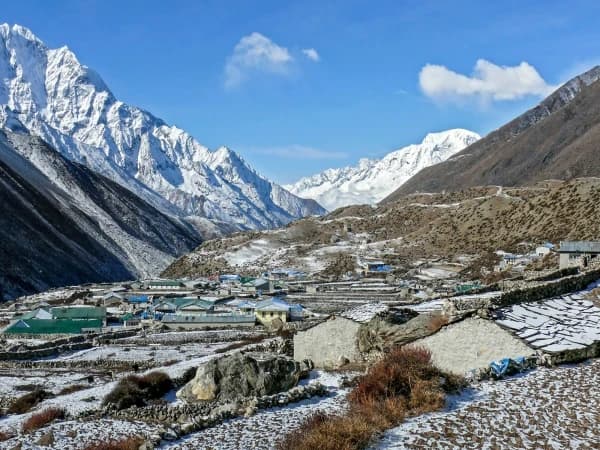
Thamdanda and Surke: The Road Head for Everest Base Camp by Road
Thamdanda is the road head where our Everest Base Camp trek by road starts and ends on foot. How to get there from Phaplu and what the first walk to Paiya is like.
Read More
Poon Hill Trek Permits 2027: ACAP, TIMS, Cost and What You Need
Poon Hill needs two permits: ACAP at NPR 3,000 and a TIMS card at NPR 2,000. Who arranges them, where they are checked, SAARC rates and the 2027 trek prices.
Read More
Mera Peak Climbing Itinerary 2027: 14 Days, Day by Day
Mera Peak in 14 days, night by night. The Hinku valley, a full rest day at Khare, Mera High Camp at 5,780 m, summit day, 2027 prices and the best months.
Read More Chat with Shreejan