Nepal welcomes everyone. Bhutan controls access. Both offer stunning Himalayan trekking. The honest comparison.
Govt Regd. No.: 147653/072/073
Travel Agency Licence: 2838/072
Nepal vs Bhutan Trekking: Cost, Culture and Which Himalayan Country Suits You

Short answer: Nepal and Bhutan share the same Himalaya but work very differently. Bhutan charges a daily Sustainable Development Fee on top of a compulsory tour operator, and most treks camp. Nepal has no daily fee, just permits, has teahouses every hour or two on the main routes, and shows you eight of the world's 8,000 m peaks. In Nepal, a licensed guide has been required on most trekking routes since 2023. A popular first Nepal trek is our Poon Hill trek.
The Neighbours Who Couldn't Be More Different
Nepal and Bhutan share a 250km border, the same Himalayan range, and similar Buddhist traditions. But trekking in one feels nothing like trekking in the other. The cost alone separates them: a 12-day trek in Nepal costs $1,100-1,800. The same duration in Bhutan costs $4,000-7,000 or more.
That price difference isn't random. It reflects two completely different philosophies about tourism. Nepal welcomes everyone. Bhutan controls access. Both approaches have consequences for the trekker.
What are the key differences between Nepal and Bhutan trekking?
| Factor | Nepal | Bhutan |
|---|---|---|
| Daily tourist fee | None (just permits) | $100/day Sustainable Development Fee (SDF) + tour cost |
| Trek cost (12 days, all-in) | $1,100-1,800 | $4,000-7,000+ |
| Must use a tour operator? | Licensed guide required in most areas since April 2023 (including Khumbu), but flexible | Yes, mandatory licensed operator for everything |
| Highest famous trek | EBC (5,545m Kala Patthar) | Snowman Trek (5,320m Rinchen Zoe La) |
| Number of trekking routes | 50+ established routes | 10-15 established routes |
| Trail infrastructure | Teahouses every 1-2 hours | Camping (most treks), limited lodges on popular routes |
| Crowds | Busy in peak season (EBC, Annapurna) | Almost empty (fewer than 100,000 total visitors/year) |
| 8,000m peaks visible | 8 of the world's 14 | 0 (highest is Gangkhar Puensum, 7,570m, unclimbed) |
| Cultural immersion | Strong (Sherpa, Tamang, Gurung villages) | Very strong (dzongs, monasteries, Gross National Happiness) |
| Visa | On arrival, $30-50 | Must arrange in advance through operator |
| Getting there | Direct flights from many cities | Limited flights (Paro only), usually via Bangkok, Delhi, or Kathmandu |
How much does it cost to trek in Nepal vs Bhutan?
Bhutan's $100/day Sustainable Development Fee (SDF) applies to every tourist on top of tour operator costs. For trekkers, this means:
- A 12-day trek in Bhutan: $1,200 in SDF alone, before you've paid for the guide, food, camping, transport, or flights to Paro
- Total realistic cost for the Druk Path (6 days) or Jomolhari Trek (8 days): $3,500-5,000
- The Snowman Trek (25 days, one of the world's hardest): $8,000-12,000+
In Nepal, the same money buys you two or three treks, internal flights, Kathmandu hotels, and still leaves change.
Bhutan isn't overpriced. The SDF funds free healthcare, free education, and environmental conservation. You're not being ripped off. You're paying for a different kind of experience in a country that genuinely prioritises quality over quantity.
But if budget matters, Nepal is the clear choice. Our EBC 12-day trek starts at $1,399 all-inclusive. Our EBC by Road is even less.
What is the trekking experience like in Nepal and Bhutan?
Nepal: Teahouse Culture
Nepal's trail network is built on teahouses: family-run lodges every 1-2 hours along major routes. You sleep in a bed (basic, but a bed), eat hot meals prepared in the kitchen, sit in communal dining rooms with other trekkers, and carry only a daypack. Porters handle the heavy loads.
This system makes Nepal treks accessible. You don't need a tent, stove, or camping skills. The infrastructure supports everything from easy 6-day walks to challenging 17-day crossings.
Bhutan: Wilderness Camping
Most Bhutan treks are camping treks. Your operator provides tents, a cook, porters, and horses. You sleep in meadows and forests with nothing but mountains around you. The trails are quiet to the point of feeling empty. On the Snowman Trek, you might go days without seeing anyone outside your own group.
This isolation is Bhutan's greatest asset. If you want genuine wilderness trekking with zero crowds, Bhutan delivers what Nepal's popular routes no longer can.
What mountains and scenery will I see in Nepal vs Bhutan?
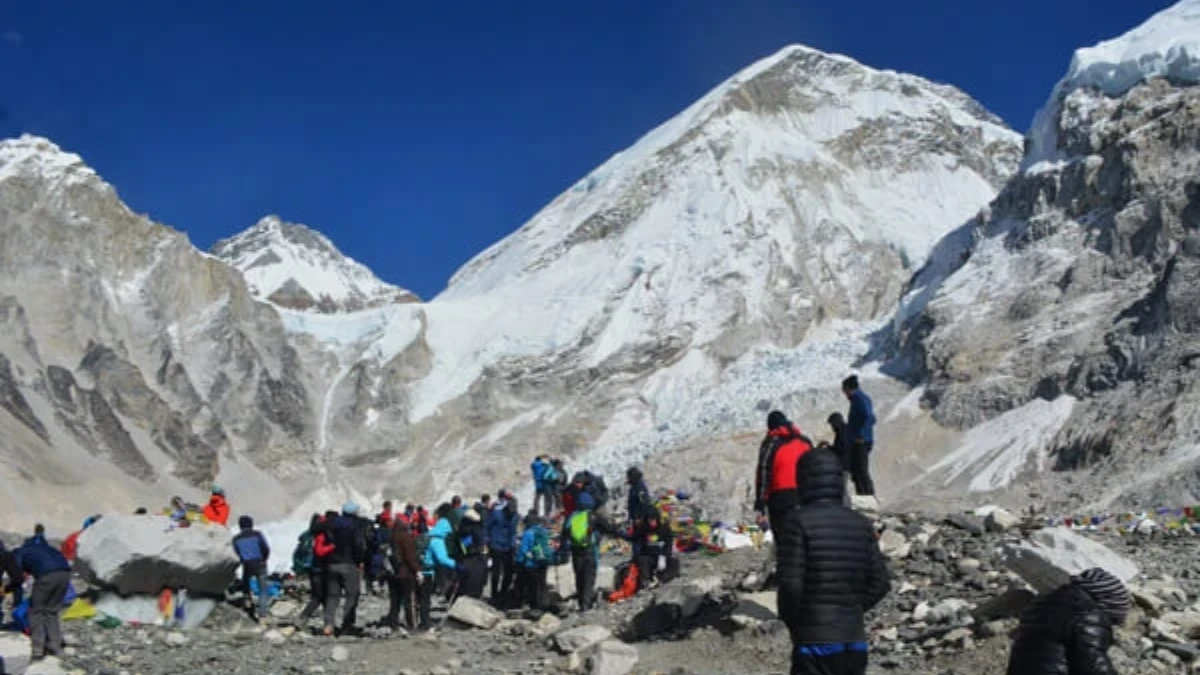
Nepal has eight of the world's fourteen 8,000m peaks. From the EBC trail alone you see Everest (8,849m), Lhotse (8,516m), Makalu (8,485m), and Cho Oyu (8,188m). The Annapurna Circuit shows you Annapurna I (8,091m) and Dhaulagiri (8,167m). The scale is almost incomprehensible.
Bhutan's mountains are lower but no less beautiful. Jhomolhari (7,326m), Jichu Drake (6,989m), and the unclimbed Gangkhar Puensum (7,570m) dominate trekking views. The scenery tends toward forested valleys, high pastures, and dramatic passes rather than the barren glacial landscapes of Nepal's highest routes.
If you want to stand in the shadow of the world's tallest mountains, Nepal is the only option. If you want undisturbed forests, yak-herder camps, and mountains that nobody has climbed, Bhutan offers something Nepal's popular treks can't match.
What culture will I experience trekking in Nepal vs Bhutan?
Both countries are deeply Buddhist, but the expression differs.
Nepal: The trail passes through Sherpa, Tamang, Gurung, and Thakali communities. Each has distinct traditions, architecture, and cuisine. The famous monasteries (Tengboche, Thame, Kyanjin Gompa) are active places of worship that welcome visitors. Nepali culture is warm, open, and visibly diverse.
Bhutan: The kingdom's culture is more uniform and more controlled. Dzongs (fortress-monasteries) are architecturally impressive. Prayer flags cover every pass. The entire country operates on Gross National Happiness principles, which is visible in how people live and interact. The Tiger's Nest Monastery (Taktsang) is one of the most photographed religious sites in Asia.
Nepal gives you cultural variety. Bhutan gives you cultural depth.
How do flights and visas work for Nepal and Bhutan treks?
Getting to Nepal: Direct flights from Dubai, Doha, Delhi, Bangkok, Kuala Lumpur, and many other hubs. Visa on arrival at Kathmandu airport. Easy.
Getting to Bhutan: Flights only to Paro, operated by Drukair or Bhutan Airlines. Routes from Bangkok, Delhi, Kathmandu, Kolkata, and Singapore. The approach into Paro between mountains is one of the most dramatic landings in aviation. Visa must be arranged in advance through your operator.
Many trekkers combine both: fly into Kathmandu, trek in Nepal, fly to Paro for Bhutan, return via Kathmandu. This is the best way to see both Himalayan nations in one trip.
Who Should Choose Nepal?
- Budget-conscious trekkers (half to a third the cost of Bhutan)
- People who want the world's highest mountains as their backdrop
- Trekkers who prefer teahouse comfort over camping
- Anyone with limited time (many treks under 14 days)
- Repeat visitors who want variety (50+ routes to explore)
- First-time Himalayan trekkers (more infrastructure, easier logistics)
Who Should Choose Bhutan?
- Trekkers who can spend $4,000+ and want genuine wilderness
- People who've already done Nepal and want something different
- Cultural travellers fascinated by Bhutan's unique Buddhist society
- Anyone who dislikes crowds (Bhutan's trails are virtually empty)
- Experienced trekkers seeking the Snowman Trek challenge
- Photographers wanting untouched, untouched landscapes
Can You Do Both in One Trip?
Yes. A popular combination is:
- Fly to Kathmandu (Day 1)
- Trek in Nepal: Langtang (8 days) or Annapurna Base Camp (10 days)
- Return to Kathmandu, rest day
- Fly to Paro (1 hour from Kathmandu)
- Bhutan: Druk Path Trek (6 days) + Tiger's Nest visit
- Fly back via Kathmandu
Total: 18-22 days. Two countries, two treks, two profoundly different Himalayan experiences. We can arrange the Nepal portion and connect you with trusted Bhutan operators for the second half.
Frequently Asked Questions
Is Bhutan worth the extra cost?
If you value solitude and cultural uniqueness, yes. If you're primarily interested in mountain scenery and trekking variety, Nepal offers more for less. Bhutan is not "better Nepal." It's a different experience entirely.
Is Nepal too crowded?
The EBC and Annapurna trails are busy in peak season. But Nepal has dozens of quieter routes: Manaslu, Lower Dolpo, Kanchenjunga, and Nar Phu Valley see a fraction of the traffic. Crowd isn't a Nepal problem. It's a "everyone goes to the same two treks" problem.
Can I trek independently in Bhutan?
No. All tourists must book through a licensed Bhutanese tour operator and be accompanied by a guide. There is no independent trekking in Bhutan.
Which country is safer?
Both are very safe for trekkers. Nepal has more developed rescue infrastructure (helicopter evacuation is well-established). Bhutan has fewer trekkers, which means fewer incidents but also fewer rescue resources in remote areas. Neither country has significant crime risks for tourists.
Nepal and Bhutan are two sides of the same mountain range. One opened its doors wide. The other kept them carefully guarded. Both are worth visiting. Start with the one that fits your budget, your time, and your idea of what a Himalayan trek should be.
WhatsApp:+977 9810351300
Email:[email protected]
Written by Shreejan Simkhada, CEO of The Everest Holiday and third-generation Himalayan guide. TAAN Member #1586.
Nepal vs Bhutan? Nepal is cheaper and wider in choice. Our Everest Base Camp Trek (12 Days) is private (your group only, no strangers), 2027 dates open, From USD $1399. WhatsApp us for tailored 2027 dates and current departures.
Settled on Nepal? Our Nepal Trekking Holidays 2027 guide compares every major route by cost, difficulty and season.
Planning a trip to Nepal?
Drop us your details and tell us what you have in mind. We will put together a personalised plan and get back to you.
Not sure which Nepal trek is right for you?
Take our free 2-minute quiz and get personalised recommendations based on your fitness, experience, and travel style.
Find Your Perfect Trek →Need Help? Call Us+977 9810351300orChat with us on WhatsApp
Related Trek Packages
(24 reviews)
Manaslu Circuit Trek - 12 Days | Remote Larkya La Pass Expedition
Starts From
ExploreUS$799
Latest Travel Blogs
Thamdanda and Surke: The Road Head for Everest Base Camp by Road
Thamdanda is the road head where our Everest Base Camp trek by road starts and ends on foot. How to get there from Phaplu and what the first walk to Paiya is like.
Read More
Poon Hill Trek Permits 2027: ACAP, TIMS, Cost and What You Need
Poon Hill needs two permits: ACAP at NPR 3,000 and a TIMS card at NPR 2,000. Who arranges them, where they are checked, SAARC rates and the 2027 trek prices.
Read More
Mera Peak Climbing Itinerary 2027: 14 Days, Day by Day
Mera Peak in 14 days, night by night. The Hinku valley, a full rest day at Khare, Mera High Camp at 5,780 m, summit day, 2027 prices and the best months.
Read More Chat with Shreejan