
Complete guide to motorcycle touring in Nepal. Routes, best bikes, permits, road conditions, costs. Honest assessment from a company that runs motorbike tours.
Govt Regd. No.: 147653/072/073
Travel Agency Licence: 2838/072
Nepal Motorcycle Tour: Routes, Bikes, Permits and Everything You Need to Know
Short answer: A motorcycle tour in Nepal usually means the Kathmandu to Pokhara highway and the road up the Kali Gandaki to Mustang, on rough roads with dust and river crossings. Lower Mustang takes about 8 days. Upper Mustang takes about 11 days and needs the restricted-area permit of USD 50 per person per day and a licensed guide. Ride with us on our Upper Mustang motorbike tour.
Nepal Motorcycle Tour: Everything You Need to Know Before You Ride
Your first motorcycle ride from Kathmandu to Pokhara is a lot to take in. The Prithvi Highway is a mess of potholes, diesel trucks, and blind corners. Plenty of riders love every second of it, and plenty are shaken by it.
Nepal has changed since then. Some of the roads have improved. Some have got worse. But riding a motorcycle through this country remains one of the most exhilarating things you can do in the Himalayas, if you know what you're getting into.
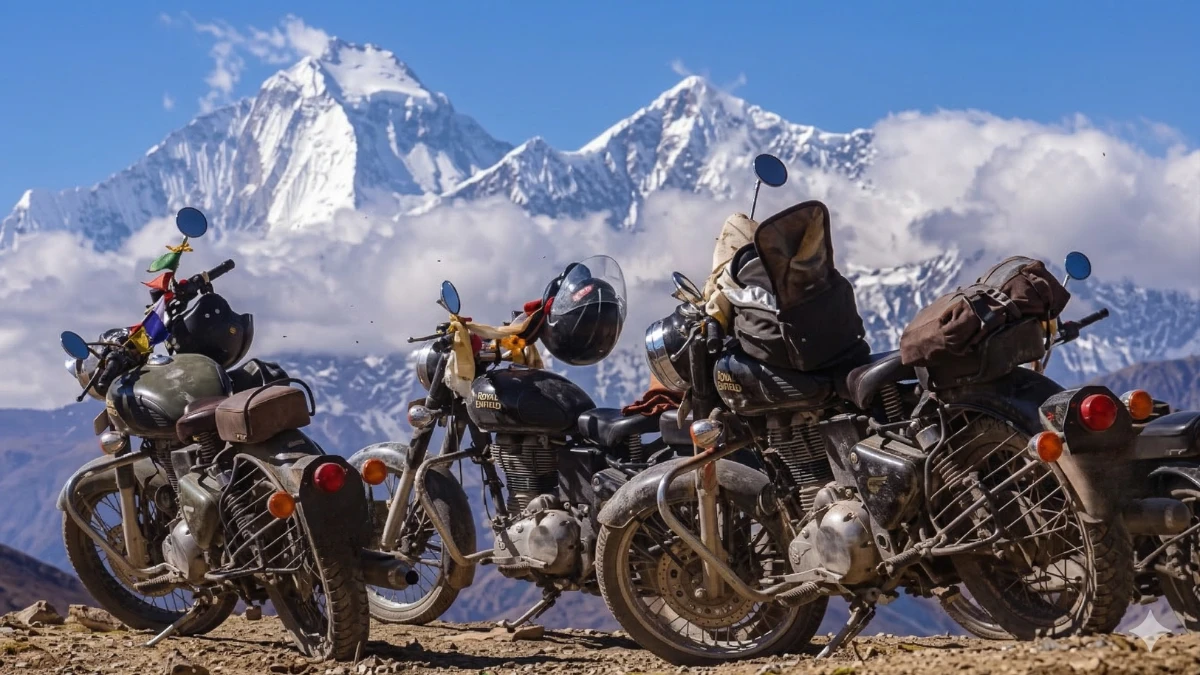
I'm Shreejan Simkhada, and The Everest Holiday has been running motorcycle tours in Nepal for years. Riders break down in Jomsom, get soaked to the bone in Beni, and drop a Royal Enfield in a river crossing in Lower Mustang. All of those things are survivable. Some are even funny, eventually.
This is the guide I wish someone had given me before that first ride.
Who Should (and Shouldn't) Ride in Nepal
Nepal is not where you learn to ride a motorcycle.
I need to be blunt about this. If you've just passed your motorcycle test, if you've only ever ridden on smooth European roads, if you've never handled a heavy bike on gravel, Nepal will overwhelm you. Our roads mix tarmac, dirt, gravel, sand, and occasionally nothing at all, sometimes within the same kilometre.
You should have:
- At least 2 years of riding experience
- Confidence on dirt and gravel roads
- Experience with heavy bikes (the Royal Enfield Himalayan weighs 199 kg)
- The ability to pick up a fallen motorcycle by yourself
- A valid motorcycle licence from your home country
Tours get cut short when riders overestimate their abilities. That's expensive and disappointing for everyone. Be honest with yourself.
Which is the best motorcycle for touring Nepal?
There's really only one serious choice for touring Nepal. The Royal Enfield Himalayan 411cc.
It's not the most powerful bike. It's not the most refined. The electronics are basic, the finish quality is average, and the stock seat will have your backside screaming after 4 hours. But it's perfect for Nepal, and here's why:
- Parts are everywhere. Every mechanic in Nepal knows this bike. If something breaks in Tatopani or Jomsom, someone can fix it. Try that with a BMW GS.
- It handles bad roads. The long-travel suspension, 21-inch front wheel, and manageable weight make it genuinely capable off-road.
- Fuel economy matters. The Himalayan does about 30 km per litre. When petrol stations are 100 km apart in Upper Mustang, that matters enormously.
- Cost. Rental is about $35-50 USD per day including basic insurance. A KTM Adventure would be three times that, if you could even find one.
We maintain our fleet ourselves. Every bike is serviced before each tour, with fresh oil, new brake pads if needed, and properly adjusted chains. Some rental outfits in Kathmandu hand over bikes with bald tyres and dodgy brakes. That's not us.
What are the best motorcycle tour routes in Nepal?
Nepal offers three distinct motorcycle touring experiences. They're vastly different in difficulty, scenery, and infrastructure.
| Route | Duration | Distance | Max Altitude | Road Condition | Difficulty | Permit Needed |
|---|---|---|---|---|---|---|
| Kathmandu-Pokhara Circuit | 4-5 days | ~600 km | 1,400m | Mostly tarmac | Easy-Moderate | No |
| Lower Mustang Loop | 8 days | ~900 km | 2,700m | Mixed (50% dirt) | Moderate-Hard | TIMS card |
| Upper Mustang | 10-12 days | ~1,100 km | 3,800m | Mostly dirt/gravel | Hard-Expert | Restricted area permit (USD 50 per person per day) |
Kathmandu to Pokhara: The Classic Introduction
If it's your first time riding in Nepal, start here. The Prithvi Highway connects Kathmandu to Pokhara in about 6 hours, but we stretch it over two days, stopping at Bandipur, a hilltop Newari town that feels like stepping back 200 years.
The road is mainly tarmac. There are bad sections, and the truck traffic is relentless, but it's manageable for intermediate riders. You'll wind through river valleys, climb through subtropical forest, and arrive in Pokhara with a huge grin and slightly shaky legs.
The honest downside: the Prithvi Highway is Nepal's busiest road. You will be overtaken by buses that have no business going that fast. You will inhale diesel fumes. The first hour out of Kathmandu is genuinely stressful until the traffic thins.
Lower Mustang: Where Things Get Real
The Lower Mustang route is my favourite ride in Nepal. From Pokhara, you descend to Beni, then follow the Kali Gandaki river valley north into the rain shadow of the Annapurnas. The landscape transforms from lush subtropical forest to arid, almost Tibetan desert.
The road between Beni and Jomsom is where your skills get tested. It's carved into cliff faces, crosses rivers (sometimes with bridges, sometimes without), and turns to deep gravel in sections. After rain, rockfalls can block the road for hours.
You'll ride through Tatopani (stop at the hot springs; your body needs it), Marpha (the apple brandy capital of Nepal), and Jomsom (windy, dusty, and surrounded by 8,000-metre peaks).
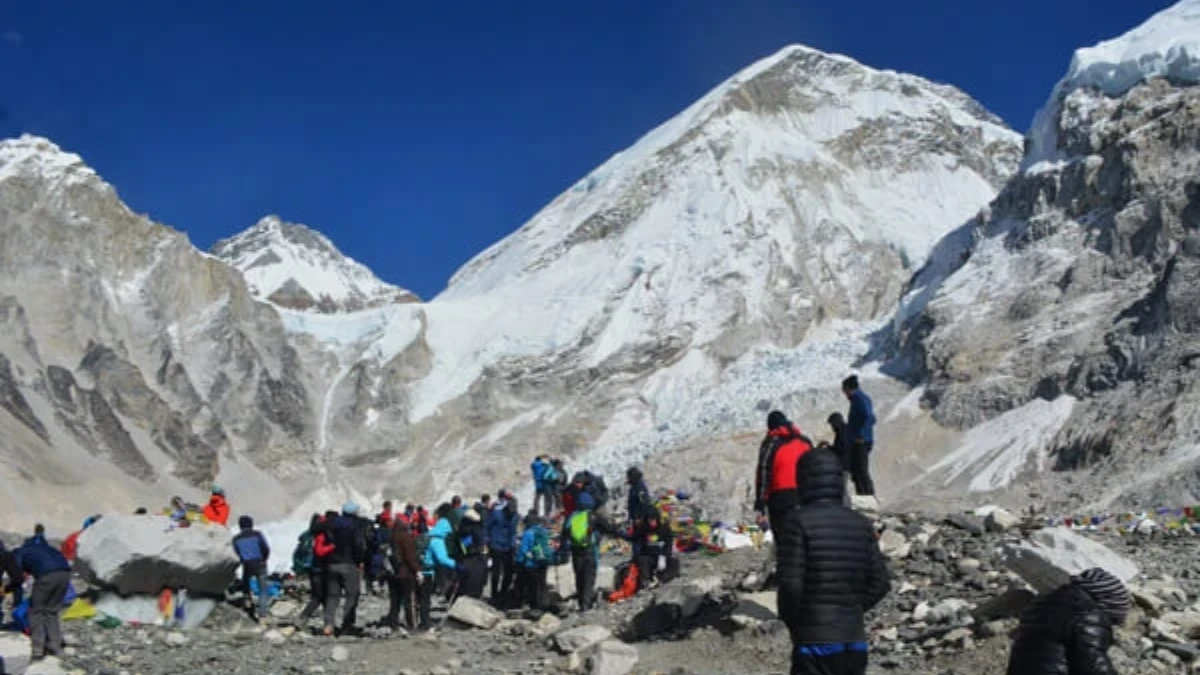
The Muktinath temple at 3,710 metres is the high point, both literally and spiritually. Sacred to both Hindus and Buddhists, it sits beneath the Thorong La pass with the Annapurnas towering behind it.
What's not great about this route: the wind. The Kali Gandaki valley funnels wind like a jet engine every afternoon. From about 11 AM, you'll be riding into 60-80 km/h headwinds with dust and grit blasting your visor. We always aim to finish riding by noon and let the wind rage while we drink tea.
Upper Mustang: The Ultimate Nepal Ride
Beyond Kagbeni, the road enters the restricted area of Upper Mustang, a former Tibetan kingdom that was closed to foreigners until 1992. The landscape is otherworldly: red and ochre cliffs, ancient cave dwellings, wind-carved pillars of rock, and the walled city of Lo Manthang.
The riding is hard. Properly hard.
The "road" is often just a track across riverbeds. River crossings can be knee-deep. The altitude means the bike loses power (the Himalayan is noticeably sluggish above 3,500 metres). You'll ride for hours without seeing another vehicle.
The permit costs USD 50 per person per day, and you only pay for the days you are actually inside the restricted area. You also have to ride with a registered guide. That is not optional, it is Nepali law. We include the permit in our tour price, so there are no surprises.
Who should do this? Experienced adventure riders only. If you haven't ridden on dirt extensively, if you can't handle a bike in deep gravel or across water, Upper Mustang will punish you. We do a skills assessment on day one in Pokhara, and if a rider is struggling we will have an honest conversation about whether to continue north of Kagbeni or turn back. Nobody enjoys that conversation in the moment, and most riders are glad of it later. Related: Upper Mustang Motorbike Tour: Ride to the Last Forbidden Kingdom.
What permits do you need for a Nepal motorcycle tour?
Motorcycling in Nepal involves more paperwork than you might expect.
International Driving Permit (IDP): You need one. Technically, Nepal recognises some foreign licences directly, but in practice, if police stop you (and they will, at checkpoints), an IDP alongside your home licence avoids arguments and fines.
TIMS Card: Required for most trekking/touring areas. We arrange this in Kathmandu before departure. Cost: about $20 USD.
Restricted Area Permits: Upper Mustang needs a special permit costing USD 50 per person per day. The old flat fee of USD 500 for ten days was scrapped, so you now pay only for the days you are inside the zone. It has to be arranged through a registered agency. You cannot get it on your own, and you cannot buy it at the checkpoint.
Vehicle registration document: If riding one of our bikes, we provide this. If you're renting independently, make sure the rental company gives you the bike's registration papers (bluebook). Riding without it is technically illegal, and police checkpoints will ask.
Insurance: Our bikes come with basic third-party insurance as required by Nepali law. But you need your own travel insurance that covers motorcycle riding. Many standard travel policies exclude motorcycles. Check the fine print. If it says "motorcycles under 125cc only," your Himalayan 411cc is not covered.
What are road conditions like for motorcycling in Nepal?
Nepal's roads are either being built, being repaired, or falling apart. Sometimes all three simultaneously.
The government has been expanding the road network aggressively for the last decade. This means that some routes which were impassable five years ago now have tarmac. It also means that construction zones are everywhere, and a "paved road" on Google Maps might actually be a muddy track with dozers blocking half of it.
What to expect:
- Major highways (Kathmandu-Pokhara, Kathmandu-Chitwan): Tarmac, mostly decent, occasional potholes, heavy traffic
- District roads (Beni-Jomsom, Besisahar-Chame): Mix of tarmac and gravel, unpredictable, rockfall zones, single-track sections
- Remote tracks (Upper Mustang, Manang side roads): Dirt, gravel, river crossings, no road markings, no barriers, no mercy
We drive on the left in Nepal. In theory. In practice, vehicles drive wherever there's road. Expect oncoming traffic on your side, overtaking vehicles on blind corners, and livestock appearing from nowhere. Horn usage isn't aggression; it's communication. Use yours constantly.
When is the best time for a Nepal motorcycle tour?
There are two windows.
October to November: Post-monsoon. Clear skies, dry roads, the best mountain views. This is prime season, and for good reason. Temperatures are comfortable at lower altitudes (20-25C during the day) and cold but bearable at altitude. The roads have had all summer to dry out after the monsoon.
March to May: Pre-monsoon. Warmer temperatures, occasional afternoon clouds, but generally dry roads. March is excellent. April gets hazy. May is hot at low altitude and the monsoon can arrive early.
Avoid: June to September (monsoon: landslides, flooded rivers, terrible visibility) and December to February (freezing at altitude, passes may be closed, roads icy above 3,000m).
What's Included in Our Tours
Our motorcycle tour packages include:
- Royal Enfield Himalayan 411cc (well-maintained, serviced before each tour)
- Helmet, riding gloves, and basic protective gear
- Experienced lead rider/guide who knows every road, every petrol station, every mechanic
- Support vehicle with spare parts, tools, and luggage capacity
- Accommodation (hotels and guesthouses, not camping)
- All permits and entry fees
- Breakfast daily, other meals on remote sections where options are limited
- Basic third-party insurance for the motorcycle
What's NOT included: personal travel insurance (you must arrange this), fuel (approximately $5-8 per day), lunches and dinners in towns with restaurants, alcoholic drinks, tips for support staff.
We keep group sizes to a maximum of 6 riders. Larger groups are slower, harder to manage, and more likely to have incidents. With 6, everyone rides at a comfortable pace, and the guide can keep eyes on the whole group.
Fuel: The Anxiety You Didn't Know You'd Have
On the Kathmandu-Pokhara route, petrol stations appear every 20-30 km. No stress.
On the Mustang routes, things get interesting. Between Beni and Jomsom, stations are sporadic. In Upper Mustang, there are no petrol stations at all. None.
We carry Jerry cans in the support vehicle. The Himalayan's 15-litre tank gives about 400-450 km of range in perfect conditions, less on steep dirt roads at altitude. We plan refuelling carefully and always carry reserve fuel. Running out of petrol 50 km from the nearest village at 3,500 metres is not a fun experience, which is why we plan fuel stops carefully.
How do you prepare for a Nepal motorcycle tour?
Motorcycle touring in Nepal is physically demanding. You're not cruising a motorway. You're wrestling a heavy bike over rough terrain for 4-6 hours a day, often at altitude where you get tired faster.
Prepare by:
- Riding regularly in the months before your trip, especially off-road if possible
- Core and leg strength training (squats, lunges, planks)
- Getting comfortable with slow-speed manoeuvres and hill starts on loose surfaces
- Practising picking up a dropped bike: it will happen
Altitude can affect your riding. At 3,500 metres, you'll notice reduced concentration, slower reaction times, and fatigue that creeps in earlier than expected. We build rest days into the higher-altitude itineraries for exactly this reason.
Is it safe to ride a motorcycle in Nepal?
I believe in honest marketing. Here's what can happen on a Nepal motorcycle tour:
- Mechanical breakdowns: Punctures are common. Chain issues happen. We carry spare tubes, a tyre repair kit, spare chains, brake cables, clutch cables, and a full tool kit. Our guide is also a trained mechanic.
- Drops and falls: On a multi-day tour, at least one rider will drop their bike at least once. Usually at slow speed, usually in gravel, usually in front of everyone. Embarrassing but rarely dangerous.
- Road closures: Landslides, construction, or political strikes (bandhs) can close roads. We have alternative routes planned for every section and local contacts who alert us to closures.
- Illness: Stomach issues, altitude sickness, or general fatigue. The support vehicle can carry a rider who needs a rest day.
- Weather: Rain changes everything. Dirt roads become mudslides. Visibility drops to metres. We monitor forecasts and adjust schedules. Sometimes that means an extra day somewhere. Sometimes it means an early start to beat afternoon rain.
Can you do a self-guided motorcycle tour in Nepal?
Can you rent a bike in Kathmandu and ride to Mustang yourself? Legally, yes (except Upper Mustang, which requires a guide). Practically, I'd strongly advise against it unless you have extensive experience riding in developing countries.
Navigation is tricky: Google Maps is often wrong. Mechanics are hard to find outside major towns. If you're injured on a remote road, getting help takes time. And riding alone means nobody is watching your back.
If you're experienced and determined to go solo, we can arrange bike rental with proper paperwork and give you a detailed route briefing. But the guided tour exists for good reasons.
Ready to Ride?
If you've read all of this and you're still excited rather than terrified, Nepal might be your kind of ride. Send us a message with your trip level, preferred dates, and which route interests you. We'll give you an honest assessment of whether it's the right fit.
And if we think you need more experience first, we'll tell you that too. A disappointed rider at home is better than an injured rider in Jomsom.
WhatsApp: +977 9810351300
Email:[email protected]
Shreejan Simkhada is the CEO of The Everest Holiday and a third-generation Himalayan guide. TAAN Member #1586.
If you prefer pedal-power to engines, see our mountain biking Nepal guide for the trails, bike rental options, and the routes most popular with international cyclists.
Upper Mustang Motorbike: our flagship motorbike tour. Our Upper Mustang Motorbike Tour (11 Days) is private (your group only, no strangers), 2027 dates open, From USD $1849. WhatsApp us for tailored 2027 dates and current departures.
Planning a trip to Nepal?
Drop us your details and tell us what you have in mind. We will put together a personalised plan and get back to you.
Not sure which Nepal trek is right for you?
Take our free 2-minute quiz and get personalised recommendations based on your fitness, experience, and travel style.
Find Your Perfect Trek →Need Help? Call Us+977 9810351300orChat with us on WhatsApp
Related Trek Packages
 US$999
8 DaysMax 20
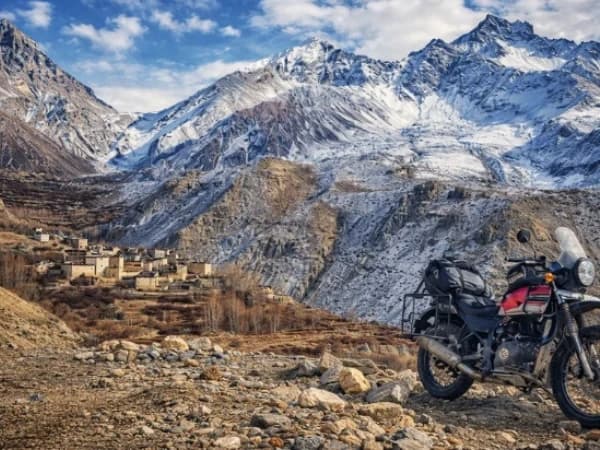
Lower Mustang Motorbike Tour - 8 Days Itinerary and Costs
Starts From
ExploreUS$999
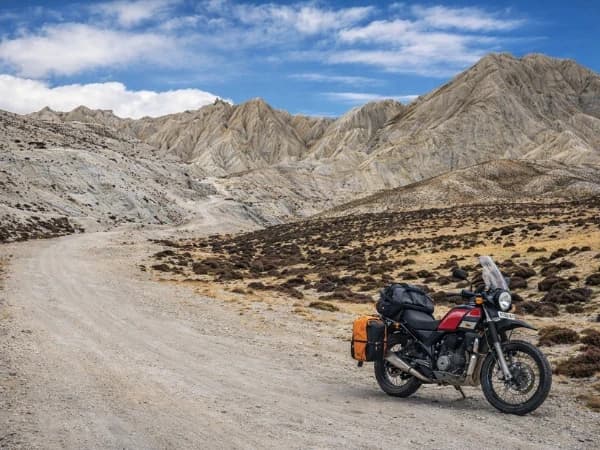 US$1,849
11 DaysMax 20
Upper Mustang Motorbike Tour - 11 Days Itinerary and Costs
Starts From
ExploreUS$1,849
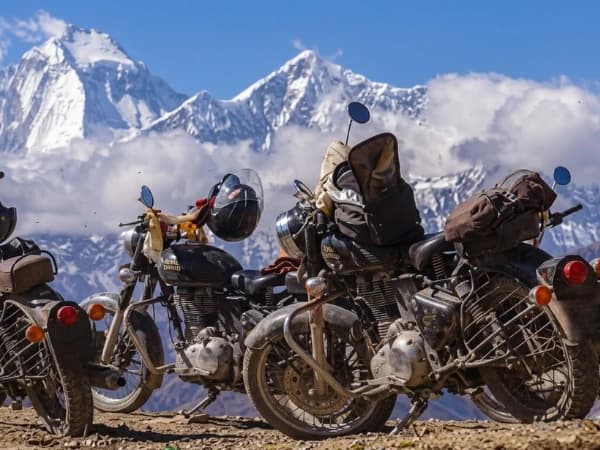 US$1,599
7 DaysMax 20
Latest Travel Blogs
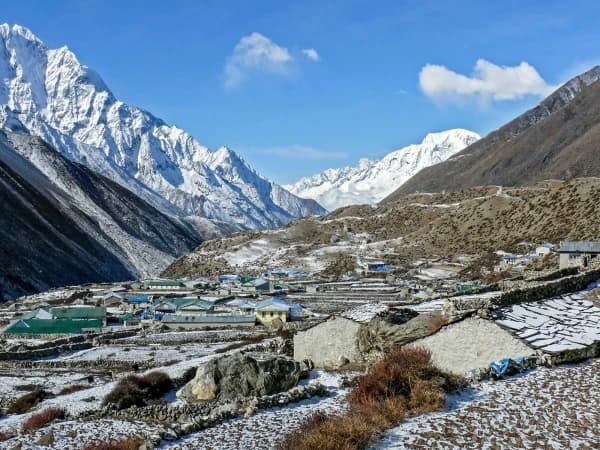
Thamdanda and Surke: The Road Head for Everest Base Camp by Road
Thamdanda is the road head where our Everest Base Camp trek by road starts and ends on foot. How to get there from Phaplu and what the first walk to Paiya is like.
Read More
Poon Hill Trek Permits 2027: ACAP, TIMS, Cost and What You Need
Poon Hill needs two permits: ACAP at NPR 3,000 and a TIMS card at NPR 2,000. Who arranges them, where they are checked, SAARC rates and the 2027 trek prices.
Read More
Mera Peak Climbing Itinerary 2027: 14 Days, Day by Day
Mera Peak in 14 days, night by night. The Hinku valley, a full rest day at Khare, Mera High Camp at 5,780 m, summit day, 2027 prices and the best months.
Read More Chat with Shreejan