Mountain biking in Nepal guide. Best routes, bike rental, Mustang MTB adventure, road safety reality, permits, and what to expect. By a company that runs cycling tours.
Govt Regd. No.: 147653/072/073
Travel Agency Licence: 2838/072
Mountain Biking in Nepal: The Ultimate Cycling Adventure Guide

Short answer: Nepal is a serious mountain biking country. The ground drops from the high Himalaya to near sea level in about 200 km, so you get long descents, dirt roads and village trails in one trip. Mustang is the classic multi-day ride, past Muktinath and down the Kali Gandaki towards Jomsom, and the Kathmandu Valley rim works for day rides. Ride it on our Mustang mountain bike tour.
Mountain Biking in Nepal: The Ultimate Cycling Adventure Guide
By Shreejan Simkhada | April 2026
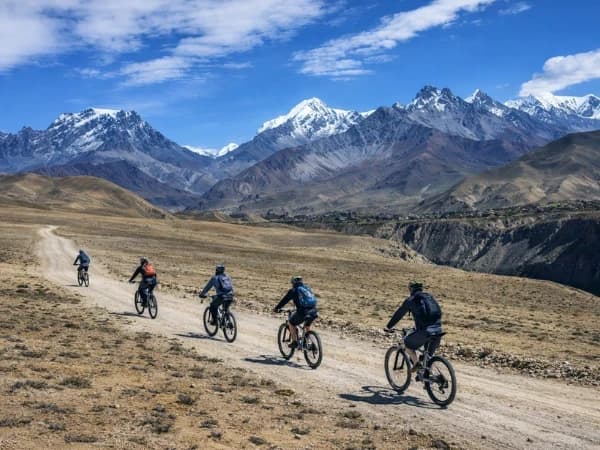
The road from Muktinath to Jomsom drops 600 metres in two hours. You're riding through a landscape that looks like Mars (red cliffs, dry riverbeds, wind-carved canyons) and Dhaulagiri, the seventh highest mountain in the world, fills your entire field of vision. The wind is in your face, the surface is a mix of gravel and packed dirt, and every few minutes you pass a Tibetan Buddhist chorten or a line of prayer flags strung across the valley.
Not so long ago, cycling tours in Nepal were unusual. The standard trekking companies offered walking. Cycling was something you did in the Kathmandu Valley on a rented city bike, maybe around Nagarkot if you were feeling ambitious.
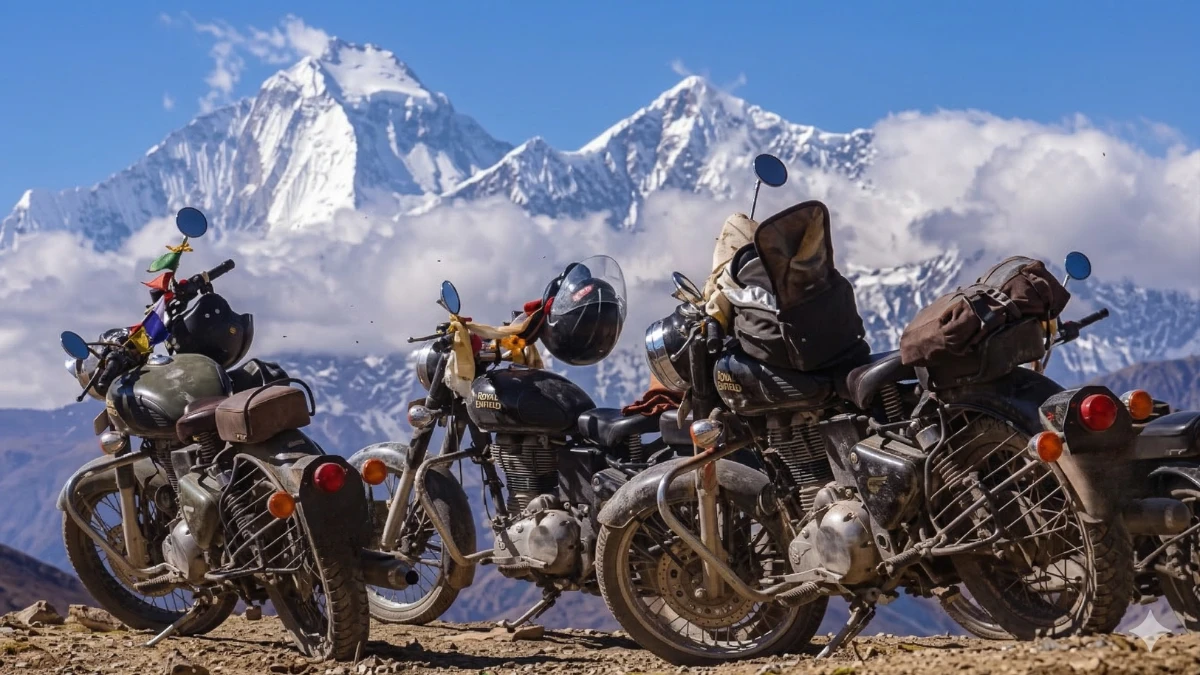
Cyclists who have ridden Patagonia and Mongolia see the Mustang route on a map and understand at once what they are looking at: some of the most dramatic cycling terrain in Asia, and almost nobody knows about it.
Nepal is one of the world's great emerging mountain biking destinations, and it's still early enough that you can ride trails where you won't see another cyclist all day.
Why is Nepal good for mountain biking?
Nepal's geography is essentially a series of descents. The country drops from the highest point on earth to near sea level across a distance of roughly 200 kilometres. That vertical range creates an absurd variety of riding terrain within a single trip.
In a two-week cycling tour, you might ride through subtropical lowland forests, climb through terraced farmland in the middle hills, traverse high-altitude desert above 3,500 metres, and descend through ancient trading routes carved into cliff faces. The terrain changes faster than anywhere I know, which means the riding never gets monotonous.
Then there's the trail network. Nepal has been walking between villages for thousands of years. The trails exist. They're maintained because people use them daily: farmers, traders, schoolchildren, mule trains. Some are smooth and fast. Some are rocky and technical. Some are both within the same kilometre. But they go everywhere, including places no road has reached.
The cultural element elevates Nepal cycling above pure mountain biking destinations like Whistler or Moab. You're not riding through empty wilderness. You're riding through communities, stopping for tea at the same houses where trekkers stop, and being welcomed by people who find a cyclist slightly more entertaining than yet another hiker.
Our Cycling Tours
Kathmandu Mountain Bike Tour: 5 Days
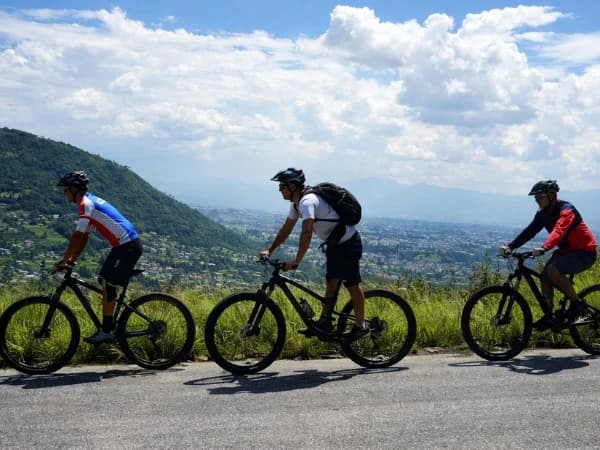
The Kathmandu Mountain Bike Tour is our introduction to Nepal cycling. Five days of riding in and around the Kathmandu Valley, covering the best trails without the altitude challenges of the high mountains.
The valley rim ride from Nagarkot to Dhulikhel is the highlight. You start at about 2,175 metres with sunrise views of the Himalayan range stretching from Langtang to Everest, then descend through Newari villages, past ancient temples, through mustard fields (in spring, they're blindingly yellow), and end in Dhulikhel, one of the prettiest hill towns in Nepal.
Other rides include the forested trails around Shivapuri National Park, the back roads connecting Bhaktapur, Patan, and Kathmandu's medieval city squares, and the ridge trails above Pharping with views of the southern valley. The riding is moderate. Fitness is needed, but technical skill requirements are manageable for anyone who's comfortable on a mountain bike.
This tour works well as a standalone trip or as an add-on before or after a longer trek.
Mustang Mountain Bike Tour: 19 Days
The Mustang Mountain Bike Tour is the big one. Nineteen days of riding through one of the most spectacular and remote landscapes accessible by bicycle. This is the trip that Australian rider was talking about, and it's the one that makes Nepal an great cycling destination.
The route follows the ancient salt trading route from Pokhara into Upper Mustang, crossing the Kali Gandaki gorge, climbing through the rain shadow into Tibetan Buddhist territory, and reaching the walled city of Lo Manthang at 3,840 metres, with a day ride up to the Kora La at about 4,660 metres. Then you ride back.
The terrain ranges from smooth tarmac in the lower sections to loose gravel, river crossings, and exposed cliff trails in Upper Mustang. Some sections are rideable. Some require pushing your bike. The wind in Upper Mustang is legendary: it funnels through the gorge every afternoon with enough force to stop you dead on a downhill.
This isn't a casual tour. You need to be fit, comfortable on technical terrain, and mentally prepared for long days in remote conditions. But if you're the kind of rider who chose this sport because normal holidays bore you, Mustang will be the best thing you've ever done on a bicycle.
What are the best mountain biking routes in Nepal?
Kathmandu Valley Rim
The ridge that encircles the Kathmandu Valley offers some of the best day riding in Nepal. You can put together loops of 30-60 kilometres combining ridgetop trails with descents into the valley floor. Nagarkot to Dhulikhel (about 30km) is the classic section: mostly downhill, mostly rideable, with views that make you stop every ten minutes.
The trails around Champadevi and Hattiban on the valley's southern rim are more technical, with singletrack through forest and some steep descents that'll test your handling. These are popular with Kathmandu's small but growing local MTB community, so you might actually see other riders.
Pokhara Lakeside and Surrounds
Pokhara has easier terrain than Kathmandu and better infrastructure for casual cycling. The lakeside road is flat and scenic. The trails around the World Peace Pagoda involve a steep climb rewarded by views of the Annapurna range and Phewa Lake. The back roads toward Begnas and Rupa lakes take you through quieter countryside away from the tourist centre.
For more serious riding, the trails above Sarangkot (the famous paragliding launch point) offer fast descents on mixed surfaces with the Annapurna range as a backdrop. Several local operators run guided day rides from Pokhara, and bike rental quality here is decent.
The Annapurna Circuit on Two Wheels
Yes, people do this. The Annapurna Circuit, traditionally a trekking route, can be ridden on a mountain bike, though "ridden" requires generous interpretation in some sections. The lower portions through Besisahar to Manang are increasingly road-accessible and rideable. The Thorong La pass at 5,416 metres is mostly walked with a bike pushed or carried. The descent from the pass to Muktinath is one of the most spectacular rides on earth, dropping 1,600 metres through high-altitude desert.
We don't currently offer this as a packaged tour, but we can arrange custom cycling itineraries on the circuit for experienced riders. Talk to us about logistics, permits, and realistic timelines. Related: Kathmandu Valley Mountain Biking Trails: Routes, Difficulty, and Tips (2027).
Bikes: Bring Your Own or Rent?
Five years ago, my answer would have been unequivocal: bring your own. Rental bikes in Kathmandu were heavy, poorly maintained, and equipped with components that inspired zero confidence on technical terrain.
That's changing. Several Kathmandu and Pokhara shops now stock decent hardtail mountain bikes from recognised brands, maintained to a reasonable standard. For the Kathmandu Valley tour, a good rental hardtail is perfectly adequate. You won't get the precise fit and feel of your own bike, but you also won't be wrestling with a rusted chain and brakes that work when they feel like it.
For the Mustang tour or any serious multi-day route, I'd still recommend bringing your own bike. You know it, it fits you, and when you're 200 kilometres from the nearest bike shop in Upper Mustang, you want equipment you trust completely. Airlines generally transport bikes as oversized luggage. Pack it properly in a bike box or padded bag, and bring essential spares: inner tubes, brake pads, a chain link, and a derailleur hanger specific to your frame.
If you fly your bike to Nepal, bring your own tools too. Multi-tools are fine for trail adjustments, but a proper set of Allen keys, a chain tool, a spoke key, and a compact pump will cover most mechanical issues. Our support vehicle on the Mustang tour carries basic tools and a pump, but they may not include the specific sizes your bike needs.
Road Safety: An Honest Assessment
I'm not going to pretend road cycling in Nepal is like road cycling in Europe. It's not. Nepal's roads are busy, narrow, often unpaved, and shared with buses, trucks, motorbikes, tractors, livestock, and pedestrians, all of whom have their own interpretation of traffic rules.
On major highways, the risk is real. The Prithvi Highway between Kathmandu and Pokhara is not a road I'd recommend cycling on. Trucks pass with centimetres of clearance, blind corners are common, and the road surface alternates between tarmac and rubble. Several international cyclists have been seriously injured on this route.
Off the highways, it's a different story. Village roads and trails are quieter, slower, and significantly safer. Vehicles are rare, speeds are low, and the biggest hazards are mule trains and the occasional surprised chicken. Our cycling tours deliberately avoid busy highways, using back roads and trails that are both safer and more enjoyable.
Two practical safety points. First, wear a helmet. This isn't optional. Second, Nepal drives on the left. If you're from a country that drives on the right, your instincts for which direction to look at junctions will be wrong. Stay alert until the habit adjusts.
Do I need a permit to mountain bike in Upper Mustang?
If your cycling route passes through a restricted area, you need a permit, the same as trekkers. Upper Mustang requires a special restricted-area permit costing USD 50 per person per day, billed only for the days you are inside Upper Mustang. Manaslu, Dolpo, and Kanchenjunga have similar requirements.
Conservation area permits (Annapurna Conservation Area, Sagarmatha National Park, Langtang) are standard and cost between $20-30. TIMS cards are required on most routes.
We handle all permits as part of our cycling tours. If you're organising an independent ride, you'll need to arrange permits through a registered trekking agency. You cannot obtain restricted area permits without one. As a TAAN-registered company (Member #1586), we can arrange permits for any cycling route in Nepal, even if you're not on one of our tours.
Cycling at Altitude: Harder Than Walking
This is the thing that catches experienced cyclists off guard. Pedalling a bike at 3,500+ metres is significantly harder than walking at the same altitude. Here's why.
Walking is low-intensity, sustained exercise. You can regulate your effort precisely, slow down when you're breathless, and stop whenever you need to. Cycling involves bursts of higher intensity: climbing, accelerating out of corners, powering through loose surfaces. These bursts push your heart rate and breathing rate higher, exactly when altitude has reduced your oxygen intake.
On a steep climb at 4,000 metres, your legs might have the strength to pedal but your lungs simply cannot deliver enough oxygen to sustain the effort. You hit a wall that has nothing to do with fitness and everything to do with physics. Experienced high-altitude cyclists learn to spin low gears at high cadence rather than mashing big gears, because sustained moderate effort is manageable while intense bursts aren't.
Acclimatisation is at least as important for cyclists as it is for trekkers. More so, arguably, because the temptation to push hard on a bike is greater. Our Mustang tour builds in rest days and gradual altitude gain, just like our trekking itineraries. Don't skip them.
Hydration matters more on a bike too. You're generating more body heat through higher-intensity exercise, which increases fluid loss. At altitude, the dry air accelerates dehydration. Drink more than you think you need. If your urine is dark, you're behind.
When is the best time for mountain biking in Nepal?
October and November are ideal. Clear skies, dry trails, moderate temperatures in the middle hills, and the wind in Mustang is calmer than in spring. The downside: you're sharing trails with peak-season trekkers, though on a bike you'll be moving faster and encountering them briefly.
March to May works well, especially for lower-altitude routes. Warmer temperatures make early morning rides more comfortable. Spring flowers, particularly rhododendrons in the middle hills, add colour to every ride. But afternoon clouds and occasional rain can affect higher routes, and the wind in Mustang intensifies in spring.
December to February is possible at lower altitudes (the Kathmandu Valley tour runs year-round) but cold mornings and shorter days limit the riding window. High-altitude routes are effectively closed.
June to September is monsoon. Trails are muddy, landslides close roads, and river crossings become genuinely dangerous. Upper Mustang, in the rain shadow, can still work but getting there involves monsoon-affected roads. I wouldn't recommend cycling in Nepal during monsoon unless you specifically want to suffer.
What should I pack for a mountain biking tour in Nepal?
This is separate from your trekking packing list. Cycling has specific needs.
- Padded cycling shorts. Essential. You will not enjoy a full day in the saddle without them. Bring at least two pairs.
- Cycling gloves. Full-finger, with padding. The vibration from rough trails over hours is hard on your hands. Gloves reduce numbness and protect your palms if you come off.
- Helmet. Non-negotiable. Bring your own from home. Rentals are available but fit matters enormously, and a helmet that doesn't fit properly is almost as useless as no helmet.
- Cycling shoes. If you use clipless pedals, bring your shoes and cleats. If you prefer flats, sturdy trainers with stiff soles work fine.
- Eye protection. Sunglasses or clear glasses. Dust, UV, and wind are all issues. At altitude, UV is intense enough to damage eyes without protection.
- Layers. Mountain weather changes rapidly. A lightweight windproof jacket that packs small is essential. You'll sweat on the climbs and freeze on the descents.
- Water bottles or hydration pack. Minimum 2 litres capacity. Water purification tablets or a filter for refilling from village taps and streams.
- Basic repair kit. Spare tubes (at least two), tyre levers, multi-tool, pump or CO2 inflator, chain links, zip ties, duct tape. If you can't fix a puncture, don't ride in Nepal.
- Lights. Front and rear. Tunnels exist on some roads, and if you're delayed and riding at dusk, visibility matters.
Can I get bike repairs and spare parts in Nepal?
In Kathmandu and Pokhara, you can find bike shops that handle most repairs. Several shops stock basic parts for common brands. Specialised parts (specific derailleur hangers, hydraulic brake components for less common models) are harder to source. If your bike has proprietary parts, bring spares.
Outside the two main cities, mechanical support drops to essentially zero. Village repair shops can fix a puncture and might have a wrench, but they're set up for motorbikes, not mountain bikes. On the Mustang route, the nearest bike shop is Pokhara, which might be five or six days' ride away.
On our multi-day tours, a support vehicle carries basic tools, a spare bike for emergencies, and a driver who can handle common mechanical issues. This doesn't replace knowing how to fix your own bike, but it provides a safety net for problems beyond a trailside repair.
Is Nepal the Future of Mountain Biking?
I think so, and I'm not saying that just because I run a trekking company. The terrain is first-rate. The trail network already exists. The culture is welcoming. The costs are a fraction of European or North American riding destinations. The infrastructure is improving annually.
What Nepal needs is awareness. Cyclists who've ridden in Peru, Morocco, and Kyrgyzstan tell me Nepal is equal or better but nobody talks about it yet. That's starting to change. International mountain biking media have featured Mustang and the Annapurna region in the past two years. Kathmandu's local riding community is growing, building trails, and organising events.
If you're a cyclist looking for the next place that hasn't been discovered yet, Nepal is it. Come now, while the trails are still empty and the only traffic you'll meet is a yak train.
Browse our cycling tours and plan your trip at theeverestholiday.com/plan-your-trip.
WhatsApp: +977 9810351300
Email: [email protected]
Shreejan Simkhada is the CEO of The Everest Holiday and a third-generation Himalayan guide. TAAN Member #1586. He prefers walking to cycling in the mountains, but he'll never admit that to his cycling clients.
Mountain biking Nepal is a different scene from EBC trekking. Our Everest Base Camp Trek (12 Days) is private (your group only, no strangers), 2027 dates open, From USD $1399. WhatsApp us for tailored 2027 dates and current departures.
Prices and what is inside them: the Nagarkot day ride from US$199, the five-day Kathmandu valley tour from US$499 and the 19-day Mustang ride from US$3,155. The full breakdown by tier, permits and support vehicle is in my mountain bike tour cost guide. 2027 dates at the same price.
Planning a trip to Nepal?
Drop us your details and tell us what you have in mind. We will put together a personalised plan and get back to you.
Not sure which Nepal trek is right for you?
Take our free 2-minute quiz and get personalised recommendations based on your fitness, experience, and travel style.
Find Your Perfect Trek →Need Help? Call Us+977 9810351300orChat with us on WhatsApp
Related Trek Packages
 US$3,155
19 DaysMax 20
Mustang Mountain Bike Tour - 19 Days Itinerary and Cost
Starts From
ExploreUS$3,155
 US$499
5 DaysMax 20
Kathmandu Mountain Bike Tour - 5 Days Itinerary and Cost
Starts From
ExploreUS$499
Latest Travel Blogs
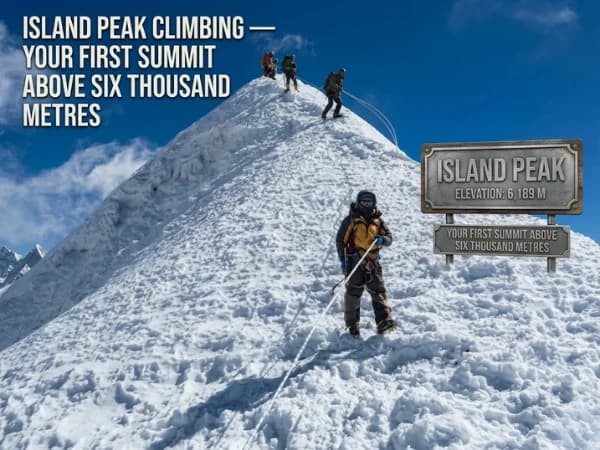
Island Peak Itinerary and Summit Day 2027: 14 Days, Base Camp to the Top
The 14-day Island Peak itinerary day by day, what summit day is like from base camp, where sources disagree on heights, best months and 2027 prices.
Read More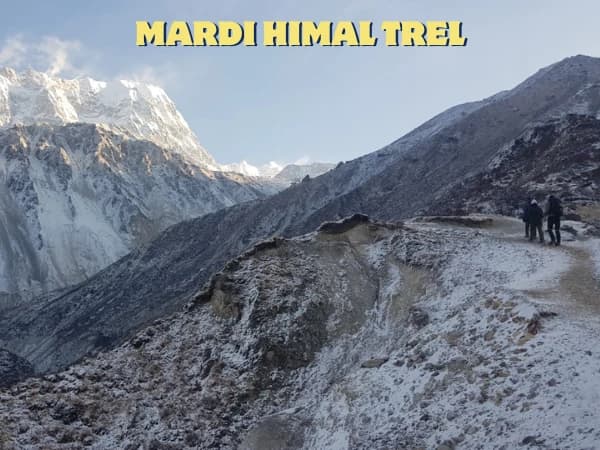
How Difficult Is the Mardi Himal Trek? An Honest Day-by-Day Rating for 2027
An honest day-by-day rating of the Mardi Himal trek: the steep climb to High Camp, the 4,500 m push to Base Camp, altitude risk, who finds it hard and 2027 prices.
Read More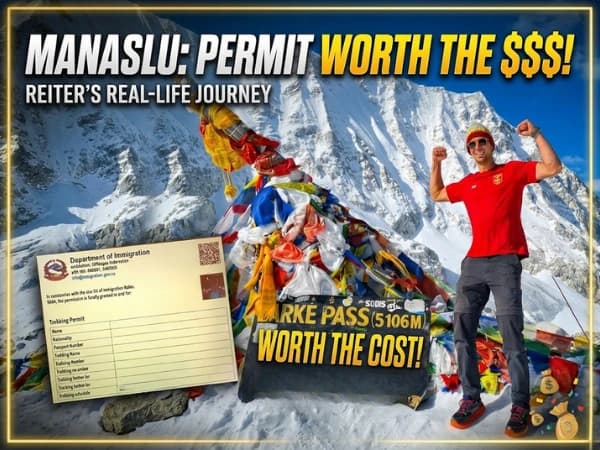
Manaslu Circuit Reopened: What Changed After the 2026 Floods and How to Plan 2027
The Manaslu Circuit over the Larke Pass is open again with extreme caution. What changed in the lower valley after the two 2026 floods, 2027 prices and permits, and how I would plan.
Read More Chat with Shreejan