
Update, 7 October 2026: a large flood came down the Bhote Koshi river on 26 August and damaged the Rasuwagadhi border crossing, the customs post and the road through Timure and Syabrubesi. Our Kailash yatra is on hold since the Rasuwa floods, on every route, and the 2027 priority list is open. The 2026 quota for Indian passports is already full. I have written the full account of what happened, and what it means for each route, here. I will update this page once the crossing has been properly assessed.
2027 dates and prices are confirmed once the Tibet season opens. Join our 2027 priority list on WhatsApp, +977 9810351300.
Can Indian Citizens Do Kailash Mansarovar in 2026?
Short answer: Not through us in 2026. Our yatra is on hold since the Rasuwa floods, and the 2026 quota for Indian passports is already full. There are two ways to go in general, the Indian government (MEA) lottery route and the Nepal route through a licensed agency. For 2027 we keep a priority list, and we promise nothing on quota or dates. The China side does not accept pilgrims over 70.
If you're an Indian citizen planning the Kailash Mansarovar Yatra, the honest position for 2026 is this: our yatra has been on hold since the Rasuwa floods, and the 2026 quota for Indian passports is already full. 2027 is the realistic year, and our priority list is open. This guide still explains how the two routes compare, so you can plan properly. Which route should you take? What does it cost? And how do you avoid the lottery headache?
2026 Position and the 2027 Priority List
Our 14-day overland Kailash Yatra from Kathmandu is on hold since the Rasuwa floods, and the 2026 Indian quota is full. We are taking names for the 2027 priority list. Pricing is on request, and we promise nothing on quota. Helicopter and Simikot-trek routes will be re-quoted once supplier rates for 2027 are confirmed. MEA route prices below are 2025 reference figures and may change. WhatsApp Shreejan for the latest.
This guide breaks down both routes available to Indian pilgrims, compares costs and logistics, covers visa and document requirements, and helps you plan your yatra. If you're weighing up the overland route from Kathmandu or the helicopter option, we'll cover everything so you can make a confident decision.
What Are the Two Routes to Kailash for Indians?
| Question | MEA route | Nepal route (us) |
|---|---|---|
| How you get a place | Computerised lottery | Booking with a licensed agency, subject to China's permits for Indian passports |
| Dates | Fixed batch, assigned to you | Your preferred dates, as confirmed |
| Entry points | Lipulekh (Uttarakhand) or Nathu La (Sikkim) | Kerung (Gyirong) by road, or Simikot and Hilsa |
| Age | 18 to 70 | Not over 70 (China side) |
| Medical | Government fitness test | Doctor's fitness certificate |
| Chinese visa | See the MEA notice | Group visa issued in Kathmandu; any existing Chinese visa is cancelled |
| 2026 position | Check the MEA notice | On hold; Indian quota full; 2027 priority list open |
Indian pilgrims have two distinct ways to reach Mount Kailash and Lake Mansarovar. Each has its own process, cost structure, and level of flexibility. Understanding both options is the first step to planning your yatra properly.
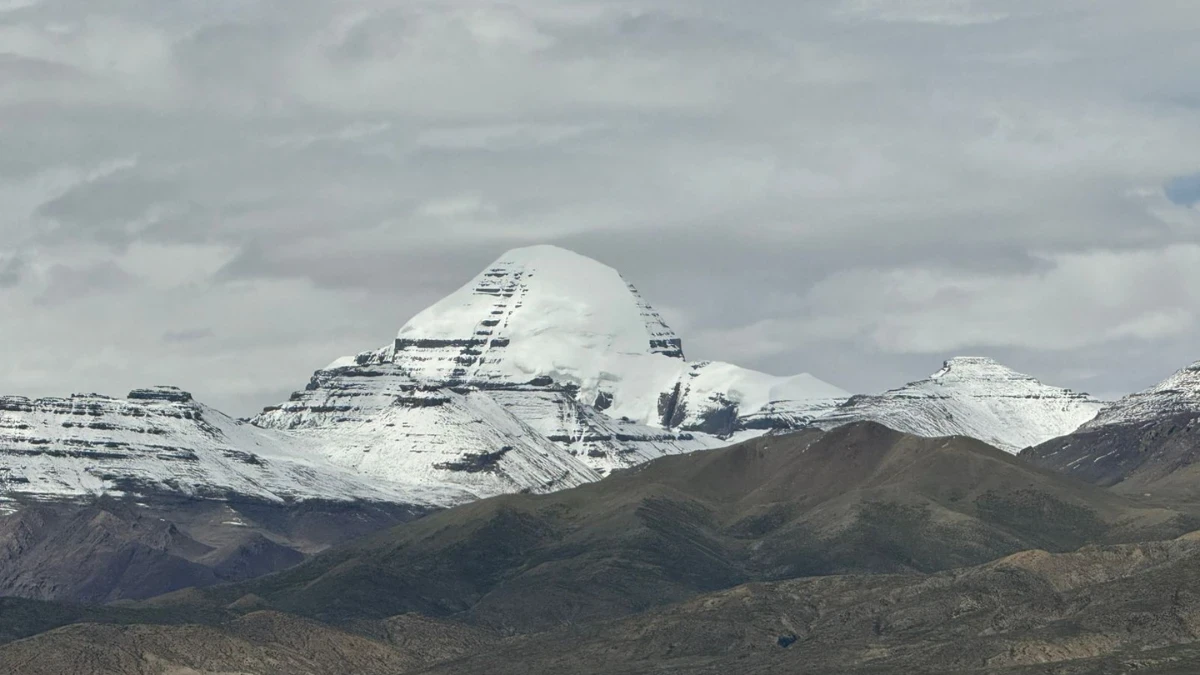
Route 1: The MEA (Indian Government) Route
The Ministry of External Affairs (MEA) organises the Kailash Mansarovar Yatra every year through a bilateral agreement with China. This is the official government-facilitated route, and it operates through two border passes:
- Lipulekh Pass (Uttarakhand): The traditional route, involving a multi-day trek through the Kumaon hills to the China border at Lipulekh La (5,334m). This is physically demanding and requires good fitness.
- Nathu La Pass (Sikkim): A newer route added in 2015, entirely by road. No trekking required, which makes it accessible to older pilgrims and those with moderate fitness levels.
The MEA route is fully organised by the Indian government in coordination with Chinese authorities. Accommodation, meals, transport on the Chinese side, and a liaison officer are all included in the package.
Route 2: The Nepal Route via Kathmandu
The second option is travelling through Nepal. You fly into Kathmandu, then travel overland or by helicopter to the Tibet border at Kerung (Gyirong). From there, you continue by road to Lake Mansarovar and Mount Kailash.
This route is operated by licensed trekking agencies in Nepal (like us), and it gives you far more control over your dates, group size, accommodation standard, and pace. You can choose the full overland journey from Kathmandu or opt for the helicopter-assisted route that cuts travel time significantly.
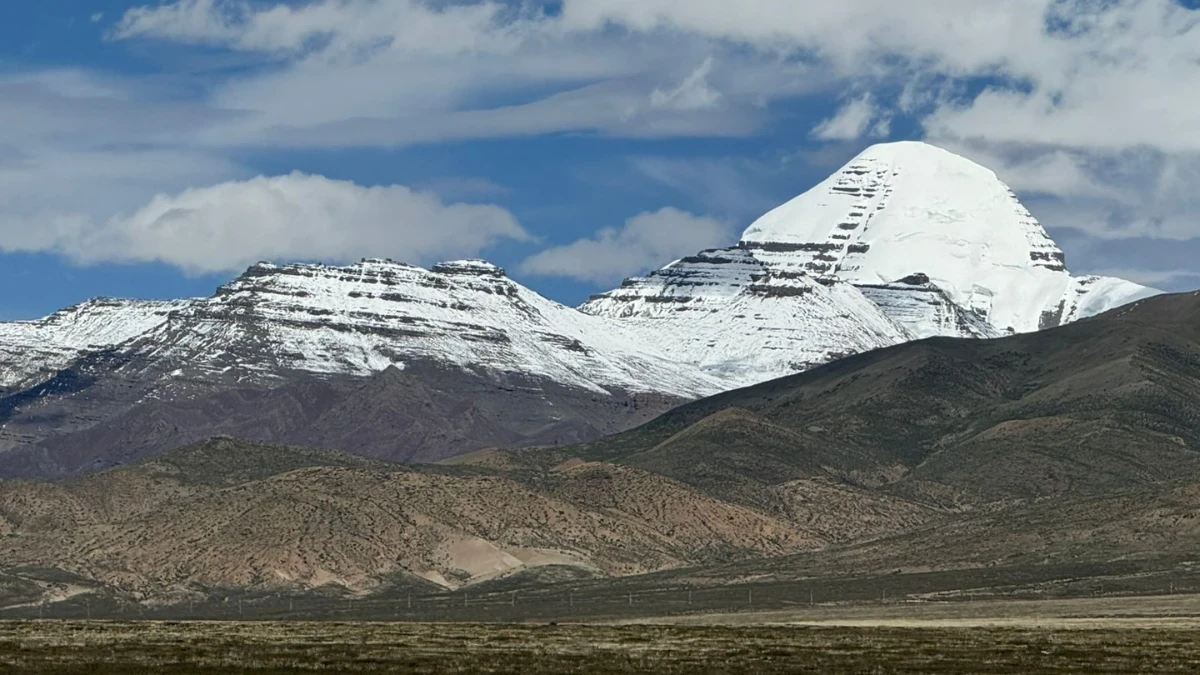
MEA Route: How the Government System Works
Every year, the MEA opens online applications between January and March (dates vary). Here's how the process works:
The Quota and Lottery System
The MEA route operates on a strict quota system. Roughly 1,800 pilgrims are selected each year through a computerised lottery. Applications typically number in the tens of thousands, so the odds of being selected in any given year are genuinely low.
The yatra season runs from May to September, with batches of around 50-60 pilgrims departing every few days. If you're selected in the lottery, you'll be assigned a specific batch and dates. You cannot choose your preferred travel window.
MEA Route Costs
The MEA route costs approximately Rs 2.5 lakh (around USD 3,000) per person. This covers:
- Accommodation and meals on the Indian side and Chinese side
- Transport within China (bus/vehicle)
- Liaison officer and support staff
- Permits and border crossing fees
- Medical check-ups and oxygen support
However, this does not include your travel to the starting point (Delhi for Lipulekh, Gangtok for Nathu La), personal gear, travel insurance, or any medical evacuation costs.
Eligibility and Restrictions
- Age: 18 to 70 years
- Must hold a valid Indian passport
- Must pass a medical fitness test (conducted at designated government hospitals)
- BMI requirements apply (BMI must be under 25 for Lipulekh route)
- No person can repeat the yatra through the MEA route within three years of a previous trip
Nepal Route: Why Most Indian Pilgrims Are Choosing This Option
Over the past few years, the Nepal route has become the preferred choice for a growing number of Indian pilgrims. The reasons are straightforward:
No Government Lottery
This is the single biggest advantage. The Nepal route has no government lottery. You book with a licensed agency, and the agency applies for your permits. China still limits the number of permits for Indian passports each year, and the 2026 quota is already full, so we promise nothing on quota and keep a 2027 priority list instead. The season runs from May to September, and if you want to go in June 2027, tell us early.
Many pilgrims who apply for the MEA lottery year after year without success eventually choose the Nepal route instead. Others prefer it from the start because they want to choose their own dates and group.
Flexible Dates and Group Sizes
Through the Nepal route, you can choose your exact travel dates, travel with your own group (family, friends, or a private party), and adjust the itinerary pace to suit your fitness level. The MEA route assigns you to a fixed batch with strangers on government-chosen dates.
Better Accommodation Options
The MEA route uses basic government guesthouses and Chinese-side accommodation that is functional but spartan. The Nepal route offers a range of accommodation standards, from comfortable hotels in Kathmandu and Kerung to upgraded guesthouses in the Kailash region. For those choosing the helicopter route, the accommodation standard is typically higher throughout.
Helicopter Option Available
The Nepal route offers a helicopter-assisted option that eliminates the long overland drive from Kathmandu to the Tibet border. Instead of spending two days on bumpy mountain roads, you fly by helicopter to Simikot or directly towards the border region, saving considerable time and physical strain. Check our detailed helicopter vs overland comparison to see which suits you better.
For those who prefer the full overland experience, the Simikot route offers a more adventurous alternative through remote western Nepal.
Less Strict Age and Medical Requirements
While basic fitness is still necessary (you're travelling above 4,500m), the Nepal route does not impose the same rigid BMI requirements or government medical fitness tests. The China side does not accept pilgrims over 70 on any route, so the age limit is the same. We always recommend a thorough medical check-up before any high-altitude journey. Read our guide on how to avoid altitude sickness for practical preparation advice.
Is the MEA Route or Nepal Route Cheaper for Indians?
Let's look at the actual numbers side by side.
MEA Government Route
- Cost: Approximately Rs 2.5 lakh (USD 2,800-3,000)
- Includes: Accommodation, meals, Chinese-side transport, permits, liaison officer
- Does not include: Travel to starting point (Delhi/Gangtok), personal gear, insurance, medical evacuation
- Total realistic cost: Rs 3-3.5 lakh when you factor in flights to Delhi/Gangtok, gear, insurance, and personal expenses
Nepal Route (Overland from Kathmandu)
- Cost: on request, depending on group size and accommodation standard
- Includes: Kathmandu hotel, all overland transport, Tibet permits, Chinese group visa, meals, guide, accommodation throughout
- Does not include: International flights to Kathmandu, personal expenses, travel insurance, tips
- Total realistic cost: Rs 3.5-4 lakh including international flights to Kathmandu from Indian cities
Nepal Route (Helicopter-Assisted)
- Cost: Quote on request (2026 supplier rates being finalised) (approximately Rs 3 lakh upward; supplier-updating) depending on the specific helicopter segments and group size
- Includes: Everything in the overland package plus helicopter transfers
- Best for: Pilgrims who want to minimise travel time or have physical limitations that make long road journeys difficult
For a full breakdown of costs, read our complete Kailash Mansarovar cost guide for 2026.
SAARC Pricing Advantage for Indian Citizens
Here's something many Indian pilgrims don't realise: as citizens of a SAARC nation, you benefit from preferential pricing in Nepal. Indian nationals do not need a Nepal visa (it's free entry), domestic flights within Nepal are charged at Nepali rates rather than tourist rates, and many services in Nepal offer SAARC-member pricing. This can save you a meaningful amount compared to what a European or American pilgrim would pay for the same trip.
This SAARC advantage is one reason the Nepal route works out surprisingly affordable for Indian citizens, often cheaper than the MEA route once you add up all the real costs.
Visa and Document Requirements for Indian Citizens
Nepal Entry: Visa-Free for Indians
Indian citizens do not need a visa to enter Nepal. Under SAARC bilateral agreements, Indians can enter Nepal with just a valid passport or even a Voter ID card. However, for the Kailash Mansarovar Yatra specifically, we strongly recommend carrying your passport because you'll need it for the Chinese group visa.
For general Nepal travel information, our complete Nepal visa guide covers everything, though the key takeaway for Indians is simple: you walk through immigration with your passport and you're in.
Chinese Group Visa for Tibet
To enter Tibet from Nepal, you need a Chinese group visa, issued in Kathmandu, and a separate Tibet Travel Permit that only a registered agency can obtain. A Chinese visa on its own will not get you into Tibet. This is not something you arrange yourself. Your travel agency in Nepal handles the entire application process on your behalf. You provide your passport and photographs, and the agency submits the application to the Chinese Embassy in Kathmandu.
The group visa takes about five working days to process in Kathmandu. This is one reason to book as early as you can; the Nepal-route permits and the group visa take several weeks, and we will only confirm once China opens the season.
Please note that travelling overland from Nepal means a Chinese group visa, and any Chinese visa you already hold in that passport is cancelled. Do not buy a visa in advance. The China side also does not accept pilgrims over 70, so please tell us your date of birth when you enquire.
Documents You'll Need
- Valid Indian passport with at least 6 months' validity from your travel date and at least 2 blank pages
- Passport-size photographs (6-8 copies, white background, recent)
- Medical fitness certificate from a registered doctor (basic fitness declaration, not as extensive as the MEA medical test)
- Travel insurance covering high-altitude trekking and emergency evacuation up to 6,000m
- Photocopies of passport, Aadhaar card, and any other ID
- Emergency contact details
OCI card holders should note that the Chinese group visa process is slightly different. Contact us directly for guidance if you hold an OCI card rather than an Indian passport.
Tibet Border Status in 2026: Current Updates
The Kerung (Gyirong) crossing between Nepal and Tibet, reached by the Rasuwagadhi road, was damaged in the flood of 26 August 2026. Our 2026 Kailash yatra has been on hold since the Rasuwa floods. The 2026 quota for Indian passports is already full, and the 2027 priority list is open. We will update this section once the crossing has been assessed and the Chinese side confirms what can run in 2027.
The Chinese authorities continue to manage Tibet access through the permit system, meaning independent travel to Tibet is not possible. All travellers must be part of an organised group with a licensed Tibetan guide. This is handled entirely by your Nepal-based agency.
We stay in touch with the Tibet side and will tell everyone on the priority list as soon as there is something firm to say. We make no promises on quota, and none on the inner kora, which is not officially granted. If we cannot run a trip you have booked, we refund what you have paid, less taxes, bank and card charges and any money already spent. If you need to move your dates, rescheduling is free to any date within one year with at least 7 days' notice.
When to Book: The Kailash Season Timeline
The Kailash Mansarovar Yatra season runs from May to September, with the peak months being May, June, and September. July and August see monsoon rains in Nepal, though the Kailash region in Tibet itself sits in a rain shadow and remains relatively dry.
Recommended Booking Timeline
- Booking lead time: Book as early as you can; the Nepal-route permits and the group visa take several weeks, and we will only confirm once China opens the season.
For a broader look at seasonal conditions, our best time to visit Nepal guide covers weather patterns across the year.
Peak vs Off-Peak Pricing
May, June, and September are peak months with the highest demand. July and August offer slightly lower prices due to reduced demand, but the weather in Nepal (the transit portion) can be wet. Many experienced pilgrims consider September the best month: the monsoon is ending, the skies are clearing, and autumn light makes for spectacular views of Kailash.
Overland vs Helicopter: Which Nepal Route Suits You?
If you've decided on the Nepal route, the next question is whether to go overland or use helicopter transfers.
The Overland Experience
The full overland route from Kathmandu takes you through the dramatic landscapes of central Nepal, across the Kerung border into Tibet, and then through the vast Tibetan plateau to Lake Mansarovar and Mount Kailash. The total journey typically takes 12-15 days.
The drive through Nepal is beautiful but long. Road conditions vary from decent highways to rough mountain tracks. You'll spend 1-2 full days on the road each way between Kathmandu and the border. Once in Tibet, the roads are well-maintained Chinese highways.
This route is ideal if you want the full pilgrimage experience, enjoy road travel through mountain scenery, and are comfortable with long driving days.
The Helicopter-Assisted Route
The helicopter route replaces the Nepal-side road travel with a scenic helicopter flight. This cuts your total trip duration by 2-3 days and eliminates the most physically tiring road sections. The helicopter flight itself offers extraordinary aerial views of the Himalayan range.
This option costs more but is popular with pilgrims who have limited leave from work, older travellers, or anyone who wants to arrive at the border fresh rather than road-weary.
What's Included When You Book Through The Everest Holiday
When you book your Kailash Mansarovar Yatra through us via the Nepal route, your package includes:
- Airport pickup and drop-off in Kathmandu
- Hotel accommodation in Kathmandu (before and after the yatra)
- All overland transport in Nepal and Tibet (or helicopter transfers if you choose that option)
- Chinese group visa processing and Tibet Travel Permit
- Experienced bilingual guide throughout
- All accommodation during the yatra
- All meals during the Tibet portion
- Kailash parikrama (circumambulation) support
- First aid kit and basic medical supplies
- Complimentary duffel bag and down jacket for the trip
We provide duffel bags and down jackets free of charge to all our Kailash Mansarovar pilgrims. The temperatures around Kailash can drop well below freezing even in summer, and a proper down jacket is essential. Rather than asking you to buy specialist gear you might only use once, we include it in your package.
Why Book Your Kailash Yatra From Nepal With Us?
Choosing the right agency for your Kailash Mansarovar Yatra matters. This is a high-altitude pilgrimage in a remote region, and the quality of your operator directly affects your safety and experience.
- Government-licensed: We are a fully licensed Nepal trekking company (Registration No. 147653) and a member of TAAN (Trekking Agencies' Association of Nepal, Membership #1586). This means we meet all regulatory standards for operating in Nepal and Tibet.
- Over 300 reviews: Our clients have left over 300 reviews on TripAdvisor, Google and Trustpilot. We encourage you to read them before making any decision.
- Family of Himalayan guides across three generations: Our family has been guiding in the Himalayas for three generations. This isn't a recently started travel company. Our knowledge of these routes, border procedures, and high-altitude logistics comes from decades of direct experience.
- Secure payment: We accept payments through Himalayan Bank's secure payment gateway. Your money is processed through a licensed Nepali bank, not a personal account or informal transfer.
- Free rescheduling: Plans change. You can move your yatra to another date free of charge, with enough notice. The deposit itself is not refunded if you cancel.
Learn more about our team and story, or head straight to our contact page to get in touch.
Common Questions for Indian Citizens About Kailash
Do Indian citizens need a visa for Nepal?
No. Indian citizens can enter Nepal without a visa. You just need a valid passport (recommended) or Voter ID card. However, for the Kailash Mansarovar Yatra, a passport is essential because you'll need it for the Chinese group visa to enter Tibet.
What is the difference between the MEA route and the Nepal route?
The MEA route is organised by the Indian government with a lottery selection process, limited to about 1,800 pilgrims per year, with fixed dates and batches. The Nepal route is operated by private agencies, has no government lottery (China still limits permits for Indian passports), allows flexible dates, and offers both overland and helicopter options. The Nepal route typically costs less for the overland option and offers more comfort and flexibility.
Can I do Kailash Mansarovar without winning the MEA lottery?
Yes. The Nepal route has no lottery system, and you book through a licensed agency. For 2026 the Indian quota is full and our yatra is on hold, so the realistic route is our 2027 priority list. Many Indian pilgrims choose this route specifically because they don't want to wait for lottery results or risk not being selected.
How much does the Kailash Mansarovar Yatra cost from Nepal for Indian citizens?
The overland route from Kathmandu is priced on request, depending on group size and accommodation level. The helicopter-assisted route costs Quote on request (2026 supplier rates being finalised) (Rs 3 lakh upward; supplier-updating). Indian citizens benefit from SAARC pricing on domestic flights and services within Nepal. See our detailed cost guide for a full breakdown.
Is the Tibet border open for Kailash Mansarovar in 2026?
Not for our groups at present. The Rasuwagadhi road to the Kerung (Gyirong) crossing was damaged in the flood of 26 August 2026, and our 2026 Kailash yatra has been on hold since the Rasuwa floods. The 2026 Indian quota is full, and the 2027 priority list is open. We will tell everyone on the list as soon as there is something confirmed.
What documents do I need as an Indian citizen?
You need a valid Indian passport (minimum 6 months validity, 2 blank pages), passport-size photographs (6-8 copies), a medical fitness certificate from a registered doctor, travel insurance covering high altitude, and photocopies of your Aadhaar card. The Chinese group visa is arranged by your Nepal-based travel agency.
When is the best time to do Kailash Mansarovar Yatra?
The season runs May to September. May and June offer stable weather and clear skies. September is considered by many to be the best month, with post-monsoon clarity and fewer crowds. July and August are possible but the Nepal transit section can be wet. Book as early as you can; the Nepal-route permits and the group visa take several weeks, and we will only confirm once China opens the season.
Is the Kailash Mansarovar Yatra physically difficult?
The parikrama (circumambulation) around Mount Kailash involves walking approximately 52 km over three days at altitudes between 4,600m and about 5,630m (Dolma La pass). This is physically demanding. However, the Nepal route allows you to acclimatise gradually, and the helicopter option reduces the physical strain of reaching the region. We recommend basic fitness preparation and a medical check-up before booking.
Ready to Join the 2027 Priority List?
If you're an Indian citizen planning the Kailash Mansarovar Yatra, the Nepal route gives you more say over your dates, without a lottery and without rigid government schedules, with a choice between overland and helicopter, subject to what China confirms for 2027.
Browse our overland Kailash Mansarovar package or helicopter-assisted package for full itineraries. To join the 2027 priority list, message us below.
Have questions? We're happy to help. Reach out on WhatsApp at +977 9810351300 for a quick response, or visit our contact page to send us a message. We typically reply within a few hours.
Written by Shamjhana Basukala | Last updated: 7 October 2026. I re-checked the route status, the 2026 quota position, the group visa rule and the over-70 rule on that date.
Indian citizens can book through our Kailash Mansarovar Tour from Nepal. We handle the Chinese group visa, Tibet permit, and all border logistics. The Kailash via Simikot route is also popular with Indian trekkers wanting a more adventurous approach.
Indian citizen planning Kailash? Our Kailash Mansarovar Overland Yatra (14 Days) is private (your group only, no strangers), pricing on request. Our 2026 yatra is on hold since the Rasuwa floods, so WhatsApp us to join the 2027 priority list.

 Chat with Shreejan