
October and November are the definitive months for the Annapurna Circuit. Clear skies, dry trails, Thorong La in optimal conditions.
Govt Regd. No.: 147653/072/073
Travel Agency Licence: 2838/072
Annapurna Circuit Trek in Autumn: Why October and November Are Perfect

Short answer: October and November are the main season for the Annapurna Circuit. The monsoon has cleared, the skies are at their most reliable and the trail is dry. Thorong La at 5,416 m is still very cold before dawn, around minus 15°C in October, and colder later in November. Book early, because teahouses fill in October. Cross the pass on our Annapurna Circuit trek.
Thorong La at Dawn in October
You leave Thorong Phedi at 4am in the dark. The temperature is -15°C. Your headlamp catches the frost on the rocks ahead and the breath of the person in front of you. For four to six hours you climb steep switchbacks, gaining 1,000 metres of altitude on legs that already hurt. And then the sun hits the top of the pass.
Thorong La (5,416m) in October is one of the great trekking moments anywhere on earth. The sky is cloudless. The Annapurna range burns orange to the south. The Mustang plateau stretches brown and barren to the north. You've crossed from one world to another.
The Annapurna Circuit in autumn is the definitive version of this trek. October and November offer the driest weather, the clearest mountain views, and the best trail conditions of any season. If you're planning this walk, here's exactly what each month gives you.
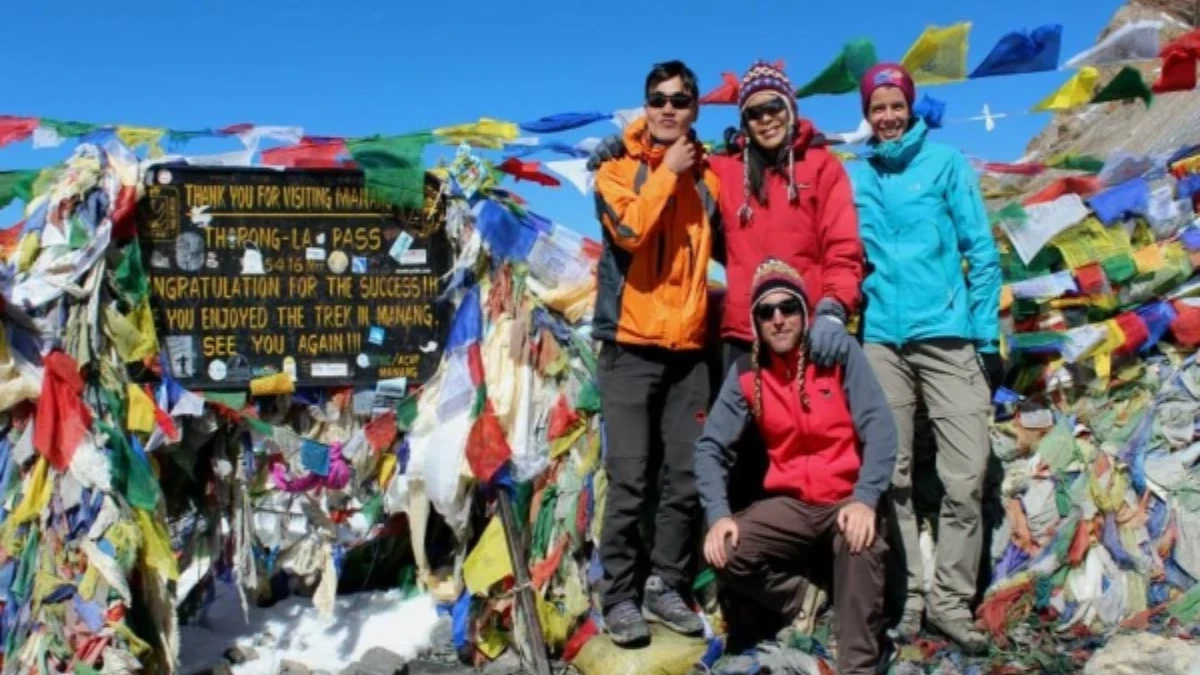
Is October the best month for the Annapurna Circuit?
October is the most popular month on the Annapurna Circuit, and for good reason. The monsoon ends in late September, the sky clears, and daytime temperatures at trekking altitudes are comfortable. Here's what October looks like at each major stop:
- Besisahar to Chame (1,000-2,670m): Warm. Daytime temperatures reach 20°C at lower altitudes. The rice paddies in the Marsyangdi valley are golden, harvest season is in full swing, and the trail passes through villages busy with autumn agricultural work. Evenings cool to 8-10°C.
- Chame to Manang (2,670-3,540m): The landscape opens up. Pine forests give way to arid terrain. Daytime temperatures of 12-16°C, dropping to -2°C at night. The Annapurna III and Gangapurna views from Manang are crystal clear in October, especially in the first two hours after sunrise.
- Manang to Thorong La (3,540-5,416m): Cold at altitude but dry. High Camp (4,900m) nights drop to -12°C to -18°C. The pass itself can be -15°C to -20°C at pre-dawn. But the sky is almost always clear, and wind speeds are lower than in spring. Snow on the pass is minimal in October.
- Muktinath to Jomsom (3,800-2,720m): Welcome warmth on the descent. The Kali Gandaki gorge, the deepest in the world, channels afternoon wind but mornings are calm and sunny. Apple orchards in Marpha are at harvest. The views of Dhaulagiri (8,167m) and Nilgiri from Jomsom are extraordinary.
What is the Annapurna Circuit like in November?
November is the photographer's month. The air is drier and colder than October, which means sharper light, less haze, and mountain views that look almost unreal. The trade-off is temperature: November nights at Manang and above are genuinely harsh.
What changes from October to November:
- Temperatures drop 3-5°C at every altitude compared to October
- Thorong La nights can reach -25°C in late November
- Snow on the pass becomes more likely after mid-November
- Trekker numbers drop significantly after Tihar festival (early November)
- Some teahouses in the Manang valley begin closing for winter in late November
- The Kali Gandaki valley remains beautiful, with golden grass and apple-picking wrapping up
If you're comfortable with cold and want fewer crowds, the first two weeks of November are ideal. After mid-November, check with your trekking company about teahouse availability above 3,500m.
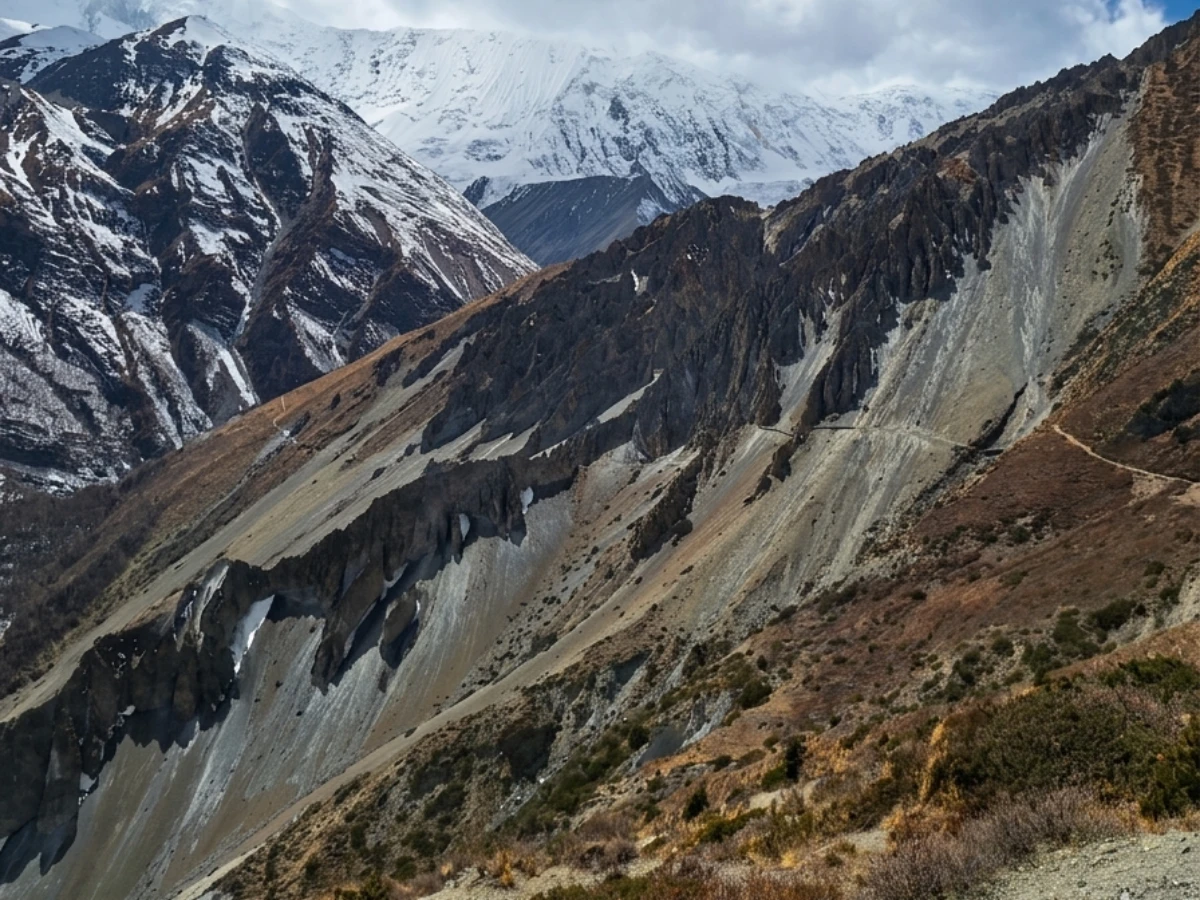
Autumn Temperature Table: Annapurna Circuit
| Location | Altitude | October (Day/Night) | November (Day/Night) |
|---|---|---|---|
| Besisahar | 760m | 28°C / 15°C | 24°C / 10°C |
| Chame | 2,670m | 16°C / 2°C | 12°C / -3°C |
| Manang | 3,540m | 14°C / -2°C | 10°C / -7°C |
| Thorong Phedi | 4,525m | 6°C / -10°C | 2°C / -16°C |
| Thorong La | 5,416m | -5°C / -18°C | -10°C / -25°C |
| Muktinath | 3,800m | 12°C / -4°C | 8°C / -8°C |
| Jomsom | 2,720m | 16°C / 2°C | 12°C / -2°C |
Thorong La Pass: What It's Really Like in Autumn
The pass is the crux of the Annapurna Circuit. At 5,416m, it's one of the highest trekking passes in the world. In autumn, conditions are generally favourable, but it still demands respect.
October Thorong La: Snow is rare. The trail is visible and well-trodden. Wind is moderate. Most trekkers cross between 7am and 10am after a pre-dawn start from either Thorong Phedi (4,525m) or High Camp (4,900m). The descent to Muktinath on the western side is steep but straightforward on dry ground.
November Thorong La: Snow becomes possible, especially after mid-month. Fresh snowfall can make the trail harder to follow. Wind increases. The pass is still crossable in November, but you need to be prepared for winter conditions at the top. Guides with Thorong La experience in November are essential.
We send all our Annapurna Circuit groups with a guide who has crossed Thorong La multiple times. In October, the crossing is demanding but manageable for fit trekkers. In November, we carry emergency equipment and monitor weather forecasts closely. No group crosses in a blizzard, no exceptions.
Is the Tilicho Lake side trip worth it in autumn?
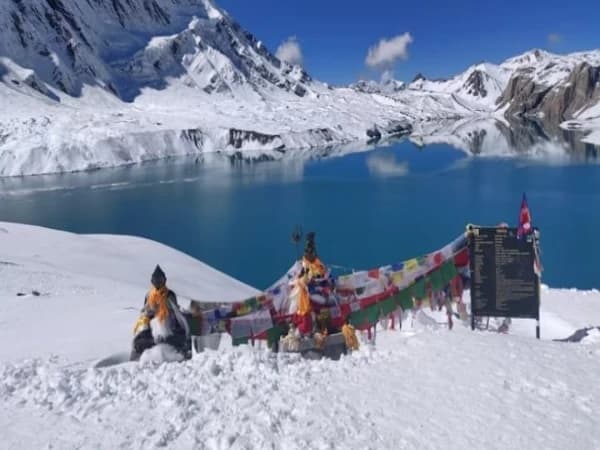
The detour to Tilicho Lake (4,919m) from the main circuit is one of the best add-ons in autumn. The lake, one of the world's highest, sits in a glacial amphitheatre surrounded by Tilicho Peak (7,134m) and the Great Barrier. In October and early November, the lake surface is perfectly still and reflects the surrounding peaks.
The side trip adds 2-3 days to your circuit. From Manang, you trek to Shree Kharka (4,060m), then to Tilicho Base Camp (4,150m), and make a day trip to the lake. The trail is rougher than the main circuit, exposed in places, and not recommended after heavy snowfall. In October, it's fully accessible and deeply worth the effort.
Our Annapurna Circuit trek can include the Tilicho Lake side trip. Ask when you enquire and we'll build it into your itinerary.
How do Dashain and Tihar festivals affect the autumn trek?
Autumn in Nepal is festival season. Dashain (usually October) and Tihar (October/November) are the two biggest celebrations. If your trek overlaps with either festival, you'll experience something most tourists never see.
Dashain is Nepal's longest holiday. Villages along the lower circuit sections celebrate with animal sacrifices, family gatherings, tika (red powder blessings), and new clothes. Some teahouses may be understaffed as workers return to their home villages. Plan for this, but don't avoid it. If you're invited to a Dashain celebration, say yes.
Tihar (the Festival of Lights) turns every village into a display of oil lamps, marigold garlands, and rangoli art. It's Nepal's most photogenic festival. Walking through villages between Jomsom and Tatopani during Tihar is a highlight that has nothing to do with mountains.
How crowded is the Annapurna Circuit in autumn?
The Annapurna Circuit is less crowded than EBC even in peak season, partly because it's longer and more demanding. But October is the busiest month. You'll share teahouses with other groups, particularly between Manang and Thorong La where everyone converges for the pass crossing.
How to manage autumn crowds:
- Start from Besisahar or Bhulbhule (the traditional start), not Chame. Jeep-starters miss the best lower valley sections and all converge at Manang.
- Take the upper trail variations where available (via Ghyaru and Ngawal instead of the main road)
- Consider the clockwise direction (Jomsom first, Thorong La at the end). It's harder due to the altitude profile but much quieter.
- November crowds drop sharply after Tihar. The second and third weeks of November are noticeably quieter.
Is autumn or spring better for the Annapurna Circuit?
| Factor | Autumn (Oct-Nov) | Spring (Mar-May) |
|---|---|---|
| Mountain views | Exceptional, clearest of the year | Good mornings, hazy afternoons |
| Rain | Very rare after early October | Afternoon showers from late March |
| Temperature | Cool to cold, colder at night | Warmer, more comfortable |
| Flowers | None, dry brown vegetation | Rhododendrons below Manang |
| Thorong La snow | Rare Oct, possible Nov | Possible Mar, rare Apr-May |
| Crowds | Peak in October | Moderate, spread over 3 months |
| Festivals | Dashain, Tihar | Holi (lower altitudes only) |
| Apple season | Yes, Marpha harvest | No |
What should I pack for the Annapurna Circuit in autumn?
The Annapurna Circuit crosses a huge altitude range, from subtropical valleys to high alpine pass. Layering is critical. For autumn specifically:
- Down jacket: Essential above Manang. October evenings at 3,500m+ need serious warmth.
- Warm sleeping bag: -15°C rating minimum for October, -20°C for November. Teahouse blankets are not enough above 4,000m.
- Wind protection: The Kali Gandaki gorge funnels afternoon wind that cuts through fleece. A windproof shell layer is important for the Jomsom-Marpha section.
- Dust protection: The lower Kali Gandaki valley is dusty in autumn. A buff or face covering helps.
- Minimal rain gear: Unlike spring, you probably won't need a heavy rain jacket. A light windproof that can handle brief drizzle is enough.
See our complete Annapurna Circuit packing guide for the full list.
Our Autumn Departures
We run the Annapurna Circuit throughout October and November. Our groups are small (1 to 20 people), and every departure includes:
- Nepal government well-trained guide with Thorong La experience
- Porters for your main luggage
- All permits (ACAP + TIMS)
- Teahouse accommodation throughout
- Ground transport from and to Kathmandu
- Option to add Pokhara activities at the end
We also offer the Annapurna Base Camp trek for those who want the mountain views without the high pass crossing, and the shorter Poon Hill trek for beginners.
Frequently Asked Questions
Is October or November better for the Annapurna Circuit?
October has warmer temperatures and lower risk of snow on Thorong La. November has sharper mountain views, fewer crowds, and crisper photography light. Most trekkers choose October. Experienced trekkers who don't mind cold often prefer early November.
Can I cross Thorong La in November?
Yes, through mid-November. After that, snowfall risk increases significantly. We monitor weather closely and will delay or reroute if conditions are unsafe. Late November crossings should only be attempted with experienced guides and full cold-weather equipment.
How many days does the Annapurna Circuit take?
Our standard circuit is 14-17 days depending on side trips. Adding Tilicho Lake adds 2-3 days. Adding Poon Hill at the end adds 2 days. Most trekkers spend 15-18 days total including Kathmandu arrival and departure days.
Is the Annapurna Circuit harder than EBC?
The Annapurna Circuit is longer and has a higher pass (Thorong La at 5,416m vs Kala Patthar at 5,545m, but the EBC trail never crosses a pass of this nature). The daily walking distances on the circuit are generally longer. Overall, the circuit is rated moderate-to-challenging, while EBC is graded strenuous on our scale. Both are achievable for reasonably fit people with proper acclimatisation.
Do I need a guide for the Annapurna Circuit?
Yes. A licensed guide is required on the Annapurna Circuit under the Nepal Tourism Board rule from April 2023. Our guides carry the proper credentials and know the trail intimately, including Thorong La weather patterns and emergency descent routes.
What about the road on the Annapurna Circuit?
The road from Besisahar to Chame (and partially beyond) has replaced some of the original trail. Many trekkers now jeep to Chame and walk from there. We recommend walking from Besisahar or Bhulbhule to see the full cultural walk through Gurung and Manangba villages. If time is limited, starting from Chame saves 3-4 days.
Autumn on the Annapurna Circuit is the trek at its finest. Clear skies, dry trails, warm apple cider in Marpha, and that singular moment when the sun hits Thorong La and you realise what you've just done.
WhatsApp:+977 9810351300
Email:[email protected]
Written by Shreejan Simkhada, CEO of The Everest Holiday and third-generation Himalayan guide. TAAN Member #1586.
Autumn AC (Oct-Nov) is the clearest crossing window. Our Annapurna Circuit Trek (12 Days) is private (your group only, no strangers), 2027 dates open, From USD $1,175. WhatsApp us for tailored 2027 dates and current departures.
Planning a trip to Nepal?
Drop us your details and tell us what you have in mind. We will put together a personalised plan and get back to you.
Not sure which Nepal trek is right for you?
Take our free 2-minute quiz and get personalised recommendations based on your fitness, experience, and travel style.
Find Your Perfect Trek →Need Help? Call Us+977 9810351300orChat with us on WhatsApp
Related Trek Packages
Latest Travel Blogs
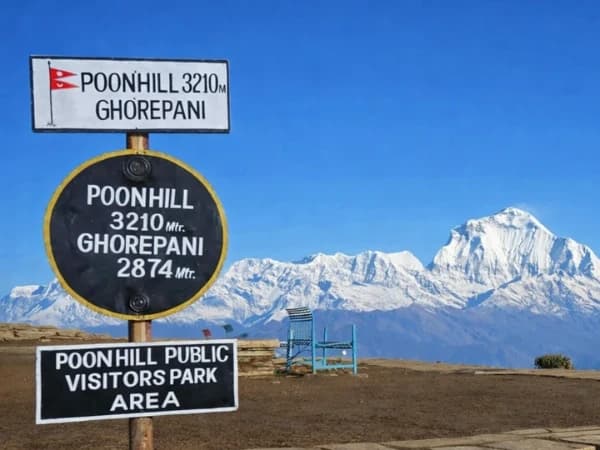
Christmas and New Year Treks from Pokhara 2026/27: 3 to 5 Days
<p>Short treks from Pokhara for Christmas and New Year 2026/27: Panchase 3 days, Poon Hill 4 days and Mardi Himal 5 days. Weather, snow, what is open, and prices by group size.</p>
Read More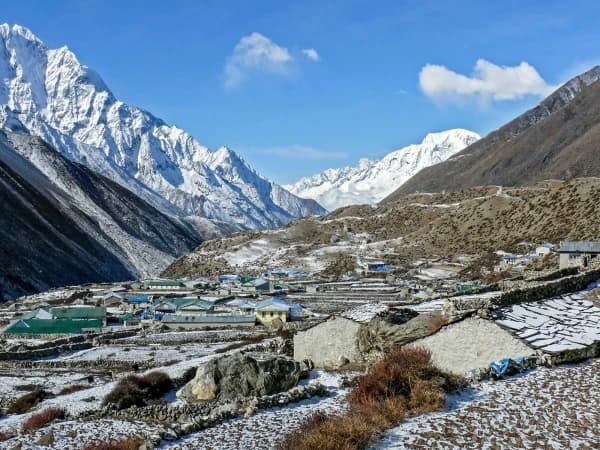
Thamdanda and Surke: The Road Head for Everest Base Camp by Road
Thamdanda is the road head where our Everest Base Camp trek by road starts and ends on foot. How to get there from Phaplu and what the first walk to Paiya is like.
Read MorePoon Hill Trek Permits 2027: ACAP, TIMS, Cost and What You Need
Poon Hill needs two permits: ACAP at NPR 3,000 and a TIMS card at NPR 2,000. Who arranges them, where they are checked, SAARC rates and the 2027 trek prices.
Read More Chat with Shreejan