

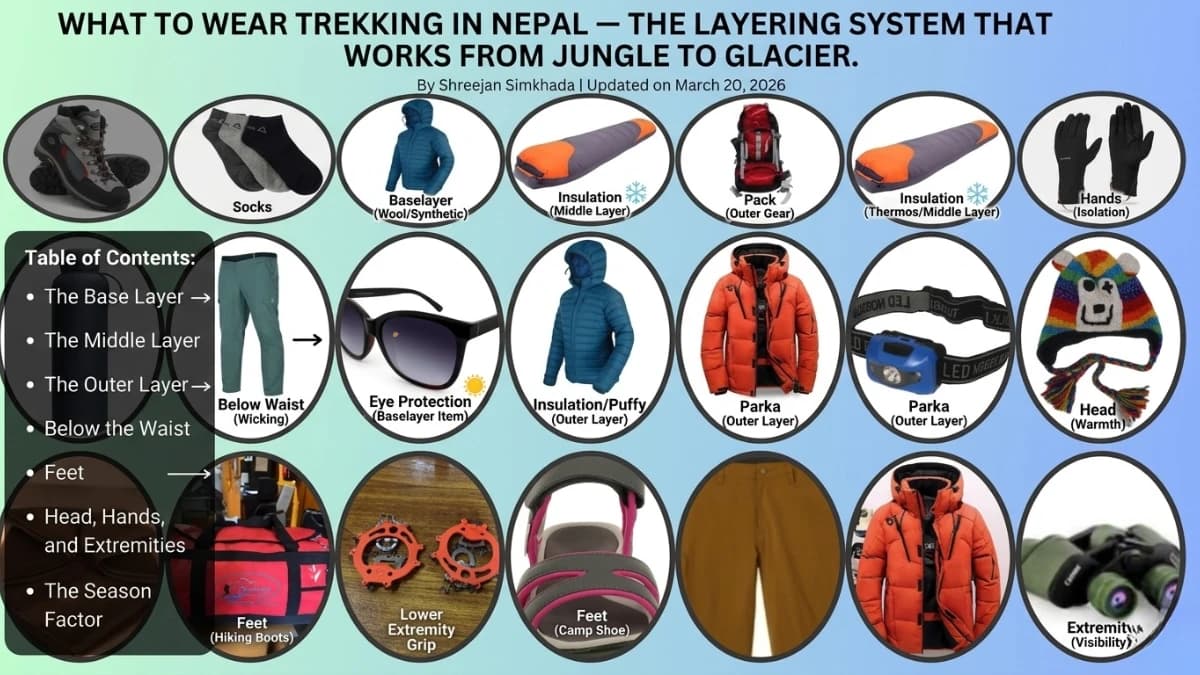
Short answer: Dress in three layers. Next to your skin, a merino or synthetic base layer, never cotton. Over it, a fleece or light down jacket for warmth. On the outside, a windproof and waterproof shell. Add and remove layers through the day, because one trek can go from humid valleys to below freezing above 4,000 m. Add a warm hat, gloves and broken-in boots. Dress for our 12-day Everest Base Camp trek.
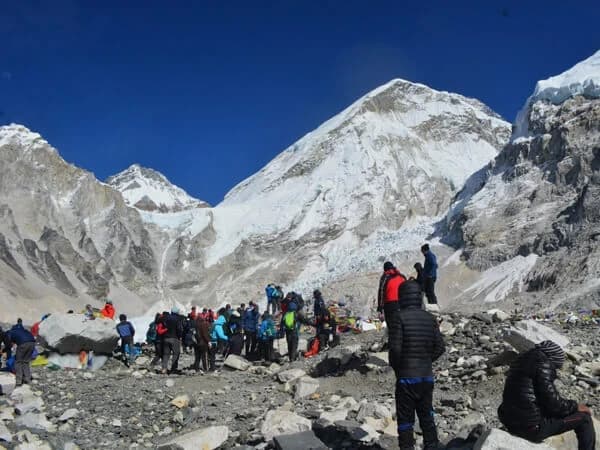
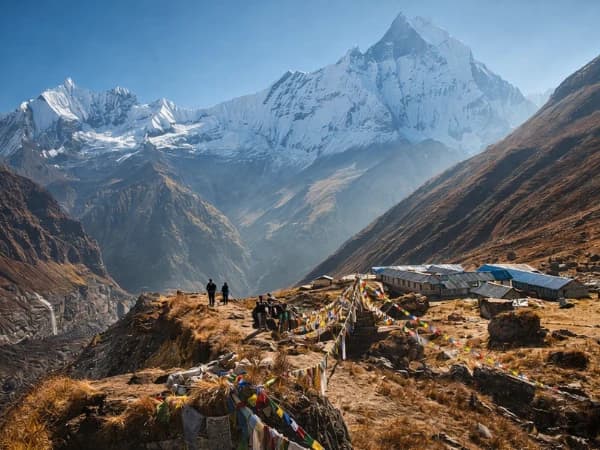
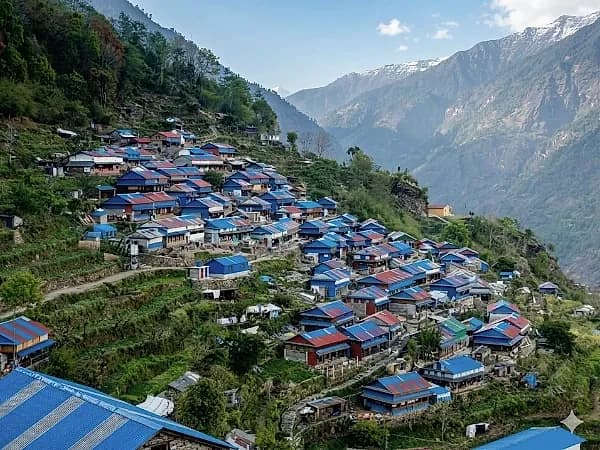
There is no single outfit for Nepal trekking. There is a system, three layers that work together across a temperature range of forty-five degrees, from the humid subtropical valleys where you sweat through cotton in twenty minutes to the frozen moraine at five thousand metres where exposed skin hurts within seconds.
The system is simple: a base layer against your skin that moves moisture away from your body. A middle layer that traps warmth. An outer layer that blocks wind and rain. Add or remove layers as conditions change, which on a Nepal trek means several times per day, sometimes several times per hour.
What base layer should I wear trekking in Nepal?
Merino wool or synthetic fabric. Never cotton. This is the layer closest to your skin. Its job is to wick sweat away from your body so that you remain dry. Dry skin stays warm. Wet skin loses heat twenty-five times faster than dry skin.
Cotton absorbs moisture and holds it against your skin like a cold, damp compress. At altitude, in cold wind, wearing a wet cotton T-shirt is not uncomfortable. It is dangerous. One guide describes it as "the fabric that wants to kill you slowly."
Two to three base layer tops. Long-sleeve for cold mornings and high altitude. Short-sleeve or T-shirt for warm lower sections. Merino wool is expensive but worth the investment, it regulates temperature, resists odour for days of continuous wear, and feels comfortable against skin in both heat and cold.
Do I need a down jacket for trekking in Nepal?
A fleece jacket for everyday warmth on the trail. Lightweight, breathable, quick-drying. This is the layer you put on at every tea stop, every shady section, every time the wind picks up. It lives in the top of your daypack and comes out dozens of times over a twelve-day trek.
A down jacket for the evenings and the highest sections. Lightweight down, six hundred to eight hundred fill power, packs small and insulates spectacularly. From Dingboche onwards on the EBC route, or from Manang onwards on the Annapurna Circuit, the down jacket becomes a permanent fixture from mid-afternoon until morning. You eat dinner in it. You sit by the stove in it. Some people sleep in it.
Do I need a waterproof jacket for trekking in Nepal?
A waterproof and windproof shell jacket with a hood. Gore-Tex or equivalent membrane. Its job is to stop rain from reaching your warm layers and wind from stripping heat away. On most days during the autumn trekking season, you will not need it, the weather is dry and calm. But when a storm arrives, and storms arrive suddenly at altitude, this jacket becomes the most important garment you own.
Waterproof overtrousers for the lower body. Lightweight, packable, stowed in the bottom of your daypack until needed. Less critical than the jacket, your legs generate enough heat while walking to tolerate some rain, but essential in sustained downpours or snow.
What Trousers and Boots Do You Need for Nepal Trekking?
Trekking trousers with zip-off legs. Two or three pairs. The zip-off feature allows you to convert between trousers and shorts as the day demands, warm and humid at low altitude, cold and windy at high altitude, sometimes within the same afternoon. Quick-dry fabric. Stretchy enough to lift your knee onto a high step. Tough enough to resist abrasion from rock and thorny bushes.
Thermal leggings for sleeping and for layering under trousers on the coldest days. Above four thousand metres, the combination of trekking trousers over thermal leggings is the standard lower-body configuration. Related: Manaslu Circuit Packing List: What to Bring for Nepal's Most Remote Major Trek.
Feet
Waterproof, ankle-high trekking boots. Broken in. This is the non-negotiable item. Everything else can be rented or improvised. Bad boots cannot. They must support your ankle on uneven terrain, keep water out, and fit comfortably with thick socks after ten hours of walking. Break them in with at least fifty kilometres of walking before Nepal.
Wool or merino socks, four to five pairs. Not cotton. Cotton socks absorb sweat, bunch up, and cause blisters. Good socks are the most cost-effective comfort investment you will make.
Camp shoes or sandals for teahouse evenings. Your feet need to breathe after hours in boots. Crocs, flip-flops, or lightweight sandals, anything that lets your feet expand and recover. Related: Choosing Trekking Boots for Nepal: The Only Guide You Need.
What Head and Hand Protection Do You Need?
A warm beanie for high altitude. A sun hat for lower altitudes. A buff for everything in between. Thin liner gloves and thick insulated gloves. UV-protective sunglasses. These are the items that people forget and regret most, because extremities are the first to feel cold, the fastest to lose heat, and the most vulnerable to UV damage.
How does trekking clothing in Nepal change by season?
Autumn (October-November) is the standard trekking season. Days are dry and clear. The layering system described above works perfectly.
Spring (March-May) is slightly warmer at lower altitudes and slightly hazier. You may need fewer warm layers below three thousand metres but the same at the top.
Winter (December-February) demands heavier warm layers, a beefier down jacket, thicker gloves, a balaclava, and possibly chemical hand warmers. The shell layer becomes more critical as wind and occasional snow become factors.
Monsoon (June-September) demands better rain protection, a properly waterproof jacket (not just water-resistant), rain covers for packs, and quick-dry everything because you will be wet despite your best efforts.
How does the layering system work for trekking in Nepal?
Dress in layers. Add before you get cold. Remove before you overheat. Keep cotton away from your skin. And accept that perfect comfort is impossible, the trail passes through too many microclimates in a single day for any outfit to be right all the time. The system is not about being comfortable at every moment. It is about never being dangerously cold or dangerously wet. Everything between those extremes is tolerable. And the views, which do not change regardless of what you are wearing, are always, always worth it.
See our gear lists on the EBC Trek and Annapurna Circuit pages. We provide a sleeping bag rated to minus fifteen and a down jacket free on every tier, Budget included, and a duffel bag as well on the Standard and Luxury packages.
Three layers. That is it. Base layer (merino wool, not cotton). Mid layer (fleece or down). Shell (waterproof, windproof). This system works from 1,000 metres to 5,500 metres. Add or remove layers as you climb. Cotton kills: it holds sweat and turns cold. Merino wool is expensive but worth it. Buy your base layers at home. Rent or buy the rest in Thamel.
We provide a free down jacket on all treks. One less layer to buy.
WhatsApp:+977 9810351300
Email:[email protected]
Written by Shreejan Simkhada, CEO of The Everest Holiday and third-generation Himalayan guide. TAAN Member #1586.
Layering for EBC: covered in our packing list. Our Everest Base Camp Trek (12 Days) is private (your group only, no strangers), 2027 dates open, From USD $1399. WhatsApp us for tailored 2027 dates and current departures.


 Chat with Shreejan