
Stomach bugs, altitude sickness, injuries: things go wrong on treks. Here's exactly what happens, how our guides respond, and why insurance isn't optional.
Govt Regd. No.: 147653/072/073
Travel Agency Licence: 2838/072
What If I Get Sick on the Trail? Emergency Plans for Nepal Treks

What Happens If You Get Sick on a Nepal Trek? Emergency Plans for Nepal Treks
Nobody books a Himalayan trek expecting to get sick. You picture summit sunrises, prayer flags snapping in the wind, tea houses buzzing with tired, happy trekkers. You don't picture yourself doubled over behind a rock at 4,200 metres, wondering whether you can make it to the next village.
But here's what twenty years of guiding has taught me: things go wrong on trails. Stomachs rebel. Heads pound at altitude. Ankles twist on loose stone. It's not a matter of if something happens on a multi-day trek; it's a matter of when. The real question isn't whether you'll face a health issue in the mountains. It's whether the people around you know exactly what to do when it happens.
I'm Shreejan Simkhada, a third-generation Himalayan guide. I've evacuated trekkers by helicopter, by horse, and once on a porter's back when the weather grounded everything with rotors. I've watched altitude sickness turn a confident mountaineer into someone who couldn't remember their own name. I've also watched a grandmother from Melbourne recover from a stomach bug in 18 hours and summit Kala Patthar the next morning, grinning like she'd won the lottery.
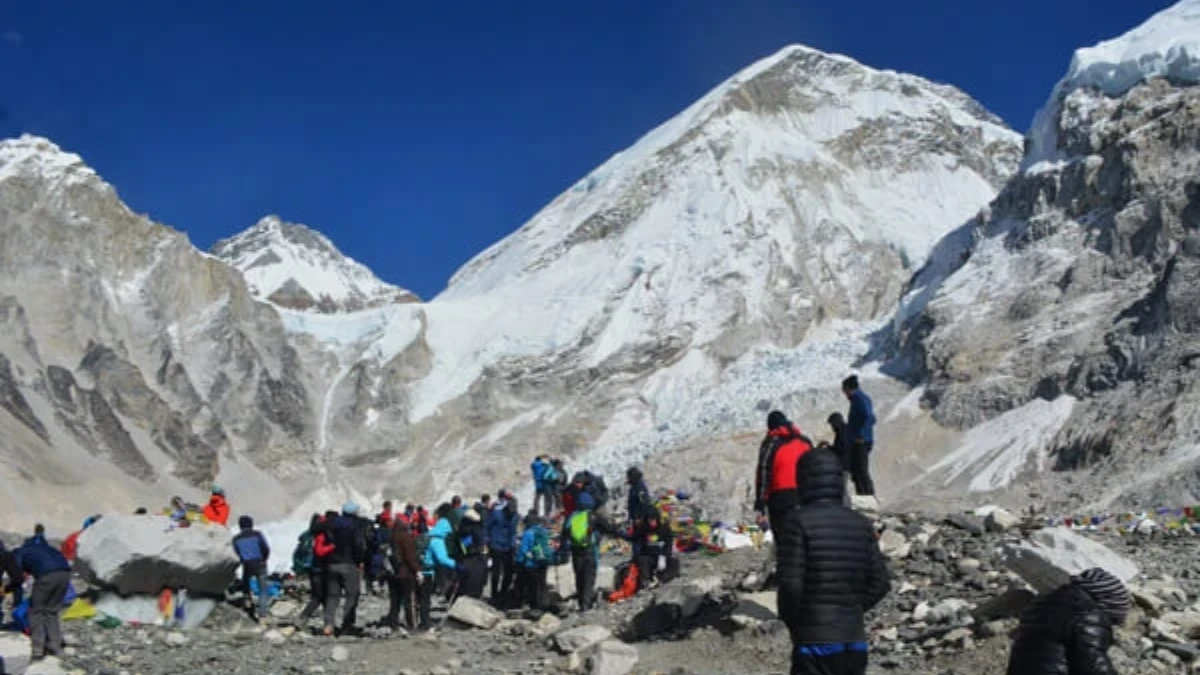
This guide covers everything: what can go wrong, what we carry, how evacuations work, and why your travel insurance policy might be the most important thing in your pack.
What are the most common illnesses on Nepal treks?
Gastrointestinal Problems: The Number One Complaint
Let's start with the unglamorous truth. Stomach trouble is by far the most common health issue on Nepal treks. Roughly 40-50% of trekkers experience some form of gastrointestinal distress during a multi-day trek. That ranges from mild nausea to full-blown food poisoning that leaves you unable to walk.
The causes vary. Contaminated water is a big one, even when you think you're being careful. Unfamiliar bacteria in food prepared in basic tea house kitchens. Unwashed hands, yours or someone else's. Stress on the digestive system from altitude and exertion. Sometimes it's simply the change in diet.
On our Everest Base Camp trek, we see stomach issues peak around days 3-5, usually between Namche Bazaar and Tengboche. The body is adjusting to altitude, the food is heavier, and trekkers often push fluids less than they should because they don't want to stop.
What our guides carry for gastro issues: oral rehydration salts (ORS), Imodium for emergencies, antibiotics (ciprofloxacin) for bacterial infections, anti-nausea medication, and electrolyte powder. We also carry water purification tablets as backup and insist on boiled or treated water at every stop.
Acute Mountain Sickness (AMS): The Silent Risk
Altitude sickness is the one that scares people most, and rightly so. AMS can affect anyone above 2,500 metres regardless of age, fitness, or experience. I've seen ultra-marathon runners collapse at Lobuche while a 67-year-old retired teacher strolled past them feeling fine.
Mild AMS symptoms include headache, nausea, dizziness, fatigue, and loss of appetite. These are common and usually manageable. Moderate AMS brings persistent vomiting, severe headache that doesn't respond to paracetamol, and difficulty sleeping. Severe AMS, which can progress to High Altitude Pulmonary Oedema (HAPE) or High Altitude Cerebral Oedema (HACE), is a genuine medical emergency.
Every guide on our team carries a pulse oximeter. It's a small clip that goes on your finger and measures blood oxygen saturation. At sea level, you're around 95-100%. At 5,000 metres, anything above 80% is generally acceptable. Below 75%? We're going down. No discussion.
We check oxygen levels twice daily on high-altitude treks like the Everest Three Pass trek and the Manaslu Circuit. Our itineraries build in acclimatisation days, not because we're padding the schedule, but because the human body needs time to produce more red blood cells at altitude.
Diamox (acetazolamide) is a prescription medication that helps prevent and treat mild AMS. We carry it, but it's not a substitute for proper acclimatisation. We recommend trekkers consult their GP before the trip and bring their own supply. The standard preventive dose is 125mg twice daily, starting 24 hours before ascent.
Blisters, Sprains, and Muscle Injuries
The unglamorous injuries. Blisters seem trivial until you're four days from the nearest road and every step feels like walking on broken glass. Sprains happen on uneven terrain, especially on descents. Knee pain builds slowly and then hits like a wall on day six.
On the Annapurna Circuit, the descent from Thorong La Pass (5,416m) puts enormous strain on knees and ankles. Those 1,600 metres of downhill in a single day are where most injuries happen. Our guides carry trekking poles for anyone who needs them, compression bandages, blister plasters (Compeed), anti-inflammatory gel, and athletic tape for ankle support.
Prevention matters more than treatment. We check footwear before every trek starts. If your boots aren't broken in, we'll tell you honestly. Better to hear it in Kathmandu than at Thorong Phedi.
Respiratory Infections
Cold, dry mountain air combined with shared dormitories and tea house dining rooms creates perfect conditions for respiratory infections. The "Khumbu Cough" is almost a rite of passage above 4,000 metres: a persistent, dry cough caused by breathing cold, low-humidity air.
Most cases are viral and self-limiting. But in some trekkers, especially those with pre-existing asthma, it can develop into bronchitis or even pneumonia. We carry throat lozenges, cough syrup, and broad-spectrum antibiotics for cases that don't improve within 48 hours.
On our Kanchenjunga Base Camp trek and other remote routes, we're extra cautious because medical facilities are further away. A simple cough that worsens at 4,800 metres is something we watch closely.
What medical kit do Nepal trekking guides carry?
Every trek leader on our team carries a full first aid kit. This isn't a shop-bought box with a few plasters and some antiseptic cream. It's a field medical kit assembled with input from our partner doctors in Kathmandu.
| Category | Items |
|---|---|
| Monitoring | Pulse oximeter, thermometer, blood pressure cuff (high-altitude treks) |
| Altitude | Diamox (acetazolamide), dexamethasone (emergency only), nifedipine (HAPE) |
| Gastro | ORS sachets, ciprofloxacin, metronidazole, Imodium, anti-nausea tablets |
| Pain/Inflammation | Paracetamol, ibuprofen, diclofenac gel |
| Wounds/Injuries | Compression bandages, ankle supports, Compeed blister plasters, sterile gauze, surgical tape, antiseptic wipes, SAM splint |
| Respiratory | Salbutamol inhaler, throat lozenges, amoxicillin, cough suppressant |
| Emergency | EpiPen (severe allergic reactions), emergency blanket, whistle, satellite phone or GPS communicator |
Our assistant guides and senior porters carry secondary kits with basic supplies. On remote treks like the Upper Mustang trek, where the nearest hospital might be two days' walk away, we increase supplies and carry a portable Gamow bag, a pressurised chamber that simulates lower altitude and can save a life during severe AMS.
How does emergency evacuation work on a Nepal trek?
Helicopter Evacuation
Nepal has one of the most developed helicopter rescue systems in the trekking world. When a trekker needs urgent evacuation, the process goes like this:
- Our guide assesses the situation and contacts our Kathmandu office via satellite phone or mobile (where signal exists).
- Our office contacts the trekker's insurance company with medical details, policy number, and location coordinates.
- The insurance company authorises the rescue. This usually takes 30-60 minutes.
- A helicopter is dispatched from Kathmandu or the nearest helipad. Flight time to Everest region is about 45 minutes; to Annapurna, about 30 minutes.
- The trekker is flown to Kathmandu and taken directly to CIWEC Hospital or Grande International Hospital.
In good weather, the entire process from call to hospital can take 3-4 hours. In bad weather? That's where things get complicated.
This is why we never rely solely on helicopter rescue. Weather in the Himalayas changes in minutes. During monsoon shoulder seasons and winter, helicopter operations can be grounded for days.
Horse or Mule Evacuation
On some routes, particularly the Langtang Valley trek and parts of the Annapurna region, horses or mules can evacuate a trekker who can't walk but isn't in critical condition. This is common for severe knee injuries, bad sprains, or exhaustion. We maintain contacts with local horse owners along all our major routes.
Porter Carry and Assisted Descent
When no helicopter can fly and no horse is available, our team carries trekkers out. It's happened. A wicker basket called a doko, the same type porters use for supplies, can support a person. It's not comfortable. It's not fast. But it works.
On the Everest Base Camp by road trip, which approaches through different terrain, evacuation routes differ slightly, but the principle remains: we always have at least two exit strategies planned before we begin each day's walk.
Do I need travel insurance for trekking in Nepal?
I'll be direct. If you trek in Nepal without adequate travel insurance, you're gambling with your life savings, or your life. A helicopter evacuation from Everest Base Camp costs between $4,000 and $8,000 USD. A night in a Kathmandu hospital with IV antibiotics and monitoring costs $500-1,000. If you need an air ambulance home, you're looking at $50,000-100,000 depending on your country.
We require all trekkers to have travel insurance that covers:
- Helicopter evacuation up to at least the maximum altitude of their trek
- Medical treatment abroad
- Repatriation (medical flight home)
- Trip cancellation and interruption
- Coverage up to at least 6,000 metres for high-altitude treks
Popular insurers that cover Nepal trekking include World Nomads, Global Rescue, IMG (International Medical Group), and BMC (for UK climbers). Always read the fine print. Some policies exclude altitudes above 4,000 metres unless you pay extra. Some won't cover helicopter rescue at all.
We check insurance documents before every trek. No valid insurance, no departure. Full stop. It's the one rule we won't bend on.
When should I keep trekking or descend if sick?
This is the question every trekker asks, and it's the hardest one to answer because the line is different for everyone. After guiding hundreds of people through the Himalayas, here's the framework I use:
Keep Going (With Monitoring)
- Mild headache that responds to paracetamol and water
- General fatigue after a long day, this is normal
- Minor blisters that can be dressed
- Slight nausea in the morning at altitude that clears after breakfast
- Mild Khumbu cough without fever
- Muscle soreness, expected, especially in the first three days
Stop and Reassess
- Headache that doesn't improve with medication after two hours
- Persistent vomiting or diarrhoea (more than three episodes)
- Oxygen saturation below 80% after resting
- Ankle or knee pain that alters your gait significantly
- Fever above 38.5°C
- Chest tightness or unusual breathlessness at rest
Descend Immediately
- Confusion, disorientation, or inability to walk in a straight line (signs of HACE)
- Gurgling or crackling sounds when breathing (signs of HAPE)
- Oxygen saturation below 70%
- Loss of consciousness, even briefly
- Severe chest pain
- Any rapidly worsening symptom
The golden rule of altitude medicine: when in doubt, go down. You can always come back up. You can't undo brain swelling.
Real Stories From the Trail
The Teacher Who Wouldn't Quit
Sarah, a primary school teacher from Bristol, got hit with food poisoning on day three of her Ghorepani Poon Hill trek. She was vomiting every hour through the night. By morning, she was dehydrated and exhausted. We moved her to a private room, started oral rehydration, and our guide monitored her throughout the day.
We offered to arrange a horse back to Pokhara. She asked for 24 hours. We gave her 24 hours. By the next evening she was eating rice soup. The morning after that, she hiked to Poon Hill for sunrise and cried when she saw the Annapurna range lit up in gold.
"That sunrise was worth every miserable hour," she told me later.
The Evacuation That Changed Our Protocol
In 2022, a fit 34-year-old Canadian developed HAPE at 5,100 metres near Thorong La on the Annapurna Circuit. He'd shown no symptoms at all until suddenly he couldn't catch his breath at rest. His oxygen saturation dropped from 82% to 69% in two hours.
Weather was too poor for a helicopter. Our team administered nifedipine and oxygen from a portable canister, then carried him 800 metres down to Muktinath, where a jeep took him to Jomsom and a flight to Pokhara. He spent two nights in hospital and made a full recovery.
After that incident, we added portable oxygen canisters to our standard kit for all treks above 5,000 metres. We also started doing evening pulse oximetry checks at high camps, not just morning ones.
Seventy-Two and Unstoppable
Mr. Tanaka from Osaka was 72 when he joined our Annapurna Base Camp trek. On day five, he developed severe knee pain descending from Deurali. Our guide strapped his knee, gave him trekking poles, shortened his stride, and we adjusted the itinerary to add an extra rest day.
He finished the trek. Slowly, yes. With extra support, absolutely. But he stood at Annapurna Base Camp at 4,130 metres and told me it was the greatest achievement of his life.
How The Everest Holiday Handles Emergencies Differently
Most trekking companies in Nepal assign a guide and hope for the best. We take a different approach because hoping isn't a strategy.
- Pre-trek medical briefing: Every trekker gets a 30-minute session in Kathmandu where we review their health history, medications, and fitness level. We adjust the itinerary on the spot if needed.
- Daily health checks: On treks above 3,500 metres, our guides do morning check-ins covering headache, sleep quality, appetite, and oxygen saturation.
- Communication: We carry satellite communicators on remote routes. Our Kathmandu office is staffed during trekking hours and can coordinate with hospitals, insurers, and helicopter companies within minutes.
- Emergency fund: We maintain an emergency fund for situations where insurance authorisation is delayed. We've paid for helicopter evacuations upfront and sorted the insurance paperwork afterwards. Your safety doesn't wait for a claims department.
- Guide training: All lead guides hold Wilderness First Aid certification and are retrained annually. Several hold advanced WFR (Wilderness First Responder) qualifications.
- Flexible itineraries: If someone needs an extra acclimatisation day, we take it. If the group needs to descend, we descend. Our profit never outweighs your health.
On challenging routes like Island Peak climbing and the Mardi Himal trek, where conditions change rapidly, this preparation makes the difference between a manageable incident and a crisis.
How can I avoid getting sick on a Nepal trek?
Most trail illnesses are preventable. Here's what works:
- Hydration: Drink 3-4 litres per day at altitude. If your urine isn't clear or pale yellow, you're not drinking enough.
- Hand hygiene: Carry hand sanitiser and use it before every meal. This alone prevents most gastro issues.
- Acclimatisation: Follow the "climb high, sleep low" principle. Never increase sleeping altitude by more than 500 metres per day above 3,000 metres.
- Boot fit: Break in your boots for at least 50km before the trek. Blisters from new boots are entirely avoidable.
- Sun protection: UV intensity at 5,000 metres is extreme. Sunburn, snow blindness, and sun headaches are common and preventable with sunscreen, sunglasses, and a hat.
- Sleep: Altitude disrupts sleep patterns. Accept it. Don't take sleeping pills, they can mask AMS symptoms.
- Food choices: At altitude, favour carbohydrate-rich meals. Avoid heavy meats above 4,000 metres where refrigeration is unreliable.
Frequently Asked Questions
Should I bring my own medications or rely on the guide's first aid kit?
Both. Bring any prescription medications you take regularly, plus a personal supply of paracetamol, Imodium, and Diamox (if prescribed by your doctor). Our guides carry a full kit, but it's your backup, not your primary supply. If you have known allergies, asthma, or any chronic condition, bring your own specialist medication and tell your guide on day one.
How quickly can a helicopter reach me if I need evacuation?
In good weather, a helicopter can reach most trekking routes within 1-3 hours of the call being made. In the Everest region, flight time from Kathmandu is about 45 minutes. However, weather delays are common. Cloud cover, wind, and snowfall can ground helicopters for hours or even days. This is why we always have ground evacuation plans as well.
What if I get sick but the rest of the group wants to continue?
We split the team. Your guide or an assistant guide stays with you while the rest of the group continues with the remaining team member. We never leave a sick trekker alone. On private treks, the entire itinerary adjusts to your needs. This flexibility is one of the main reasons people choose smaller group treks with us.
Is altitude sickness related to fitness level?
No. This is one of the biggest misconceptions. Altitude sickness is primarily genetic, it depends on how your body responds to reduced oxygen. Very fit people sometimes suffer more because they push harder, ascend faster, and ignore early symptoms. The fittest person in your group is not necessarily the least likely to get AMS.
What happens if I need to be evacuated, who pays?
Your travel insurance covers evacuation costs. We require all trekkers to carry insurance that specifically covers helicopter evacuation at altitude. If your insurance company is slow to authorise, we have an emergency fund to cover upfront costs so your rescue isn't delayed. You'll settle with your insurer afterwards. Without insurance, you're personally liable for all costs, which is why we make insurance mandatory, not optional.
The Short Answer
Getting sick on a Nepal trek isn't a failure. It's a possibility you prepare for. The mountains don't care about your training plan or your Instagram content calendar. They're big, cold, and indifferent. What matters is who you're with when something goes wrong.
In twenty years of guiding, we've never lost a trekker. Not because nothing goes wrong, plenty goes wrong, but because we prepare for everything that can. Every first aid kit, every acclimatisation day, every morning oxygen check, every satellite phone call is a layer of safety between you and the mountain.
Trek with people who take your safety as seriously as you do. That's not marketing. That's the whole point.
Planning a trek and want to know exactly how we'll keep you safe? Contact us directly:
- WhatsApp: +977 9810351300
- Email: [email protected]
Written by Shreejan Simkhada, third-generation Himalayan guide, founder of The Everest Holiday, and licensed trekking operator (TAAN #1586). Leading treks across Nepal since 2016.
Sick on the trail: what happens? Our Everest Base Camp Trek (12 Days) is private (your group only, no strangers), 2027 dates open, From USD $1399. WhatsApp us for tailored 2027 dates and current departures.
Planning a trip to Nepal?
Drop us your details and tell us what you have in mind. We will put together a personalised plan and get back to you.
Not sure which Nepal trek is right for you?
Take our free 2-minute quiz and get personalised recommendations based on your fitness, experience, and travel style.
Find Your Perfect Trek →Need Help? Call Us+977 9810351300orChat with us on WhatsApp
Latest Travel Blogs
Thamdanda and Surke: The Road Head for Everest Base Camp by Road
Thamdanda is the road head where our Everest Base Camp trek by road starts and ends on foot. How to get there from Phaplu and what the first walk to Paiya is like.
Read More
Poon Hill Trek Permits 2027: ACAP, TIMS, Cost and What You Need
Poon Hill needs two permits: ACAP at NPR 3,000 and a TIMS card at NPR 2,000. Who arranges them, where they are checked, SAARC rates and the 2027 trek prices.
Read More
Mera Peak Climbing Itinerary 2027: 14 Days, Day by Day
Mera Peak in 14 days, night by night. The Hinku valley, a full rest day at Khare, Mera High Camp at 5,780 m, summit day, 2027 prices and the best months.
Read More Chat with Shreejan