Upper Mustang needs a $50 a day permit and 15 days. Lower Mustang is open, cheaper, and just as beautiful. A guide who's walked both explains the real differences.
Govt Regd. No.: 147653/072/073
Travel Agency Licence: 2838/072
Upper Mustang vs Lower Mustang: Which Trek Should You Choose?

Upper Mustang vs Lower Mustang: Which Trek Should You Choose?
I've walked from Jomsom to Lo Manthang more times than I can count. Each trip, somewhere around Kagbeni, I watch trekkers stop at the police checkpoint and hesitate. North means Upper Mustang: the restricted zone, the daily permit fee, the lost kingdom. South and east means Lower Mustang: open trails, apple orchards, and the sacred halls of Muktinath.
Both routes are extraordinary. They're also very different treks for very different people. Getting the choice wrong means spending two weeks wishing you'd picked the other one.
My family has run treks in the Mustang region since the mid-1990s, shortly after Upper Mustang opened to foreigners in 1992. I've guided solo backpackers, families, and film crews through both areas. Here's the honest breakdown from someone who knows the trails by heart.
How do Upper and Lower Mustang compare at a glance?
| Factor | Upper Mustang | Lower Mustang |
|---|---|---|
| Duration | 10 days | 5-8 days |
| Permit cost | $50 per person per day | Free (TIMS + ACAP only) |
| Maximum altitude | 3,840m (Lo Manthang) | 3,710m (Muktinath) |
| Best months | May-October (rain shadow) | March-May, Sept-Nov |
| Terrain | Arid desert, red cliffs, fierce wind | Green valleys, forests, farmland |
| Teahouses | Basic, limited options | Comfortable, many choices |
| Trekkers per year | ~3,000 | ~30,000+ |
| Cultural highlight | Walled city of Lo Manthang | Muktinath Temple |
| Difficulty | Moderate to hard | Easy to moderate |
| Guide required? | Yes (mandatory for restricted area) | Not for a permit, but required under the Nepal Tourism Board rule (April 2023) |
What does trekking Upper Mustang actually feel like?
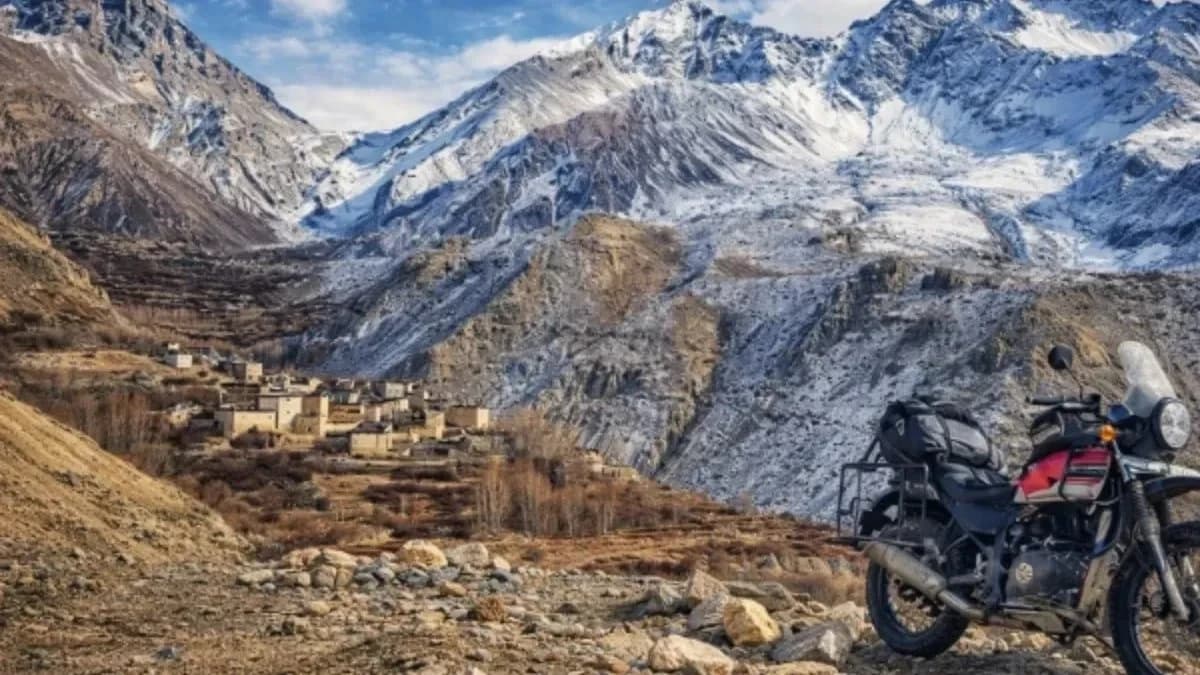
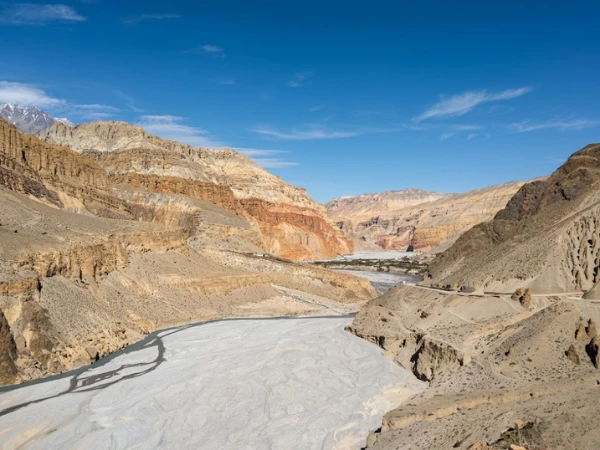
Forget Nepal. Upper Mustang feels like Tibet. The moment you pass through the police checkpoint at Kagbeni and turn north, the world changes. Green vanishes. The Kali Gandaki gorge narrows, cliffs turn rust-red and ochre, and the wind hits you with a force that will push a lightweight trekker sideways.
This is a rain shadow desert sitting behind the Annapurna and Dhaulagiri massifs. While the rest of Nepal drowns during the June-to-September monsoon, Upper Mustang stays dry. That makes it one of the few treks you can do in summer, which is a genuine advantage if your holiday falls in July or August.
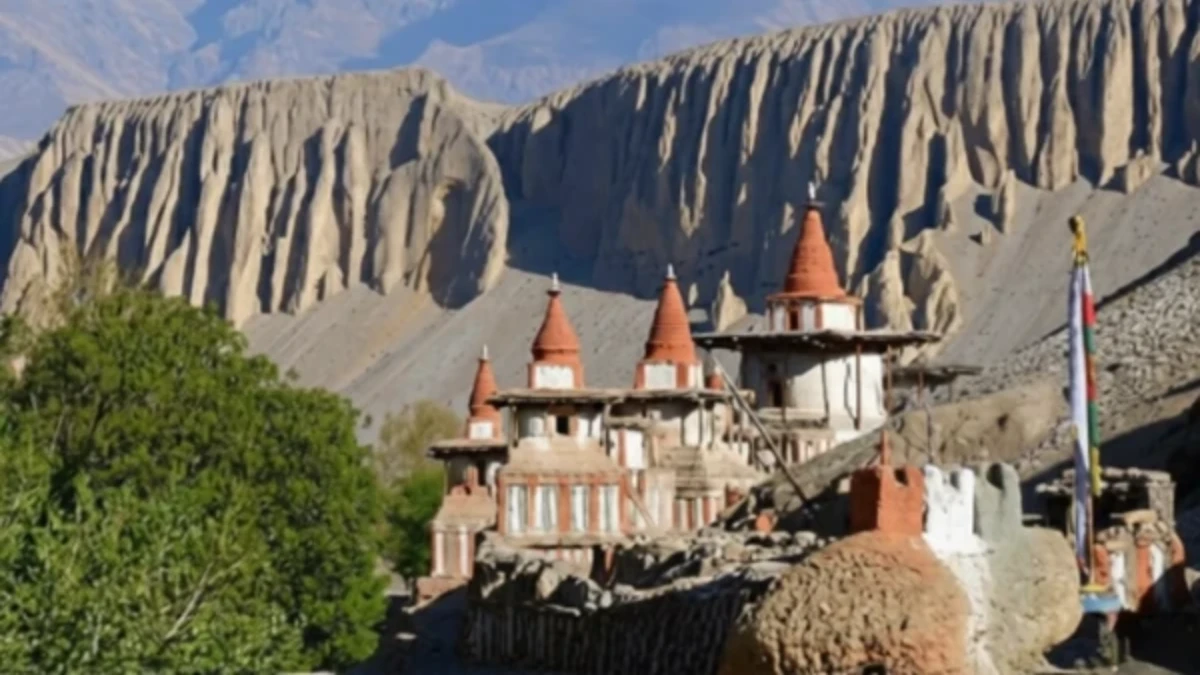
The trail passes through villages that feel frozen in time. Ghami, Tsarang, and Dhakmar have populations measured in dozens, not hundreds. Homes are whitewashed with flat roofs. Every village entrance is marked by a chorten. Locals speak a Tibetan dialect. Butter tea is the standard welcome drink.
Lo Manthang is the prize. A walled city at 3,840m, it was once the capital of an independent kingdom that only merged with Nepal in 1951. The royal palace still stands, though the last king passed away in 2016. Four major monasteries contain murals dating back to the 15th century, with restoration work led by an Italian conservation team since 2008.
Our Upper Mustang Trek follows this full route. I always tell clients: budget for the experience, not just the permit.
The Wind Nobody Warns You About
Every Upper Mustang guide knows this. The afternoon wind through the Kali Gandaki gorge is relentless. From roughly noon to 5 PM, gusts regularly reach 60-80 km/h. This isn't a gentle breeze. It throws dust into your eyes, makes conversation impossible, and turns a flat trail into an exhausting fight.
We always start walking by 6:30 AM and aim to reach the next village by early afternoon. Any trekker who sleeps in and starts at 9 AM will spend four miserable hours battling headwinds. This is something most brochures fail to mention.
The wind takes anything that is not tied down. Nothing stays put in Upper Mustang unless it is weighted down or inside your pack.
The Permit Question
The Upper Mustang restricted area permit costs $50 USD per person per day, charged only for the days you are actually inside the restricted zone. The old flat $500 for ten days was abolished in December 2025. It's one of the most expensive trek permits in Nepal, introduced in 1992 to limit tourist numbers and protect the fragile Tibetan Buddhist culture.
Is it worth the money? If you've already done the classic Nepal treks and want something genuinely different, absolutely. If this is your first time in Nepal and you're watching your budget, Lower Mustang or the Annapurna Circuit Trek will give you more value.
For those who want the Upper Mustang landscape without the long walking days, our Upper Mustang Motorbike Tour covers the same route on Royal Enfield bikes. It takes about 8 days and still requires the restricted area permit, which at $50 a day comes to $400, but you cover ground faster and can explore side valleys that trekkers often skip.
What does trekking Lower Mustang actually feel like?
Lower Mustang is the gateway. It covers the stretch between Jomsom (the airstrip town) and Kagbeni, plus the trail east to Muktinath and the villages along the lower Kali Gandaki valley. Most trekkers see it as part of the Annapurna Circuit with Tilicho Lake rather than as a standalone destination.
The landscape here is greener than the north. Marpha is famous for its apple orchards and apple brandy. Tukuche has a distillery that's been running for decades. Jomsom is a functional town with an airport, ATMs, and proper restaurants.
Kagbeni deserves special attention. This medieval village sits at the confluence of the Kali Gandaki and a tributary flowing south from Upper Mustang. Its narrow alleys, crumbling walls, and ancient Kag Chode monastery make it one of the most photogenic villages in Nepal. Many trekkers who can't afford the Upper Mustang permit walk to Kagbeni, spend a night, and return perfectly content.
The crown jewel of Lower Mustang is Muktinath Temple at 3,710m. One of the holiest sites for both Hindus and Buddhists, it features an eternal flame burning from natural gas that seeps through rock behind a waterfall. Pilgrims from across South Asia make the journey here year after year.
The Landscape: Desert Versus Garden
If I had to capture the difference in a single sentence: Upper Mustang is Mars, Lower Mustang is Tuscany with mountains behind it.
Upper Mustang's beauty is stark. Eroded canyons, wind-carved formations, fossil beds containing ammonites (shaligrams sacred to Hindus), and sky caves carved into cliff faces thousands of years ago. The colour palette is brown, red, orange, and grey. Vegetation is sparse: scrub bushes and the occasional irrigated field of buckwheat or barley.
Lower Mustang is lush by comparison. Apple orchards line the trail through Marpha. Pine forests rise above Jomsom. Terraced fields surround Tukuche. The Kali Gandaki river runs through a gorge flanked by Dhaulagiri (8,167m) on one side and Annapurna I (8,091m) on the other: two 8,000-metre peaks facing each other across the deepest valley on Earth.
Both regions share one thing: the ammonite fossils. Black shaligram stones are found throughout the Kali Gandaki riverbed. These 140-million-year-old marine fossils are considered sacred. They're technically illegal to export, though locals sell them openly along the trail.
What are the food and culture like in Mustang?
In Upper Mustang, the food is Tibetan. Thukpa (noodle soup), tsampa (roasted barley flour), yak butter tea, and dried yak meat. Dal bhat is available but feels out of place this far north. Lo Manthang has a couple of restaurants serving basic Western meals, but expect to eat local for most of the trek.
In Lower Mustang, the food scene is surprisingly good. Marpha's apple products (cider, brandy, dried apple rings, apple pie) are famous across Nepal. Jomsom has Korean, Italian, and Indian restaurants catering to the Annapurna Circuit crowd. Kagbeni's bakeries turn out solid cinnamon rolls and banana bread.
Who should choose Upper Mustang?
- Experienced trekkers who've already done Everest Base Camp or the Annapurna Circuit and want something completely different
- Photography enthusiasts: the light on red cliffs at dawn is extraordinary
- Monsoon-season travellers: Upper Mustang is one of the few viable treks from June to September
- Cultural travellers drawn to Tibetan Buddhism, ancient monasteries, and medieval architecture
- Higher-budget trekkers: between the permit, longer duration, and mandatory guide, expect $2,500-$4,000 total
Who should choose Lower Mustang?
- First-time Nepal trekkers combining it with the Annapurna Circuit
- Budget-conscious travellers: no restricted area permit needed
- Shorter holiday windows, you can see the highlights in 5-7 days
- Families with older children, trails are well-maintained and altitudes moderate
- Pilgrims heading to Muktinath Temple
Our Lower Mustang Motorbike Tour is popular with travellers who want adventure without the long walking days. You ride through the Kali Gandaki gorge on a Royal Enfield, stopping at monasteries and apple farms along the way.
Combining Both: The Full Mustang Experience
Here's my recommendation for clients who can't decide: do both, but not necessarily on the same trip.
Start with the Annapurna Circuit Trek, which naturally passes through Lower Mustang. You'll cross Thorong La at 5,416m, visit Muktinath, walk through Kagbeni and Jomsom, and taste the Mustang landscape. If it captivates you, and it usually does, come back for Upper Mustang the following year, ideally during monsoon season when the rest of Nepal is off-limits.
Some trekkers do a combined trip: fly to Jomsom, trek north to Lo Manthang over 6-7 days, return to Jomsom, then walk east to Muktinath and south over Thorong La to complete the Annapurna Circuit in reverse. That takes about 20-22 days and requires serious fitness, but it's the complete Mustang experience plus one of the world's great high passes.
For a shorter combined taste, the Mustang Mountain Bike Tour covers both areas faster, though you'll want solid mountain biking experience for the terrain north of Kagbeni.
What permits and flights are needed for Mustang?
Getting to Mustang
Lower Mustang starts from Jomsom. Our Upper Mustang trek goes in by road as standard, driving from Kathmandu to Kagbeni, and we can arrange Kathmandu to Pokhara and Pokhara to Jomsom flights, both ways, on request. To reach Jomsom itself you have two options:
- Fly from Pokhara to Jomsom, 20 minutes with spectacular mountain views, but flights cancel frequently because of wind. Budget 1-2 extra days in Pokhara as a buffer.
- Trek from Besisahar or Chame, the Annapurna Circuit approach takes 7-10 days to reach Jomsom via Thorong La pass.
Permits Breakdown
Upper Mustang: $50 USD per person per day restricted area permit, so $500 on a ten day trek and proportionally less on a shorter one. Plus ACAP permit ($30) and TIMS card ($20). You must trek with a registered agency and licensed guide. No exceptions.
Lower Mustang: ACAP permit ($30) and TIMS card ($20). No restricted area permit. A guide isn't a restricted-area requirement here, but a licensed guide is required in most trekking areas under the Nepal Tourism Board rule from April 2023.
Best Months
Upper Mustang: May through October. The rain shadow means clear skies while the rest of Nepal is soaked. September and October offer the best balance of clear views and comfortable temperatures.
Lower Mustang: March to May and September to November. Standard Nepal trekking seasons apply. Avoid December through February when Thorong La may be blocked by snow.
Teahouse Comfort
Upper Mustang teahouses are basic. Shared rooms, squat toilets, limited electricity, and simple dal bhat. Lo Manthang has a few better options, but don't expect Namche Bazaar-level comfort. Charging your phone costs extra at most stops.
Lower Mustang teahouses are comfortable. Jomsom and Marpha have proper hotels with hot showers, Wi-Fi, and varied menus including pizza and pasta. Kagbeni falls somewhere in between.
Can You Visit Upper Mustang Without Walking?
Yes. The jeep road from Jomsom to Lo Manthang was completed around 2014 and continues to improve. Our Upper Mustang Motorbike Tour uses this road. It's rough, dusty, and spectacular.
Some older travellers and those with limited mobility hire private jeeps. The ride from Jomsom to Lo Manthang takes about 8-10 hours. It rattles every bone in your body, but several of our clients in their 70s have done it and enjoyed every minute.
Which is better, Upper or Lower Mustang?
If this is your first Nepal trip and you have 14 days, do the full Annapurna Circuit Trek. It passes through Lower Mustang naturally. You'll cross Thorong La, visit Muktinath, explore Kagbeni and Jomsom, and get a real taste of the Mustang landscape without the restricted area permit.
If you've done the Circuit already and want something deeper, Upper Mustang is one of Nepal's finest experiences. The permit cost stings initially, but you're paying for exclusivity, cultural preservation, and access to a landscape that looks like nowhere else on the planet.
If time is short but you want Mustang flavour, consider the Lower Mustang Motorbike Tour. Five days, no expensive permits, and you still get the gorge, the monasteries, and the apple brandy.
Still uncertain? The Ghorepani Poon Hill Trek and Annapurna Base Camp Trek are shorter alternatives in the same region. For something entirely different, the Langtang Valley Trek offers Tibetan culture closer to Kathmandu. And for a multi-destination overview, our Kathmandu Pokhara Chitwan Lumbini Tour covers Nepal's greatest hits in a single trip.
Frequently Asked Questions
Can I visit Upper Mustang without a guide?
No. Upper Mustang is a restricted area. You must trek with a registered trekking agency and a licensed guide. The permit is issued to the agency, not the individual trekker. Lower Mustang is in the Annapurna area, where the Nepal Tourism Board rule from April 2023 requires a licensed guide, so solo trekking is not an option.
Is Upper Mustang harder than Everest Base Camp?
Not in terms of altitude. Lo Manthang sits at 3,840m compared to EBC's 5,364m. But the fierce wind, remoteness, basic facilities, and long exposed plateaus with no shelter make it mentally demanding. Physical fitness matters less than your tolerance for dust, wind, and isolation.
What's the cheapest way to see Mustang?
Trek the Annapurna Circuit. It passes through Lower Mustang . Jomsom, Marpha, Kagbeni, and Muktinath, and only requires the standard ACAP and TIMS permits, about $50 total. You get the gorge, the culture, and the landscape without the restricted area fee.
Can I fly out of Jomsom instead of walking back?
Yes, on request. Our Upper Mustang trek comes back by road as standard, but we can book the Jomsom to Pokhara and Pokhara to Kathmandu flights instead, weather permitting. If you choose to fly, keep one or two spare days for weather cancellations, because the Jomsom flights only run in the early morning and wind often stops them.
Is the Upper Mustang road ruining the trek?
The jeep road from Jomsom to Lo Manthang has changed the character of the trek, yes. Dust from vehicles is a nuisance on certain stretches. But most trekking routes now use alternative paths that avoid the road for long sections. The villages, the monasteries, and the desert landscape remain unchanged. Upper Mustang is still worth every step.
Plan Your Mustang Trek
Whether you choose the restricted kingdom of Upper Mustang or the apple orchards and temples of Lower Mustang, we'll help you plan the right trip. I've walked both routes dozens of times and I'm happy to answer your questions honestly, including telling you if a different trek suits you better.
WhatsApp: +977 9810351300
Email: [email protected]
Written by Shreejan Simkhada, third-generation Himalayan guide and founder of The Everest Holiday. TAAN Licence #1586. Born in Nepal, raised on the trails.
Upper Mustang is the deeper Mustang experience. Our Upper Mustang Trek (10 Days) is private (your group only, no strangers), 2027 dates open, From USD $1290. WhatsApp us for tailored 2027 dates and current departures.
Planning a trip to Nepal?
Drop us your details and tell us what you have in mind. We will put together a personalised plan and get back to you.
Not sure which Nepal trek is right for you?
Take our free 2-minute quiz and get personalised recommendations based on your fitness, experience, and travel style.
Find Your Perfect Trek →Need Help? Call Us+977 9810351300orChat with us on WhatsApp
Latest Travel Blogs
Island Peak Itinerary and Summit Day 2027: 14 Days, Base Camp to the Top
The 14-day Island Peak itinerary day by day, what summit day is like from base camp, where sources disagree on heights, best months and 2027 prices.
Read More
How Difficult Is the Mardi Himal Trek? An Honest Day-by-Day Rating for 2027
An honest day-by-day rating of the Mardi Himal trek: the steep climb to High Camp, the 4,500 m push to Base Camp, altitude risk, who finds it hard and 2027 prices.
Read More
Manaslu Circuit Reopened: What Changed After the 2026 Floods and How to Plan 2027
The Manaslu Circuit over the Larke Pass is open again with extreme caution. What changed in the lower valley after the two 2026 floods, 2027 prices and permits, and how I would plan.
Read More Chat with Shreejan