
Nepal's high altitude and zero light pollution make it world-class for stargazing. Best spots, what you'll see, astrophotography tips. NatGeo top 5 rated.
Govt Regd. No.: 147653/072/073
Travel Agency Licence: 2838/072
Stargazing Treks in Nepal: The Astrotourism Guide Nobody Wrote Yet

Short answer: Nepal's high trails are among the best places on Earth to see the Milky Way, because the air is thin, dry and free of city light. Gorak Shep (5,164 m) on the Everest Base Camp trek and the Gokyo Lakes are especially good. The clearest skies are from October to February. Plan around a new moon and step outside after midnight. See the stars on our 12-day Everest Base Camp trek.
Stargazing Treks in Nepal: The Complete Astrotourism Guide for 2027
By Shreejan Simkhada | April 2026 | 14 min read
Most people remember the first time they really see the Milky Way.
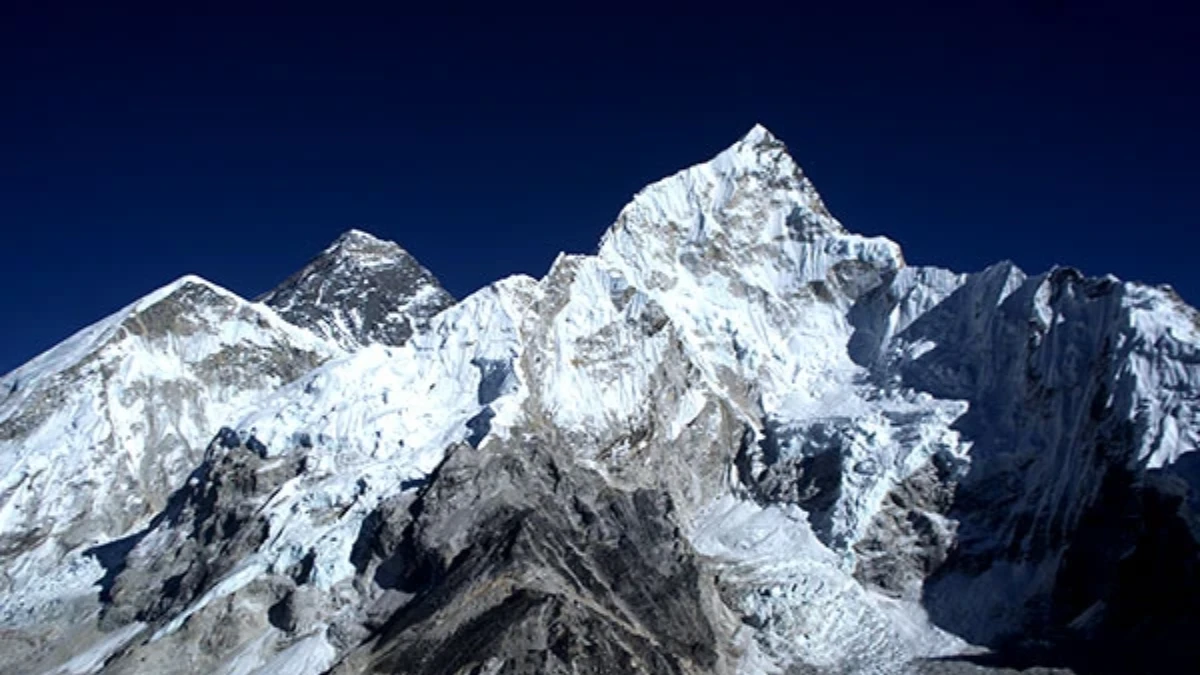
Not a hazy smear through city light pollution. The actual Milky Way, a river of billions of stars stretching from horizon to horizon, so bright it casts faint shadows on the ground. At Gorak Shep, 5,164 metres above sea level, you can walk outside the teahouse at 2am, look up, and forget why you came out.
It never stops being extraordinary.
Nepal has some of the best stargazing conditions on Earth, and almost nobody talks about it. The trekking industry sells mountains, sunrises, prayer flags. Fair enough, those are magnificent. But the night sky at altitude in the Himalayas is, I'd argue, equally remarkable, and it's been almost completely overlooked.
This guide is my attempt to fix that.
Why Nepal's Night Sky Is Exceptional
Three factors combine to make Nepal exceptional for stargazing, and they're hard to replicate anywhere else on the planet.
1. Altitude
At sea level, you're looking through the full thickness of Earth's atmosphere, roughly 100km of air, moisture, and particles that scatter and absorb starlight. At 5,000 metres, you've already risen above almost half that atmospheric mass. The air is thinner. The sky is darker. Stars don't twinkle as much (twinkling is caused by atmospheric turbulence, which decreases with altitude). Everything is sharper, cleaner, more vivid.
This is why professional observatories are built on mountaintops. Nepal's trekking routes put you at observatory-grade altitudes while sleeping in a teahouse with a cup of hot lemon ginger tea. The Atacama Desert in Chile has the big telescopes. Nepal has teahouse dal bhat and the same thin atmosphere.
2. Zero Light Pollution
Nepal's trekking regions have virtually no artificial light. The Khumbu valley above Namche Bazaar, the Annapurna Sanctuary, Upper Mustang, Rara Lake: these places are dark. Properly dark. No streetlights, no cities on the horizon, no highway glow. Teahouses turn off generators by 9pm. After that, it's just you and however many billions of stars happen to be overhead.
National Geographic rated Sagarmatha (Everest) National Park as one of the top five stargazing destinations on the planet. They weren't exaggerating.
3. Latitude
Nepal sits between 26° and 30° North latitude, close enough to the equator to see much of the southern sky, including the dense core of the Milky Way, which passes nearly overhead during autumn months. You get a wider slice of the celestial sphere than you'd see from, say, northern Europe or Canada. More sky, more stars.
What can you see while stargazing in Nepal?
Let me be specific. Here's what's visible to the naked eye from a typical trekking altitude of 4,000-5,000 metres on a clear night in Nepal:
- The Milky Way core: Visible as a bright, structured band with dark dust lanes clearly defined. In October and November, the galactic centre is still visible in the early evening before it sets in the west. Genuinely jaw-dropping.
- Shooting stars: On any given clear night, you'll see 5-15 meteors per hour from random (sporadic) meteors alone. During major showers like the Geminids (mid-December) or Perseids (mid-August, though monsoon clouds often interfere), the count jumps to 50-120 per hour.
- Planets: Jupiter and Saturn are spectacular even without a telescope. Jupiter's four Galilean moons are visible with any decent binoculars. Venus blazes so brightly in the pre-dawn or post-sunset sky that trekkers sometimes mistake it for a headlamp on a distant ridge.
- Satellite passes: The International Space Station crosses Nepal's sky regularly, moving horizon-to-horizon in about 4 minutes. Starlink satellite trains are visible too, bright lines of dots that some find fascinating and others find infuriating.
- The Andromeda Galaxy: Visible as a faint smudge to the naked eye. It's 2.5 million light-years away. You're looking at ancient photons that left before humans existed.
- Star clusters: The Pleiades (Seven Sisters) are sharp at altitude. The Double Cluster in Perseus. The Beehive Cluster. All clearly visible without optical aid.
With even basic binoculars (8x42 or 10x50), the experience doubles. Craters on the Moon. Star clusters resolving into individual points of light. The Orion Nebula as a glowing cloud rather than a dot.
Where are the best stargazing spots in Nepal?
1. Gorak Shep (5,164m). The Everest Route
The highest settlement on the Everest Base Camp trek, and possibly the best stargazing spot on Earth that's accessible without technical climbing. The air is astonishingly thin. The sky is ink-black thirty minutes after sunset. The Milky Way looks three-dimensional. You can see structure and depth in it that lower altitudes simply can't reveal.
The view south from Gorak Shep is unobstructed, giving you a wide sweep of sky. And the daytime scenery isn't bad either. Everest, Nuptse, and Pumori are right there.
Honest warning: At 5,164m, cold is severe. Expect -15°C to -25°C on clear winter nights. You'll need serious down clothing. And altitude sickness is a real risk, and proper acclimatisation is non-negotiable. Nobody enjoys the Milky Way with a splitting headache.
2. Gokyo (4,790m). The Quiet Alternative
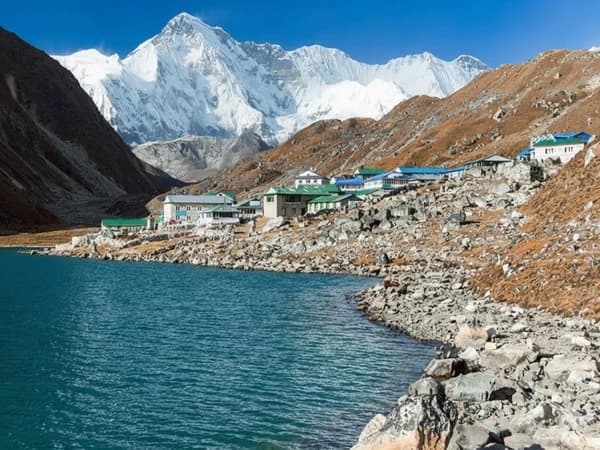
The Gokyo Valley sees fewer trekkers than the classic EBC route, which means fewer headlamps and less noise after dark. The turquoise lakes reflect starlight on calm nights. It is rare, and it is one of the most beautiful things the mountains offer.
Gokyo Ri (5,357m) is a popular sunrise viewpoint, but consider climbing it before dawn to watch the stars fade as the sun rises behind Everest. The transition from starfield to mountain panorama takes about forty-five minutes and it's hypnotic.
3. Annapurna Base Camp (4,130m)
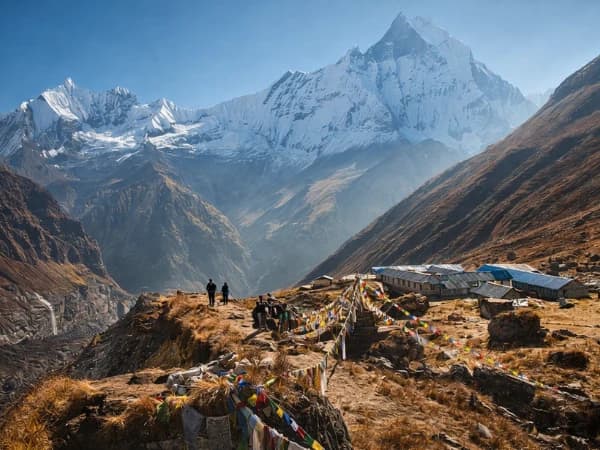
The Annapurna Base Camp sits inside a natural amphitheatre of peaks. Annapurna I, Annapurna South, Machhapuchhre, Hiunchuli. This means your sky view is a bowl of stars framed by dark mountain silhouettes. It's more intimate than the wide-open views on the Everest route. Different, not lesser.
The altitude is more manageable (4,130m vs 5,164m), so you'll be more comfortable, sleep better, and actually enjoy sitting outside at night rather than retreating to your sleeping bag after three minutes.
4. Rara Lake (2,990m)
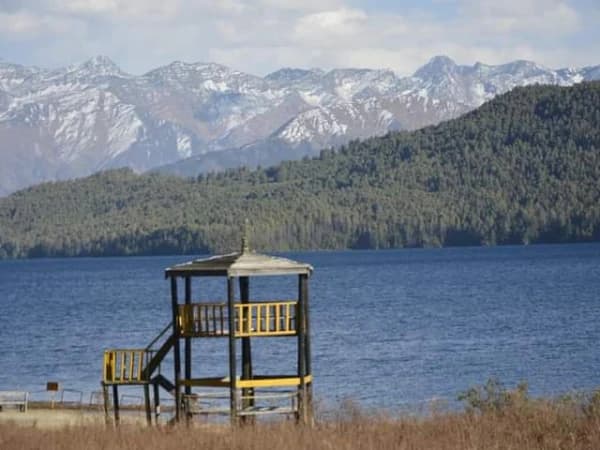
Nepal's largest lake, tucked into the far northwest of the country. Rara is one of the least-visited trekking destinations in Nepal, and that isolation is exactly what makes it remarkable for stargazing. Zero light pollution. Zero crowds. The lake surface acts as a dark mirror for the sky. Lower altitude means warmer nights and more comfortable viewing sessions.
The downside: getting there requires a flight to Jumla or Nepalgunj plus additional travel. It's logistically harder. But if dark skies are your primary goal, Rara might be the single best option in Nepal.
5. Upper Mustang (3,800-4,000m)
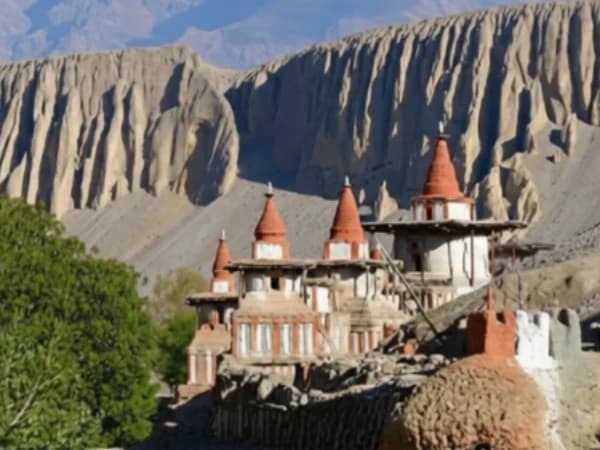
The former kingdom of Lo sits in the rain shadow north of the Annapurna-Dhaulagiri massif. This means fewer clouds, drier air, and exceptionally clear skies even during months when the rest of Nepal is socked in with monsoon weather. Upper Mustang offers stargazing possibilities in July and August when everywhere else in Nepal is cloudy.
The landscape is Tibetan: arid, dramatic, almost Martian. Stars above red cliffs and ancient cave monasteries. It feels like another planet.
What are the best months for stargazing in Nepal?
| Month | Sky Clarity | Temperature | Milky Way Visibility | Verdict |
|---|---|---|---|---|
| October | Excellent | Cold but tolerable | Evening core visible | Best overall |
| November | Excellent | Cold | Core setting early | Excellent |
| December | Excellent | Very cold | Core below horizon | Great for winter constellations |
| January | Very good | Extreme cold at altitude | Core rises pre-dawn | Good if you handle cold well |
| February | Very good | Cold | Core visible pre-dawn | Good. Warming up slightly. |
| March-April | Good but hazy | Mild | Core rising earlier | Haze can reduce transparency |
| May | Deteriorating | Warm | Core well-positioned | Pre-monsoon clouds building |
| June-September | Poor (monsoon) | Warm | Best core position, worst weather | Skip (except Upper Mustang) |
October and November are the sweet spot. Clear post-monsoon air that's been washed clean by months of rain, reasonable temperatures, and the Milky Way core still visible in the evening sky. If I could only pick one month, I'd pick October.
What camera settings work for trail astrophotography?
I'm not a professional photographer. But our guides watch trekkers haul camera gear up to Everest Base Camp every season, and they know what works and what doesn't.
Gear That's Worth the Weight
- Camera: Any modern mirrorless or DSLR with manual mode. Full-frame sensors are better for low light, but APS-C cameras work well too. Even modern smartphones (iPhone 15 Pro/16, Samsung S24/S25 Ultra) have decent night modes, though they can't match a real camera.
- Lens: Fast, wide-angle prime. A 14mm f/2.8 or 20mm f/1.8 is ideal. The wider the aperture (lower f-number), the more light you gather. Zoom lenses are usually too slow (f/4 or worse).
- Tripod: Non-negotiable. A lightweight travel tripod (carbon fibre, under 1.5kg) is essential. You cannot hand-hold astrophotography exposures.
- Spare batteries: Cold kills batteries. At -15°C, a battery that lasts 2 hours at room temperature lasts 30 minutes. Bring three. Sleep with them in your sleeping bag.
- Headlamp with red mode: White light ruins your night vision (which takes 20-30 minutes to fully develop). A red headlamp preserves it.
Basic Camera Settings for Milky Way Shots
- Manual mode
- ISO: 3200-6400 (start at 3200, increase if needed)
- Aperture: As wide as your lens allows (f/1.8, f/2.0, f/2.8)
- Shutter speed: Use the "500 rule", divide 500 by your focal length to get max seconds before stars trail. So a 20mm lens: 500/20 = 25 seconds. A 14mm lens: 500/14 = 35 seconds.
- Focus: Manual focus to infinity. Use live view zoomed in on a bright star to nail focus precisely. Autofocus doesn't work in the dark.
- White balance: Around 3800-4200K (cooler tones suit night skies)
- Shoot RAW, not JPEG, because you'll want the editing latitude
The Challenges Nobody Mentions
Your hands. Operating a camera at -15°C with thick gloves is nearly impossible. Thin liner gloves help, but your fingers will still go numb within minutes. Work fast. Know your camera controls by feel.
Condensation. Bringing a cold camera into a warm teahouse causes instant condensation on the lens and sensor. Put the camera in a sealed plastic bag before going inside. Let it warm up slowly. This takes an hour. Be patient or you'll fog your optics.
Fatigue. You've been trekking all day at altitude. You're exhausted. Your alarm goes off at 2am for "the best Milky Way window." Getting out of a warm sleeping bag into -20°C air to set up a tripod requires genuine motivation. Most people do it once. Some do it every night. Know which type you are.
Weight. Camera body, fast lens, tripod, and batteries add 2-3kg to your pack. On a trek where every gram matters, this is significant. Decide before you go whether astrophotography is a "nice if it happens" or a genuine priority, and pack accordingly.
Which Nepal treks are best for stargazing?
Every trek we run passes through potential stargazing spots. But some routes are better than others.
Best for Stargazing
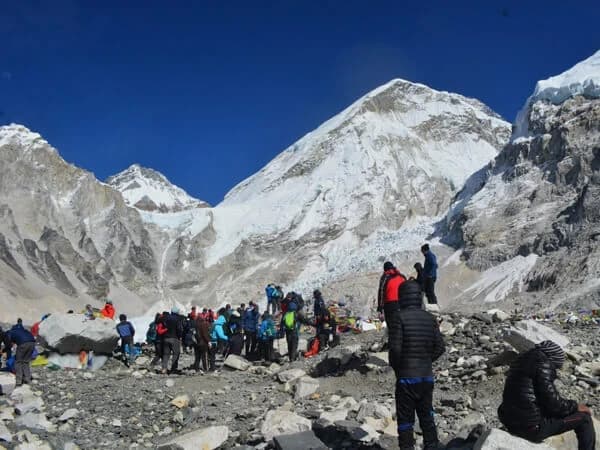
Everest Base Camp Trek (12 days): Three exceptional stargazing nights. Dingboche (4,410m), Lobuche (4,940m), and Gorak Shep (5,164m). Each progressively higher, darker, and colder. The final night at Gorak Shep, if clear, will stay with you for the rest of your life.
Gokyo Valley Trek: Two nights at Gokyo (4,790m) with turquoise lakes below and the Milky Way above. Less crowded than EBC. The lake reflections on a still night are extraordinary.
Rara Lake Trek (10 days): Lower altitude means warmer nights and longer comfortable viewing sessions. The lake reflection is the unique draw here. Nepal's most remote major trekking destination.
Good for Stargazing
Annapurna Base Camp Trek: One exceptional night at ABC (4,130m) inside the mountain amphitheatre. The bowl shape limits horizon views but creates an incredible framed effect.
Upper Mustang Trek: Dry conditions mean clearer skies even in marginal months. Multiple nights above 3,500m. The ancient cave monasteries by starlight are hauntingly beautiful.
How do you plan a stargazing trek in Nepal?
If dark skies are genuinely your priority (not just a bonus, but the reason you're coming), here's what I'd suggest:
- Choose October or November. Non-negotiable for best conditions.
- Pick a route with multiple high-altitude nights. The EBC trek gives you three nights above 4,400m. That's three chances for clear skies.
- Schedule rest days strategically. If your itinerary includes an acclimatisation day (and it should), use that night for stargazing. You're rested, adjusted to the altitude, and not getting up at 5am the next day.
- Check moon phases. A full moon drowns out the Milky Way. Plan your highest-altitude nights around new moon if possible. The difference is dramatic.
- Tell us stargazing matters to you. We can adjust the itinerary, adding an extra night at altitude, timing rest days around new moon, ensuring your guide knows to wake you if skies clear at 2am. This costs nothing extra. We just need to know.
A Note on Astrotourism's Future in Nepal
This is going to grow. The International Dark-Sky Association has been recognising dark sky reserves and sanctuaries worldwide, and Nepal's high-altitude national parks are strong candidates. As light pollution increases globally, places with naturally dark skies become more valuable, not less.
We're already seeing early interest from dedicated astrotourism groups: amateur astronomy clubs, astrophotography tours, dark-sky enthusiasts who currently travel to Namibia, Chile, or the Canary Islands. Nepal offers something none of those places do: the combination of dark skies at extreme altitude with a well-established trekking infrastructure that makes getting there relatively straightforward.
I don't think stargazing will ever overtake mountain views as Nepal's primary draw. But I do think it'll become a significant secondary motivation for trekkers who already want to come here, and a primary draw for a small but growing community of sky enthusiasts who haven't yet considered Nepal.
We're ready for them.
Want to plan a stargazing trek in Nepal?
WhatsApp: +977 9810351300
Email: [email protected]
About the Author: Shreejan Simkhada is the CEO of The Everest Holiday and a third-generation Himalayan guide, registered with TAAN (Trekking Agencies' Association of Nepal, Member #1586). He first saw the Milky Way properly at age seventeen on the trail to Everest Base Camp and has been slightly obsessed with Nepal's night sky ever since. He runs trekking operations from Kathmandu and has personally guided treks across every major route in the Nepali Himalayas.
Stargazing on EBC trek is a guaranteed bonus. Our Everest Base Camp Trek (12 Days) is private (your group only, no strangers), 2027 dates open, From USD $1399. WhatsApp us for tailored 2027 dates and current departures.
Planning a trip to Nepal?
Drop us your details and tell us what you have in mind. We will put together a personalised plan and get back to you.
Not sure which Nepal trek is right for you?
Take our free 2-minute quiz and get personalised recommendations based on your fitness, experience, and travel style.
Find Your Perfect Trek →Need Help? Call Us+977 9810351300orChat with us on WhatsApp
Related Trek Packages
 US$1,290
10 DaysMax 20
 US$2,290
10 DaysMax 20
Rara Lake Trek - 10 Days: Explore Nepal's Largest Lake
Starts From
ExploreUS$2,290
Latest Travel Blogs
Christmas and New Year Treks from Pokhara 2026/27: 3 to 5 Days
<p>Short treks from Pokhara for Christmas and New Year 2026/27: Panchase 3 days, Poon Hill 4 days and Mardi Himal 5 days. Weather, snow, what is open, and prices by group size.</p>
Read More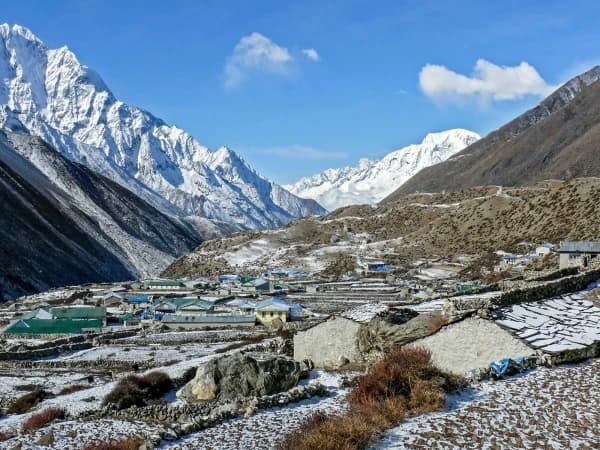
Thamdanda and Surke: The Road Head for Everest Base Camp by Road
Thamdanda is the road head where our Everest Base Camp trek by road starts and ends on foot. How to get there from Phaplu and what the first walk to Paiya is like.
Read MorePoon Hill Trek Permits 2027: ACAP, TIMS, Cost and What You Need
Poon Hill needs two permits: ACAP at NPR 3,000 and a TIMS card at NPR 2,000. Who arranges them, where they are checked, SAARC rates and the 2027 trek prices.
Read More Chat with Shreejan