Stop rushing through Nepal. Slow travel guide to immersive Himalayan experiences: living with locals, walking instead of flying, 2-4 week itineraries.
Govt Regd. No.: 147653/072/073
Travel Agency Licence: 2838/072
Slow Travel in Nepal: Why Rushing Through the Himalayas Misses the Point

Short answer: Slow travel in Nepal means seeing fewer places for longer. With ten days, choose the Kathmandu Valley and one trek, not five destinations, and you will come home having met people rather than just photographed places. Villages, homestays and quieter trails reward the extra time. A good slow trek is our Tamang Heritage Trail trek.
Slow Travel in Nepal: Why Rushing Through the Himalayas Misses the Point
By Shreejan Simkhada | April 2026
A few years ago, I met a couple from Berlin at Kathmandu airport. They had ten days. They wanted to see Kathmandu, Pokhara, Chitwan, Lumbini, Everest Base Camp, and "maybe Annapurna if there's time." I asked them how long they'd spent planning their trip to Nepal. "Six months," they said.
Six months planning. Ten days executing. Five destinations. And they would leave Nepal having photographed everything and experienced almost nothing.
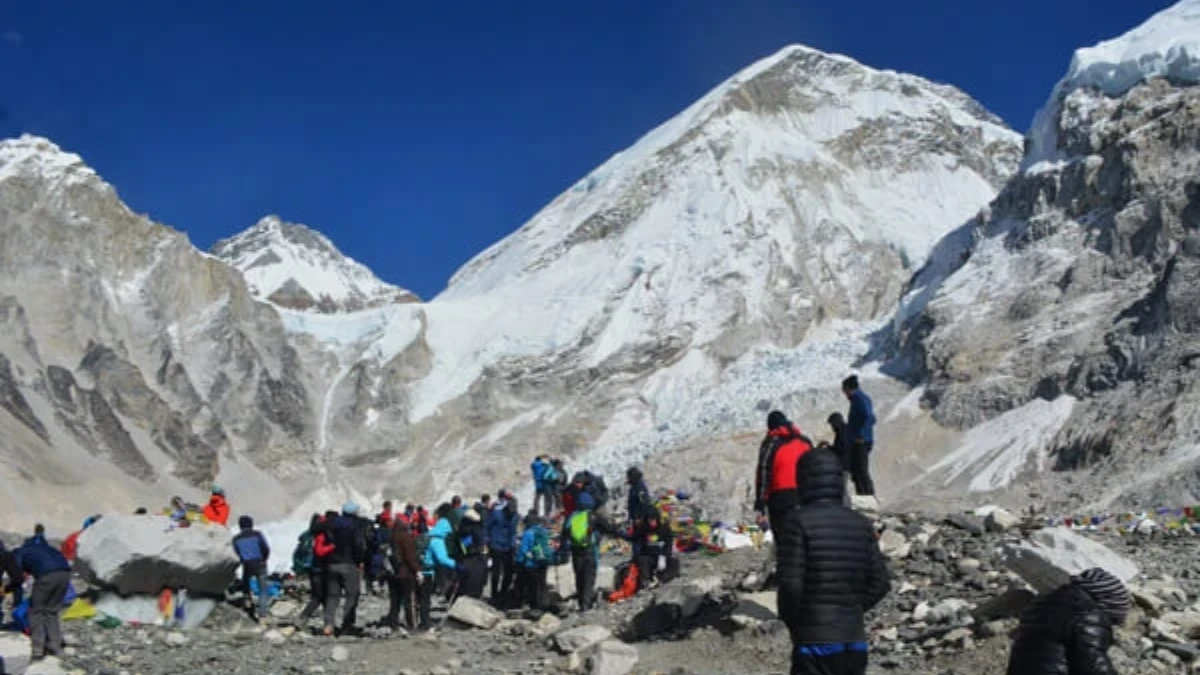
I talked them out of it. We redesigned their trip: seven days in the Kathmandu Valley and seven days on the Tamang Heritage Trail. Fourteen days total. Two areas instead of five. They later told me it was the best holiday of their lives.
I'm Shreejan Simkhada, CEO of The Everest Holiday. I've been running treks and tours in Nepal since 2016, and my family has been in the Himalayan tourism business for three generations. Over those decades, I've noticed something: the travellers who remember Nepal most vividly are never the ones who saw the most. They're the ones who stayed the longest in the fewest places.
This is what slow travel means in Nepal. Not laziness. Not wasting time. The opposite: spending time so carefully that nothing is wasted.
Why is the standard Nepal itinerary too rushed?
Most tourists visit Nepal for 7-12 days. In that time, a typical itinerary looks like this: one day in Kathmandu (Durbar Square, Boudhanath, Swayambhunath), fly to Pokhara (one day boating and paragliding), fly to Lukla (seven days trekking to Everest Base Camp), fly back, depart.
That itinerary hits all the big names. It fills an Instagram grid beautifully. And it misses roughly 95% of what makes Nepal extraordinary.
Here's what gets left out when you rush:
-
The afternoon light in Bhaktapur when the tour buses have left and the potters are working alone in the square
-
The taste of sel roti (rice doughnuts) made fresh at a farmhouse kitchen during a festival
-
The conversation with a Tamang grandmother who remembers the 2015 earthquake and shows you where her old house stood
-
The sound of a monastery at dawn, when there are no other tourists and the chanting fills the entire valley
-
The friendship with your guide that only develops after Day 5, when you stop being a client and start being a companion
These aren't minor details. They're the entire point of travel. You can't schedule them into a 10-day sprint.
What does slow travel actually mean in Nepal?
Slow travel isn't a specific itinerary. It's a philosophy. Here's what it looks like in practice.
Stay longer in fewer places
Instead of one night in Bhaktapur, spend three. On Day 1, you'll visit the famous squares and temples like every tourist. On Day 2, you'll discover the side streets, the local tea shops, the woodcarving workshops where artisans have been doing the same work for generations. On Day 3, you'll sit in a rooftop cafe watching daily life unfold below you, and a local will sit down beside you and tell you about his daughter's school, his brother in Qatar, his plans for Dashain festival.
That conversation on Day 3 is worth more than every photograph you took on Day 1.
Walk instead of fly
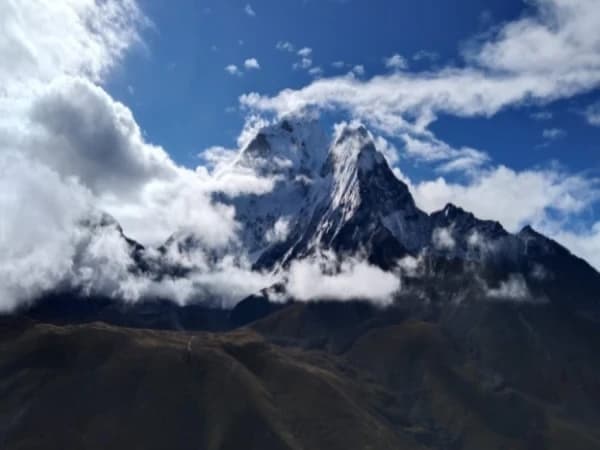
Most Everest trekkers fly to Lukla. It's quick and dramatic. But the original route to Everest starts in Jiri, a hill town about 180 kilometres east of Kathmandu. Our Jiri to Everest Base Camp Trek follows the route that Edmund Hillary and Tenzing Norgay walked in 1953. It takes about 20-22 days instead of 12.
Those extra days aren't filler. They're the most authentic part of the trek. The Jiri route passes through Sherpa, Rai, and Tamang villages that almost no tourists visit anymore. You walk through terraced rice paddies. You cross suspension bridges over rivers so blue they look artificial. You eat in homes, not tourist teahouses. You arrive in Namche Bazaar having earned it, not having been dropped off by a Twin Otter.
The Jiri route is also significantly cheaper than flying to Lukla, because you're not paying for the most expensive short-haul flight in Nepal.
Eat where locals eat
In Kathmandu's tourist district of Thamel, you'll find pizza, burgers, sushi, and "authentic" Nepali food served in restaurants decorated for foreigners. It's fine. It won't teach you anything about Nepal.
Walk fifteen minutes outside Thamel and you'll find local bhojanalaya, simple canteen-style restaurants where office workers and taxi drivers eat. A plate of dal bhat with three vegetable sides, pickle, and unlimited refills costs 150-250 rupees (about $1-2). The food is fresher, the portions are larger, and the trip is real.
In Pokhara, skip Lakeside's tourist restaurants and cross to the other side of Seti Gorge. In Bhaktapur, eat at the juju dhau (king curd) shops near Nyatapola Temple. On trek, ask your guide where the porters eat: it's always better and cheaper than the tourist menu.
One honest note: tourist restaurants have English menus and filtered water. Local places often don't. Your guide can translate, and you should stick to cooked food and bottled or purified water regardless of where you eat. Slow travel doesn't mean reckless travel.
Learn basic Nepali
You don't need fluency. You need ten phrases. And those ten phrases will change every interaction you have in Nepal.
Namaste (hello): you probably know this one, but saying it first, before the other person, with your hands together, transforms how Nepali people see you. You go from tourist to guest.
Dhanyabad (thank you)
Mitho chha (it's delicious): say this after every meal and watch the cook's face light up
Tapai ko naam ke ho? (what is your name?)
Mero naam ... ho (my name is ...)
Kati ho? (how much?)
Ramro (beautiful/good)
Bistari (slowly): useful on trek when your guide is setting too fast a pace
Pheri bhetaula (see you again)
Hajur (respectful yes/pardon)
Your pronunciation will be terrible. Nobody will care. The effort itself is what matters. I've watched a single "mitho chha" at dinner transform a distant teahouse host into a friend who gives you the best room and an extra blanket.
What is the Tamang Heritage Trail trek like?
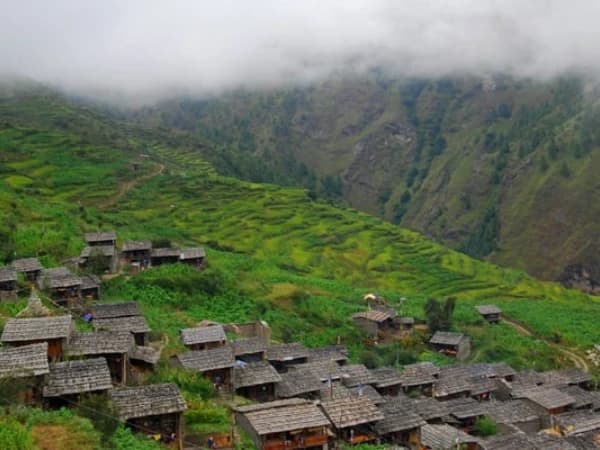
If I had to choose one trek that embodies slow travel, it would be our Tamang Heritage Trail Trek. It's in the Langtang region, north of Kathmandu, and it's everything that popular treks are not.
No crowds. No tourist-oriented teahouses. No souvenir shops. Instead, you walk through Tamang villages where families offer their spare room and cook you dinner. You sit in kitchens around wood-burning stoves while children do homework by candlelight. You visit gompa (monasteries) where the lama knows every villager by name.
The altitude is moderate (max around 3,700m), the walking is gentle by Nepal standards, and the cultural immersion is total. You're not observing Tamang culture from behind a camera. You're participating in it.
The trail was specifically designed to bring income to villages that were bypassed by the more popular Langtang Valley route. By walking it, you're directly supporting families who have few other sources of cash income. This isn't charity tourism: it's the economy of attention. You give your time and your money, and you receive something no luxury hotel can sell: genuine human connection.
Are homestays better than tourist hotels in Nepal?
Nepal's homestay network has grown enormously in the last decade. On many routes, you can choose between a tourist-standard teahouse (private room, Western toilet, English menu) and a family homestay (shared meal with the family, sleeping in a spare room, squat toilet, Nepali food only).
The teahouse is more comfortable. The homestay is more memorable. Both are valid choices, and there's no prize for suffering.
But if you've come to Nepal looking for something you can't get anywhere else, the homestay is where you'll find it. I've had guests tell me that dinner with a Sherpa family in their kitchen, eating dal bhat while their children laughed at our attempts to use our hands instead of cutlery, was the single most meaningful meal of their lives.
Practically speaking, homestays cost less (typically $10-20 per person including dinner and breakfast), hygiene is variable (bring hand sanitiser and lower your expectations about hot water), and the trip is entirely dependent on your willingness to participate. If you sit quietly in the corner waiting to be served, you'll have an awkward night. If you help prepare the vegetables, play with the children, and attempt conversation in broken Nepali, you'll have a memorable one.
How many days should you spend in Bhaktapur?
Most Kathmandu itineraries give Bhaktapur a half-day. You arrive by car, walk through Durbar Square, photograph the Nyatapola Temple, buy a pot, eat juju dhau, and leave. It's fine. You've seen Bhaktapur.
But you haven't lived in Bhaktapur. And living there, even for three days, is an entirely different experience.
Stay in a traditional guesthouse inside the old city. The car-free streets at dawn are extraordinary. Farmers bring fresh vegetables to the markets. Potters carry clay on their heads. Old men sit on temple platforms playing cards. Women dry grain on woven mats in the square. The city wakes up slowly, and if you're there with a cup of tea and nowhere to rush to, you become part of the rhythm.
By Day 2, the shopkeepers recognise you. They stop trying to sell you things and start asking where you're from. By Day 3, someone invites you to their roof to watch the sunset over the valley. This is what travel used to be before flights got cheap and itineraries got optimised.
Bhaktapur charges a one-time entrance fee of 1,500 rupees (about $11) for foreigners. That ticket is valid for as long as you stay: another day, another week, doesn't matter. The longer you stay, the better the value.
Volunteering at the Nagarjun Learning Center
Our family founded the Nagarjun Learning Center in 2019 to provide free education to children in remote Nepal. The flagship centre is in Saldum Village, Dhading District, where 70 children receive daily education and hot meals.
Slow travellers sometimes ask if they can volunteer there. The answer is yes, with conditions. We don't accept drop-in volunteers for a day or two: that's disruptive for the children and not useful for anyone. But if you can commit at least a week, we'll arrange for you to assist with English classes, help with maintenance projects, or support the health assistant with basic tasks.
The village is remote (accessible only on foot), facilities are basic, and the work is real. This isn't a photo opportunity. It's actual community participation. If that appeals to you, contact me directly and we'll discuss it honestly, including whether your skills match what the centre actually needs.
Which festivals should you experience in Nepal?
Nepal has more festivals per calendar year than almost any country on earth. If you're travelling slowly, you'll inevitably encounter one. And attending a Nepali festival as a participant rather than a spectator is one of travel's great privileges.
Some worth planning around:
Dashain (October): Nepal's biggest festival. Fifteen days of celebration. Families reunite from across the country. Swing sets are built in villages. Tika (red powder blessing) is given by elders. If your trekking guide invites you to his family's Dashain celebration, say yes. It's an extraordinary honour.
Tihar (October-November): The festival of lights. Dogs are honoured on one day (garlanded, fed special food). Crows on another. Houses are decorated with oil lamps and marigolds. On Bhai Tika day, sisters bless their brothers. If you're on trek during Tihar, teahouses will be decorated and the atmosphere is magical.
Holi (March): The colour festival. You will get covered in coloured powder and water. It's joyous, chaotic, and the one day of the year when every barrier between locals and tourists disappears completely. Wear clothes you don't mind destroying.
Indra Jatra (September): Kathmandu's biggest street festival. The living goddess Kumari is paraded through the city. Masked dancers perform in Durbar Square. It's ancient and extraordinary, and most tourists miss it because they're on trek.
Slow travel means having the time to wait for these moments instead of hoping one happens to fall during your 10-day window.
The Buddhist Circuit: Nepal's Hidden Slow Travel Route
Most travellers associate Buddhism with Boudhanath Stupa in Kathmandu and move on. But Nepal has a complete Buddhist pilgrimage circuit that takes you from Lumbini (Buddha's birthplace) through ancient monasteries, meditation centres, and stupas across the country. Our Nepal Buddhist Circuit Tour covers this route, and it's one of the most peaceful ways to discover Nepal.
This isn't a trek. It's a cultural journey. You travel by road between sites, staying in monastery guesthouses and local hotels. The pace is deliberately gentle. You spend mornings at temples and afternoons exploring the surrounding countryside. If you're interested in meditation, several centres along the route offer daily sessions for visitors.
Lumbini itself deserves at least two full days, not the half-day that most tours allocate. The Peace Park contains monasteries built by Buddhist nations from around the world, each in their own architectural style. Walking through them is like walking through a dozen countries in a single afternoon.
Is slow travel in Nepal cheaper than a rushed trip?
Here's something counterintuitive: spending more time in Nepal costs less per day than rushing through it.
The expensive parts of Nepal travel are flights (internal flights cost $100-300 each), tourist-area hotels ($50-150 per night), and organised tours with transport ($100-300 per day). When you rush, you need all three constantly.
When you travel slowly, you replace internal flights with local buses ($5-15). You replace tourist hotels with guesthouses and homestays ($10-30). You replace organised tours with walking and self-guided exploration (free). You eat at local restaurants ($1-3 per meal) instead of tourist restaurants ($5-15).
| Item | Fast Travel (10 days) | Slow Travel (21 days) |
|---|---|---|
| Accommodation | $800-1,200 | $400-700 |
| Food | $300-500 | $250-450 |
| Internal transport | $400-700 | $100-200 |
| Activities/entry fees | $200-300 | $150-250 |
| Guided trek (EBC 12 days or Poon Hill 6 days) | $1,399 | $599 |
| Total (excluding international flights) | $2,833-3,833 | $1,499-2,199 |
| Cost per day | $283-383 | $71-105 |
Twenty-one days of slow travel costs less than ten days of fast travel. You see fewer famous things and experience more real ones. The maths works. The memories work better.
How Long Do You Actually Need?
For a meaningful slow travel in Nepal, I'd recommend a minimum of two weeks and ideally three to four weeks. Here's how that time might break down:
2 weeks (minimum slow travel): 4 days Kathmandu Valley (including Bhaktapur and Patan) + 8-10 days on one trek (Tamang Heritage Trail or Poon Hill at gentle pace)
3 weeks (comfortable slow travel): 5 days Kathmandu Valley + 10 days trekking + 4 days Pokhara or Bandipur + 2 days travel
4 weeks (full immersion): 5 days Kathmandu Valley + 14-16 days trekking (Jiri to EBC or extended Annapurna) + 4 days Chitwan/Lumbini + 3 days Pokhara + travel days
Our Kathmandu-Bandipur-Pokhara-Chitwan Tour can be done at a slow pace by adding extra nights at each stop. Instead of one night in Bandipur, stay three. Instead of rushing through Chitwan in two days, linger for four.
The Slow Travel Mindset
The hardest part of slow travel isn't logistics. It's psychology. We've been trained to equate value with quantity. More sights. More photos. More countries. More stamps in the passport.
Slow travel asks you to measure value differently. Not how much you saw, but how deeply you understood it. Not how many places you visited, but how many people you connected with. Not how far you walked, but how present you were while walking.
Nepal rewards this approach more than almost any country I know. It's not a place that reveals itself quickly. The mountains are obvious. The temples are photogenic. But the things that make Nepal genuinely special (the generosity, the resilience, the quiet faith, the absurd sense of humour, the way a stranger becomes a friend over a cup of tea) only emerge when you slow down enough to notice them.
Take your time. Nepal isn't going anywhere. And neither, for the next few weeks, should you be.
Got questions about planning a longer Nepal trip? I answer every message personally.
WhatsApp: +977 9810351300
Email: [email protected]
Shreejan Simkhada is the CEO of The Everest Holiday and a third-generation Himalayan guide. TAAN Member #1586.
Slow travel Nepal means private departures only. Our Everest Base Camp Trek (12 Days) is private (your group only, no strangers), 2027 dates open, From USD $1399. WhatsApp us for tailored 2027 dates and current departures.
Planning a trip to Nepal?
Drop us your details and tell us what you have in mind. We will put together a personalised plan and get back to you.
Not sure which Nepal trek is right for you?
Take our free 2-minute quiz and get personalised recommendations based on your fitness, experience, and travel style.
Find Your Perfect Trek →Need Help? Call Us+977 9810351300orChat with us on WhatsApp
Related Trek Packages
 US$1,599
18 DaysMax 20
(1 review)
Historical Jiri to Everest Base Camp Trek - 18 Days Itinerary & Cost
Starts From
ExploreUS$1,599
Tamang Heritage Trail - 12 Days
Starts From
ExploreUS$1,020
Latest Travel Blogs
Christmas and New Year Treks from Pokhara 2026/27: 3 to 5 Days
<p>Short treks from Pokhara for Christmas and New Year 2026/27: Panchase 3 days, Poon Hill 4 days and Mardi Himal 5 days. Weather, snow, what is open, and prices by group size.</p>
Read More
Thamdanda and Surke: The Road Head for Everest Base Camp by Road
Thamdanda is the road head where our Everest Base Camp trek by road starts and ends on foot. How to get there from Phaplu and what the first walk to Paiya is like.
Read MorePoon Hill Trek Permits 2027: ACAP, TIMS, Cost and What You Need
Poon Hill needs two permits: ACAP at NPR 3,000 and a TIMS card at NPR 2,000. Who arranges them, where they are checked, SAARC rates and the 2027 trek prices.
Read More Chat with Shreejan