
Above 3,500m, most trekkers lie awake gasping. It's normal but terrifying. Here's the science, the fixes, and what your guide won't tell you about altitude insomnia.
Govt Regd. No.: 147653/072/073
Travel Agency Licence: 2838/072
Sleeping at Altitude: Why You Can't Sleep and What Actually Helps

Sleeping at Altitude: Why You Can't Sleep and What Actually Helps
Short answer: You cannot sleep at altitude mainly because of periodic breathing, where your breathing pauses and starts in cycles and wakes you with a gasp. It is common above 3,500 m, it is normal, and it usually eases after a second night at the same height. What helps most is a rest day for acclimatisation, staying warm, avoiding alcohol and sleeping pills, and asking your doctor about Diamox before you travel.
It's 11 PM in a teahouse at 4,400 metres. You've been trekking for seven hours. Your legs are exhausted. Your body is screaming for sleep. You crawl into your sleeping bag, close your eyes, and... nothing. You're wide awake.
An hour passes. You drift off briefly, then jolt awake gasping for air. Your heart is pounding. You feel like you've forgotten how to breathe. You lie there staring at the wooden ceiling, listening to the wind rattle the tin roof, wondering if something is seriously wrong. Our 12-day Everest Base Camp trek builds in acclimatisation days for exactly this reason. Our 12-day Everest Base Camp trek builds in acclimatisation days for exactly this reason.
Nothing is wrong. What you're experiencing is altitude insomnia, and it affects a large share of trekkers above 3,500 metres. It's one of the most common and least discussed aspects of high-altitude trekking. People talk about the views, the physical challenge, the food. Nobody warns you about the nights.
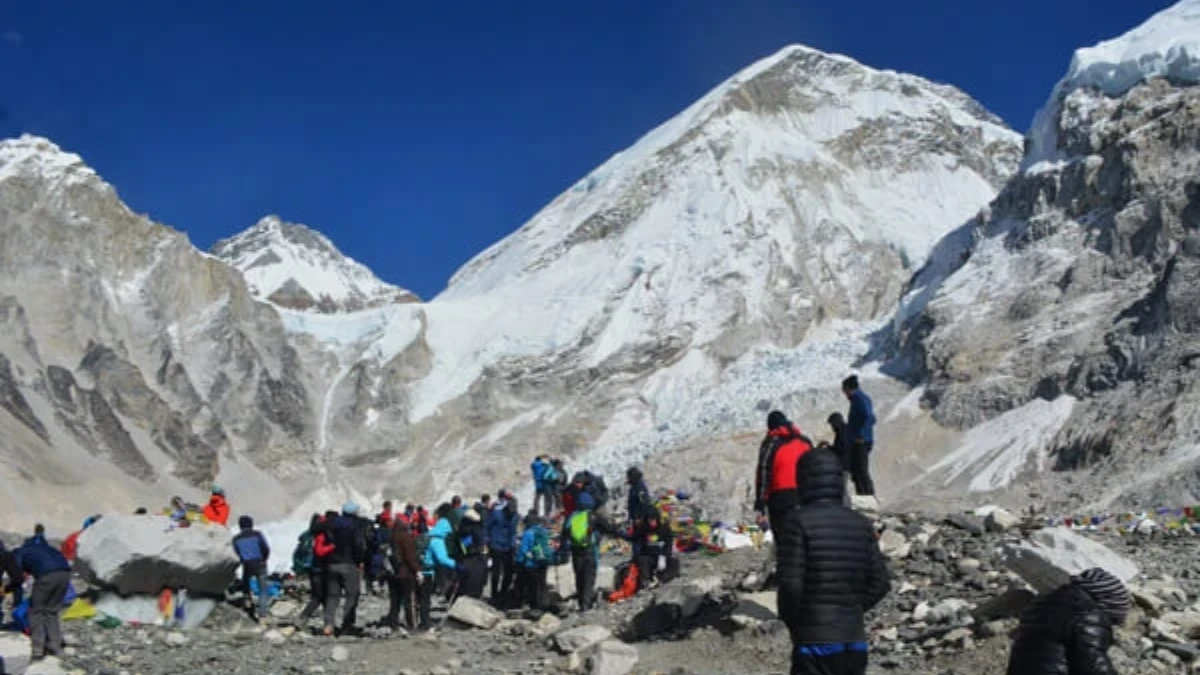
Disrupted sleep above 4,000 metres is normal, even for people who spend a lot of time at altitude. The difference is that once you understand what's happening, why it's happening, and what to do about it, the knowledge transforms the trip from terrifying to merely annoying.
The Science of Why You Can't Sleep
What Is Periodic Breathing at Altitude?
This is the big one. The main reason you can't sleep at altitude has a name: periodic breathing, also called Cheyne-Stokes respiration at altitude.
Here's what happens. At altitude, the lower oxygen levels trigger your brain to increase your breathing rate. This blows off more carbon dioxide (CO2). But CO2 is the primary trigger that tells your brain to breathe. So when CO2 drops too low, your brain temporarily stops telling you to breathe.
You stop breathing. For 5-15 seconds. Sometimes longer.
Then your blood oxygen drops enough to trigger an alarm response. Your brain panics and you gasp awake, taking several rapid deep breaths. CO2 drops again. Breathing pauses again. The cycle repeats.
This pattern (breathe, breathe, breathe, stop, gasp, breathe, breathe, breathe, stop) is periodic breathing. It's incredibly common above 3,500 metres. It is very common above 3,500 metres and close to universal at the height of Everest Base Camp.
It feels terrifying. Waking up gasping feels like suffocation. But it's your body's normal response to low-oxygen environments. The gasping is your backup system working perfectly. You're not suffocating. You're breathing differently.
How Does Altitude Change Your Sleep Architecture?
Even when you do sleep at altitude, the quality is different. Research shows that high altitude reduces the amount of deep sleep (slow-wave sleep) and REM sleep you get. You spend more time in lighter sleep stages. This means you wake more easily, dream less vividly, and feel less rested even after a full night.
Above 5,000 metres, a proper night's sleep becomes very difficult. This is one reason why extended stays at extreme altitude are so physically demanding: the body never fully recovers overnight.
Other Sleep Disruptors at Altitude
- Cold: Teahouses at 4,000+ metres are not heated overnight. Temperatures inside can drop below freezing. Cold feet, cold nose, and shivering all prevent deep sleep.
- Headache: Altitude-related headaches worsen when lying flat due to increased intracranial pressure. Many trekkers find their headache bearable during the day but worse at night.
- Need to urinate: Your body produces more urine at altitude (altitude diuresis). This means getting up 2-3 times per night to use the toilet, which at a teahouse usually means stumbling outside in the cold.
- Noise: Teahouse walls are thin. You'll hear every cough, every footstep, every windblast. Earplugs are essential.
- Anxiety: If you're lying awake worrying about whether your symptoms are normal, the stress itself prevents sleep. It's a vicious cycle.
What actually helps you sleep better at altitude?
I've spent years collecting practical advice from guides, trekkers, and mountain medicine specialists. Here's what genuinely works, ranked by effectiveness.
1. Proper Acclimatisation (Most Important)
Sleep quality improves dramatically after acclimatisation days. Your first night at a new altitude will almost always be worse than your second. This is why well-designed itineraries include rest days, not just for daytime acclimatisation, but to give your body a second night at the same altitude.
On our Everest Base Camp 12-day trek, the rest day in Namche Bazaar (3,440m) is partly about giving trekkers a second night at that altitude before ascending further. By the second night, most people sleep significantly better. The trek has a second rest day at Dingboche (4,410m). A good general rule above 3,000 metres is a rest day at the same altitude every 3 to 4 days.
2. Sleep Position
Sleeping with your head and chest slightly elevated reduces periodic breathing. Stack your clothes under the top end of your sleeping pad, or use your backpack as a pillow booster. A 15-20 degree elevation makes a measurable difference. Some trekkers find sleeping on their side helps too.
3. Breathing Techniques Before Sleep
Deliberate, slow breathing before attempting to sleep can help reset your respiratory pattern. Try this: breathe in for 4 counts, hold for 2 counts, breathe out for 6 counts. Repeat for 5-10 minutes. The extended exhale promotes relaxation and slightly raises CO2, which can reduce periodic breathing.
4. Diamox (Acetazolamide)
Here's what most guides won't tell you outright: Diamox significantly improves sleep at altitude. It's not just for preventing AMS; it directly reduces periodic breathing by acidifying the blood, which stimulates more consistent breathing.
Studies show that acetazolamide reduces periodic breathing and improves sleep at altitude. The usual preventive dose is 125mg twice a day, started the day before you go high, but your doctor sets the dose for you. It is not a substitute for ascending slowly.
Downsides: increased urination (you'll get up more often), tingling in fingers and toes, and altered taste of fizzy drinks. Requires a prescription. Discuss with your doctor before your trek. This page is general information, not medical advice.
5. Stay Warm
Cold is a sleep killer at altitude. Practical strategies:
- Boil water and fill a Nalgene bottle to put in your sleeping bag. This is the single best teahouse trick. Warm feet change everything.
- Wear a hat and warm socks to bed. You lose enormous heat through your head and feet.
- Use a sleeping bag rated for the temperatures you'll encounter (typically -10°C to -20°C for high-altitude treks).
- Layer a silk liner inside your sleeping bag for extra warmth.
- Don't sleep in your trekking clothes. Change into dry base layers. Sweat-damp clothing gets cold fast.
6. Earplugs and Eye Mask
Simple but effective. Teahouse noise is unavoidable. Foam earplugs block the worst of it. An eye mask helps if moonlight or early dawn light enters through gaps in the windows.
7. Limit Caffeine After Noon
This sounds obvious, but at altitude where you're already wired from the physiological stress response, afternoon tea or coffee can tip you into full insomnia. Switch to herbal tea after midday. Ginger-lemon-honey tea is a teahouse staple and won't keep you awake.
8. Evening Walk
A short, gentle walk after dinner helps regulate your breathing and can reduce the intensity of periodic breathing at bedtime. Just 15-20 minutes, nothing strenuous. Some trekkers find that a few minutes of slow yoga stretching in the teahouse common room serves the same purpose.
What Doesn't Work (Despite Popular Advice)
- Alcohol: Many trekkers drink beer or raksi (local spirits) hoping it will help them sleep. It doesn't. Alcohol disrupts sleep architecture, worsens dehydration, and actually increases periodic breathing. Avoid it above 3,000 metres.
- Sleeping pills: Standard sleeping pills (benzodiazepines like Valium, or Z-drugs like Ambien) are dangerous at altitude. They suppress the respiratory drive, which at altitude, where your breathing is already compromised, can be genuinely hazardous. Do not take them unless specifically prescribed by a mountain medicine specialist.
- Melatonin: Mixed evidence. Some trekkers report mild benefit. Others notice nothing. It doesn't address the core issue of periodic breathing. It's safe to try but don't expect much.
- Exhausting yourself during the day: Counterintuitively, being more physically tired doesn't improve sleep at altitude. It can actually worsen symptoms because your body is more oxygen-depleted and your breathing pattern more disrupted.
How well will I sleep each night on the EBC trek?
Let me walk through what sleep typically looks like on the Everest Base Camp trek, because this is our most popular route and the one clients ask about most.
| Night | Location | Altitude | Expected Sleep Quality |
|---|---|---|---|
| 1 | Phakding | 2,610m | Good. Mild awareness of altitude. |
| 2 | Namche Bazaar | 3,440m | Fair. Some periodic breathing may begin. Mild headache possible. |
| 3 | Namche (rest day) | 3,440m | Better than night 2. Body adjusting. |
| 4 | Tengboche | 3,860m | Disrupted. Periodic breathing likely. Cold. |
| 5 | Dingboche | 4,410m | Poor. Periodic breathing common. Frequent waking. |
| 6 | Dingboche (rest day) | 4,410m | Slightly better than night 5. |
| 7 | Lobuche | 4,940m | Difficult. Most trekkers sleep 3-5 hours in fragments. |
| 8 | Gorak Shep | 5,164m | The worst night. Cold, altitude effects peak. 2-4 hours typical. |
| 9-12 | Descending | Decreasing | Improves rapidly. By Namche, most sleep normally again. |
The pattern is clear: sleep gets harder as you go up and better as you come down. The Gorak Shep night is universally acknowledged as rough. But here's the good news: you only need to endure one or two really difficult nights. And knowing in advance that everyone struggles makes it easier to accept.
Which Nepal treks have the worst altitude sleep problems?
Not all treks are equally challenging for sleep. The maximum altitude and the number of nights spent above 4,000 metres make a significant difference.
The Annapurna Circuit has just 1-2 nights above 4,000 metres before the Thorong La pass crossing. Sleep disruption is concentrated in a shorter window. The Manaslu Circuit follows a similar pattern with the Larkya La pass.
The Everest Three Pass trek and Island Peak climbing expedition involve extended time above 4,500 metres, meaning more difficult nights overall. The Gokyo Lake trek reaches similar altitudes to EBC with slightly fewer high-altitude nights.
For treks with minimal sleep disruption, the Ghorepani Poon Hill trek stays below 3,210 metres, too low for significant periodic breathing. The Mardi Himal trek has perhaps one mildly disrupted night. The Langtang Valley trek has 1-2 nights where sleep may be affected.
The Annapurna Base Camp trek reaches 4,130 metres for one night, enough to notice periodic breathing but not enough to cause serious sleep issues for most people.
Remote high-altitude treks like the Upper Mustang trek and Kanchenjunga Base Camp trek both involve extended periods above 4,000 metres where sleep quality becomes a significant factor in overall trek experience.
Does anxiety make altitude insomnia worse on a trek?
Trekkers who know about altitude insomnia in advance handle it far better than those who encounter it unprepared. The gasping-awake experience is only frightening when you don't understand it. Once you know it's periodic breathing and it's harmless, the fear drops away. It's still uncomfortable, but the panic is gone.
I've started telling all my clients about altitude sleep before they arrive. Detailed, honest descriptions. Not to scare them, but to normalise it. When they discover their first episode of periodic breathing at Namche and think "ah, this is what Shreejan was talking about," they can smile (or at least grimace knowingly) instead of panicking.
What to Do During the Long Nights
Accept that you might not sleep well. This sounds defeatist but it's actually liberating. If you stop fighting insomnia and instead treat those wakeful hours as quiet rest time, the frustration drops significantly.
Practical suggestions for the long nights:
- Listen to audiobooks or podcasts (download before the trek; Wi-Fi above 4,000m is unreliable)
- Practise breathing exercises or body scan meditation
- Read a book by headlamp (a physical book, not your phone; screen light worsens sleep)
- Journal about the day's trekking
- Just rest with eyes closed, even if you're not sleeping. Your body still recovers from lying quietly.
When should I worry about not sleeping at altitude?
Altitude insomnia by itself is not a danger sign. But certain symptoms during the night should prompt you to wake your guide:
- Persistent wet cough: A dry cough at altitude is common. A wet, gurgling cough, especially if combined with breathlessness while lying flat, can indicate HAPE (high altitude pulmonary oedema). This requires immediate attention.
- Severe headache unresponsive to paracetamol: If you've taken paracetamol and drunk plenty of water and the headache is getting worse, not better, that's a sign your acclimatisation isn't keeping up.
- Confusion or disorientation: If you feel genuinely confused, not just groggy, this can indicate HACE (high altitude cerebral oedema). This is rare but serious.
- Rapid breathing at rest that doesn't slow: Different from periodic breathing, which comes in waves. Constant rapid breathing at rest suggests your body is struggling to oxygenate.
Our guides check oxygen saturation morning and evening with pulse oximeters. If your overnight sleep was particularly bad, we'll check you immediately. A resting SpO2 above 80% at 5,000 metres is generally acceptable. Below 75% at any altitude warrants close monitoring or descent.
Does sleep improve as you acclimatise to altitude?
Sleep improves as you acclimatise. The first night at a new altitude is almost always the worst. Rest days make a noticeable difference. And on the descent, sleep quality bounces back remarkably quickly. Most trekkers report sleeping like the dead once they drop below 3,000 metres on the way down.
Even on the worst nights, at Gorak Shep or Lobuche on the EBC trek, you'll manage a few hours. And then you wake up, step outside the teahouse, and see the Himalayan peaks turning pink in the dawn light. And the sleepless night stops mattering.
Every person who has completed a high-altitude trek in Nepal has survived the bad nights. Every single one. You will too.
Frequently Asked Questions
Is it normal to stop breathing while sleeping at altitude?
Yes. Periodic breathing (Cheyne-Stokes respiration) causes brief pauses in breathing followed by deeper breaths. This is a normal physiological response to reduced oxygen at altitude and affects the vast majority of people above 3,500 metres. The pauses typically last 5-15 seconds and are not dangerous, though they feel alarming when you wake during one. The condition improves with acclimatisation.
Can I take sleeping pills at altitude?
Standard sleeping pills (benzodiazepines and Z-drugs) are generally not recommended at altitude because they suppress the respiratory drive, which is already compromised. This can worsen oxygen saturation during sleep and potentially increase the risk of altitude illness. Acetazolamide (Diamox), which is primarily an altitude medication, has the beneficial side effect of improving sleep by reducing periodic breathing. Consult your doctor specifically about altitude sleep before your trek.
At what altitude does sleep become disrupted?
Most trekkers begin noticing sleep changes above 2,500-3,000 metres, with significant disruption common above 3,500 metres. Periodic breathing becomes prevalent above 4,000 metres. The severity increases with altitude, peaking at the highest point of your trek. Individual variation is significant, some people sleep reasonably well at 4,500 metres while others struggle at 3,500 metres.
Does altitude insomnia get better over time?
Yes. With acclimatisation, sleep quality improves at any given altitude. The first night is almost always the worst. After 2-3 nights at the same elevation, most trekkers experience meaningful improvement. People who live or work at high altitude long-term generally acclimatise fully and sleep normally, though this takes weeks to months rather than days.
What's the single best thing I can bring for sleeping at altitude?
A warm sleeping bag rated for the temperatures you'll encounter. Cold is the most avoidable sleep disruptor. Beyond that, good quality foam earplugs, a Nalgene bottle for hot water in your sleeping bag, and a discussion with your doctor about Diamox are the three most impactful preparations.
Sleep Well, Trek Well
Altitude insomnia is a reality of high-altitude trekking, but it shouldn't stop you from experiencing Nepal's mountains. Armed with the right knowledge, the right gear, and the right guide, you can manage it. Not eliminate it, nobody sleeps perfectly at 5,000 metres, but manage it so that the nights are tolerable and the days remain extraordinary.
If you have questions about altitude sleep, trek difficulty, or which itinerary best matches your comfort level, we're here.
WhatsApp: +977 9810351300
Email:[email protected]
Written by Shreejan Simkhada, third-generation Himalayan guide and founder of The Everest Holiday. Licensed trekking operator, TAAN member #1586. Years of high-altitude guiding. Still hasn't found a way to sleep well at Gorak Shep.
Sleeping well at altitude matters most on EBC. Our Everest Base Camp Trek (12 Days) is private (your group only, no strangers), 2027 dates open, From USD $1399. WhatsApp us for tailored 2027 dates and current departures.
Planning a trip to Nepal?
Drop us your details and tell us what you have in mind. We will put together a personalised plan and get back to you.
Not sure which Nepal trek is right for you?
Take our free 2-minute quiz and get personalised recommendations based on your fitness, experience, and travel style.
Find Your Perfect Trek →Need Help? Call Us+977 9810351300orChat with us on WhatsApp
Latest Travel Blogs
Christmas and New Year Treks from Pokhara 2026/27: 3 to 5 Days
<p>Short treks from Pokhara for Christmas and New Year 2026/27: Panchase 3 days, Poon Hill 4 days and Mardi Himal 5 days. Weather, snow, what is open, and prices by group size.</p>
Read More
Thamdanda and Surke: The Road Head for Everest Base Camp by Road
Thamdanda is the road head where our Everest Base Camp trek by road starts and ends on foot. How to get there from Phaplu and what the first walk to Paiya is like.
Read MorePoon Hill Trek Permits 2027: ACAP, TIMS, Cost and What You Need
Poon Hill needs two permits: ACAP at NPR 3,000 and a TIMS card at NPR 2,000. Who arranges them, where they are checked, SAARC rates and the 2027 trek prices.
Read More Chat with Shreejan