

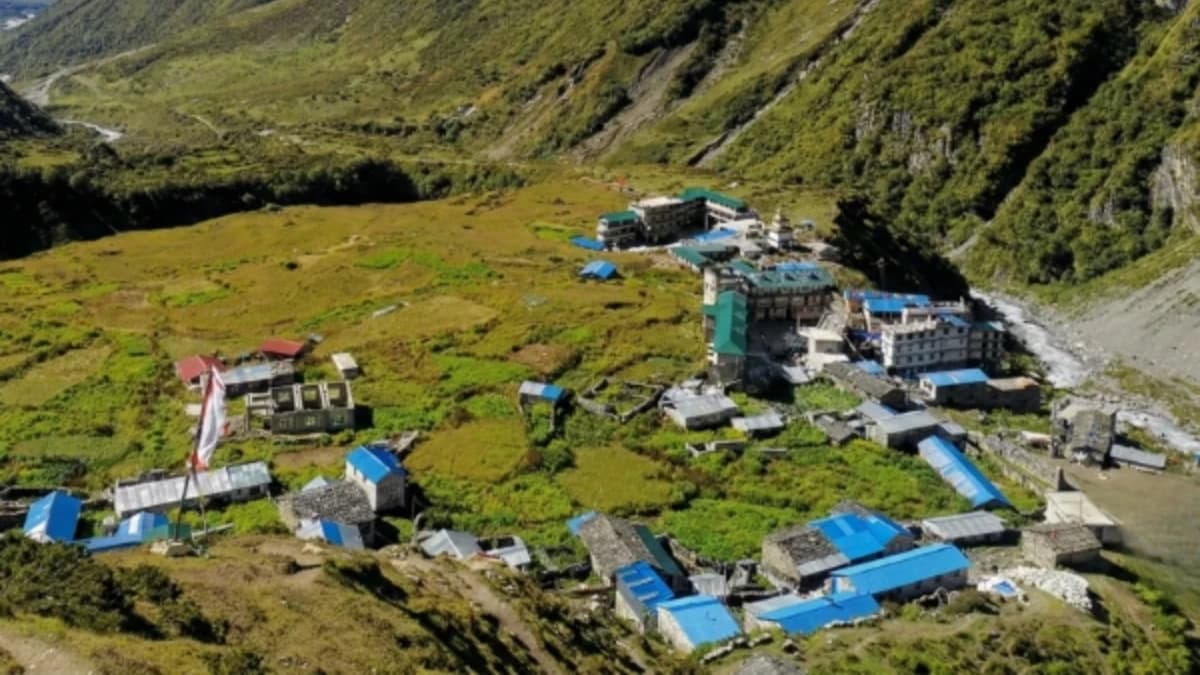
Beyond Samagaon, the Budhi Gandaki valley narrows and climbs into a landscape that is more Tibetan than Nepali. The trees thin. The grass turns brown. The wind, which has been a background presence since the valley broadened at Samagaon, becomes the dominant force, carrying the cold of the glaciers above with a constancy that makes every exposed surface ache. And at the end of a three-to-four-hour walk from Samagaon, on a shelf above the river at 3,860 metres, the last permanent settlement before the Larkya La appears: Samdo.
Samdo is where the Manaslu Circuit pauses. The village (approximately twenty houses and three teahouses) is the final inhabited point before the trail climbs to Dharamsala (Larkya Base Camp, 4,460 metres) and the Larkya La pass (5,160 metres) beyond. It is the place where trekkers eat their last proper meal before the high camp, check their gear for the last time, and sleep their last night at an altitude where sleep is still possible without the gasping, interrupted agony that 4,460 metres imposes.
But Samdo is more than a staging point. It is a village with its own character, its own culture, and its own specific beauty: a trans-Himalayan settlement where the landscape looks like Tibet, the people look like Tibetans, and the yak herds that graze the meadows above the village have been maintained by the same families for generations. Spending a night, or better, two nights, at Samdo reveals a community that the pass-focused trekker misses by treating the village as nothing more than the last stop before the climb.
What Is Samdo Village Like?
Samdo sits in a broad valley at the confluence of the Budhi Gandaki and a tributary stream that flows from the northwest, from the direction of the Larkya La and the glaciers above. The valley floor is flat meadow, grazed by yaks in summer, covered in frost in autumn, and buried in snow through the winter months when the village is accessible only to those who live there.
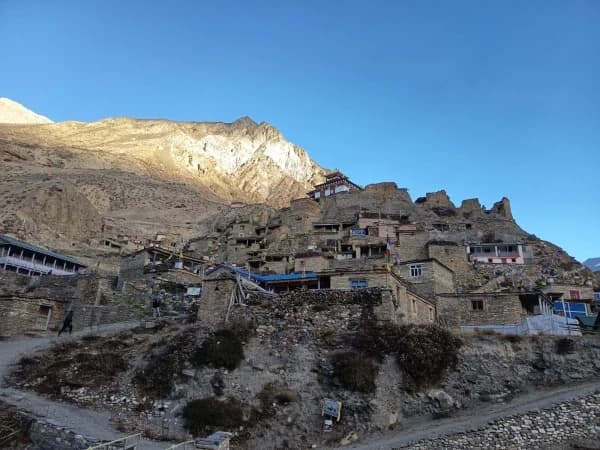
The houses are Tibetan in every detail: flat roofs for drying grain and meat, thick stone walls that hold the winter heat, small windows that minimise heat loss, and prayer flags on every rooftop that snap in the wind that never stops. The firewood stacked against every wall is the village's winter fuel, collected during summer from the scrub juniper that grows on the hillsides above, carried down on human backs, and stacked in quantities that represent months of labour and months of warmth.
The people of Samdo are Nubri, the Tibetan-heritage ethnic group that inhabits the upper Budhi Gandaki. Their language is a Tibetan dialect. Their religion is Nyingma Buddhism. Their economy is pastoral, yak herding supplemented by trade (historically with Tibet via the passes to the north) and, increasingly, by the trekking tourism that the Manaslu Circuit brings. The trekking season (October-November) coincides with the end of the grazing season, and the village in October is busy with both yak management and trekker hospitality, a dual economy visible in the simultaneous presence of yak herds being moved to winter pastures and trekking groups being served dal bhat in the teahouse common rooms.
What Should You Do on Your Rest Day in Samdo?
Some itineraries include a rest day at Samdo, an additional acclimatisation day beyond the one at Samagaon. The value of this extra day is debated: the altitude at Samdo (3,860 metres) is only 330 metres higher than Samagaon (3,530 metres), and some guides argue that the Samagaon acclimatisation day is sufficient for the push to Dharamsala and the Larkya La.
The counter-argument, and the one that cautious guides and medical advisors support, is that the altitude above Samdo increases rapidly: Dharamsala is 4,460 metres, and the pass is 5,160 metres. An extra night at 3,860 metres gives the body additional time to adapt before entering the zone above 4,000 metres where AMS risk is significant. For trekkers who felt the altitude at Samagaon, headache, poor sleep, reduced appetite, an extra day at Samdo can make the difference between crossing the Larkya La with discomfort and crossing it with confidence.
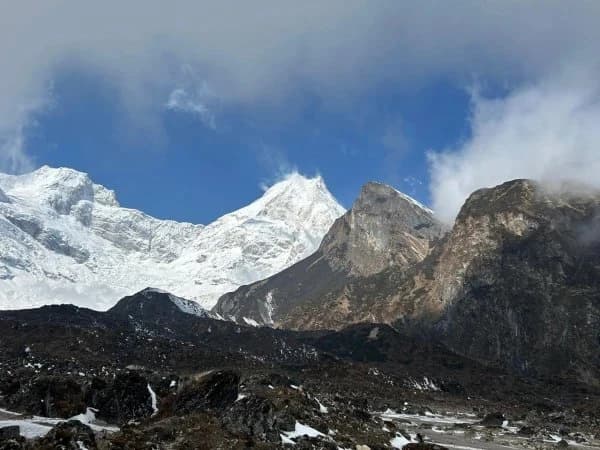
The acclimatisation hike from Samdo typically heads north toward the Tibetan border, following the valley upstream toward the Larkya Glacier and climbing to approximately 4,200-4,400 metres before returning. The hike provides altitude exposure for the pass, views of the Manaslu range from a different angle, and the specific satisfaction of walking toward Tibet, visible as a brown, flat landscape beyond the ridge, even though the border is closed and the nearest crossing is the Larkya La to the east.
How Close Is Samdo to the Tibetan Border?
Samdo sits approximately fifteen kilometres from the Nepal-Tibet border. The proximity is palpable, the landscape, the culture, and the wind all come from Tibet, and the feeling of being at the edge of one world and the beginning of another is one of Samdo's most distinctive qualities.
Historically, the passes north of Samdo, including the Lajyung La, were trade routes between Nepal and Tibet. Salt, wool, and livestock came south. Grain, iron, and manufactured goods went north. The Nubri people of the upper Budhi Gandaki were the traders who managed this exchange, and their relative prosperity, visible in the quality of the village architecture, reflects centuries of trade income. When the Chinese government restricted border crossing in the mid-twentieth century, the trade economy collapsed, and the communities adapted to subsistence agriculture and, eventually, trekking tourism.
The border area is sensitive, Chinese military posts are visible on the ridges above, and the trail toward the border is restricted. Trekkers are not permitted to approach the border, and the guides ensure that the acclimatisation hikes from Samdo stay well within the permitted zone. The restriction is practical rather than cultural, the Nubri people's connection to Tibet remains strong, expressed in language, religion, and the family ties that the closed border has strained but not severed.
What Is Above Samdo Before Larkya La?
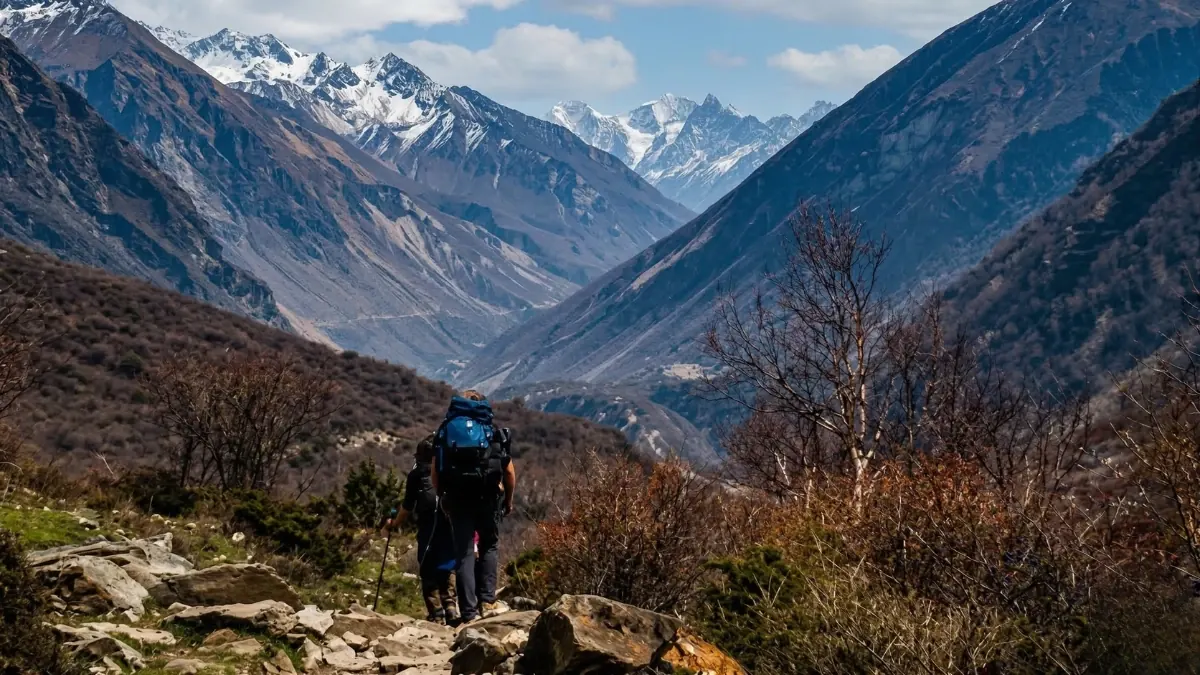
The walk from Samdo to Dharamsala (Larkya Base Camp) takes three to four hours and gains 600 metres. The trail climbs through the last of the alpine scrub and onto the moraine that leads to the Larkya Glacier and the pass above. The vegetation ends within an hour of Samdo, the juniper and grass give way to rock and rubble, and the landscape becomes the grey, mineral, wind-scoured terrain that will accompany you to the pass and beyond.
Dharamsala is not a village. It is a collection of stone shelters, three or four basic huts with tin roofs, built on a rocky flat at 4,460 metres to provide overnight accommodation for Larkya La crossers. The shelters are cold, exposed, and minimal. The food is dal bhat (carried up from Samdo on porter-back that morning). The stove burns sporadically. And the wind, which was a presence at Samdo, is a force at Dharamsala, constant and strong enough to make standing upright an exercise in balance.
The night at Dharamsala is the hardest night of the Manaslu Circuit. The altitude (4,460 metres) produces severe periodic breathing in most trekkers. The cold (minus fifteen to minus twenty at night) penetrates sleeping bags rated for lesser temperatures. And the knowledge that tomorrow begins at three in the morning with a twelve-hour day across a 5,160-metre pass adds a layer of anticipatory stress that makes sleep, already difficult at this altitude, nearly impossible.
This is why the rest at Samdo matters. The night at Samdo, at 3,860 metres, in a proper teahouse, with a proper stove, and food that was grown rather than carried, is the last comfortable night. The last night where sleep approximates sleep rather than a series of altitude-interrupted naps. And the trekker who rests well at Samdo, who hydrates at Samdo, who eats properly at Samdo, arrives at Dharamsala in better condition than the trekker who rushed through.
Why Is the Rest Day in Samdo Important?
Samdo is the village at the edge. The edge of habitation, there are no permanent settlements above. The edge of comfort, Dharamsala offers shelter but not warmth. The edge of the Manaslu Circuit's gentle half, the walk through valleys and villages that the lower circuit provides gives way, above Samdo, to the alpine challenge that the Larkya La demands.
The trekker who pauses at Samdo, who stays for the sunset over the valley, the yak herds returning to their stone enclosures, the prayer flags catching the last light on the rooftops, carries something extra to the pass. Not just acclimatisation (though that matters). Not just rest (though that matters more). But the memory of the last village. The last warm room. The last evening where the human world was present and the mountain world was waiting above. Because above Samdo, the mountain world takes over, and the trekker who remembers Samdo's warmth carries that warmth through the cold, the wind, and the altitude that the pass demands.
Samdo is the acclimatisation stop before Larkya La on the Manaslu Circuit Trek. The Tsum Valley and Manaslu Circuit also passes through here on the 19-day route.
Samdo is the last village before Larkya La on the Manaslu Circuit, and the acclimatisation day here is essential. The village is tiny, the altitude is 3,860 metres, and the walk to the Tibetan border above town gives you views of the pass you will cross tomorrow. The yak herders who live here year-round are some of the toughest people in Nepal.
Samdo is the rest day before Larkya La on our Manaslu Circuit Trek.
WhatsApp:+977 9810351300
Email:[email protected]
Written by Shreejan Simkhada, CEO of The Everest Holiday and third-generation Himalayan guide. TAAN Member #1586.
Samdo is the day before Larkya La. Our Manaslu Circuit Trek (12 Days) is private (your group only, no strangers), 2027 dates open, From USD $799. WhatsApp us for tailored 2027 dates and current departures.
Continue planning your trek
This is one stop on the Manaslu Circuit trail. For the full route, read our complete Manaslu region guide. When you are ready for dates and prices, see the Manaslu Circuit Trek (12 days) or WhatsApp us directly. We reply personally.
 Chat with Shreejan