A detailed 30-day Nepal itinerary for career breaks. Trek, volunteer, explore. Costs from $2,450. The micro-retirement guide for people who need a reset.
Govt Regd. No.: 147653/072/073
Travel Agency Licence: 2838/072
One-Month Career Break in Nepal: The Micro-Retirement Guide

Short answer: A month in Nepal is enough for a proper reset. You could spend two weeks on a trek such as Everest Base Camp or Annapurna Base Camp, then a few slow days each in Kathmandu, Pokhara and Chitwan. Daily costs outside the trek are low, and October to November and March to April have the best weather. Build the tour part around our Kathmandu, Pokhara and Chitwan tour.
One Month in Nepal: The Career Break Guide for People Who Need More Than a Holiday
By Shreejan Simkhada | April 2026 | 14 min read
A two-week holiday isn't enough.
You know this. You've taken the fortnight off, gone somewhere warm, scrolled your phone by a pool, and returned to your desk on Monday feeling like you never left. The inbox wins. The burnout stays. The vague sense that you're living someone else's life doesn't go anywhere.
What you actually need is a month. A full, unbroken, phone-off, out-of-office, auto-reply-enabled month somewhere that forces you to slow down. Somewhere cheap enough that you're not burning through savings. Somewhere safe enough that your family won't worry (much). Somewhere genuinely different from your normal life, not just a warmer version of it.
Nepal is that place.
I've watched hundreds of people come here on career breaks, sabbaticals, and what the internet is now calling "micro-retirements." Some stay a month. Some stay three. A few never really leave. Almost all of them say the same thing when it's over: "I should have done this years ago."
This guide is the practical plan. Not inspiration. Not Instagram captions. The actual logistics of spending 30 days in Nepal, combining trekking, culture, volunteering, and the kind of rest that actually works.
Why Is Nepal the Best Career Break Destination? (Not Bali or Thailand)
Three reasons, and they're all honest.
It's affordable. A full month in Nepal, including trekking, internal flights, food, accommodation, and activities, costs $2,000-4,000 depending on your comfort level. Not per week. Per month. Compare that to $3,000-5,000 for a month in Bali (which has gotten expensive), $4,000-6,000 in Thailand's tourist areas, or $6,000+ in Europe.
It's not a party destination. This matters more than people realise. If you're taking a career break because you're burnt out, exhausted, or questioning what you're doing with your life, the last thing you need is a full moon party and cheap cocktails until 3am. Nepal has bars, sure. But the default mode here is tea, early mornings, and conversation. The pace naturally resets you.
It's life-changing without being extreme. Nepal isn't a 10-day silent meditation retreat in Myanmar. It isn't hitchhiking through Central Asia. It's a country with functioning infrastructure, friendly people, incredible scenery, and a culture that welcomes strangers without performing for them. You'll be challenged, a trek to 5,000m will do that, but you won't be overwhelmed. It's the right amount of uncomfortable.
What is the best 30-day Nepal itinerary for a career break?
Here's a month-long plan that balances adventure, culture, rest, and meaning. I've refined this over years of watching what actually works for career-break travellers.
Week 1: Kathmandu, Culture and Decompression (Days 1-7)
Don't trek immediately. I know the temptation. You've just arrived, you're excited, and those mountains are right there. But you need a few days to adjust, to the timezone, the altitude (Kathmandu is 1,350m, which matters if you're coming from sea level), the food, the pace.
Day 1-2: Arrive. Sleep. Wander Thamel. Get your bearings. The sensory overload of Kathmandu, the temples, the traffic, the incense, the horns, the dogs, the colours, takes a day or two to process. Don't try to see everything. Walk slowly. Eat dal bhat. Drink masala tea on a rooftop.
Day 3: Kathmandu Durbar Square and the old city. Hire a local guide (not a trekking guide, a cultural guide) for half a day. The history here goes back 2,000 years. The living goddesses, the Kumari, the carved wooden temples, it's overwhelming and wonderful.
Day 4: Boudhanath Stupa in the morning (walk the kora with the monks as the sun comes up). Pashupatinath Temple in the afternoon. This is Nepal's most sacred Hindu site, where cremation ceremonies happen on the banks of the Bagmati River. It's intense. It makes you think about mortality in a way that's surprisingly helpful when you're reconsidering your life.
Day 5: Patan. Cross the river to the old Newar city. Patan Museum. The golden temple. The artisan quarter where metalworkers still make Buddhist statues by hand using techniques that haven't changed in five hundred years. Lunch at a rooftop restaurant overlooking Patan Durbar Square.
Day 6: Swayambhunath (the Monkey Temple) at sunrise. The walk up the 365 steps before breakfast is a beautiful way to start a day. Then Bhaktapur, the best-preserved medieval city in the Kathmandu Valley. Pottery Square. Juju Dhau (king of yoghurt). Get lost in the side streets.
Day 7: Rest day. Seriously. Read a book. Write in a journal. Sit in a garden café in Thamel and watch the world move at a pace you'd forgotten existed. This is the day most career-breakers say the mental shift happens. The emails stop feeling urgent. The to-do list stops running in the background. Your shoulders drop.
Week 2: The Big Trek (Days 8-19)
This is the centrepiece of your month. Choose one:
Option A: Everest Base Camp Trek (12 days)
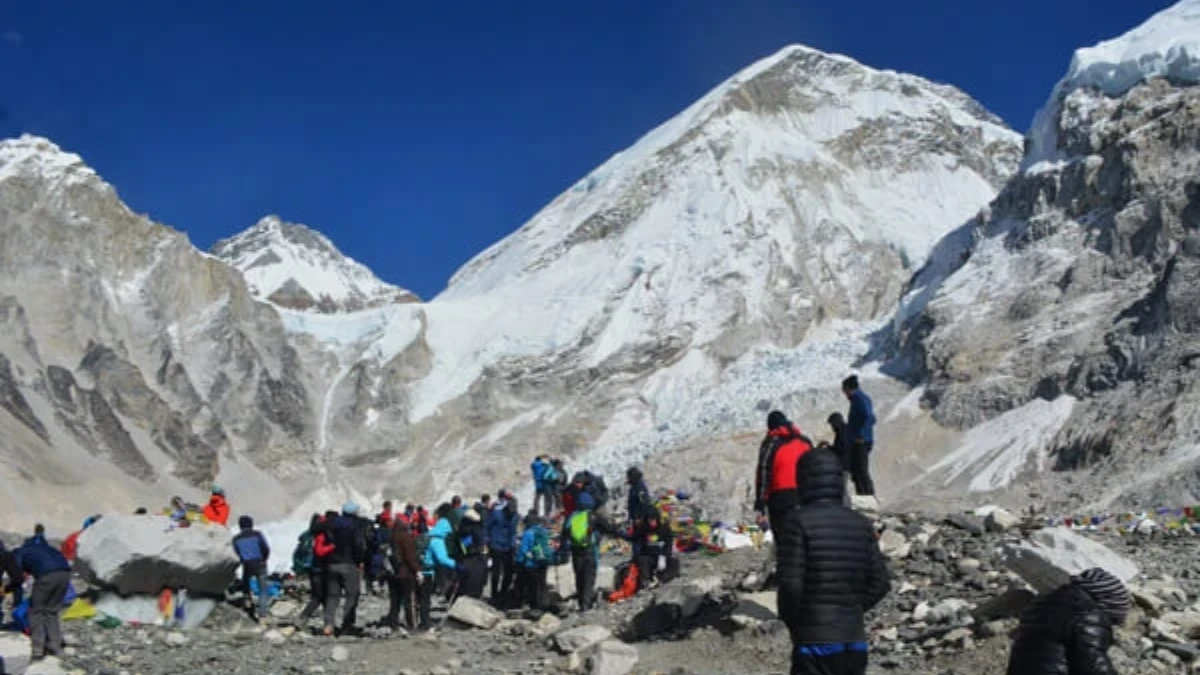
The iconic one. Fly to Lukla, walk through Sherpa villages, cross suspension bridges over roaring rivers, acclimatise at Namche, climb through the Khumbu valley to the base of the tallest mountain on Earth. You'll walk 130km. You'll gain and lose thousands of metres of elevation. You'll sleep in teahouses at 5,000m where the stars are so bright they cast shadows.
This trek changes people. I don't say that lightly. Something about spending 12 days walking, no phone, no email, no decisions more complicated than "left foot, right foot", rewires the brain. By day 8, most people report a clarity of thought they haven't felt in years. By day 12, they're making decisions about their lives that they've been avoiding for months.
Option B: Annapurna Base Camp Trek (9 days)
If Everest feels too physically demanding (and there's no shame in that, it tops out at 5,364m), Annapurna Base Camp reaches 4,130m, which is significantly more manageable. The scenery is arguably more varied: rice paddies, bamboo forests, rhododendron groves, then a dramatic mountain amphitheatre. The cultural immersion is richer, you pass through Gurung and Magar villages with distinct traditions.
It's less famous than EBC. I actually think it's more beautiful. Don't tell the Everest people I said that.
Week 3: Pokhara + Short Trek (Days 20-25)
After the big trek, you need recovery time, and Pokhara is the perfect place for it.
Day 20-21: Arrive in Pokhara (fly from Lukla via Kathmandu if you did EBC, or you're already nearby if you did ABC). Rest. The lake. The views of Machhapuchhre and the Annapurna range from Lakeside. Rent a kayak. Get a massage. Eat pizza (Pokhara has surprisingly good pizza). Sleep until noon.
Day 22: Paragliding over Phewa Lake. This is one of those activities that sounds terrifying and turns out to be pure joy. Tandem flights are safe and the views of the Himalayas while soaring on thermals are extraordinary. If flying isn't your thing, hire a mountain bike and ride the lakeside trails instead.
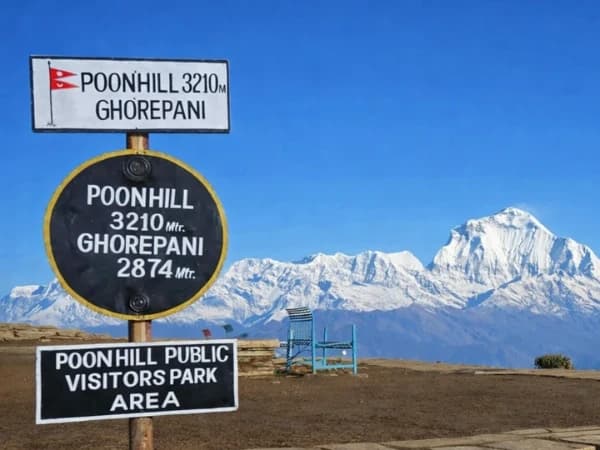
Day 23-25: A short Poon Hill trek (3-4 days, though you can compress it to 3 if your legs cooperate after the big trek). This is the gentle counterpart to your Week 2 adventure. Lower altitude, shorter days, and a sunrise from Poon Hill at 3,210m that routinely makes people cry. Dhaulagiri, Annapurna South, Machhapuchhre, Hiunchuli, all lit up gold and pink at dawn.
If your legs genuinely can't handle another trek, skip Poon Hill. Spend the full week in Pokhara. Take a cooking class. Learn to make momos. Read three books. Sometimes the most productive thing a career-breaker can do is nothing at all.
Week 4: Chitwan, Volunteering, and Farewell (Days 26-30)
The final week shifts gears completely. You've done the mountains. Now you go south.
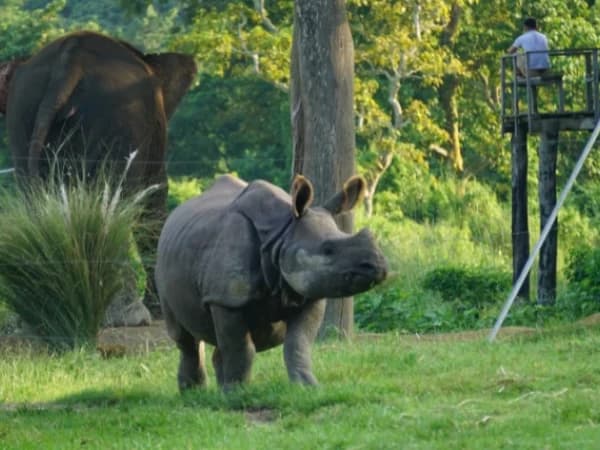
Day 26-27: Travel to Chitwan National Park. This is the subtropical lowlands, jungle, rivers, one-horned rhinos, Bengal tigers (if you're lucky), and elephants. A 2-night stay in a jungle lodge is a completely different Nepal from anything you've seen. Canoe down the Rapti River at sunset. Walk through the sal forest with a naturalist guide. The transition from Himalayan mountains to tropical jungle within the same country is genuinely surreal.
Day 28-29: Return to Kathmandu. Two options for your final days:
Option 1: Volunteering
Spend a day at the Nagarjun Learning Center, which provides education to children from disadvantaged backgrounds. You don't need special skills. Reading with kids, helping with English conversation, playing sports, the contribution is the presence. Our Heart for Nepal initiative connects travellers with meaningful volunteering opportunities that benefit communities rather than exploit them.
A note on voluntourism: I'm aware of the criticisms, and they're often valid. Two days of volunteering doesn't fix systemic issues. What it does, what I've seen it do, repeatedly, is shift the volunteer's perspective. You spend a morning with children who walk an hour to school and study under a tin roof, and suddenly your career anxieties feel different. Not trivial. Just different.
Option 2: Lumbini
If you'd rather continue travelling, take a day trip or overnight to Lumbini, the birthplace of the Buddha. It's a UNESCO World Heritage Site with monasteries built by countries from around the world, each in their own architectural tradition. Japanese, Thai, Cambodian, German, all in one park. It's peaceful in a way that feels deliberately designed for people at a crossroads.
Day 30: Final day in Kathmandu. Last walk around Boudhanath. Final dal bhat. Buy gifts (pashmina shawls, singing bowls, Nepali tea). Sit somewhere quiet and take stock.
You've been gone 30 days. You've trekked to the base of the world's highest mountain (or near it). You've watched the sun rise over the Himalayas twice. You've floated in a kayak on a Himalayan lake. You've seen a rhinoceros in the wild. You've volunteered at a school. You've eaten approximately 47 plates of dal bhat. You've had exactly zero Slack notifications.
You're ready to go home. Or you're absolutely not ready, and you extend your visa for another month. Both responses are normal.
How much does a one-month trip to Nepal cost?
| Expense | Budget Level | Comfortable Level | Premium Level |
|---|---|---|---|
| EBC or ABC trek (12 days, guided, all-inclusive) | $1,200 | $1,600 | $2,200 |
| Poon Hill trek (3-4 days) | $350 | $500 | $750 |
| Kathmandu accommodation (10 nights) | $100 | $250 | $500 |
| Pokhara accommodation (5 nights) | $50 | $125 | $300 |
| Chitwan lodge (2 nights, with activities) | $80 | $150 | $350 |
| Food (non-trek days, ~15 days) | $100 | $200 | $400 |
| Internal flights (Kathmandu-Lukla return) | $420 | $510 | $510 |
| Transport (buses, taxis, domestic travel) | $50 | $100 | $200 |
| Activities (paragliding, tours, etc.) | $50 | $150 | $300 |
| Visa (30-day on arrival) | $50 | $50 | $50 |
| Misc (SIM, tips, souvenirs) | $70 | $120 | $250 |
| Total for 30 days | $2,450 | $3,595 | $5,650 |
For under $3,600, you get a month that includes a major Himalayan trek, a shorter trek, a national park safari, cultural immersion in three UNESCO World Heritage Sites, paragliding, and volunteering. A single week at an all-inclusive resort in the Maldives costs more.
How do I get a tourist visa for Nepal?
Nepal's tourist visa system is straightforward:
- 30-day visa: $50, available on arrival at Kathmandu airport. No advance application needed for most nationalities.
- 90-day visa: $125, also on arrival. If you think you might extend, get this upfront, it's cheaper than extending a 30-day visa.
- Extensions: Available at the Department of Immigration in Kathmandu. $2 per extra day. Maximum 150 days per calendar year.
- Documents: Valid passport (6+ months remaining), one passport photo, cash in USD for the visa fee.
The visa process at Kathmandu airport takes 30-60 minutes depending on your arrival time. There are electronic kiosks for filling in the form. It's not painful. It's not elegant either. It just works.
How do I ask my employer for a career break?
This is the section people actually want but are afraid to ask about.
If you have a sabbatical policy, use it. Many companies now offer 4-6 week sabbaticals after 3-5 years of service. Check your employee handbook. If a sabbatical policy exists, you have use.
If you don't have a formal policy, here's what I've seen work:
Frame it as an investment, not an escape. "I want to take a month to reset so I can come back performing at my best" lands better than "I'm burned out and need to get away." Even if both are true.
Propose unpaid leave. Many managers who can't approve paid sabbaticals can approve unpaid leave. A month without salary is cheaper than hiring and training your replacement when you quit.
Time it strategically. October-November (post-monsoon trekking season) aligns with Q4 for many companies. If your Q4 is quiet, that's your window. If Q4 is your crunch time, go in March-April (pre-monsoon, also excellent for trekking).
Offer a transition plan. Document your projects, brief your colleagues, set up out-of-office systems. Make it easy for them to say yes.
And if they say no? Well. That tells you something important about whether this is where you should be spending the next decade of your life. A month in Nepal might not give you the answer. But it'll give you the space to find one.
How does a one-month career break affect your mental health?
I'm not a psychologist. I'm a trekking guide. But I've watched this process hundreds of times, and the pattern is consistent enough to describe.
Days 1-3: Restlessness. You check your phone constantly. You feel guilty for not being productive. The absence of a schedule feels uncomfortable, not freeing. This is normal. It passes.
Days 4-7: The decompression begins. You start noticing things, the smell of incense, the sound of prayer bells, the way light hits a temple at sunset. Your breathing slows. You sleep better. The phone stays in your pocket longer.
Days 8-19 (the trek): This is where the real shift happens. Walking 6-8 hours a day at altitude with no connectivity strips away everything non-essential. Your world shrinks to your next step, your breathing, the person walking beside you, and the mountain in front of you. By day 10, most people experience a mental clarity they describe as feeling like a fog has lifted.
Days 20-25: Integration. You're back in civilisation but different. Conversations go deeper. You make decisions more easily. Some people journal obsessively during this phase. Others just sit by a lake and stare at mountains. Both are valid.
Days 26-30: You either feel ready to return or you extend. There's rarely a middle ground.
I'm not selling Nepal as therapy. But I am saying that removing yourself from your normal environment for 30 days, especially if part of that time involves physical challenge, natural beauty, and genuine disconnection, does something that a weekend spa retreat doesn't touch.
Is Nepal safe for a one-month career break trip?
Is Nepal safe? Yes. Violent crime against tourists is extremely rare. Petty theft exists (as in any tourist area worldwide), but Nepal consistently ranks as one of the safest countries in Asia for travellers. Solo female travellers visit regularly and generally report feeling safe, though standard precautions apply everywhere.
Health: Get travel insurance that covers trekking and helicopter evacuation up to the highest point of your trek: 6,000 m for Everest Base Camp, 5,500 m for the Annapurna Circuit, 4,500 m for Annapurna Base Camp and Mardi Himal, and 3,500 m for Poon Hill. Standard policies often exclude high-altitude activities. Check the fine print. Bring basic medications: Imodium, Diamox (for altitude sickness prevention, consult your doctor), painkillers, rehydration salts. Drink bottled or purified water only.
Connectivity: Get a Nepali SIM card at the airport (Ncell is best for travellers). 4G works in Kathmandu and Pokhara. On the trail, connectivity ranges from patchy to non-existent above 4,000m. This is a feature, not a bug.
Fitness required: You don't need to be an athlete. The EBC trek requires reasonable fitness, you should be comfortable walking 5-7 hours a day with a light pack. If you can walk up stairs for 20 minutes without stopping, you're probably fit enough. We've guided people from age 12 to 74 to Everest Base Camp. Willpower matters more than VO2 max.
What is a micro-retirement?
The phrase "micro-retirement" has exploded online in the past two years, and I think it describes something real. The traditional model, work for 40 years, retire, then travel, doesn't account for the fact that your 65-year-old body can't do what your 35-year-old body can. You can't trek to Everest Base Camp at 70 (well, some people can, but it's dramatically harder). The high passes, the altitude, the cold, the physical demands, these reward youth and fitness.
Taking a month now, in your 30s or 40s, to do something extraordinary, that's not lazy. It's strategic. You're front-loading the experiences that require physical capability while you still have it. You're investing in memories, perspective, and mental health at a time when the return on that investment is highest.
Nepal is perfectly designed for this. A month here costs less than a month's rent in London. The trekking infrastructure means you don't need years of mountaineering experience. The culture adds depth that a pure adventure trip lacks. And the disconnection, the forced, altitude-imposed, WiFi-less disconnection, gives you something that money genuinely cannot buy: time alone with your own thoughts in one of the most beautiful places on Earth.
How do I book a one-month Nepal career break trip?
Visit our trip planning page to begin. Or just message us:
- Tell us your month (October and November are best, March and April are great too)
- Tell us your fitness level honestly
- Tell us your budget range
- Tell us if you want to include volunteering
We'll build a 30-day plan that fits you. Not a template. Not a package tour. A month that's yours.
The career will be there when you get back. The Himalayas are there right now.
Ready to plan your career break in Nepal?
WhatsApp: +977 9810351300
Email: [email protected]
About the Author: Shreejan Simkhada is the CEO of The Everest Holiday, a third-generation Himalayan guide, and a lifetime member of TAAN (Trekking Agencies' Association of Nepal, Member #1586). He has guided hundreds of travellers through Nepal's mountains and valleys, including a growing number who come not for a holiday but for a pause, a month to breathe, walk, think, and return home knowing what they want next. He runs The Everest Holiday from Kathmandu, where the mountains are visible from his office window on clear days, which is roughly half the year.
One-month career break? EBC fits perfectly. Our Everest Base Camp Trek (12 Days) is private (your group only, no strangers), 2027 dates open, From USD $1399. WhatsApp us for tailored 2027 dates and current departures.
Planning a trip to Nepal?
Drop us your details and tell us what you have in mind. We will put together a personalised plan and get back to you.
Not sure which Nepal trek is right for you?
Take our free 2-minute quiz and get personalised recommendations based on your fitness, experience, and travel style.
Find Your Perfect Trek →Need Help? Call Us+977 9810351300orChat with us on WhatsApp
Related Trek Packages
 US$949
8 DaysMax 20
Latest Travel Blogs
Christmas and New Year Treks from Pokhara 2026/27: 3 to 5 Days
<p>Short treks from Pokhara for Christmas and New Year 2026/27: Panchase 3 days, Poon Hill 4 days and Mardi Himal 5 days. Weather, snow, what is open, and prices by group size.</p>
Read More
Thamdanda and Surke: The Road Head for Everest Base Camp by Road
Thamdanda is the road head where our Everest Base Camp trek by road starts and ends on foot. How to get there from Phaplu and what the first walk to Paiya is like.
Read MorePoon Hill Trek Permits 2027: ACAP, TIMS, Cost and What You Need
Poon Hill needs two permits: ACAP at NPR 3,000 and a TIMS card at NPR 2,000. Who arranges them, where they are checked, SAARC rates and the 2027 trek prices.
Read More Chat with Shreejan