Short answer: Many people with a medical condition such as a knee problem, asthma or diabetes trek in Nepal safely. Talk to your doctor first, tell us honestly about your condition, and declare it to your insurer. Every trek with us is private, so we can slow the pace, shorten the days and add rest days to suit you. We then recommend a trek that fits, such as our 12-day Everest Base Camp trek.
Can You Trek Nepal With a Medical Condition?
You've been dreaming about Nepal, but you've got a dodgy knee. Or asthma. Or you're managing diabetes, or you've had heart surgery, or you take medication that might not play well with altitude. So you're wondering: can I still do this?
In most cases, yes. We've guided trekkers with knee replacements, controlled asthma, Type 1 and Type 2 diabetes, thyroid conditions, and a range of other medical situations through the Himalayas safely. The key is honesty, preparation, and choosing the right trek with the right support.
This page covers the most common medical conditions our trekkers ask about, what we can do to accommodate them, and what you need to do before you arrive in Kathmandu.
Our Approach: Honest and Practical
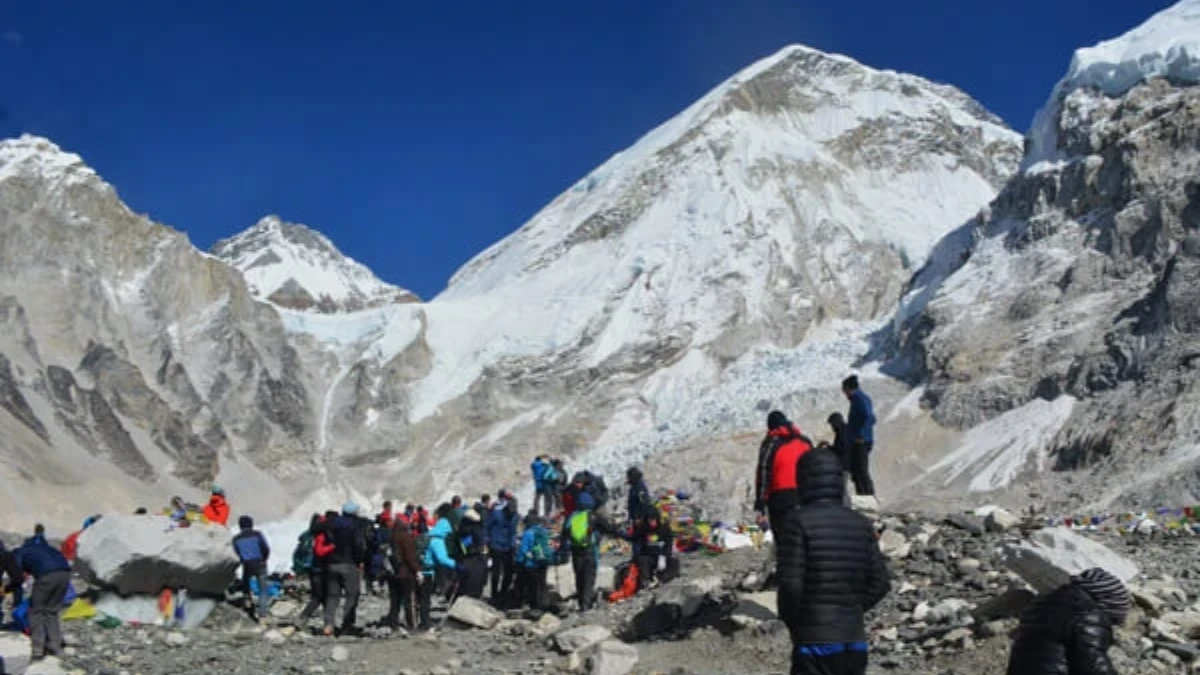
When you contact The Everest Holiday and tell us about a medical condition, we don't say "no problem" without thinking. We ask questions. We listen. And then we give you an honest recommendation, which might be "this trek is perfect for you," or it might be "we'd suggest a different route," or occasionally "we think you should check with your doctor before we go further."
Every trek with us is private. That means we can adjust the pace, the daily distance, the altitude profile, and the rest days to suit your specific needs. You're not joining a fixed-schedule group. It's just you, your guide, and your porter, moving at whatever speed works for your body.
Here's how we accommodate medical conditions:
- Pace adjustment: Shorter walking days, more frequent rest stops, slower ascent rate above 3,000m.
- Extra porter: So you carry absolutely nothing but a water bottle and your medication.
- Lower altitude alternatives: If high altitude is risky for your condition, we have excellent treks below 3,500m that don't compromise on the experience.
- Health monitoring: Our guides carry pulse oximeters and can check oxygen saturation and heart rate multiple times daily.
- Emergency planning: Our guides know the location of the nearest health post, CIWEC-trained doctor, and helicopter evacuation point on every trail in Nepal.
- Communication with your doctor: If you want your GP or specialist to review our itinerary before you commit, we're happy to provide full altitude profiles, daily distances, and accommodation details.
Condition by Condition: What You Need to Know
Knee Injuries and Surgery (ACL, Meniscus, Replacement)
This is the most common medical concern we hear. Knees and trekking, particularly the descents, are not natural allies. But thousands of people with knee conditions and knee surgery history trek Nepal successfully every year.
ACL reconstruction or repair: Most orthopaedic surgeons clear patients for trekking 9–12 months post-surgery, assuming rehabilitation is complete and the knee is stable. Get written clearance from your surgeon specifying that you're fit for multi-day trekking on uneven terrain with elevation changes of up to 800m per day.
Meniscus surgery: Recovery is typically faster. Many trekkers return to the trail 4–6 months after arthroscopic meniscus surgery. Again, written clearance is essential.
Knee replacement: Both partial and total knee replacement patients can trek. The consensus among most surgeons is 6–12 months post-surgery for moderate trekking. Choose treks with gentler gradients: Langtang is kinder on the knees than the steep descents on the Everest trail.
What we do for trekkers with knee conditions:
- Recommend treks with less steep descent (Langtang, Poon Hill via the gentler route, Mardi Himal)
- Provide trekking poles (essential: they reduce knee impact by up to 25%)
- Plan shorter daily descents: splitting long downhill sections across two days
- Select teahouses that minimise unnecessary stair climbing
- Arrange a personal porter so you carry zero weight on your knees
- Allow extra time on steep sections: no pressure to keep pace
Asthma at Altitude
Altitude and asthma have a complicated relationship. The air at altitude is colder, drier, and contains less oxygen: all potential triggers. However, many asthma sufferers actually find their symptoms improve at altitude because there are fewer allergens (dust, pollen, pollution) than in lowland cities.
Key facts for asthmatic trekkers:
- Cold, dry air is the primary trigger at altitude: wear a buff or scarf over your mouth and nose during cold morning starts
- Carry your reliever inhaler (salbutamol/albuterol) in your pocket at all times, not in your porter's bag
- Bring a spare inhaler in a different bag
- Continue your preventer inhaler (if prescribed) throughout the trek
- Altitude does not directly worsen asthma, but the reduced oxygen can make breathlessness harder to distinguish from an asthma attack: tell your guide about your condition so they can help monitor you
- If you use a peak flow metre at home, consider bringing one on the trek
- Kathmandu's air quality is poor: if urban pollution triggers your asthma, plan to spend minimal time in the city or wear a mask
Best treks for asthmatic trekkers: Any trek is suitable if your asthma is well controlled. For severe or poorly controlled asthma, stay below 4,000m: Poon Hill, Australian Camp, Nagarkot, and lower sections of Langtang are all good options.
Diabetes (Type 1 and Type 2)
Diabetic trekkers need more planning than most, but Nepal is absolutely achievable. We've guided both Type 1 and Type 2 diabetics through treks up to 5,000m+.
Blood glucose management on the trail:
- Physical activity on the trail will generally lower blood sugar: expect to need less insulin or medication than at home
- Altitude above 3,000m can affect glucose metre accuracy: some metres read slightly high at altitude
- Test more frequently than you would at home, especially during the first few days as your body adjusts
- Carry fast-acting glucose (tablets, gel, or sweets) in your pocket at all times
- Teahouse food is heavily carbohydrate-based, rice, noodles, bread, potatoes, so plan your intake and medication accordingly
Medication and supplies:
- Bring double the supplies you think you'll need: the trek might be extended by weather or other factors
- Pack insulin and medication in carry-on luggage, never in checked bags
- Insulin needs to be kept cool but not frozen: a small insulated case works at altitude. Temperatures inside teahouses rarely drop below freezing
- Carry supplies in two separate bags in case one is lost or damaged
- Inform your guide fully about your condition, your medication schedule, and what to do in a hypo- or hyperglycaemic emergency
- Carry a medical ID bracelet or card in English and Nepali (we can help with translation)
Pre-trek preparation: See your diabetes specialist 2–3 months before departure. Ask specifically about medication adjustment for sustained daily exercise at altitude. Get a letter for travel insurance and airport security explaining your medication and equipment.
Heart Conditions
This is the condition where we are most cautious, and where honest medical assessment matters most.
Altitude increases heart rate, blood pressure, and cardiac workload. For trekkers with a history of heart disease, angina, heart attack, cardiac surgery, or arrhythmia, these effects are significant.
Our recommendation:
- Written clearance from a cardiologist is mandatory, not optional, for any trek above 2,500m
- The cardiologist should be specifically asked: "Is this patient fit for sustained physical activity at altitudes up to [maximum altitude of trek] metres for [number of days] consecutive days?"
- Trekkers with well-controlled, stable heart conditions often do well on lower-altitude treks (Poon Hill, Australian Camp, Nagarkot)
- We do not recommend treks above 4,500m for trekkers with significant cardiac history unless a cardiologist provides specific written approval
- Our guides monitor heart rate and oxygen saturation, but they are not medical professionals: a cardiologist's clearance is the baseline
Medications: Continue all cardiac medications on the trail. Beta-blockers, ACE inhibitors, statins, blood thinners: bring them all, in full supply plus spares. Carry a detailed medication list in English. If you take warfarin or similar anticoagulants, carry your INR record and testing kit if practical.
Respiratory Conditions (COPD, Bronchitis)
Chronic obstructive pulmonary disease and chronic bronchitis make altitude more challenging because your lungs are already working harder at sea level. The reduced oxygen at altitude compounds this.
- Treks below 3,000m are generally feasible for mild-to-moderate COPD with medical clearance
- Treks above 4,000m are not recommended for most COPD patients
- Carry all inhalers and nebuliser medication (if applicable) in your daypack
- Cold air is a common trigger: cover your mouth and nose in cold conditions
- Our guides can slow the pace significantly for trekkers with breathing difficulties
- Supplemental oxygen is available at some high-altitude health posts, but don't rely on it
Back Pain and Spinal Conditions
Trekking with back pain depends entirely on the cause and severity. Muscular back pain often improves with walking (the movement helps). Disc-related pain can worsen with uneven terrain and the jarring of descents.
- A personal porter is essential: carry nothing on your back
- Trekking poles help distribute load and improve posture
- Choose treks with more gradual terrain: Langtang and Poon Hill are gentler than EBC
- Bring any medications, supports, or braces you use at home
- Teahouse mattresses are thin: consider bringing a lightweight inflatable sleeping mat for extra support
Mental Health Conditions
Trekking in Nepal can be profoundly positive for mental health: the physical activity, the natural beauty, the disconnection from daily stressors. But the trail can also be isolating, physically exhausting, and uncomfortable, which can be challenging for people managing anxiety, depression, or other mental health conditions.
- Continue all psychiatric medications on the trail: do not stop or reduce without medical advice
- Some medications (notably lithium) are affected by dehydration, which is common at altitude: discuss with your prescriber
- Tell your guide if you're having a difficult day: our guides are understanding and can adjust the pace or plan accordingly
- The private trek format means you can take time and space when you need it, without group pressure
- If you have specific anxiety triggers (heights, bridges, confined spaces), tell us before the trek so we can plan the route accordingly
Medications: What to Bring and What's Available in Kathmandu
What to Bring from Home
- All prescription medications for the full trek duration plus one extra week
- A written prescription or doctor's letter for each medication (for customs and insurance)
- Medications split between two bags in case one is lost
- Basic pain relief: paracetamol and ibuprofen
- Antihistamines (for allergic reactions or insect bites)
- Rehydration sachets
- Any condition-specific emergency medications (EpiPen, GTN spray, etc.)
What's Available in Kathmandu
Kathmandu pharmacies stock many different medications, often without prescription and at much lower prices than Western countries. Common trekking medications readily available include:
- Diamox (acetazolamide) for altitude sickness prevention
- Ciprofloxacin and azithromycin for gastrointestinal infections
- Paracetamol, ibuprofen, and codeine-based painkillers
- Oral rehydration salts
- Basic antibiotics, antifungals, and antihistamines
However: specialist medications, specific insulin types, and newer drugs may not be available. Do not rely on buying prescription medications in Kathmandu: bring your own.
CIWEC Hospital Travel Medicine Centre
Located in Lazimpat, Kathmandu, CIWEC is an international-standard clinic staffed by Western-trained doctors who specialise in travel and altitude medicine. If you have a medical condition and want a pre-trek consultation in Kathmandu, CIWEC is the place to go. They can:
- Review your medications and condition for altitude suitability
- Provide altitude sickness prevention advice specific to your condition
- Prescribe Diamox if appropriate for your medical history
- Issue a medical fitness letter for your trek
- Provide emergency contact during your trek (available by phone)
A consultation costs approximately $60–100 USD. We can arrange an appointment for you before your trek starts.
Insurance: The Non-Negotiable
Travel insurance is mandatory for all trekkers with The Everest Holiday. For trekkers with pre-existing medical conditions, insurance requires extra attention.
What Your Policy Must Cover
- Helicopter evacuation from altitude (specify the maximum altitude of your trek)
- Medical treatment abroad, including hospitalisation
- Repatriation to your home country
- Pre-existing medical conditions: this is the critical one
Pre-Existing Condition Cover
Many standard travel insurance policies exclude pre-existing conditions. You need a policy that specifically includes them. This usually means:
- Declaring all conditions during the application process
- Paying a higher premium (varies by condition and age)
- Possibly providing a doctor's letter confirming your condition is stable and managed
- Some conditions may be excluded even on specialist policies: read the fine print
Recommended providers for pre-existing condition cover:
- Campbell Irvine (UK): specialist adventure travel insurance, covers most pre-existing conditions
- Dogtag (UK): good coverage for chronic conditions at altitude
- World Nomads (international): covers many conditions, check altitude limits
- AllClear (UK): specialists in pre-existing condition travel insurance
- Battleface (international): covers adventure sports with medical conditions
Important: If you fail to declare a pre-existing condition and need treatment related to it on the trail, your insurer will almost certainly refuse to pay. A helicopter evacuation from the Everest region costs $3,000–5,000 USD. Be honest with your insurer.
Which Nepal treks are best for my medical condition?
| Condition | Recommended Treks | Avoid | Key Consideration |
|---|---|---|---|
| Knee injury/surgery | Langtang, Poon Hill, Australian Camp | EBC (steep descents), Manaslu (long days) | Trekking poles essential. Avoid steep descents. |
| Asthma (well controlled) | All treks suitable | None, if well controlled | Carry reliever inhaler in pocket. Cold air is a trigger. |
| Asthma (poorly controlled) | Poon Hill, Australian Camp, Nagarkot | Anything above 4,000m | Medical clearance required. Stay below 4,000m. |
| Type 1 Diabetes | All treks with preparation | None, with proper planning | Double supplies. Frequent testing. Guide fully briefed. |
| Type 2 Diabetes | All treks with preparation | None, with proper planning | Adjust medication for increased activity. Carb-heavy trail food. |
| Heart condition (stable) | Poon Hill, Australian Camp, Nagarkot | EBC, Manaslu, anything above 4,500m | Cardiologist clearance mandatory. Lower altitude only. |
| COPD (mild-moderate) | Australian Camp, Nagarkot, Poon Hill | Anything above 3,500m | Reduced oxygen compounds breathing difficulty. |
| Back pain (muscular) | All treks: walking often helps | None | Personal porter. Trekking poles. Sleeping mat. |
| Back pain (disc-related) | Poon Hill, Langtang, Australian Camp | Very rough terrain treks | Gentle gradients. No heavy carrying. |
Our Guides' Training
Every guide at The Everest Holiday is licensed by the Government of Nepal. Beyond the standard licence, our guides receive additional training in:
- Wilderness first aid: Recognition and initial treatment of altitude sickness, fractures, hypothermia, and dehydration
- Pulse oximeter use: Every guide carries one and knows how to interpret oxygen saturation readings at different altitudes
- Altitude sickness protocols: When to rest, when to slow the ascent rate, and when to descend immediately
- Helicopter evacuation coordination: Our guides know the nearest evacuation points on every trail and carry satellite communication devices on remote routes
- Basic medication knowledge: Our guides understand common trekking medications (Diamox, painkillers, rehydration) but they are not doctors and will never prescribe or adjust your personal medication
What our guides are not: They are not doctors, nurses, or paramedics. They cannot diagnose conditions, prescribe medication, or provide medical treatment beyond basic first aid. For trekkers with complex medical conditions, we strongly recommend a pre-trek consultation at CIWEC in Kathmandu and carrying a medical action plan written by your doctor.
About The Everest Holiday
We are a Himalayan family company. Our family has three generations of guiding in the Himalayas, and our grandfather Hari Lal Simkhada arranged logistics for Himalayan expeditions. Our father Ganesh Prasad Simkhada has held senior positions at the Nepal Tourism Board and Nepal Mountaineering Association. Today, Shreejan Simkhada and Shamjhana Basukala run The Everest Holiday with 80+ guides and staff.
- TAAN Member #1586: Nepal's official trekking agency association
- Tourism Licence 2838/072: Government of Nepal
- Over 300 reviews on TripAdvisor (4.9★), Google (4.9★) and Trustpilot (4.7★)
- Selected by Nepal Tourism Board to represent Nepal at MATKA 2026 Helsinki
- Secure online payment through Himalayan Bank Limited: a 10 percent deposit by card confirms your trek and the balance is paid in Kathmandu.
Our charity, the Nagarjun Learning Center
A portion of every booking supports the Nagarjun Learning Center, founded by our family. We provide free education and hot meals to 70 children across 7 learning centres in rural Nepal, free medical care to 600+ people, and empowerment programmes for 275+ women. The centre is verified and listed on the UN Partner Portal.
Your trek doesn't just change your life: it changes theirs.
Frequently Asked Questions: Medical Conditions
Do I need to tell you about my medical condition?
Yes, please. We ask all trekkers to complete a health questionnaire before booking. This isn't to exclude anyone: it's so we can plan the right trek, the right pace, and the right support for you. The more we know, the better we can look after you. Everything you tell us is treated confidentially.
Will you refuse to take me if I have a medical condition?
Almost never. We might recommend a different trek, a slower pace, or additional support. In very rare cases, such as an unstable heart condition without cardiologist clearance, we may ask you to get medical approval before we proceed. Our priority is getting you onto the trail safely, not turning you away.
Can I see a doctor in Kathmandu before my trek?
Yes. We recommend the CIWEC Hospital Travel Medicine Centre in Lazimpat for trekkers with medical conditions. They specialise in travel and altitude medicine. A consultation costs approximately $60–100 USD. We can book an appointment for you on your arrival day or the day before your trek starts.
What if my condition worsens on the trail?
We descend. If your condition deteriorates to the point where continuing isn't safe, our guides will get you to the nearest health post or arrange helicopter evacuation. This is why travel insurance with medical evacuation cover is mandatory. Our guides carry satellite communication on remote routes and can reach rescue coordination within minutes.
Are there doctors on the trekking trails?
The Himalayan Rescue Association (HRA) operates aid posts at Manang (3,540m, Annapurna region) and Pheriche (4,250m, Everest region) during the autumn and spring trekking seasons. These are staffed by volunteer doctors. Outside these locations, the nearest medical care is typically a basic health post: another reason why pre-trek preparation and insurance are so important.
Can I bring my own doctor on the trek?
Some trekkers with complex conditions do bring a companion with medical training. We can accommodate this: just let us know when booking and we'll include them in the group arrangements. For corporate or group treks, we can also help arrange a trek doctor through our medical contacts in Kathmandu.
I had surgery recently. How long should I wait?
This depends entirely on the surgery. General guidelines: knee arthroscopy 3–6 months, ACL reconstruction 9–12 months, knee replacement 6–12 months, cardiac surgery 6–12 months, abdominal surgery 3–6 months. But these are rough guides: your surgeon's specific written clearance is what matters. Tell them exactly what the trek involves: duration, altitude, daily walking hours, and terrain.
Is Diamox safe with my other medications?
Diamox (acetazolamide) interacts with several common medications, including some diabetes drugs, blood thinners, and aspirin. Do not take Diamox without discussing it with your doctor first, especially if you take any regular medication. Your GP or the CIWEC clinic in Kathmandu can advise on interactions.
What if I can't get travel insurance for my condition?
If standard insurers won't cover your pre-existing condition, specialist providers like AllClear (UK) or Battleface (international) often can. If no insurer will cover your condition for trekking at altitude, we need to have an honest conversation about whether the trek is the right choice. We cannot allow trekkers without valid medical evacuation insurance on the trail: this is for your protection.
How do I book?
Contact Shreejan directly. Tell us about your medical condition, your fitness level, your dates, and what you'd like to experience. We'll recommend the right trek and build a custom itinerary with appropriate adjustments. We'll also send you our health questionnaire. Pay a 10% deposit through our secure Himalayan Bank payment gateway to confirm your booking.
How do I book a Nepal trek with a medical condition?
A medical condition doesn't mean the Himalayas are off limits. It means you need the right company: one that listens, plans carefully, and puts your safety first. That's what we do, and we've been doing it for three generations.
WhatsApp:+977 9810351300 (Shreejan responds within 30 minutes during Nepal business hours)
Email:[email protected]
Website:theeverestholiday.com
Three generations. One family. Your Himalayas.
Trekking with a medical condition? Our Everest Base Camp Trek (12 Days) is private (your group only, no strangers), 2027 dates open, From USD $1399. WhatsApp us for tailored 2027 dates and current departures.


 Chat with Shreejan