There is a version of this guide that tells you to skip the guide, sleep in the cheapest teahouses, eat only rice, and negotiate every price until the teahouse owner wishes you had never walked through the door. That version saves you two hundred dollars and gives you a trek that is uncomfortable, potentially dangerous, and deeply unfair to the people whose hospitality you are exploiting.
This is not that guide.
This is the guide for trekkers who want to spend less without compromising the experience — who understand that budget trekking does not mean cheap trekking, and that the difference between the two is the difference between a trip you remember fondly and a trip you regret.
Nepal is one of the most affordable adventure travel destinations on earth. A fully guided, fully permitted, fully catered trek through the Himalayas costs less than a week in most European ski resorts. The savings are already built into the destination. The question is not how to make Nepal cheap — it already is — but how to avoid the unnecessary expenses that inflate the cost beyond what it needs to be.
The Biggest Saving: Book Direct
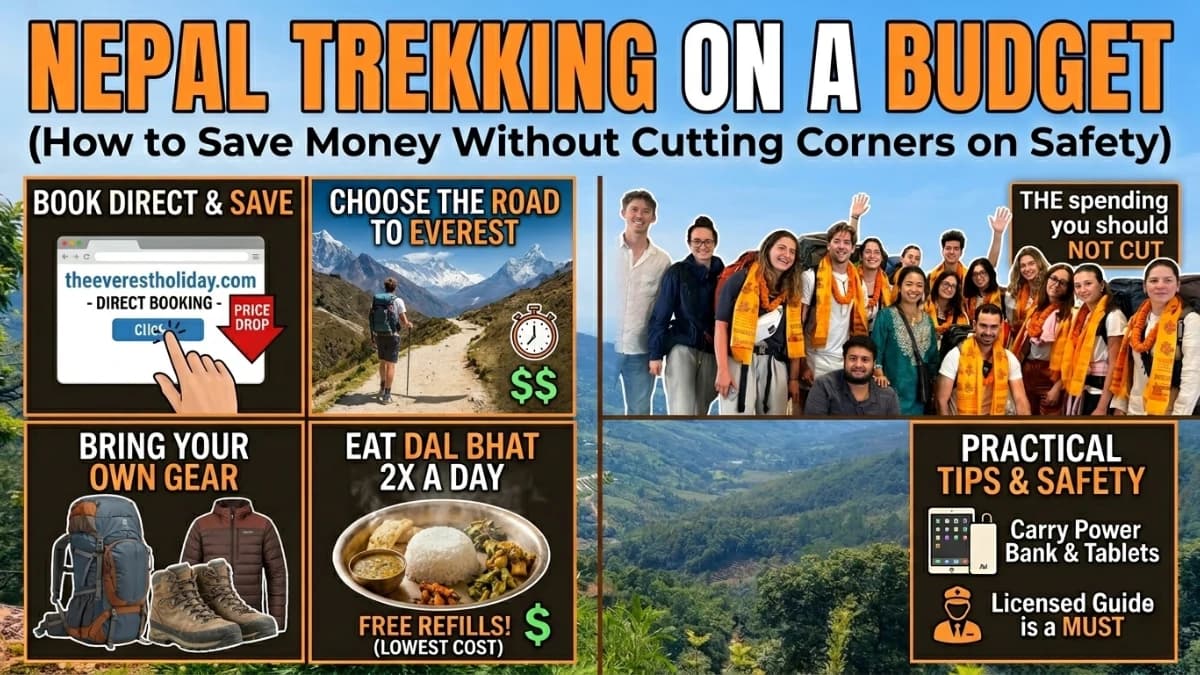
This single decision saves more money than every other tip in this guide combined.
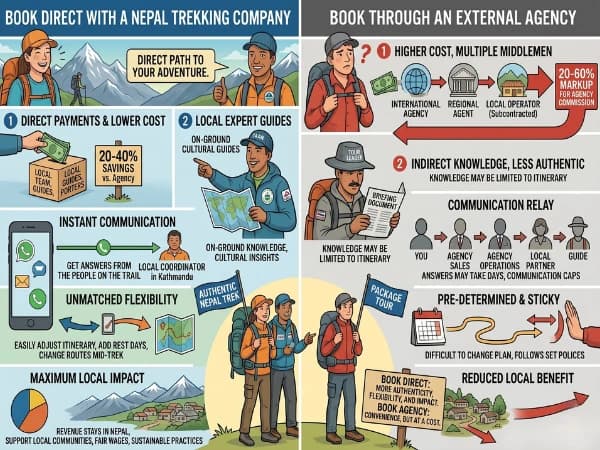
International adventure travel companies — the ones with offices in London, Sydney, New York — charge two thousand to three thousand five hundred dollars for an Everest Base Camp trek. A Nepal-based company charges one thousand to eighteen hundred for the identical experience. Same trail. Same teahouses. Same mountains. Same guides, because the international company subcontracts to a local partner anyway.
The price difference is overhead. The international company pays London rent, Western salaries, shareholder dividends, and marketing budgets measured in millions. These costs are passed to you, the trekker, as a thirty to sixty percent premium on a product that you could purchase directly from the people who actually take you up the mountain.
Booking directly with a reputable Nepali company is not a compromise. It is a smarter allocation of the same money. The guide quality is identical. The safety protocols are identical. The experience is identical. The only difference is that more of your money stays in Nepal, supporting the communities, the guides, and the porters who make the trek possible, and less of it services a mortgage in Fulham.
Choose the Road to Everest
The fifteen-day road route to Everest Base Camp eliminates the Lukla flight entirely, saving two hundred to three hundred and fifty dollars per person on internal flights. For a couple, that is four hundred to seven hundred dollars. For a family of four, eight hundred to fourteen hundred.
The road route adds three days to the trek but provides its own rewards, the drive through Nepal's hill country, the gradual altitude gain, the villages and farmland that flyers never see. Many trekkers who chose the road route for budget reasons describe it afterwards as one of the best decisions of their trip.
Choose a Shorter Trek
Not every Nepal trek needs to be twelve days and five thousand metres. The Poon Hill trek, six days, maximum altitude 3,210 metres, budget from three hundred and five dollars, delivers one of the most spectacular sunrise views in the Himalayas for a third of the cost of EBC. The Ama Yangri trek, three days, budget from one hundred and fifty dollars, provides a genuine Himalayan experience for the price of a nice dinner in London.
Shorter treks cost less because they require fewer days of guide, porter, and accommodation. They also require less time off work, less expensive gear (lower altitudes need less cold-weather equipment), and less physical preparation. The cost saving is not just the package price, it is the entire ecosystem of expenses that surrounds a major trek.
Trek in Shoulder Season
October is peak season. Prices are highest. Trails are busiest. Teahouses are fullest. Flights are most expensive and most likely to cancel.
Late September, early December, late February, and March offer weather that is almost as good, sometimes equal, at prices that are ten to twenty percent lower from some companies. Teahouses have availability. Trails are quieter. Internal flights are less contested. The entire financial pressure of peak season eases.
The risk is weather. Late September can still be monsoon. Early December can be genuinely cold above four thousand metres. But for trekkers willing to accept slightly higher weather variability, the financial and experiential rewards of shoulder season are substantial.
Bring Your Own Gear
Budget-tier packages typically require you to provide your own sleeping bag and down jacket. If you own these already, from previous treks, camping trips, or winter activities, bringing them saves the rental cost of one to two dollars per day for each item.
If you do not own them, renting in Kathmandu's Thamel district is the budget option. A down jacket rents for one to two dollars per day. A sleeping bag rated to minus fifteen rents for the same. Over a twelve-day trek, total rental cost is twenty-four to forty-eight dollars. This is dramatically cheaper than buying equivalent quality gear at home, a sleeping bag alone costs two hundred to five hundred dollars in Western countries.
Eat Dal Bhat Twice a Day
This is not deprivation. This is wisdom. Dal bhat, rice, lentil soup, vegetable curry, pickle, papad, comes with unlimited refills. You eat until you physically cannot eat more. The cost is four to eight dollars depending on altitude. The caloric density is higher than any other item on the teahouse menu. And the nutritional profile, complex carbohydrates, plant protein, vitamins, salt, is exactly what your body needs to sustain eight hours of daily walking at altitude.
The pizza on the teahouse menu costs more. The pasta costs more. The fried rice costs more. None of them provide unlimited refills. None of them have fuelled Himalayan workers for centuries. Dal bhat is the budget trekker's secret weapon, the meal that costs the least and delivers the most.
Carry a Power Bank and Purification Tablets
Phone charging above Namche Bazaar costs two hundred to five hundred rupees per charge, roughly one fifty to four dollars. Over twelve days, that is eighteen to forty-eight dollars in charging fees alone. A twenty-thousand-milliamp-hour power bank, charged fully at Namche on the rest day, provides four to five days of phone use. Total saving: ten to thirty dollars, plus the freedom of not queuing for the one outlet in the teahouse dining room.
Bottled water above Namche costs two to four dollars per litre. Three to four litres per day over eight days above Namche is forty-eight to one hundred and twenty-eight dollars in water alone. Purification tablets cost a few cents per litre. A SteriPen costs fifty to one hundred dollars but treats water for years. Even a single twelve-day trek with tablets instead of bottles saves forty to one hundred and twenty dollars.
The Spending You Should Not Cut
Insurance. A hundred-dollar policy versus a five-thousand-dollar helicopter bill is not a saving, it is a gamble with catastrophic downside.
Tips. Reducing your guide's tip to save fifty dollars degrades the income of someone who kept you safe for twelve days. The saving is small. The impact on a person whose annual income is two thousand dollars is significant.
Food. Skipping meals to save money at altitude is not frugal. It is dangerous. Your body needs fuel to acclimatise, to walk, and to stay warm. Eat properly. The three dollars you save by skipping lunch will cost you ten times more in misery and reduced performance.
Guide quality. The cheapest company is not the best value. A company that charges five hundred dollars for an EBC trek and pays its guides half the industry rate is not saving you money. It is cutting the one cost that matters most, the quality and motivation of the person responsible for your safety in one of the most challenging environments on earth.
The Real Cost of Nepal Trekking
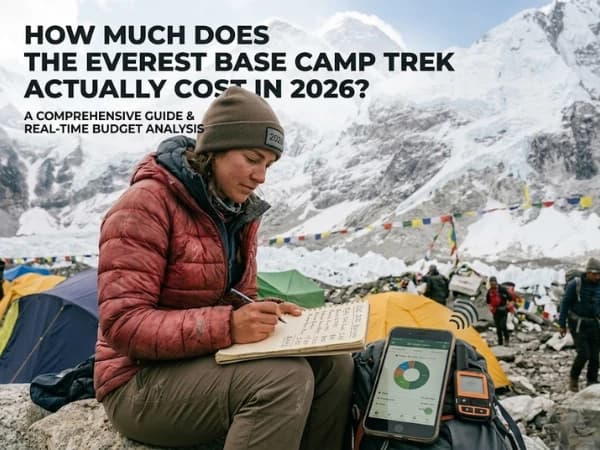
An honest, complete, fully budgeted EBC trek from the United Kingdom costs approximately twenty-two hundred to twenty-six hundred dollars. An Annapurna Circuit costs fourteen hundred to nineteen hundred. A Poon Hill costs eleven hundred to fifteen hundred. A Langtang costs twelve hundred to seventeen hundred.
These numbers include everything, flights, visa, insurance, trek package, tips, personal spending. They are real. They cannot be reduced below a certain floor without removing something that matters.
But they can be optimised. Book direct instead of through an agent: save five hundred to a thousand dollars. Choose the road route to EBC: save two hundred to three hundred. Trek in shoulder season: save ten to twenty percent. Carry a power bank and purification tablets: save fifty to one hundred and fifty dollars. Eat dal bhat: save a dollar per meal.
Added together, these optimisations reduce the total cost by seven hundred to fifteen hundred dollars, without compromising the guide quality, the safety, the accommodation, the food, or the experience that makes Nepal trekking one of the most extraordinary things a human being can do with their legs and their time on this planet.
Budget trekking in Nepal is not about spending less. It is about spending wisely. And the wisest investment you will ever make is the one that puts you on a trail in the Himalayas with a good guide, a full stomach, and a view that no amount of money could improve.