Why Kiwi Trampers Are Booking Direct with a Nepali Family Company
New Zealand has some of the finest tramping in the world. If you've walked the Milford Track, crossed the Tongariro Alpine Crossing, or completed any of the Great Walks, you already know what it means to earn a view. You know the rhythm of multi-day walking, the satisfaction of a hut at the end of a long day, and the deep quiet of being far from roads.
Nepal takes everything you love about tramping and amplifies it. The mountains are higher, the culture is deeper, and the trails pass through villages where life hasn't changed much in generations. And here's the thing New Zealand trampers appreciate: Nepal's teahouse system works much like DOC huts. Walk during the day, sleep in a lodge at night, repeat.
If you book through a New Zealand adventure travel company, you'll pay Kiwi prices for a trek that's run entirely by a Nepali company on the ground. Book directly with The Everest Holiday and you'll pay 40-60% less for the same trails, same lodges, and better guides. We are the source.
Trek Prices in New Zealand Dollars
| Trek | Budget (NZD) | Standard (NZD) | Luxury (NZD) |
|---|---|---|---|
| Everest Base Camp 12 Days | NZD 1,105 | NZD 1,822 | NZD 3,058 |
| Annapurna Base Camp 10 Days | NZD 765 | NZD 1,326 | NZD 2,125 |
| Poon Hill 5 Days | NZD 366 | NZD 604 | NZD 978 |
| Langtang Valley 8 Days | NZD 646 | NZD 1,105 | NZD 1,785 |
| Manaslu Circuit 12 Days | NZD 1,105 | NZD 1,675 | NZD 3,398 |
| Mardi Himal 6 Days | NZD 442 | NZD 714 | NZD 1,188 |
All prices include permits, licenced guide, porter, accommodation, meals (Standard and Luxury tiers), and ground transport from Kathmandu. We offer three tiers so you choose exactly how you want to trek.
The Everest Holiday Advantage for Kiwi Trampers
- Direct booking, no middleman — New Zealand adventure companies and international operators mark up 40-60%. We are the company that actually runs your trek.
- Pay securely online — We are the only Nepal trekking company with a direct bank payment gateway through Himalayan Bank Limited. Your money is protected by Nepal's most trusted commercial bank.
- Private treks, your dates — Every trek is private. Pick your dates, your pace, your group. No joining strangers on a bus tour.
- WhatsApp planning — Shreejan responds within 30 minutes during Nepal business hours. Plan everything over WhatsApp.
- Three tiers, one family — Budget for backpackers, Standard for comfort, Luxury for premium lodges. Same expert guides on every tier.
Getting to Kathmandu from New Zealand
There are no direct flights from New Zealand to Nepal. The most common routes connect through Australia, Singapore, or Kuala Lumpur. Total travel time is 15-20 hours depending on your connection.
| From | Via | Airlines | Total Time | Cost (Return, NZD) |
|---|---|---|---|---|
| Auckland (AKL) | Singapore (SIN) | Singapore Airlines/Scoot | 16-19 hrs | NZD 1,200-2,200 |
| Auckland (AKL) | Kuala Lumpur (KUL) | Malaysia Airlines/AirAsia | 16-20 hrs | NZD 1,100-2,000 |
| Auckland (AKL) | Sydney (SYD) + Bangkok (BKK) | Qantas/Jetstar + Thai Airways | 17-21 hrs | NZD 1,200-2,300 |
| Auckland (AKL) | Delhi (DEL) | Air New Zealand + Air India | 16-20 hrs | NZD 1,300-2,500 |
| Christchurch (CHC) | Singapore (SIN) | Singapore Airlines | 17-20 hrs | NZD 1,300-2,400 |
Pro tip: Singapore Airlines via Singapore and Malaysia Airlines via Kuala Lumpur tend to offer the best combination of price and schedule. Book 2-3 months ahead. Many Kiwi trampers add a day or two in Singapore or Bangkok to break the journey, which can also make the flights cheaper with separate bookings.
Visa Information for New Zealand Citizens
New Zealand citizens need a tourist visa to enter Nepal. The easiest option is the visa on arrival at Tribhuvan International Airport in Kathmandu.
- 15 days: USD 30 (approximately NZD 51)
- 30 days: USD 50 (approximately NZD 85)
- 90 days: USD 125 (approximately NZD 213)
Bring your New Zealand passport (valid for at least 6 months), one passport-size photo, and cash in USD. The process takes 15-30 minutes at the airport. You can also apply online at nepaliport.immigration.gov.np before your trip to save time on arrival.
Best Months to Trek from New Zealand
- October-November (NZ spring): Nepal's best weather window. Clear skies, stable temperatures, spectacular mountain views. Peak season, so book early. Perfect for Everest Base Camp and Annapurna. You'll swap New Zealand's spring for Nepal's autumn brilliance.
- March-May (NZ autumn): Nepal's spring. Warmer temperatures and rhododendron forests in full bloom. Slightly more cloud in the afternoons but excellent trekking conditions. Great for Langtang and Poon Hill.
- December-February (NZ summer): Nepal's winter. Cold but clear at lower altitudes. Fewer crowds, lower prices. Good for Poon Hill and Mardi Himal. Not recommended for Everest Base Camp or Manaslu unless experienced in cold conditions. Many Kiwis like this option as it avoids taking leave during NZ's best months.
- June-September (NZ winter): Nepal's monsoon. Avoid for most treks. Exception: Upper Mustang and Dolpo sit in a rain shadow area.
For Kiwi professionals: October-November is the sweet spot. You avoid NZ's summer holiday rush at home and get Nepal's best trekking weather. The Anzac Day long weekend in April can be extended into a spring Nepal trek. School holidays in July are monsoon in Nepal, so plan around it.
From the Great Walks to the Himalayas: What to Expect
Kiwi trampers are among the best-prepared trekkers who come to Nepal. You're used to multi-day walks, hut systems, variable weather, and carrying your own gear. Here's how Nepal compares.
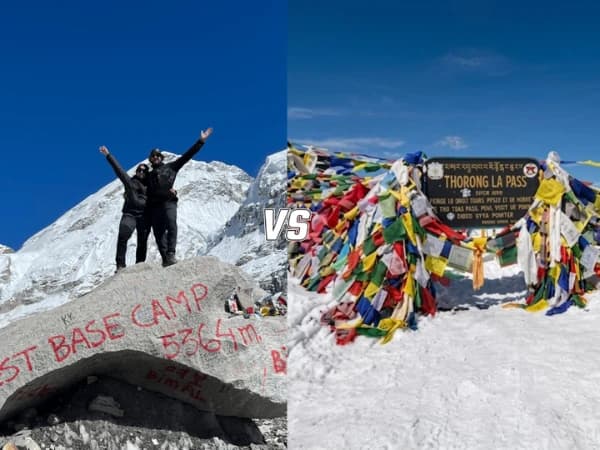
- Altitude is the big difference. Aoraki/Mount Cook is 3,724m. Everest Base Camp is 5,364m. Most Great Walks top out under 1,500m. Above 3,000m your body reacts differently regardless of fitness, and our itineraries include acclimatisation days to keep you safe.
- Teahouses are like DOC huts, but with meals. Simple twin rooms, shared bathrooms, warm blankets. The biggest difference from New Zealand: someone cooks your food. Dal bhat (rice, lentils, vegetables) with unlimited refills, plus momos, noodles, and more. No need to carry a stove or dehydrated meals.
- You carry less. In New Zealand you carry everything. In Nepal, your porter carries up to 15kg. You walk with just a daypack containing water, camera, and snacks. For experienced trampers used to 20kg packs, this feels like walking on air.
- The tracks are different. Nepal's trails are rougher than NZ's well-maintained Great Walk tracks. Expect stone steps, river crossings, and steep sections. But if you've walked the Routeburn or Kepler in bad weather, you can handle anything Nepal throws at you.
- The scale is extraordinary. New Zealand's Southern Alps are beautiful, but the Himalayas are on another level. Peaks of 7,000m and 8,000m line the horizon. The vertical relief from valley to summit is staggering.
- You have a licenced guide. Since 2023, Nepal law requires all trekkers to have a licenced guide. Our guides are government-trained, carry pulse oximetres, and know the trails intimately.
Our Most Popular Treks for Kiwi Trampers
Everest Base Camp Trek — 12 Days
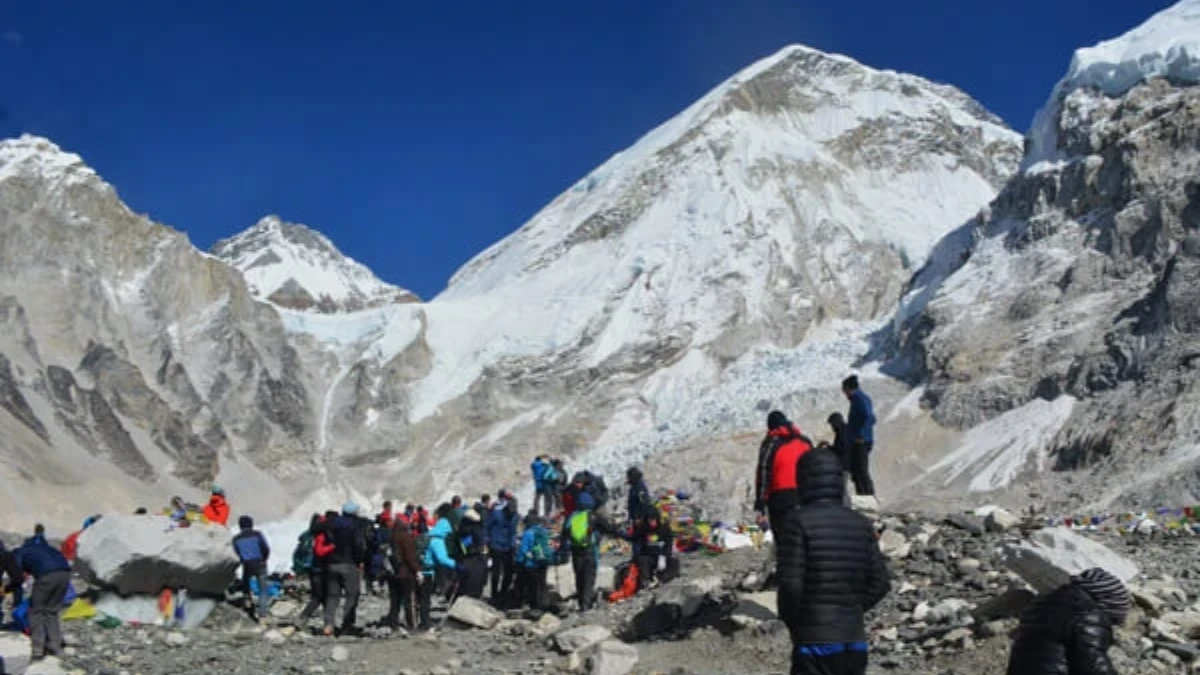
The ultimate trek. Stand at 5,364m in the shadow of the world's tallest mountain. Walk through Sherpa villages, cross suspension bridges over glacial rivers, and watch sunrise from Kala Patthar (5,545m). Three tiers: Budget NZD 1,105 | Standard NZD 1,822 | Luxury NZD 3,058 per person. Permits, guide and ground transport in all tiers. Porter: none on Budget (you carry your own pack), one per two trekkers on Standard, one per trekker on Luxury. Meals included on Standard and Luxury (Budget excludes meals).
Annapurna Base Camp Trek — 10 Days
Walk through rice terraces, bamboo forests, and natural hot springs to the amphitheatre of Annapurna (8,091m). The diversity of landscape in 10 days will astonish even well-travelled Kiwi trampers. Budget NZD 765 | Standard NZD 1,326 | Luxury NZD 2,125 per person.
Poon Hill Trek — 5 Days
The perfect introduction to Himalayan trekking. A short, rewarding trek with a famous sunrise viewpoint at 3,210m overlooking Annapurna and Dhaulagiri. Think of it as Nepal's Tongariro Crossing stretched over five days. Budget NZD 366 | Standard NZD 604 | Luxury NZD 978 per person.
Langtang Valley Trek — 8 Days
The closest major trek to Kathmandu. Tamang culture, yak pastures, cheese factories, and views of Langtang Lirung (7,227m). A quieter experience with genuine village life. Budget NZD 646 | Standard NZD 1,105 | Luxury NZD 1,785 per person.
Manaslu Circuit Trek — 12 Days
The quieter alternative to the Annapurna Circuit. Cross the Larkya La Pass at 5,160m through a restricted area with limited trekker numbers. This is the trek for experienced Kiwi trampers who want something wild and remote. Budget NZD 1,105 | Standard NZD 1,675 | Luxury NZD 3,398 per person.
Mardi Himal Trek — 6 Days
Nepal's newest trail. Quiet ridgeline walking with close-up views of Machhapuchhre (Fishtail). The solitude and ridge-walking will remind you of the Hump Ridge Track, but at 4,500m. Budget NZD 442 | Standard NZD 714 | Luxury NZD 1,188 per person.
What Kiwi Trampers Need to Know
Permits
All trekking permits are included in our package price. You need: TIMS card (Trekkers' Information Management System) plus National Park or Conservation Area entry permit. For restricted areas (Manaslu, Upper Mustang, Dolpo), a special restricted area permit is required. We handle everything. No DOC passes needed here.
Currency
Nepal uses Nepali Rupees (NPR). Exchange NZD or USD at the airport or in Kathmandu's Thamel district. ATMs in Kathmandu and Pokhara accept Visa and Mastercard (ANZ and ASB Visa cards work well internationally). Carry cash for the trail as there are no ATMs above Namche Bazaar (Everest region) or Chame (Annapurna region). Budget approximately NZD 15-25 per day for personal expenses on the trail.
Mobile and Internet
Buy an NCell SIM card at Kathmandu airport (approximately NZD 9 with data pack). It works on most of the trail up to Namche Bazaar and Dingboche. Your NZ SIM will work with roaming (Spark, Vodafone, 2degrees) but charges are expensive. Wi-Fi is available at most teahouses for NPR 200-500 per session.
Weather Comparison
New Zealand's changeable mountain weather is good preparation for Nepal. You're used to four seasons in one day. Nepal's trekking seasons (October-November and March-May) are generally more stable than NZ conditions, with clearer skies and less rain. But temperatures at altitude are colder than anything in New Zealand outside of Aoraki/Mount Cook region. Expect near-freezing nights above 4,000m and well below freezing above 5,000m.
Altitude Sickness
This is the biggest risk. Even experienced Kiwi trampers who've been fit and capable at lower elevations can be affected by altitude above 3,000m. Fitness does not prevent altitude sickness. Our guides carry pulse oximetres and monitor your oxygen levels daily. We build acclimatisation days into every itinerary. If symptoms appear, we descend immediately.
Insurance
Travel insurance with helicopter evacuation cover is mandatory for all trekkers. New Zealand providers like Southern Cross Travel Insurance and Cover-More offer adventure travel policies. Check that yours covers trekking above 5,000m and helicopter rescue. World Nomads is also popular with Kiwi trampers. Cost: approximately NZD 80-150 for two weeks. We require confirmation before departure.
About The Everest Holiday
We are a three-generation Himalayan family company. Our grandfather Hari Lal Simkhada arranged logistics for Himalayan expeditions in the 1960s and 70s. Our father Ganesh Prasad Simkhada has held senior positions at the Nepal Tourism Board and Nepal Mountaineering Association. Today, Shreejan Simkhada and Shamjhana Basukala run The Everest Holiday with 80+ guides and staff.
- TAAN Member #1586 — Nepal's official trekking agency association
- Tourism Licence 2838/072 — Government of Nepal
- 360+ verified reviews across TripAdvisor (4.9 stars), Google (4.9 stars), and Trustpilot (5 stars)
- TripAdvisor Travellers' Choice 2024
- Selected by Nepal Tourism Board to represent Nepal at MATKA 2026 Helsinki
- Secure online payment through Himalayan Bank Limited — the only Nepal trekking company with direct bank payment
Our Charity — Nagarjun Learning Center
A portion of every booking supports the Nagarjun Learning Center, founded by our family in 2019. We provide free education and hot meals to 70 children across 7 learning centres in rural Nepal, free medical care to 600+ people, and empowerment programmes for 275+ women. The centre is verified and listed on the UN Partner Portal.
Your trek doesn't just change your life — it changes theirs.
Frequently Asked Questions — Kiwi Trampers
Do New Zealand citizens need a visa for Nepal?
Yes. You can get a visa on arrival at Kathmandu airport. Bring your NZ passport (valid 6+ months), one photo, and USD 30-50 in cash. The process takes 15-30 minutes. You can also apply online before your trip.
Do I need a guide to trek in Nepal?
Yes. Since 2023, Nepal law requires all trekkers to have a licenced guide. Unlike New Zealand where you can tramp independently, Nepal requires professional guidance. Our guides are government trained and licenced, and several hold Bachelor's degrees in Mountaineering.
How does Nepal compare to the Great Walks?
The teahouse system is similar to DOC huts but with meals provided. Trails are rougher and steeper. The scale is bigger. Altitude adds a completely new dimension. But if you've completed multi-day Great Walks, you have the mindset and fitness base for Nepal. The biggest adjustment is altitude, not difficulty.
How fit do I need to be?
You should be able to walk 5-7 hours daily on hilly terrain. If you regularly tramp in New Zealand's backcountry, you're well prepared. The key addition is altitude training: focus on cardio and stair climbing 8-12 weeks before. No mountaineering skills needed for standard treks.
Can I trek solo or do I need a group?
All our treks are private. You don't join a group. It's just you, your guide, and your porter. Solo trampers, couples, families, and friend groups all welcome. Minimum 1 person, maximum 20.
Do I really need a porter?
Kiwi trampers are used to carrying their own gear, but we strongly recommend a porter. At altitude, every kilogram matters. The porter carries up to 15kg, letting you walk with just a daypack. This makes a significant difference above 4,000m and lets you enjoy the trail rather than battle your pack. Portering also provides vital employment in rural Nepal.
What if I get altitude sickness?
Our guides are trained in altitude sickness prevention and carry pulse oximetres. We monitor your oxygen levels twice daily above 3,000m. If serious symptoms appear, we descend immediately and coordinate helicopter evacuation if needed. Travel insurance with helicopter cover is mandatory.
How do I book?
Choose your trek, pick your tier (Budget/Standard/Luxury), and pay a 10% deposit online through our secure Himalayan Bank payment gateway. The remaining balance is due before your trek starts. Or simply WhatsApp Shreejan directly and we'll plan everything together.
Plan Your Nepal Trek Today
New Zealand trampers are built for this. You've got the fitness, the mindset, and the love of wild places. Nepal is the natural next step after the Great Walks. We'll make it personal, safe, and yours. Every detail is your choice: dates, pace, tier, route.
WhatsApp:+977 9810351300 (Shreejan responds within 30 minutes during Nepal business hours)
Email:[email protected]
Website:theeverestholiday.com
Three generations. One family. Your Himalayas.
For trekkers from New Zealand, our New Zealand trekkers' country guide consolidates Auckland/Wellington connection routes, NZD pricing, and the route comparisons most relevant to Kiwi trampers used to multi-day backcountry trips.
Travelling from New Zealand? Our Everest Base Camp Trek (12 Days) is private (your group only, no strangers), 2026 dates open, From USD $1399. WhatsApp us for tailored 2026 dates and current departures.