
Why Are Korean Hikers Choosing Nepal Over Domestic Mountains
South Korea has the highest hiking participation rate in Asia. Over 20 million Koreans hike regularly, and on any given weekend, Bukhansan alone draws more visitors than most national parks see in a month. If you've conquered Bukhansan, stood on the summit of Hallasan, or traversed the ridgeline of Seoraksan, you already know the feeling: the quiet pride of reaching a peak, the camaraderie on the trail, the warmth of a meal earned by effort.
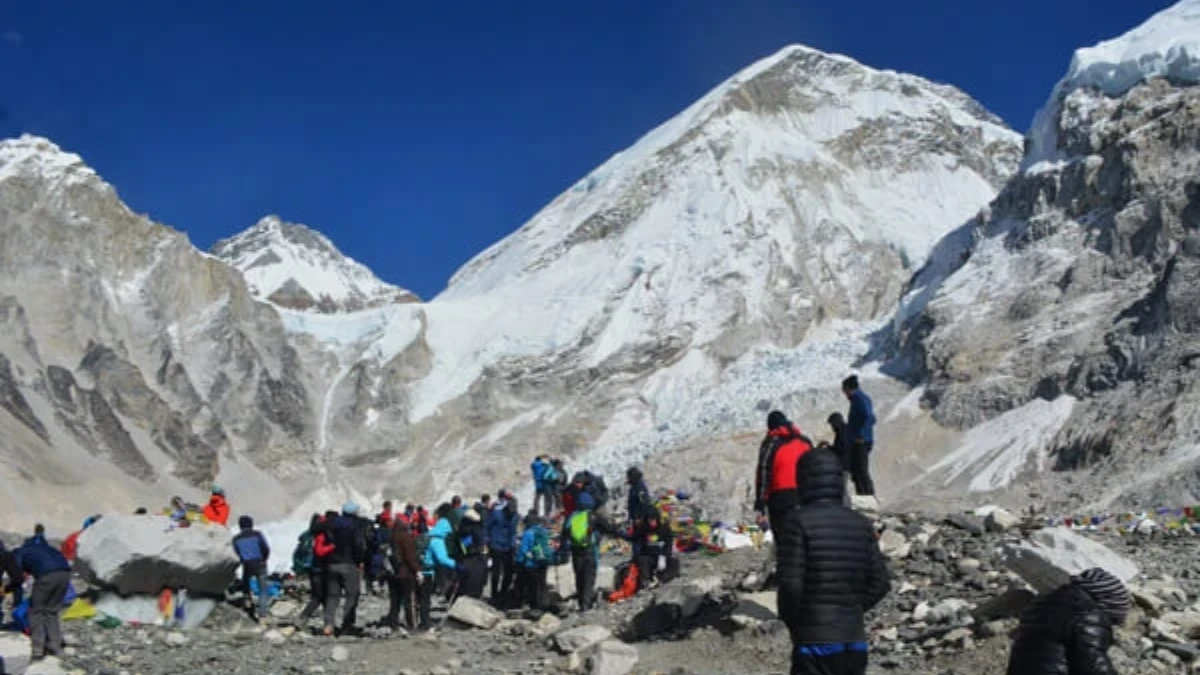
Now imagine that same feeling at 5,364 metres, with the world's tallest mountain towering above you.
Nepal is the natural next step for Korean hikers. The trails are well-marked, the teahouses are warm, the food is rice-based and filling, and the mountains are beyond anything you've seen before. And with The Everest Holiday, you'll trek with a three-generation Himalayan family who treats every guest like one of their own.
Korea to Nepal: Closer Than You Think
Korean Air flies Incheon to Kathmandu nonstop in about six and a half hours, which is far and away the fastest way to reach us. It is a seasonal service rather than a year-round one, so check the schedule against your own dates before you build a plan around it. The rest of the year, and often for a better fare, the one-stop connections below are the dependable backbone, and that way most Korean trekkers reach Kathmandu within 10 to 14 hours door-to-door.
| Route | Airlines | Total Travel Time | Approx. Return Fare (KRW) |
|---|---|---|---|
| ICN → KTM nonstop | Korean Air, seasonal | About 6 hours 15 minutes | Varies with the season |
| ICN → Bangkok (BKK) → KTM | Thai Airways, Korean Air + Nepal Airlines | 10–12 hours | ₩750,000–₩1,200,000 |
| ICN → Singapore (SIN) → KTM | Singapore Airlines, Scoot + Buddha Air | 12–14 hours | ₩800,000–₩1,350,000 |
| ICN → Delhi (DEL) → KTM | Asiana, Air India + IndiGo | 11–13 hours | ₩700,000–₩1,100,000 |
| ICN → Doha (DOH) → KTM | Qatar Airways | 14–16 hours | ₩850,000–₩1,400,000 |
Pro tip: Bangkok is the most popular transit hub for Korean trekkers heading to Nepal. Thai Airways and Korean Air both serve the ICN–BKK route multiple times daily, and onward flights to Kathmandu are frequent and affordable. Book 2 to 3 months ahead for the best fares. If you're flexible on dates, mid-week departures are often ₩100,000–₩200,000 cheaper.
Visa for Korean Citizens
South Korean passport holders receive a visa on arrival at Tribhuvan International Airport in Kathmandu. The process takes 15 to 30 minutes. Bring a passport-size photo and the fee in USD cash:
- 15-day visa: USD $30 (approximately ₩40,800)
- 30-day visa: USD $50 (approximately ₩68,000)
- 90-day visa: USD $125 (approximately ₩170,000)
Most trekkers choose the 30-day visa, which covers even the longest standard treks with time to spare for exploring Kathmandu and Pokhara.
From Bukhansan to Base Camp: Korean Hiking Culture Meets the Himalayas
Korea's hiking culture is among the strongest in the world. The country has over 20 mountain ranges, and hiking is not just exercise but a social tradition that cuts across every generation. Grandparents hike with grandchildren. Office colleagues hike together on weekends. Trail fashion is taken seriously, and Korean outdoor brands like Black Yak, Kolon Sport, and K2 are worn with pride on every summit.
This culture translates beautifully to Nepal trekking. Here's how your Korean hiking experience prepares you:
| Korean Trail | Elevation | Nepal Equivalent | Elevation |
|---|---|---|---|
| Bukhansan (북한산) | 836m | Poon Hill | 3,210m |
| Seoraksan (설악산) | 1,708m | Mardi Himal | 4,500m |
| Jirisan (지리산) | 1,915m | Annapurna Base Camp | 4,130m |
| Hallasan (한라산) | 1,950m | Langtang Valley | 3,870m |
| Bukhansan Ridge Traverse | Multi-peak | Everest Base Camp | 5,364m |
If you can complete the Hallasan sunrise hike or the Jirisan ridge traverse, you have the endurance for most Nepal treks. The main difference is altitude. Above 3,500 metres, your body needs time to adjust regardless of fitness. Our guides build acclimatisation days into every itinerary and monitor your oxygen levels with pulse oximeters twice daily.
Chuseok Timing: Korea's Best-Kept Trekking Secret
Chuseok (추석), Korea's harvest festival, falls in September or October each year. Many Koreans receive 3 to 5 days off work, and with strategic leave, a 10 to 14-day window opens perfectly. This overlaps with Nepal's peak trekking season, when skies are clearest and temperatures are most comfortable.
October in Nepal offers:
- Clear, stable weather with views stretching to the horizon
- Daytime temperatures of 10–15°C at 3,500m (similar to a crisp Korean autumn day)
- Post-monsoon trails that are green and lush
- The Dashain festival atmosphere in Kathmandu, Nepal's biggest celebration
Spring (March to May) is the second-best window, coinciding with Korean school holidays and offering blooming rhododendron forests at lower elevations. If you can combine a few days of annual leave with public holidays in either season, you have a perfect trekking trip.
Trek Pricing for Korean Trekkers, 2027 (KRW)
All prices are per person and include permits, licensed guide, porter, accommodation, meals (Standard and Luxury tiers), and ground transport from Kathmandu. We offer three tiers so you choose exactly how you want to trek.
We price in US dollars. The won figures below are converted at about 1,360 KRW to the dollar, the rate on 16 September 2026. Exchange rates move, so treat the won as a guide and the dollar as the price you actually pay. These prices hold for 2027 departures too, so booking a 2027 trek today costs the same as booking a 2026 one.
Everest Base Camp Trek: 12 Days
The ultimate Himalayan goal. Stand at 5,364m in the shadow of Sagarmatha. Walk through Sherpa villages, cross suspension bridges over glacial rivers, and witness the sunrise from Kala Patthar at 5,545m.
For the full breakdown see our Everest Base Camp cost guide.
Budget ₩1,900,000 | Standard ₩3,400,000 | Luxury ₩6,800,000
View full itinerary and book →
Annapurna Base Camp Trek: 9 Days
Walk through rice terraces, bamboo forests, and hot springs to the amphitheatre of Annapurna (8,091m). A varied and visually striking trail that rewards you with one of the most dramatic mountain panoramas on earth.
Budget ₩680,000 | Standard ₩1,090,000 | Luxury ₩1,900,000
View full itinerary and book →
Poon Hill Trek: 6 Days
The perfect first Himalayan trek and ideal for shorter holidays. Sunrise over Annapurna and Dhaulagiri from 3,210m. Moderate difficulty, suitable for most fitness levels, and a wonderful introduction to Nepal's teahouse culture.
Budget ₩680,000 | Standard ₩1,020,000 | Luxury ₩1,510,000
Langtang Valley Trek: 8 Days
The closest major trek to Kathmandu, through Tamang villages and yak pastures with views of Langtang Lirung (7,227m). Quieter trails, authentic cultural encounters, and a powerful story of community rebuilding after the 2015 earthquake.
Budget ₩500,000 | Standard ₩880,000 | Luxury ₩1,360,000
Manaslu Circuit Trek: 12 Days
The quieter alternative to the Annapurna Circuit. Cross the Larkya La Pass at 5,160m in a restricted area that sees a fraction of the traffic. Special permit required, which we handle entirely.
Budget ₩1,090,000 | Standard ₩2,170,000 | Luxury ₩2,850,000
Mardi Himal Trek: 7 Days
Nepal's newest trekking trail. Quiet ridgeline walking with close-up views of Machhapuchhre (Fishtail), the mountain that has never been summited. Perfect for a Chuseok long weekend trek.
Budget ₩620,000 | Standard ₩1,150,000 | Luxury ₩1,510,000
What Each Tier Includes
| Feature | Budget | Standard | Luxury |
|---|---|---|---|
| Licensed guide | Yes | Yes | Yes |
| Porter | None (carry your own) | 1 per 2 trekkers | 1 per trekker |
| All permits | Yes | Yes | Yes |
| Teahouse accommodation | Basic twin | Best available | Best available (premium lodges) |
| Meals on trek | Not included | All meals | All meals + welcome/farewell dinner |
| Airport transfers | Yes | Yes | Yes |
| Ground transport | Yes | Yes | Private vehicle |
What Korean Trekkers Need to Know
Food on the Trail: Rice, Not Ramyeon
Good news for Korean trekkers: the staple trail meal in Nepal is dal bhat, which is rice, lentil soup, vegetables, and pickle, served on a metal plate with unlimited refills. If you eat rice at every meal in Korea, you will feel at home with dal bhat in Nepal.
The pickle (achar) is not kimchi, but it fills a similar role: tangy, spiced, and served alongside every meal. You'll also find momos (Nepali dumplings similar to mandu), noodle soups (thukpa), fried rice, and egg dishes at most teahouses. Vegetarian options are plentiful.
A few honest notes:
- Kimchi and gochujang are not available on the trail. If these are essential to your comfort, bring small packets of gochujang paste or dried seaweed (김) from home.
- Instant ramyeon (라면) is sold at some higher-altitude teahouses, though at marked-up prices.
- Food becomes simpler above 4,000m. Dal bhat, noodles, and potatoes are the reliable options.
- Avoid raw salads and uncooked food above 3,000m. Stick to hot, freshly cooked meals.
- Bring your own chopsticks if you prefer them. Teahouses provide spoons and forks.
K-Beauty at Altitude: Skincare Tips for the Himalayas
Korean trekkers often ask about skincare on the trail, and rightly so. The mountain environment is dramatically different from Seoul or Busan: intense UV radiation, extremely dry air, wind exposure, and no access to your full skincare routine for days at a time.
Here's what experienced trekkers recommend:
- Sunscreen SPF 50+ PA++++: Non-negotiable. UV intensity increases roughly 10% per 1,000m of elevation. At 5,000m, you're receiving 50% more UV than at sea level. Reapply every 2 hours. Korean sunscreens from Missha, Innisfree, or Beauty of Joseon work brilliantly but bring more than you think you'll need.
- Heavy moisturiser: Swap your lightweight Korean essence for a thicker cream. The air above 3,000m is extremely dry. Consider a sleeping pack as your daily moisturiser. CeraVe or Laneige Cica Sleeping Mask travel well.
- Lip balm with SPF: Your lips will crack within days without protection. Bring at least two.
- Sheet masks: Skip them. They freeze at altitude and create waste. Bring a small pot of overnight cream instead.
- Cleansing: Micellar water and cotton pads work better than foam cleansers when water is limited. Hot water at teahouses costs ₩500–₩1,500 equivalent per flask, so plan accordingly.
- Hand cream: Your hands will dry out faster than your face. A small tube of shea-based cream is essential.
The key principle: simplify your routine to 3 to 4 products, make sun protection the priority, and accept that your skin will need a week to recover after the trek. It will recover.
Currency and Payments
Nepal uses the Nepali Rupee (NPR). As of September 2026, 1 KRW is worth about 0.11 NPR, so roughly ₩9 gets you 1 rupee. However, the easiest approach is to bring USD or use your Korean bank card at ATMs in Kathmandu and Pokhara.
- ATMs in Kathmandu accept Visa and Mastercard (check with your Korean bank about international withdrawal fees).
- There are no ATMs above Namche Bazaar on the Everest route or above Chame on the Annapurna route.
- Carry enough Nepali Rupees for personal spending on the trail: roughly ₩50,000–₩100,000 equivalent per week for snacks, hot drinks, Wi-Fi, and hot showers.
- Our trek prices are paid in US dollars or euros, by card or cash.
Mobile and Internet
On most of our treks a SIM card is arranged for you on arrival and included in the price. If you are travelling independently, buy buy an NCell SIM card at Tribhuvan International Airport upon arrival (about ₩7,000 with a data pack). Korean phone networks do not work in Nepal. NCell provides reasonable coverage on most major trekking routes up to Namche Bazaar (Everest) and Manang (Annapurna). Wi-Fi is available at most teahouses for a small fee (₩500–₩1,500 per session). Do not rely on mobile data above 4,000m.
Language
Our guides speak English fluently, and many teahouse owners speak basic English. Korean is not widely spoken in Nepal, but a few useful Nepali phrases will earn you warm smiles on the trail:
- Namaste: Hello
- Dhanyabad: Thank you
- Mitho chha: It's delicious
- Kati ho?: How much?
- Ramro: Beautiful/Good
Altitude Sickness
This is the single most important thing to understand before trekking in Nepal. Altitude sickness (고산병, gosanbyeong) can affect anyone regardless of fitness level. Korean hikers are typically very fit, but fitness does not protect against altitude sickness. The only proven prevention is gradual ascent with proper acclimatisation days.
Our guides carry pulse oximeters and monitor your blood oxygen levels twice daily above 3,000m. We build acclimatisation days into every itinerary above 4,000m. If serious symptoms appear, we descend immediately with no argument and no delay. Travel insurance with helicopter evacuation cover is mandatory.
Insurance
Travel insurance covering helicopter evacuation up to the highest point of your trek: 6,000 m for Everest Base Camp, 5,500 m for the Annapurna Circuit, 4,500 m for Annapurna Base Camp and Mardi Himal, and 3,500 m for Poon Hill is required for all trekkers. Korean insurers offering suitable coverage include Samsung Fire and Marine Insurance, DB Insurance, and Hyundai Marine and Fire Insurance. Check that your policy specifically covers "adventure sports" or "trekking up to 6,000m" and includes helicopter rescue. Cost is typically ₩50,000–₩150,000 for 2 to 3 weeks. We require confirmation of your policy before departure.
Permits
All trekking permits are included in our package price. You need a TIMS card (Trekkers' Information Management System) and a National Park or Conservation Area entry permit. For restricted areas like Manaslu and Upper Mustang, a special restricted area permit is required. We handle everything, so you don't need to visit any government offices.
Best Months to Trek from Korea
- October–November (Chuseok onwards): The best. Clear skies, stable weather, comfortable daytime temperatures. Peak season, so book early. Perfect for Everest Base Camp and Annapurna.
- March–May (봄, Spring): Rhododendron forests in bloom. Slightly warmer at lower elevations. Wonderful for Langtang, Poon Hill, and Mardi Himal.
- December–February (겨울, Winter): Cold but clear at lower elevations. Fewer crowds. Good for Poon Hill and Mardi Himal. Not recommended for Everest Base Camp or Manaslu unless you're experienced with cold-weather trekking.
- June–September (여름, Summer/Monsoon): Avoid for most treks. Exception: Upper Mustang and Dolpo sit in the rain shadow and remain dry.
Holiday planning tip: Combine Chuseok with a few days of annual leave for a 10 to 14-day trek. Korean National Foundation Day (October 3) and Hangul Day (October 9) often create extended holiday windows that align perfectly with Nepal's peak season.
About The Everest Holiday
We are a Himalayan family company. Our family has three generations of guiding in the Himalayas, and our grandfather Hari Lal Simkhada arranged logistics for Himalayan expeditions. Our father Ganesh Prasad Simkhada has held senior positions at the Nepal Tourism Board and Nepal Mountaineering Association. Today, Shreejan Simkhada and Shamjhana Basukala run The Everest Holiday with 80+ guides and staff.
- TAAN Member #1586: Nepal's official trekking agency association
- Tourism Licence 2838/072: Government of Nepal
- Over 300 reviews on TripAdvisor (4.9 stars), Google (4.9 stars) and Trustpilot (4.7 stars)
- Selected by Nepal Tourism Board to represent Nepal at MATKA 2026 Helsinki
- Secure online payment through Himalayan Bank Limited: a 10 percent deposit by card confirms your trek and the balance is paid in Kathmandu.
Why Korean Trekkers Choose Us
Korean hikers value preparation, safety, and quality equipment. We share those values. Every itinerary is designed with proper acclimatisation days, every guide is government-licensed, with wilderness first aid training, and every detail is planned so you can focus entirely on the experience.
We are not a large tour operator. We are a family. When you message us on WhatsApp or KakaoTalk, you're speaking directly to Shreejan, the CEO. When you arrive in Kathmandu, he personally briefs you. When you're on the trail, your guide reports to him daily. This is how trekking should work.
Our charity, the Nagarjun Learning Center
A portion of every booking supports the Nagarjun Learning Center, founded by our family. We provide free education and hot meals to 70 children across 7 learning centres in rural Nepal, free medical care to 600+ people, and empowerment programmes for 275+ women. The centre is verified and listed on the UN Partner Portal.
Your trek doesn't just change your life. It changes theirs.
Frequently Asked Questions: Korean Trekkers
Do Korean citizens need a visa for Nepal?
Yes, but it's simple. South Korean passport holders receive a visa on arrival at Kathmandu airport. Bring one passport-size photo and the fee in USD cash (USD $50 for 30 days). The process takes 15 to 30 minutes. No advance application is needed.
Can I pay in Korean Won (KRW)?
We quote prices in KRW for your convenience, but we are paid in US dollars or euros. You pay the deposit online by card through our Himalayan Bank payment gateway, which processes international cards securely. The balance is paid in Kathmandu in US dollars or euros, in cash or by card (card payments carry a 3.5% bank charge).
How fit do I need to be?
If you regularly hike Bukhansan or Seoraksan, you have a strong foundation. For Poon Hill and Mardi Himal, weekend hiking fitness is sufficient. For Everest Base Camp and Manaslu, start training 8 to 12 weeks before departure with regular hiking, stair climbing, and cardio. You should be comfortable walking 5 to 7 hours daily on hilly terrain. No mountaineering skills are needed for any of our standard treks.
Is the food suitable for Korean tastes?
The staple trail meal is dal bhat: rice, lentil soup, vegetables, and pickle with unlimited refills. Most Korean trekkers adapt quickly because the base is rice. Kimchi and gochujang are not available on the trail, so bring small packets if these are important to you. Momos (similar to mandu), noodle soups, fried rice, and egg dishes are available at most teahouses.
Can I use my Korean phone in Nepal?
Korean mobile networks (SKT, KT, LG U+) do not work in Nepal. Buy an NCell SIM at Kathmandu airport for about ₩7,000 with a data pack. Coverage is reasonable on major routes up to mid-altitude. Wi-Fi is available at most teahouses for a small fee. Download offline maps (Naver Map does not cover Nepal; use Maps.me or AllTrails) before departure.
Is it safe for solo Korean trekkers?
Absolutely. All our treks are private. You don't join a group. It's just you, your guide, and your porter. Solo trekkers, couples, families, and friend groups are all welcome. Minimum 1 person, maximum 20. Nepal is consistently ranked among the safest countries in Asia for tourists, and crime on trekking trails is extremely rare.
What about altitude sickness? I'm very fit.
Fitness does not prevent altitude sickness. It affects everyone differently, and even Olympic athletes can suffer from it. The only proven prevention is gradual ascent. Our itineraries include acclimatisation days at critical altitudes, and our guides monitor your oxygen levels twice daily with pulse oximeters. If serious symptoms appear, we descend immediately. This is non-negotiable. Travel insurance with helicopter evacuation cover is mandatory.
What gear should I bring from Korea?
Korean outdoor brands like Black Yak, Kolon Sport, K2, and Eider make excellent trekking gear that performs well in the Himalayas. Bring your usual hiking boots (well broken-in), layered clothing, a down jacket for evenings above 3,500m, and rain gear. We provide a full packing list after booking. Trekking poles can be rented in Kathmandu if you prefer not to fly with them.
When should I book?
For peak season (October–November), book 2 to 3 months in advance. Chuseok period bookings fill quickly. For spring (March–May), 6 to 8 weeks is usually sufficient. We hold your spot with just a 10% deposit, and the balance is due before your trek starts. We are taking 2027 bookings now, at the same prices as 2026.
How do I book?
Choose your trek, pick your tier (Budget, Standard, or Luxury), and pay a 10% deposit online through our secure Himalayan Bank payment gateway. The remaining balance is due before your trek starts. Or simply message Shreejan directly on WhatsApp or KakaoTalk and we'll plan everything together.
A Typical Day on the Trail
In case you're used to the structured pace of Korean mountain huts and trail markers, here's what a day of trekking in Nepal actually looks like:
- 6:00 AM: Wake up in your teahouse room. Hot water for washing is available (small fee at higher altitudes). The mountains are clearest at dawn, so early risers are rewarded with the best views.
- 6:30–7:30 AM: Breakfast at the teahouse. Porridge, Tibetan bread with honey, eggs, or pancakes. Tea or coffee included with Standard and Luxury tiers.
- 7:30 AM–12:00 PM: Morning trek. This is typically the longest walking section of the day, 3 to 4 hours with rest stops. Your guide sets a steady pace and points out peaks, birds, and cultural landmarks along the way.
- 12:00–1:00 PM: Lunch at a teahouse along the trail. Dal bhat, fried rice, noodle soup, or momos. Rest and recharge.
- 1:00–3:30 PM: Afternoon trek. Usually shorter than the morning, 2 to 3 hours. Arrive at your teahouse for the night with plenty of daylight remaining.
- 4:00–5:30 PM: Free time. Explore the village, write in your journal, take photographs, or simply sit with a cup of masala tea and watch the light change on the peaks.
- 5:30–7:00 PM: Dinner in the communal dining room. This is where you meet trekkers from around the world. The wood stove is lit, stories are shared, and the stars above are brighter than anything you've seen from Korea.
- 7:30–8:00 PM: Bed. At altitude, your body needs rest. Most trekkers sleep early and sleep deeply.
The pace is gentler than you might expect. There's no rush, no competition, no summit time to beat. The Himalayas teach you to slow down, and Korean trekkers often tell us this is the most valuable lesson they bring home.
Packing Essentials for Korean Trekkers
Korean outdoor brands produce some of the best hiking gear in the world, and everything you already own will serve you well in Nepal. Here's a quick checklist tailored for Korean trekkers:
- Hiking boots: Waterproof, ankle-high, well broken-in. Brands like K2, Black Yak, and Kolon Sport all make excellent options.
- Layering system: Base layer (moisture-wicking), mid layer (fleece or light down), outer layer (waterproof and windproof). Temperatures range from 20°C during the day at lower elevations to -15°C at night above 4,500m.
- Down jacket: Essential for evenings at teahouses above 3,500m. A packable 800-fill jacket is ideal.
- Trekking poles: Highly recommended. If you don't want to fly with them, quality poles can be rented in Kathmandu for about ₩7,000–₩14,000 for the entire trek.
- Sunglasses: Category 3 or 4 UV protection. Snow glare above 4,000m can cause snow blindness without proper protection.
- Portable battery pack: 20,000mAh minimum. Charging at teahouses above 3,000m costs ₩500–₩1,500 per device, and electricity is not always reliable.
- Snacks from home: Dried seaweed (김), energy bars, dried fruit, and small packets of gochujang paste for adding to bland high-altitude meals.
- Toiletries: Your simplified K-beauty routine (see skincare section above), plus toilet paper (not always provided at teahouses) and hand sanitiser.
Your porter carries up to 20kg in a duffel bag, shared between two trekkers, so 10kg of your gear, so you only carry a daypack with water, snacks, sunscreen, camera, and an extra layer. We provide a full detailed packing list after booking.
Plan Your Nepal Trek Today
Whether you've hiked every peak in Korea or you're looking for your first international trekking adventure, Nepal's Himalayas are waiting. Every detail is your choice: dates, pace, tier, route. We handle the rest.
WhatsApp:+977 9810351300 (Shreejan responds within 30 minutes during Nepal business hours)
Email:[email protected]
Website:theeverestholiday.com
Three generations. One family. Your Himalayas.
For Korean travellers planning a Nepal trek, our Korea trekkers' country guide consolidates Incheon-to-Kathmandu routings, KRW cost breakdowns, and the route choices most popular with Korean hiking groups.
Travelling from South Korea? Our Everest Base Camp Trek (12 Days) is private (your group only, no strangers), 2027 dates open, From USD $1399. WhatsApp us for tailored 2027 dates and current departures.


 Chat with Shreejan