Why Do Japanese Trekkers Choose Local Nepal Companies?li Family Company
Japan and Nepal share something rare: a deep, quiet respect for mountains. You grow up with Fujisan on the horizon, walk the Japan Alps in summer, and understand that mountains are not just scenery. They are culture. They are spiritual. Nepal feels the same way about the Himalayas.
If you have climbed Kitadake or walked the Tateyama Kurobe route, Nepal is the natural next step. The trails are longer, the peaks are higher, and the culture is just as rich. But the experience of walking through mountain villages, eating simple meals, and sleeping surrounded by peaks will feel familiar to you.
The Everest Holiday is a three-generation Nepali family company. We do not run large group tours. Every trek is private, planned around your dates and pace. For Japanese trekkers who value attention to detail and personal service, this matters. You will not be grouped with strangers or rushed through an itinerary designed for someone else.
What Sets The Everest Holiday Apart for Japanese Guests?
- Private treks only - your guide, your porter, your pace. No joining group tours with strangers.
- Three generations of Himalayan expertise - our grandfather supported expeditions in the 1960s and 70s. Our father held senior positions at Nepal Tourism Board and Nepal Mountaineering Association. Today Shreejan Simkhada runs every trek personally.
- TAAN Member #1586 - registered with Nepal's official Trekking Agencies' Association.
- 360+ verified reviews across TripAdvisor (4.9 stars), Google (4.9 stars), and Trustpilot (5 stars).
- Secure bank payment through Himalayan Bank Limited - the only Nepal trekking company with a direct bank payment gateway. Your money is protected.
- Charity commitment - every booking supports the Nagarjun Learning Center, providing free education to 70 children in rural Nepal.
Trek Pricing in Japanese Yen
All prices are per person and include permits, licenced guide, porter, accommodation, meals (Standard and Luxury tiers), and ground transport from Kathmandu. We offer three tiers so you can choose exactly the level of comfort you want.
| Trek | Budget (¥) | Standard (¥) | Luxury (¥) |
|---|---|---|---|
| Everest Base Camp - 12 Days | ¥100,750 | ¥166,160 | ¥278,845 |
| Annapurna Base Camp - 10 Days | ¥69,750 | ¥120,900 | ¥193,750 |
| Poon Hill - 5 Days | ¥33,325 | ¥55,025 | ¥89,125 |
| Langtang Valley - 8 Days | ¥58,900 | ¥100,750 | ¥162,750 |
| Manaslu Circuit - 12 Days | ¥100,750 | ¥152,675 | ¥309,845 |
| Mardi Himal - 6 Days | ¥40,300 | ¥65,100 | ¥108,345 |
Prices are approximate at 1 USD = 155 JPY. We accept payment in USD, GBP, or JPY equivalent via our secure Himalayan Bank Limited gateway. Bank transfer through Wise is also available.
What Each Tier Includes
- Budget: Basic teahouse accommodation, licenced guide, all permits, ground transport (no porter, no meals). Meals are your own expense (approximately ¥1,500-2,500 per day on the trail).
- Standard: Everything in Budget plus all meals on the trail (breakfast, lunch, dinner), better teahouse rooms where available, and airport transfers in Kathmandu.
- Luxury: Everything in Standard plus the best available lodges, private rooms, welcome and farewell dinners in Kathmandu, and additional comfort items.
Getting to Kathmandu from Japan
There are no direct flights from Japan to Kathmandu. All routes require one connection, usually in Southeast Asia or India. Flight times range from 10 to 14 hours total depending on your layover.
| From | Via | Airlines | Total Time | Return Cost (¥) |
|---|---|---|---|---|
| Tokyo Narita (NRT) | Bangkok (BKK) | Thai Airways, ANA | 11-13 hrs | ¥80,000-¥150,000 |
| Tokyo Narita (NRT) | Singapore (SIN) | Singapore Airlines | 12-14 hrs | ¥90,000-¥160,000 |
| Tokyo Narita (NRT) | Delhi (DEL) | ANA, Air India | 11-13 hrs | ¥85,000-¥155,000 |
| Tokyo Haneda (HND) | Bangkok (BKK) | Thai Airways, JAL | 11-13 hrs | ¥85,000-¥155,000 |
| Osaka Kansai (KIX) | Bangkok (BKK) | Thai Airways, Peach | 11-14 hrs | ¥75,000-¥140,000 |
| Osaka Kansai (KIX) | Singapore (SIN) | Singapore Airlines, Scoot | 12-15 hrs | ¥80,000-¥150,000 |
Booking tip: The Bangkok route is usually cheapest and most frequent. Thai Airways offers same-day connections with short layovers at Suvarnabhumi Airport. Book 2-3 months ahead for the best fares. Budget carriers like Scoot and AirAsia also fly Bangkok-Kathmandu if you book the legs separately.
Visa Information for Japanese Passport Holders
Japanese citizens receive a visa on arrival at Tribhuvan International Airport in Kathmandu. No advance application is needed. The process is straightforward.
- 15 days: $30 USD (approximately ¥4,650)
- 30 days: $50 USD (approximately ¥7,750)
- 90 days: $125 USD (approximately ¥19,375)
Bring a passport-size photo and USD cash for the visa fee (exact amount helps). The airport has visa fee counters and electronic kiosks. Most trekkers need the 30-day visa. Processing takes 15-30 minutes on arrival.
Your passport must be valid for at least 6 months beyond your entry date. Japanese passports are among the strongest in the world, and Nepal welcomes Japanese visitors warmly.
From Fujisan to the Himalayas: Why Nepal Feels Right
Japan's mountain culture runs deep. The tradition of climbing Fujisan, walking pilgrimage routes like the Kumano Kodo, and spending weekends in the Japan Alps has created millions of experienced, well-prepared hikers. Nepal is the natural progression.
Here is what Japanese trekkers consistently tell us after their Nepal trip:
- The scale is staggering. Fujisan is 3,776m. Everest Base Camp is 5,364m. The Annapurna massif rises over 8,000m directly above the trail. Nothing in Japan prepares you for this, and that is exactly the point.
- The culture feels respectful and familiar. Nepali mountain communities share values you will recognise: hospitality, respect for elders, gratitude for nature. Buddhist prayer flags and small shrines line the trails, much like the torii gates and jizo statues on Japanese mountain paths.
- The organisation is different, but it works. Nepal operates at a different pace. Teahouses are simple. Schedules flex with weather. But with a private guide and a well-planned itinerary, everything runs smoothly. Our Japanese trekkers often say they appreciated learning to slow down.
Cherry Blossom Season Meets Spring Trekking
Japan's sakura season falls in late March and April. If you have seen the blossoms at home and want to extend your spring into something bigger, Nepal's spring trekking season overlaps perfectly. March to May brings clear skies, warming temperatures, and spectacular rhododendron forests across the Annapurna and Langtang regions. The hills turn red and pink with blooming flowers, and the high passes are open and stable.
For those who finish their sakura celebrations in early April, a Nepal trek starting mid-April is ideal timing. You arrive as the weather is at its best and the trails are lively but not overcrowded.
Autumn is equally compelling. October and November bring the clearest mountain views of the year. If you cannot travel during Golden Week, consider the culture day holiday period in November or year-end holidays in late December for shorter treks like Poon Hill.
Our Most Popular Treks for Japanese Trekkers
Everest Base Camp Trek - 12 Days
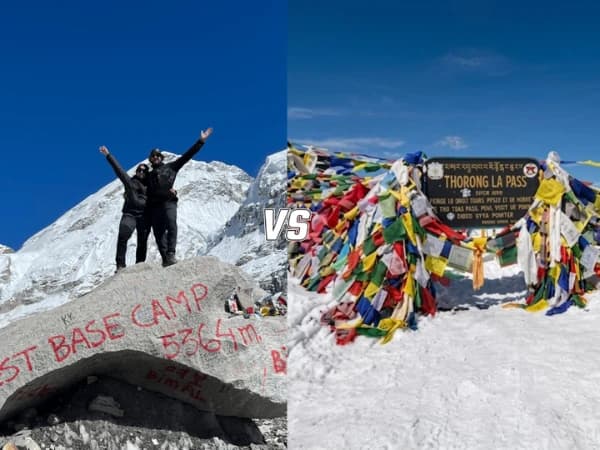
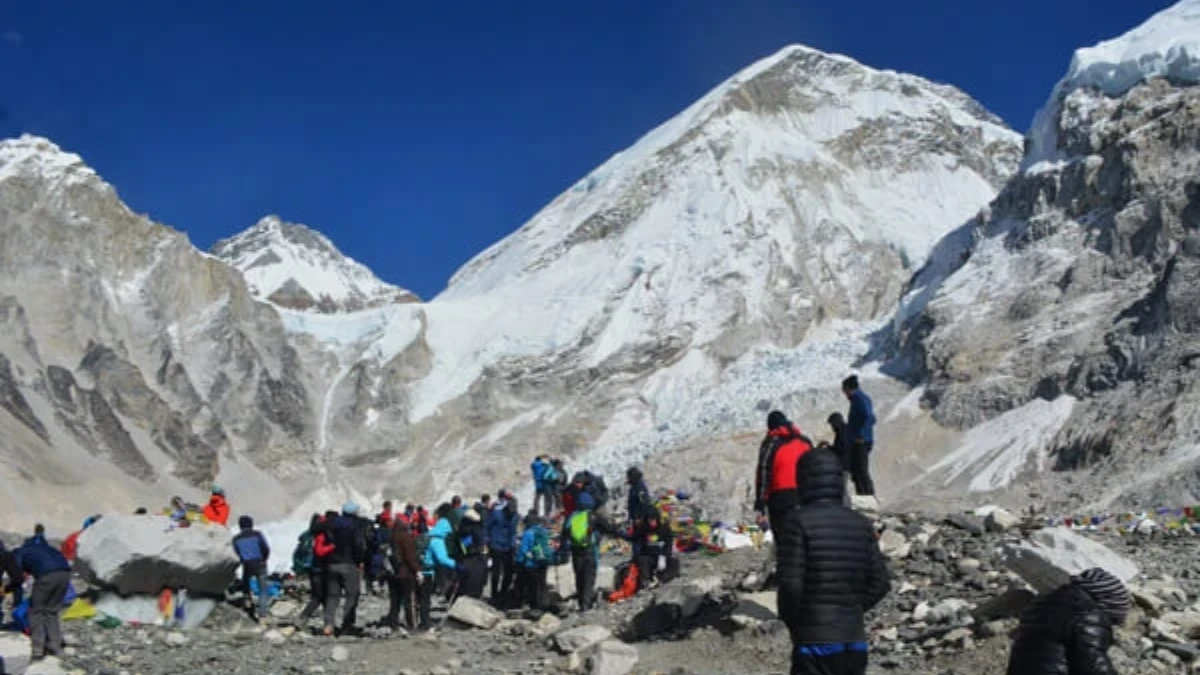
Stand at 5,364m in the shadow of the world's tallest mountain. Walk through Sherpa villages, cross suspension bridges over glacial rivers, and sleep in the Khumbu Valley beneath the highest peaks on earth. This is the trek that defines Nepal. Our itinerary includes two acclimatisation days and a sunrise climb to Kala Patthar (5,545m) for the most famous mountain view in the world. Budget ¥100,750 | Standard ¥166,160 | Luxury ¥278,845 per person.
Annapurna Base Camp Trek - 10 Days
Walk through rice terraces, bamboo forests, and hot springs into the Annapurna Sanctuary. The amphitheatre of peaks surrounding base camp is one of the most dramatic views in the Himalayas. Budget ¥69,750 | Standard ¥120,900 | Luxury ¥193,750 per person.
Poon Hill Trek - 5 Days
The perfect introduction to Nepal trekking. A short, accessible trail with a sunrise viewpoint at 3,210m overlooking Annapurna and Dhaulagiri. Ideal for a first visit or limited holiday time. Budget ¥33,325 | Standard ¥55,025 | Luxury ¥89,125 per person.
Langtang Valley Trek - 8 Days
The closest major trek to Kathmandu. Tamang culture, yak cheese factories, and views of Langtang Lirung (7,227m). Quiet trails and authentic village life. A favourite among trekkers who want to avoid crowds. From ¥58,900 (Budget) to ¥162,750 (Luxury) per person.
Manaslu Circuit Trek - 12 Days
A restricted area trek around the world's eighth highest mountain. Cross the Larkya La Pass at 5,160m. Fewer trekkers, bigger wilderness, and a genuine sense of remoteness. Special permit required, which we arrange. From ¥100,750 (Budget) to ¥309,845 (Luxury) per person.
Mardi Himal Trek - 6 Days
Nepal's newest official trekking trail. Quiet ridgeline walking with close-up views of Machhapuchhre (Fishtail Peak). Very few other trekkers. Perfect for those who want solitude and dramatic mountain scenery in under a week. From ¥40,300 (Budget) to ¥108,345 (Luxury) per person.
What Japanese Trekkers Need to Know
Food on the Trail
The staple trekking meal in Nepal is dal bhat: rice, lentil soup, vegetables, and pickle. It is served twice daily with unlimited refills. Japanese trekkers often find this comfortable because rice is the foundation of the meal, just as it is at home.
Beyond dal bhat, teahouses serve noodle soups, fried rice, momos (Nepali dumplings similar to gyoza), egg dishes, and Tibetan bread. Vegetarian options are available at every stop. Green tea and black tea are served throughout the day.
If you have specific dietary needs, let us know before the trek. Our guides communicate your requirements to each teahouse in advance. While the variety is limited above 4,000m, the food is filling and freshly prepared.
Honest note: The food is simple mountain fare, not Japanese-quality cuisine. Portions are generous but presentation is basic. Most trekkers grow to love dal bhat by the end of the trip. If you are particular about food, bring some comfort snacks from home. Japanese energy bars, dried fruit, and instant miso soup packets are all easy to carry and appreciated at altitude when appetite drops.
Accommodation: Teahouse Standards
We want to be straightforward about this, because Japanese travellers often have higher expectations for cleanliness and comfort than what basic teahouses provide.
- Budget tier: Basic twin rooms with thin mattresses, shared bathrooms, no hot water above 3,500m. Clean but very simple. Expect cold nights and basic facilities.
- Standard tier: Better teahouses with thicker mattresses, occasional hot showers (solar-heated), and slightly cleaner shared bathrooms. Still simple by Japanese standards.
- Luxury tier: The best lodges available on the route. Private bathrooms where they exist, heating in common areas, and better bedding. On popular routes like Everest and Annapurna, luxury lodges are genuinely comfortable. On remote routes like Manaslu, even the best lodges remain basic.
Bring your own sleeping bag liner, wet wipes, and hand sanitiser. A good head torch is essential. Toilets above 4,000m are squat-style and unheated. These are mountain lodges in a developing country, not Japanese ryokan. But the warmth of the hosts, the views from your window, and the peace of the mountains more than compensate.
Safety and Altitude
Altitude sickness is the primary risk on any Nepal trek. Tokyo is at sea level. Even if you have climbed Fujisan (3,776m), going above 5,000m is a different challenge that requires proper acclimatisation.
Our guides carry pulse oximetres and monitor your blood oxygen levels twice daily above 3,000m. Every itinerary includes acclimatisation days at key altitudes. If symptoms of serious altitude sickness appear, we descend immediately. There is no negotiation on this point.
Travel insurance with helicopter evacuation cover is mandatory. Japanese insurance companies such as Tokio Marine, Sompo, and Mitsui Sumitomo offer overseas travel policies with adventure sports coverage. Check that your policy covers helicopter rescue above 3,000m and medical treatment up to 6,000m. We require proof of insurance before departure.
Language
Our guides speak English fluently. While we do not currently have Japanese-speaking guides, most communication on the trail is straightforward: directions, meal orders, safety instructions. Many Japanese trekkers bring a small translation app on their phone as backup, but English is sufficient for the entire trek.
In Kathmandu and Pokhara, English is widely spoken in tourist areas. Basic phrases in Nepali are always appreciated: "Namaste" (hello), "Dhanyabad" (thank you), "Mitho chha" (delicious).
Connectivity
Buy an Ncell SIM card at Kathmandu airport (approximately ¥800 with a data pack). Bring your passport for registration. Mobile signal covers most of the trail up to Namche Bazaar (Everest region) and Chomrong (Annapurna region). Above that, coverage is patchy or nonexistent. Wi-Fi is available at most teahouses for a small fee (¥150-400 per session). Speeds are slow and unreliable. If you need to stay connected for work, plan your communications for lower-altitude stops. Many Japanese trekkers tell us that disconnecting from constant connectivity was one of the unexpected gifts of the trek.
Currency and Payments
Nepal uses the Nepali Rupee (NPR). ATMs in Kathmandu and Pokhara accept international cards including Japanese bank cards (Visa and Mastercard work reliably; JCB is accepted at some but not all ATMs). Carry enough cash for the trail as there are no ATMs above Namche Bazaar (Everest) or Chame (Annapurna). Budget approximately ¥3,000-5,000 per day for personal expenses on the trail (drinks, snacks, Wi-Fi, hot showers, device charging). Exchange money at banks or licenced money changers in Kathmandu's Thamel district for the best rates. Avoid airport exchange counters which offer lower rates.
Permits
All trekking permits are included in our package price. You need a TIMS card (Trekkers' Information Management System) and a National Park or Conservation Area entry permit. For restricted areas like Manaslu and Upper Mustang, a special restricted area permit is required. We handle all paperwork.
Best Months to Trek from Japan
- October-November (autumn): The best weather. Clear skies, stable temperatures, spectacular mountain views. Peak season, so book early. Perfect for Everest Base Camp and Annapurna.
- March-May (spring): Overlaps with sakura season at home. Warmer temperatures, rhododendron forests in full bloom, longer days. Excellent for all treks. Slightly hazier than autumn but fewer crowds in March.
- December-February (winter): Cold but clear at lower elevations. Very few other trekkers. Good for Poon Hill and Mardi Himal. Not recommended for Everest Base Camp or Manaslu unless you are experienced in cold-weather trekking.
- June-September (monsoon): Avoid for most treks. Heavy rain, leeches on lower trails, and obscured mountain views. Exception: Upper Mustang and Dolpo sit in the rain shadow and remain dry throughout monsoon season.
Golden Week tip: Japan's Golden Week holiday (late April to early May) falls during excellent Nepal trekking weather. A 10-12 day trek fits perfectly if you add a few days of annual leave. This is one of the best uses of Golden Week for mountain lovers. Shorter treks like Poon Hill (5 days) or Mardi Himal (6 days) can be done within Golden Week alone without taking extra leave.
Obon holiday tip: The August Obon holiday falls during monsoon season. We do not recommend trekking during this period unless you choose Upper Mustang, which stays dry. For most destinations, autumn and spring are significantly better.
About The Everest Holiday
We are a three-generation Himalayan family company based in Kathmandu, Nepal. Our grandfather Hari Lal Simkhada arranged logistics for Himalayan expeditions in the 1960s and 70s. Our father Ganesh Prasad Simkhada has held senior positions at the Nepal Tourism Board and Nepal Mountaineering Association. Today, Shreejan Simkhada and Shamjhana Basukala run The Everest Holiday with 80+ guides and staff.
- TAAN Member #1586 - Nepal's official Trekking Agencies' Association
- Tourism Licence 2838/072 - Government of Nepal
- 360+ verified reviews across TripAdvisor (4.9 stars), Google (4.9 stars), and Trustpilot (5 stars)
- TripAdvisor Travellers' Choice 2024
- Selected by Nepal Tourism Board to represent Nepal at MATKA 2026 Helsinki
- Secure online payment through Himalayan Bank Limited - the only Nepal trekking company with a direct bank payment gateway
Our Charity: Nagarjun Learning Center
A portion of every booking supports the Nagarjun Learning Center, founded by our family in 2019. We provide free education and hot meals to 70 children across 7 learning centres in rural Nepal, free medical care to 600+ people, and empowerment programmes for 275+ women. The centre is verified and listed on the UN Partner Portal.
Japan has a long history of development support in Nepal. JICA projects have built roads, bridges, and schools across the country. Many Japanese volunteers have taught in Nepali schools and worked on community development. When you book with The Everest Holiday, a portion of your payment goes directly to children's education in one of Nepal's most remote districts. You continue that tradition of giving back, simply by trekking.
Frequently Asked Questions for Japanese Trekkers
Do Japanese citizens need a visa for Nepal?
Yes, but it is visa on arrival. You do not need to apply in advance. Pay the fee at Tribhuvan Airport on landing (30 days costs $50 USD, approximately ¥7,750). Bring a passport-size photo and USD cash. Processing takes 15-30 minutes.
Do I need a guide to trek in Nepal?
Yes. Since 2023, Nepal law requires all trekkers to have a licenced guide. Our guides are government-trained and TAAN-certified, with wilderness first aid and altitude sickness training. Several hold degrees in mountaineering.
Is Nepal safe for Japanese travellers?
Yes. Nepal is one of the safest countries in Asia for tourists. Crime against trekkers is extremely rare. The main risks are altitude sickness and weather, both of which our guides are trained to manage. Nepal has welcomed Japanese travellers and development workers for decades, and the relationship between the two countries is warm.
How fit do I need to be?
You should be able to walk 5-7 hours daily on hilly terrain. If you regularly hike in the Japan Alps or climb Fujisan, you have the base fitness for most Nepal treks. Start additional training 8-12 weeks before departure: stair climbing, uphill walking with a loaded pack, and cardiovascular exercise. Poon Hill and Mardi Himal suit moderate fitness. Everest Base Camp and Manaslu require stronger preparation.
Can I trek solo or do I need a group?
All our treks are private. You do not join a group. It is just you, your guide, and your porter. Solo trekkers, couples, families, and friend groups are all welcome. Minimum 1 person, maximum 20. Many Japanese trekkers come solo and tell us they appreciated the quiet, personal experience.
Is there green tea available on the trek?
Yes. Green tea is widely available at teahouses throughout Nepal. Black tea with milk (chiya) is the local staple, but plain green tea is offered almost everywhere. You can also bring your own preferred tea bags from Japan if you have a favourite brand.
What about toilets and bathing?
We will be honest. Toilets on the trail are mostly squat-style, sometimes Western-style at better lodges. They are basic. Hot showers are available at lower elevations (solar-heated) but become unavailable above approximately 4,000m. Bring wet wipes, hand sanitiser, and a quick-dry towel. On Luxury tier treks, we select lodges with the best bathroom facilities available on each route.
What if I get altitude sickness?
Our guides monitor your blood oxygen levels twice daily above 3,000m using pulse oximetres. Every itinerary includes acclimatisation days built in. If serious symptoms appear, we descend immediately and coordinate helicopter evacuation if needed. Travel insurance with helicopter cover is mandatory for all trekkers.
What is the cancellation policy?
60+ days before departure: full deposit refund minus a $50 administration fee. 30-60 days: 50% refund. Under 30 days: no refund, but we will work with you to reschedule your trek to alternative dates.
How do I book?
Choose your trek, pick your tier (Budget, Standard, or Luxury), and pay a 10% deposit online through our secure Himalayan Bank Limited payment gateway. The remaining balance is due before your trek starts. You can also contact Shreejan directly on WhatsApp to discuss your plans and ask any questions before booking.
Plan Your Nepal Trek Today
Whether you are stepping beyond Fujisan for the first time or returning to the Himalayas, we will build your trek around exactly what you want. Private departure, your preferred dates, your pace, your tier.
Every detail is planned in advance. Every morning your guide briefs you on the day ahead. Every evening your lodge is ready. This is how we believe trekking should work: personal, prepared, and focused entirely on your experience.
Preparing for Your Trek
We recommend starting physical training 8-12 weeks before your departure. If you already hike regularly in the Japan Alps or other mountain areas, you have a strong foundation. Focus on building stamina for consecutive days of walking: practise hiking 5-6 hours with a light pack on weekends. Stair climbing and uphill treadmill sessions during the week help build the leg strength needed for long ascents. Above all, break in your trekking boots well before you arrive in Nepal.
We send a complete packing list and preparation guide after booking. If you have questions at any stage, Shreejan is available on WhatsApp and responds quickly.
WhatsApp:+977 9810351300 (Shreejan responds within 30 minutes during Nepal business hours)
Email:[email protected]
Website:theeverestholiday.com
Three generations. One family. Your Himalayas.
Japanese trekkers planning a Nepal trip should also see our Japan trekkers' country guide for Narita/Haneda flight routes, JPY pricing, and the gear-availability differences between Tokyo and Kathmandu.
Travelling from Japan? Our Everest Base Camp Trek (12 Days) is private (your group only, no strangers), 2026 dates open, From USD $1399. WhatsApp us for tailored 2026 dates and current departures.