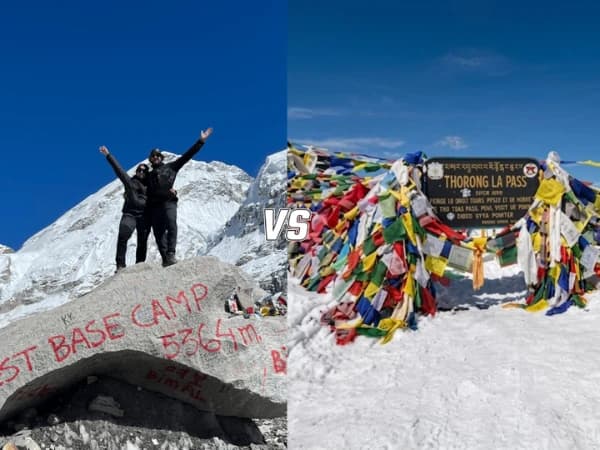
Why Israeli Trekkers Book Direct — and Why Nepal Feels Like a Second Home
If you're Israeli and reading this, there's a good chance you already know someone who's trekked in Nepal. Maybe half your army unit went after discharge. Maybe your older sibling did it. Maybe your parents did it thirty years ago. Nepal is practically a rite of passage for Israelis — and for good reason.
Israeli trekkers are the largest per-capita group in Nepal. Thamel has Hebrew signs. Lakeside in Pokhara has Israeli restaurants. Your guides have probably learned a few words of Hebrew from the thousands of Israelis who came before you. Nepal already knows you — and we welcome you.
But here's the thing: you don't need to pay an Israeli travel agency ₪15,000–₪25,000 for Everest Base Camp. Those agencies subcontract to Nepali companies like us. Book directly with The Everest Holiday and you'll pay a fraction of that price for the same trails, the same teahouses, and guides who've been leading Israeli groups for years.
Price Comparison: Israeli Agency vs Booking Direct
| Trek | Israeli Agency (₪) | The Everest Holiday (₪) | You Save |
|---|---|---|---|
| Everest Base Camp 12 Days | ₪14,000–₪25,000 | ₪2,405–₪6,656 | ₪8,000–₪18,000 |
| Annapurna Base Camp 10 Days | ₪10,000–₪18,000 | ₪1,665–₪4,625 | ₪5,500–₪13,000 |
| Poon Hill 5 Days | ₪5,000–₪10,000 | ₪796–₪2,128 | ₪3,000–₪8,000 |
| Langtang Valley 8 Days | ₪8,000–₪16,000 | ₪1,406–₪3,885 | ₪4,500–₪12,000 |
| Manaslu Circuit 12 Days | ₪15,000–₪26,000 | ₪2,405–₪7,396 | ₪8,000–₪18,600 |
| Mardi Himal 6 Days | ₪6,000–₪12,000 | ₪962–₪2,586 | ₪3,500–₪9,400 |
All our prices include permits, licenced guide, porter, accommodation, meals (Standard and Luxury tiers), and ground transport from Kathmandu. We offer three tiers — Budget, Standard, and Luxury, so you choose how you want to trek. Most Israeli trekkers choose Budget or Standard.
The Everest Holiday Advantage for Israeli Trekkers
- Fraction of the price of Israeli agencies — Same mountains, same lodges. You're just cutting out the Tel Aviv middleman.
- We know Israeli trekkers — We've guided hundreds of Israelis over the years. We understand the post-army travel culture, the group dynamics, the budget priorities, and the pace you like to keep.
- Secure bank payment: We are the only Nepal trekking company with a direct payment gateway through Himalayan Bank Limited. Your money is protected.
- Private treks, your dates: Trek with your friends from the army, your partner, or solo. You choose the dates and pace. No fixed groups.
- English-speaking guides: All our guides are fluent in English. Some have picked up basic Hebrew from years of guiding Israeli groups.
- 10% deposit to book: Reserve your spot with just 10% down. Balance due 60 days before departure.
Getting to Kathmandu from Israel
Flights from Tel Aviv
| Route | Airlines | Travel Time | Approx. Cost (₪ Return) |
|---|---|---|---|
| Tel Aviv → Doha → Kathmandu | Qatar Airways | 12–14 hrs | ₪2,500–₪5,000 |
| Tel Aviv → Dubai → Kathmandu | Emirates, flydubai | 12–15 hrs | ₪2,500–₪5,500 |
| Tel Aviv → Istanbul → Kathmandu | Turkish Airlines | 13–16 hrs | ₪2,200–₪4,500 |
| Tel Aviv → Delhi → Kathmandu | Air India, IndiGo (connecting) | 10–14 hrs | ₪2,000–₪4,500 |
Pro tip: Turkish Airlines via Istanbul is often the cheapest. Qatar Airways via Doha offers the best service and shortest connections. Book 2–3 months ahead. Flying via Delhi can be cheapest of all if you catch a good deal: and Delhi to Kathmandu is just 1.5 hours.
Visa for Israeli Passport Holders
Israeli citizens get a visa on arrival at Tribhuvan International Airport in Kathmandu. No advance application needed. Bring a passport-size photo and cash in USD.
- 15 days: $30 USD (~₪111)
- 30 days: $50 USD (~₪185)
- 90 days: $125 USD (~₪463)
Your passport must be valid for at least 6 months from your entry date. The process takes 15–30 minutes at the airport. Most Israeli trekkers get the 30-day visa.
Best Months to Trek from Israel
- October–November (after Sukkot/Simchat Torah): The best trekking weather in Nepal. Clear skies, perfect visibility, stable temperatures. The Jewish holidays in October (Sukkot, Simchat Torah) line up well: finish the chagim, fly to Nepal, start trekking. This is peak season, so book early.
- March–May (after Pesach): Warmer temperatures, rhododendrons blooming. The Pesach break in April is a natural window for a trek. Fewer crowds than autumn. Great for Annapurna, Langtang, and Poon Hill.
- Post-army (any month except monsoon): If you've just finished your service, you probably have months of freedom. October–November or March–May are ideal. Many Israelis combine Nepal with India, Southeast Asia, or South America on a longer trip.
- June–September (Monsoon): Avoid for most treks. Exception: Upper Mustang and Dolpo (rain shadow areas).
The post-army tradition: Thousands of Israelis head to Nepal after completing their military service. If that's you: welcome. You're continuing a tradition that's been going for decades. The trails are safe, the budget is manageable, and Nepal is one of the most welcoming places on earth for Israeli travellers.
Our Most Popular Treks for Israeli Trekkers
Everest Base Camp Trek — 12 Days
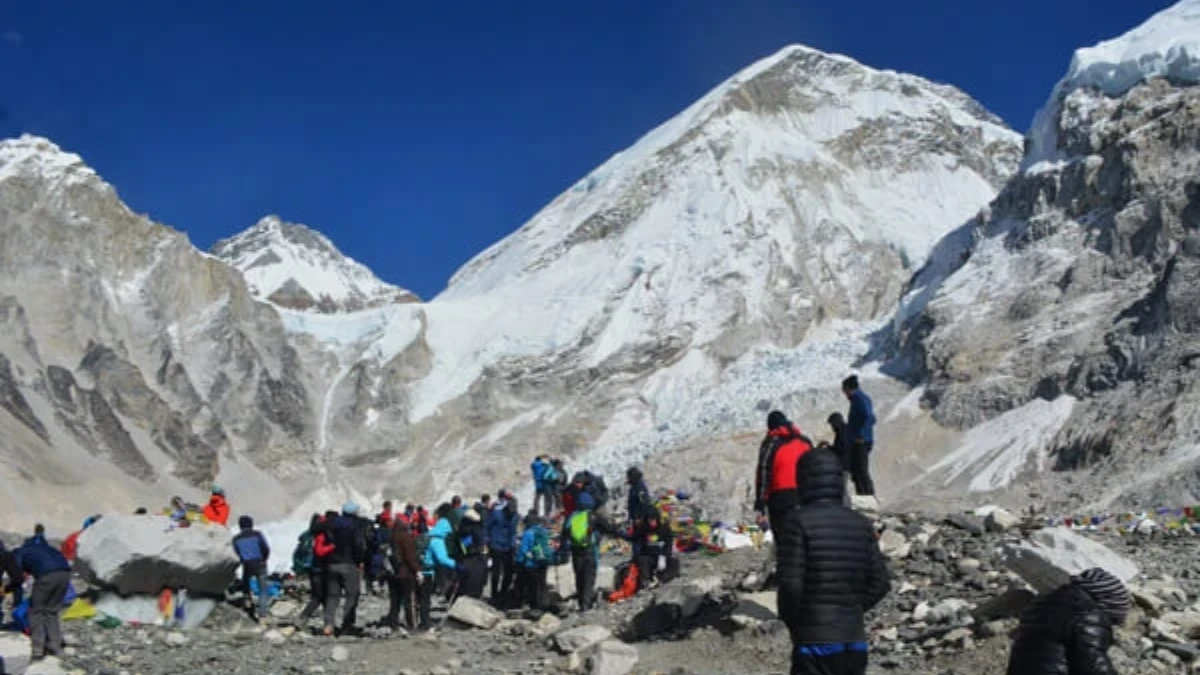
The classic. Stand at 5,364m in the shadow of the world's tallest mountain. This is the trek your friends did, the one on everyone's list. Budget ₪2,405 | Standard ₪3,966 | Luxury ₪6,656 per person. Permits, guide and ground transport in all tiers. Porter: none on Budget (you carry your own pack), one per two trekkers on Standard, one per trekker on Luxury. Meals included on Standard and Luxury (Budget excludes meals).
View full itinerary and book →
Annapurna Base Camp Trek — 10 Days
Walk through rice paddies, rhododendron forests, and hot springs to the amphitheatre of Annapurna (8,091m). Lower altitude than EBC, warmer trails, equally good scenery. Very popular with Israeli trekkers. Budget ₪1,665 | Standard ₪2,886 | Luxury ₪4,625 per person.
View full itinerary and book →
Poon Hill Trek — 5 Days
The perfect short trek. Sunrise over Annapurna and Dhaulagiri from 3,210m. If you've got a week between Nepal and your next destination, this fits perfectly. Budget ₪796 | Standard ₪1,314 | Luxury ₪2,128 per person.
Langtang Valley Trek — 8 Days
The closest major trek to Kathmandu. Tamang culture, cheese factories, and views of Langtang Lirung (7,227m). Less touristy than EBC and Annapurna: great for trekkers who want something different. Budget ₪1,406 | Standard ₪2,405 | Luxury ₪3,885 per person.
Manaslu Circuit Trek — 12 Days
The quieter alternative to Annapurna Circuit. Cross the Larkya La Pass at 5,160m through restricted territory. For experienced trekkers who want a real challenge away from the crowds. Budget ₪2,405 | Standard ₪3,645 | Luxury ₪7,396 per person.
Mardi Himal Trek — 6 Days
Nepal's newest trekking trail. Quiet ridgeline walking with close-up Machhapuchhre (Fishtail) views. Short, affordable, and beautiful. Budget ₪962 | Standard ₪1,554 | Luxury ₪2,586 per person.
What Israeli Trekkers Need to Know
Permits
All trekking permits are included in our package price. You need: TIMS card (Trekkers' Information Management System) + National Park/Conservation Area entry permit. For restricted areas (Manaslu, Upper Mustang, Dolpo), a special restricted area permit is required: we handle everything.
Insurance
Your Israeli health insurance (kupat cholim) does not cover medical treatment or helicopter evacuation in Nepal. You must buy separate travel insurance with adventure sports coverage, including helicopter rescue above 3,000m. Without it, a helicopter rescue from Everest region could cost you $5,000–$10,000 USD.
Israeli providers to check: Harel, Menora Mivtachim, AIG Israel, Shirbit. Make sure the policy explicitly covers trekking above 5,000m and helicopter evacuation. Many post-army travellers buy annual travel insurance: check yours covers Nepal trekking. We require insurance confirmation before departure.
Currency
Nepal uses Nepali Rupees (NPR). As of 2026, ₪1 is roughly 36 NPR. ATMs in Kathmandu and Pokhara accept Israeli bank cards (Visa, Mastercard, Isracard, check with your bank about international withdrawals). Carry cash for the trail, there are no ATMs above Namche Bazaar (Everest) or Chame (Annapurna). We recommend bringing $200–$300 USD as backup.
Food on the Trail — Kosher Considerations
Dal bhat, rice, lentils, vegetables, pickle, is the staple on every trail. Good news for kosher-observant trekkers: the vegetarian food on the trail is naturally kosher-friendly. No meat, no mixing. Dal bhat, vegetable curries, rice, noodles, egg dishes, and Tibetan bread are all widely available. If you keep strict kashrut, stick to vegetarian options and egg dishes, these are plentiful at every teahouse. Momos (dumplings) come in both vegetable and meat varieties, so just specify vegetable.
For strictly observant trekkers: there is no kosher-certified food on the trail. But the vegetarian trail food is naturally compatible and many kosher-observant Israeli trekkers manage comfortably. Bring any special items (instant meals, snack bars) from Israel.
Altitude Sickness
This is the biggest risk for all trekkers, regardless of fitness. Even if you're fresh out of three years of army service and in peak shape, fitness alone won't protect you at altitude. Tel Aviv is at sea level. Everest Base Camp is 5,364m. Your body needs time to adjust. Our guides carry pulse oximetres and monitor your oxygen levels daily. We build acclimatisation days into every itinerary. If symptoms appear, we descend immediately: no argument, no delay.
Safety and Security
Nepal is one of the safest countries in Asia for travellers, including Israelis. There is no history of anti-Israeli sentiment. Nepalis are genuinely welcoming to everyone. You'll find Hebrew signs in Thamel and Lakeside: a sign of how many Israelis have come before you and how warmly they've been received. Crime against trekkers is extremely rare on the trails.
Shabbat on the Trail
If you observe Shabbat, let us know in advance. We can plan rest days or lighter walking days on Saturdays. Teahouses have no electricity requirements for Shabbat: candles and early sleep are the norm at altitude anyway.
Mobile and Internet
Buy an NCell SIM at Kathmandu airport (about ₪20 for a data pack). Your Israeli SIM will not work without expensive roaming. Wi-Fi is available at most teahouses for a small fee. Don't expect reliable internet above 4,000m.
Tipping Culture
Tipping your guide and porter is customary and appreciated. General guideline: $10–$15 USD per day for guides, $5–$8 USD per day for porters. This is not included in the package price.
About The Everest Holiday
We are a three-generation Himalayan family company. Our grandfather Hari Lal Simkhada arranged logistics for Himalayan expeditions in the 1960s and 70s. Our father Ganesh Prasad Simkhada has held senior positions at the Nepal Tourism Board and Nepal Mountaineering Association. Today, Shreejan Simkhada and Shamjhana Basukala run The Everest Holiday with 80+ guides and staff.
- TAAN Member #1586: Nepal's official trekking agency association
- Tourism Licence 2838/072: Government of Nepal
- 360+ verified reviews across TripAdvisor (4.9★), Google (4.9★), and Trustpilot (5★)
- TripAdvisor Travellers' Choice 2024
- Selected by Nepal Tourism Board to represent Nepal at MATKA 2026 Helsinki
- Secure online payment through Himalayan Bank Limited: the only Nepal trekking company with direct bank payment
Our Charity — Nagarjun Learning Center
A portion of every booking supports the Nagarjun Learning Center, founded by our family in 2019. We provide free education and hot meals to 70 children across 7 learning centres in rural Nepal, free medical care to 600+ people, and empowerment programmes for 275+ women. The centre is verified and listed on the UN Partner Portal.
Your trek doesn't just change your life: it changes theirs.
Frequently Asked Questions — Israeli Trekkers
Do Israeli citizens need a visa for Nepal?
Yes, but it's simple. Visa on arrival at Kathmandu airport. Bring a passport-size photo and $50 USD cash for a 30-day visa. No advance application needed.
Is Nepal safe for Israeli travellers?
Very safe. Nepal has no history of anti-Israeli sentiment. Israelis are one of the most common nationalities on Nepal's trekking trails. You'll find Hebrew signs in Thamel and Lakeside. Nepalis are genuinely welcoming to Israeli visitors.
Can I find kosher food on the trail?
There's no kosher-certified food on the trails, but the vegetarian options are naturally kosher-friendly. Dal bhat, vegetable curries, rice, noodles, and eggs are available at every teahouse. Many kosher-observant Israeli trekkers manage comfortably with the vegetarian options.
Do I need a guide to trek in Nepal?
Yes. Since 2023, Nepal law requires all trekkers to have a licenced guide. Our guides are Nepal government trained and licenced, and several hold Bachelor's degrees in Mountaineering.
How fit do I need to be?
You should be able to walk 5–7 hours daily on hilly terrain. If you're recently out of the army, your fitness level is probably sufficient: but altitude is a different challenge from flat-ground fitness. Start altitude-specific training (stairs, hills) 6–8 weeks before your trek.
Can I trek with my army friends as a group?
Absolutely. All our treks are private. Bring 2 friends or 15: we'll organise guides and porters for your group. Many Israeli groups of 4–8 friends trek together after army service. Minimum 1 person, maximum 20.
What if I get altitude sickness?
Our guides are trained in altitude sickness prevention and carry pulse oximetres. We monitor your oxygen levels twice daily above 3,000m. If serious symptoms appear, we descend immediately and coordinate helicopter evacuation if needed.
Can I pay in shekels?
Our prices are listed in ILS for your convenience, but payment is processed in USD through our secure Himalayan Bank Limited gateway. The conversion is automatic on your credit card. We also accept bank transfers via Wise.
What's included in the price?
All permits (TIMS, national park, conservation area, restricted area if applicable), licenced guide, porter (1 porter per 2 trekkers), accommodation throughout, meals (Standard and Luxury tiers), ground transportation from Kathmandu, and airport transfers. International flights, visa, insurance, and personal expenses are not included.
How do I book?
Choose your trek, pick your tier (Budget/Standard/Luxury), and pay a 10% deposit online through our secure Himalayan Bank payment gateway. The remaining balance is due before your trek starts. Or simply WhatsApp Shreejan directly: we'll plan everything together.
Plan Your Nepal Trek Today
Whether you've just finished your service or you're taking a break from the office, Nepal is waiting. We've guided hundreds of Israeli trekkers and we know what you're looking for: great mountains, fair prices, and no nonsense. Let's plan your trip.
WhatsApp:+977 9810351300 (Shreejan responds within 30 minutes during Nepal business hours)
Email:[email protected]
Website:theeverestholiday.com
Three generations. One family. Your Himalayas.
Israeli trekkers, especially those travelling post-army, should also see our Israel trekkers' country guide for Tel Aviv connection routes, ILS pricing, and the kosher-meals coordination we arrange when requested.
Travelling from Israel? Our Everest Base Camp Trek (12 Days) is private (your group only, no strangers), 2026 dates open, From USD $1399. WhatsApp us for tailored 2026 dates and current departures.