Why Are Chinese Trekkers Booking Directly With Nepal Companies?rect with a Nepali Family Company
If you're planning a Nepal trek from China, you've probably seen packages from Chinese travel platforms priced at ¥15,000-¥25,000. What those platforms won't tell you is that they subcontract to local Nepali companies like us. You're paying a middleman who's never set foot on the trail.
Book directly with The Everest Holiday and you'll pay 30-50% less for the same routes, the same teahouses, and better guides. We are the source. Three generations of our family have been guiding people through these mountains across three generations. Our grandfather arranged logistics for Himalayan expeditions in the 1960s and 70s. Today, our team of 80+ guides and staff personally handle every detail of your trek.
We've welcomed trekkers from over 40 countries. Chinese visitors tell us they appreciate the directness of working with the team who'll actually be on the ground with them. No translation through three agencies. No surprise costs. Just honest pricing and real mountain people.
How Much Do Nepal Treks Cost in Chinese Yuan?CNY per Person)
| Trek | Duration | Budget (¥) | Standard (¥) | Luxury (¥) |
|---|---|---|---|---|
| Everest Base Camp | 12 Days | ¥4,700 | ¥7,700 | ¥13,000 |
| Annapurna Base Camp | 10 Days | ¥3,200 | ¥5,600 | ¥9,000 |
| Poon Hill | 5 Days | ¥1,550 | ¥2,550 | ¥4,150 |
| Langtang Valley | 8 Days | ¥2,750 | ¥4,700 | ¥7,550 |
| Manaslu Circuit | 12 Days | ¥4,700 | ¥7,100 | ¥14,400 |
| Mardi Himal | 6 Days | ¥1,870 | ¥3,025 | ¥5,030 |
All prices include permits, licenced guide, porter, accommodation, meals (Standard and Luxury tiers), and ground transport from Kathmandu. Prices are quoted at 1 USD = 7.2 CNY. We offer three tiers so you choose exactly how you want to trek.
The Everest Holiday Advantage for Chinese Trekkers
- Visa on arrival: Chinese passport holders get a Nepal visa at Kathmandu airport. No advance application needed.
- Direct flights from Chengdu: Sichuan Airlines flies Chengdu to Kathmandu direct, under 3 hours.
- Tibet-Nepal cross-border tours: We partner with Tibet Vista for trips combining Tibet and Nepal, including the north side of Everest.
- Familiar food: Nepal's staple dal bhat (rice, lentils, vegetables) shares much with Chinese cuisine. Hot water is always available on the trail.
- Secure online payment: We are the only Nepal trekking company with a direct bank payment gateway through Himalayan Bank Limited. Your money is protected.
- Private treks only: No joining groups with strangers. It's just you, your guide, and your porter.
Getting to Kathmandu from China
By Air
| From | Airlines | Flight Time | Route Type | Cost (Return, approx.) |
|---|---|---|---|---|
| Chengdu (CTU) | Sichuan Airlines | 2 hr 40 min | Direct | ¥3,500-¥6,000 |
| Kunming (KMG) | China Eastern, Nepal Airlines | 3 hr 30 min | Direct (seasonal) | ¥3,800-¥6,500 |
| Guangzhou (CAN) | China Southern, Nepal Airlines | 5-7 hrs | Via Dhaka or Kunming | ¥4,500-¥8,000 |
| Shanghai (PVG) | China Eastern, Air China | 7-9 hrs | Via Chengdu or Kunming | ¥5,000-¥9,000 |
| Beijing (PEK) | Air China, Sichuan Airlines | 7-10 hrs | Via Chengdu | ¥5,000-¥9,500 |
Pro tip: Chengdu is your best gateway. Sichuan Airlines operates direct flights to Kathmandu multiple times per week, and tickets are the cheapest from any Chinese city. Book 6-8 weeks ahead for the best fares. If you're in southern China, Kunming also offers direct seasonal flights.
Flight schedules change seasonally, with more frequency during peak trekking months (October-November and March-May). During Golden Week, expect higher prices from all departure cities. For the best deals, avoid booking during the week before Golden Week when prices peak. Mid-week departures (Tuesday or Wednesday) tend to be cheaper than weekends.
Overland via Tibet (Friendship Highway)
For adventurous travellers, you can enter Nepal overland from Tibet through the Gyirong (Kerung) border crossing. This route follows the legendary Friendship Highway from Lhasa through Shigatse and past the north face of Everest before descending into Nepal. A Tibet Travel Permit and a guide are required for the Tibet portion. We work with Tibet Vista to arrange complete cross-border itineraries.
Important: The Gyirong border is sometimes closed during monsoon season (June-August) and during politically sensitive periods. Always confirm border status before planning an overland crossing. The drive from Lhasa to the Nepal border takes about 3 days with stops at Shigatse and the Tibetan Everest Base Camp viewpoint. It's a spectacular journey across the Tibetan Plateau at an average altitude of 4,500m.
Visa Information for Chinese Passport Holders
Chinese citizens receive a visa on arrival at Tribhuvan International Airport in Kathmandu. No advance application is needed. Simply queue at the visa counter after landing.
Visa Fees (payable in CNY or USD)
| Duration | Fee (USD) | Fee (approx. CNY) |
|---|---|---|
| 15 days | $30 | ¥216 |
| 30 days | $50 | ¥360 |
| 90 days | $125 | ¥900 |
What to Bring for Visa on Arrival
- Valid Chinese passport (at least 6 months remaining)
- One passport-size photo (white background)
- Cash for the visa fee (USD recommended, CNY accepted)
- Return flight confirmation or onward travel details
- Hotel booking confirmation for Kathmandu
The process takes 15-30 minutes depending on the queue. There are also visa machines at the airport where you can fill in your details electronically before joining the payment queue.
Note for Hong Kong and Macau passport holders: Hong Kong SAR and Macau SAR passport holders also receive visa on arrival in Nepal under the same terms as Chinese passport holders. Bring the same documents listed above.
Visa extension: If your trek runs longer than expected or you want to stay and explore Kathmandu and Pokhara after trekking, you can extend your visa at the Department of Immigration in Kathmandu. Extensions cost $3 USD per extra day.
Money, Payments, and Practical Tips
WeChat Pay and Alipay
This is important: WeChat Pay and Alipay have very limited acceptance in Nepal. Some tourist shops in Thamel (Kathmandu's main tourist district) and a handful of hotels accept them, but you cannot rely on mobile payments here the way you do at home. On the trekking trail, there is zero mobile payment infrastructure.
What to do: Bring US dollars or Chinese yuan in cash. Exchange to Nepali Rupees (NPR) at the airport or at money changers in Thamel. The exchange rate is roughly ¥1 CNY = 19 NPR. ATMs in Kathmandu and Pokhara accept UnionPay cards from major Chinese banks, but withdraw cash before heading to the mountains. There are no ATMs above Namche Bazaar (Everest region) or Chame (Annapurna region).
Chinese Mobile Phones and SIM Cards
China Mobile, China Unicom, and China Telecom do not work in Nepal. Your Chinese SIM will have no signal once you land.
Buy an NCell SIM card at Kathmandu airport immediately after clearing customs. It costs about ¥35 (NPR 500) with a data pack included. NCell has the best coverage on trekking trails and works up to Namche Bazaar and Dingboche on the Everest route. Beyond that, teahouses offer Wi-Fi for NPR 200-500 per session.
WeChat will work over Wi-Fi, so you can still message family and friends at most teahouses along the trail.
VPN Note
Nepal does not block any websites or apps. Google, WhatsApp, Instagram, Facebook, and YouTube all work freely here. If you've been using a VPN in China, you won't need it in Nepal.
Best Seasons to Trek Nepal from China
- October-November (Autumn): The best trekking season. Clear skies, stable temperatures, and sharp mountain views. This is peak season, so book early. Perfect for Everest Base Camp and Annapurna.
- March-May (Spring): Warmer temperatures, rhododendrons in bloom. Slightly more cloud than autumn but fewer crowds. Great for Langtang, Poon Hill, and Mardi Himal.
- December-February (Winter): Cold but clear at lower elevations. Good for Poon Hill and Mardi Himal. Not recommended for EBC or Manaslu unless you're experienced with cold-weather trekking.
- June-September (Monsoon): Heavy rain on most trails. Avoid for standard treks. Exception: Upper Mustang and Dolpo sit in a rain shadow and can be trekked during monsoon.
Golden Week Timing (October 1-7)
China's National Day Golden Week falls in the first week of October, which is also the start of Nepal's peak trekking season. This is excellent timing. The monsoon has just ended, the air is clear, and the mountains are at their most visible.
However, Golden Week is also when flights from China to Kathmandu fill up fast and prices spike. If you're planning a Golden Week trek, book your flights and trek package at least 2-3 months in advance. We recommend arriving September 28-29 to allow a day in Kathmandu before your trek begins.
For longer holidays, the Mid-Autumn Festival (usually September) combined with annual leave can give you 10-15 days, which is enough for Everest Base Camp or Manaslu Circuit.
Food on the Trail
Chinese trekkers often find Nepal's trail food surprisingly familiar. The staple meal is dal bhat: steamed rice, lentil soup, vegetable curry, and pickles. It's served twice a day with unlimited refills at most teahouses. If you're used to rice-based meals at home, you'll feel comfortable here.
Other options on the trail include:
- Momos: Nepali dumplings filled with vegetables or buffalo meat, similar to jiaozi
- Thukpa: Tibetan noodle soup, hearty and warming at altitude
- Chow mein: Stir-fried noodles, a Nepali-style version of a Chinese classic
- Fried rice: Available at nearly every teahouse
- Tibetan bread: Fried flatbread, good for breakfast
- Hot water and tea: Always available. Bring your own thermos to refill
Vegetarian options are plentiful everywhere. If you have dietary requirements, let us know when booking and we'll inform the teahouses along your route.
Food safety tip: Avoid raw salads and uncooked food above 3,000m. Stick to cooked, hot meals. Drink only bottled or boiled water. If you want to bring snacks from home, dried fruit, nuts, and energy bars travel well. You can also buy instant noodles and snacks in Kathmandu before your trek.
A note on spice: Nepali food is milder than Sichuan or Hunan cuisine. If you prefer more flavour, bring a small bottle of chilli sauce or laoganma from home. Many Chinese trekkers tell us this small comfort makes a big difference at altitude.
The Tibet Connection: Everest from Both Sides
Nepal and Tibet share the world's highest mountain. Most trekkers approach Everest Base Camp from Nepal's south side, which is what our standard 12-day EBC trek covers. But there is another way.
The north side of Everest, accessed through Tibet, offers a completely different perspective. You can drive to the Tibetan Everest Base Camp (also called Rongbuk Base Camp at 5,150m) and see the mountain's dramatic north face without any trekking at all.
We partner with Tibet Vista, a licenced Tibet travel agency, to offer combined cross-border itineraries. Popular options include:
- Lhasa to Kathmandu overland: Drive the Friendship Highway through Tibet, visit Tibetan EBC, cross into Nepal at Gyirong, then trek to Nepal's EBC
- Nepal trek + Tibet tour: Trek Annapurna or Langtang in Nepal, then fly or drive to Lhasa for a cultural tour
- Double Base Camp: See Everest from both the north (Tibet) and south (Nepal) sides in one trip
A Tibet Travel Permit is required for the Tibet portion and can only be arranged through a licenced Tibetan agency. We handle the coordination so you don't have to deal with separate bookings.
Why this matters for Chinese trekkers: As a Chinese citizen, you already have the right to travel in Tibet (with a permit arranged through a licenced agency). This gives you an advantage that most international trekkers don't have. Combining both sides of Everest in one trip is something very few people in the world get to do.
Our Most Popular Treks for Chinese Trekkers
Everest Base Camp Trek — 12 Days
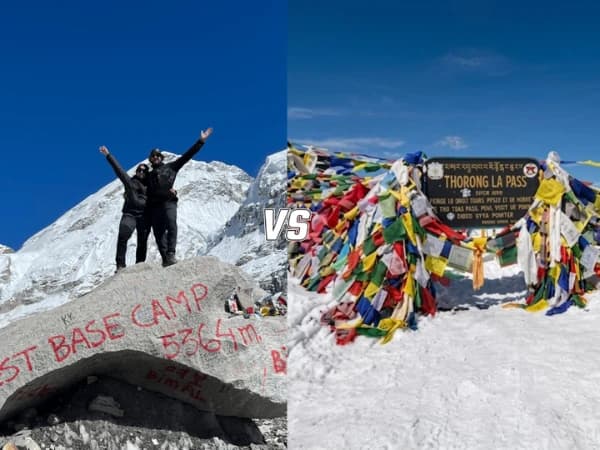
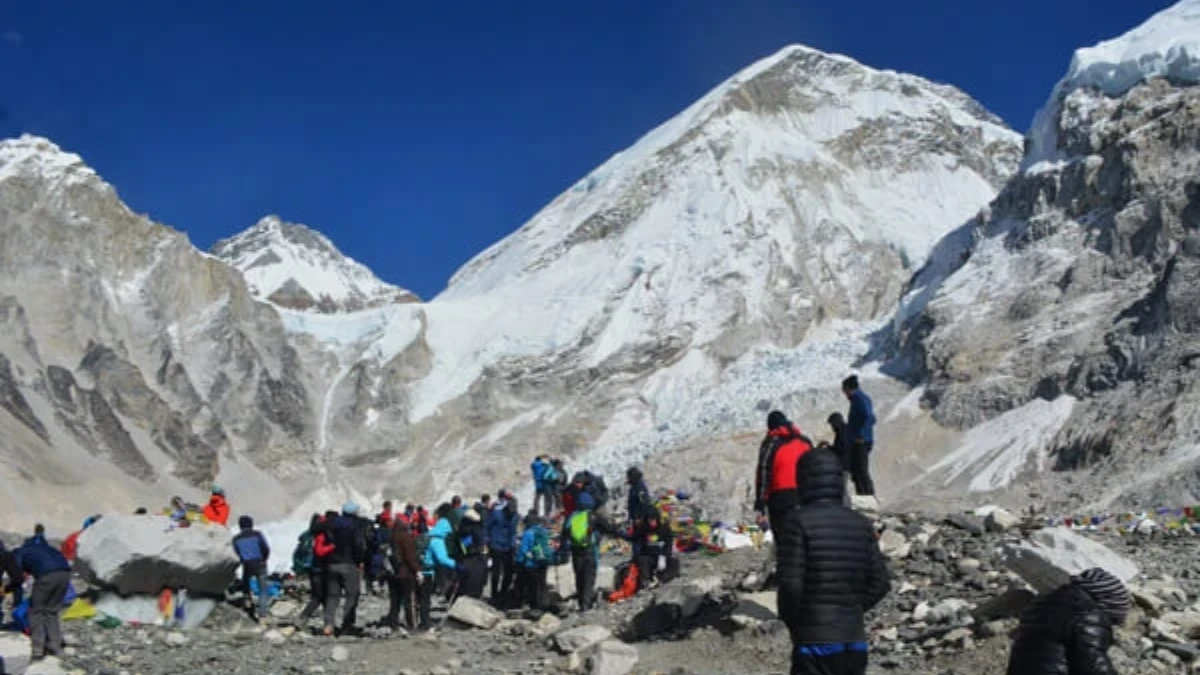
The ultimate Himalayan experience. Stand at 5,364m at the foot of the world's tallest mountain. Walk through Sherpa villages, cross suspension bridges over glacial rivers, and watch sunrise over Everest from Kala Patthar. Budget ¥10,099 | Standard ¥17,999 | Luxury ¥35,999 per person.
Annapurna Base Camp Trek — 10 Days
Walk through rice terraces, bamboo forests, and hot springs to reach the Annapurna sanctuary at 4,130m. The amphitheatre of peaks surrounding base camp is one of the most dramatic natural sights in Asia. Budget ¥3,599 | Standard ¥5,799 | Luxury ¥10,099 per person.
Poon Hill Trek — 5 Days
Perfect for a Golden Week trip or your first Himalayan experience. A short, accessible trek to 3,210m with a sunrise panorama stretching from Dhaulagiri to Annapurna. Ideal if you only have 5-7 days in Nepal. Budget ¥3,599 | Standard ¥5,399 | Luxury ¥7,999 per person.
Langtang Valley Trek — 8 Days
The closest major trek to Kathmandu. No internal flights needed. Tamang culture, yak pastures, and views of Langtang Lirung (7,227m). This valley was devastated by the 2015 earthquake and has been rebuilt by the resilient Tamang community. From ¥2,699 (Budget) to ¥7,199 (Luxury) per person.
Manaslu Circuit Trek — 12 Days
Nepal's best-kept secret. A restricted area trek that circles the world's eighth-highest mountain and crosses the Larkya La Pass at 5,160m. Far fewer trekkers than Everest or Annapurna, with equally powerful scenery. Special permit required. From ¥5,799 (Budget) to ¥15,099 (Luxury) per person.
Mardi Himal Trek — 6 Days
Nepal's newest trail. A quiet ridgeline walk with close-up views of Machhapuchhre (Fishtail Peak). Opened only recently and still off the radar for most tourists. From ¥3,299 (Budget) to ¥7,999 (Luxury) per person.
Which Trek Should You Choose?
First time trekking? Start with Poon Hill (5 days) or Mardi Himal (6 days). Both are short enough for Golden Week and don't go above 4,500m.
Want the classic Himalayan experience? Everest Base Camp (12 days) or Annapurna Base Camp (10 days) are the two most famous treks in Nepal for good reason. Both reward you with views that stay with you forever.
Looking for solitude? Manaslu Circuit (12 days) and Langtang Valley (8 days) see a fraction of the foot traffic. Manaslu in particular feels like stepping back in time.
Combining with Tibet? Any of our treks can be paired with a Tibet tour. The most popular combination is EBC in Nepal followed by the overland drive to Lhasa through Tibet.
Altitude Sickness: What Every Chinese Trekker Should Know
Altitude sickness (acute mountain sickness, or AMS) is the biggest health risk on any high-altitude trek. It affects people of all fitness levels and cannot be predicted by how strong or young you are. Beijing sits at 43m, Shanghai at 4m, Chengdu at 500m. Everest Base Camp is at 5,364m. Your body needs time to adjust.
How We Keep You Safe
- Acclimatisation days built into every itinerary: We never rush. Rest days at Namche Bazaar (3,440m) and Dingboche (4,410m) are non-negotiable on the EBC trek.
- Pulse oximetre monitoring: Our guides carry pulse oximetres and check your blood oxygen levels twice daily above 3,000m.
- Trained guides: All our guides are trained in altitude sickness recognition and emergency response.
- Immediate descent policy: If serious symptoms appear (severe headache, confusion, difficulty breathing), we descend immediately. No argument, no delay.
- Helicopter evacuation coordination: In emergencies, we coordinate helicopter rescue to Kathmandu within hours.
Prevention Tips
- Drink 3-4 litres of water daily above 3,000m
- Walk slowly. The Nepali saying is "bistaarai, bistaarai" (slowly, slowly)
- Avoid alcohol above 3,000m
- Eat well, even if your appetite decreases
- Tell your guide immediately if you feel unwell
Travel Insurance
Travel insurance with helicopter evacuation cover is mandatory for all trekkers. We require confirmation of your policy before departure.
Your insurance must cover:
- Trekking to the altitude of your chosen route (e.g. 6,000m for EBC)
- Helicopter evacuation and rescue
- Medical treatment and hospital costs
- Trip cancellation
Chinese travellers can purchase suitable policies from Ping An Insurance, China Pacific Insurance, or Allianz Global (available in Chinese). International options include World Nomads and IMG Global. Check that "adventure sports" or "trekking above 3,000m" is explicitly included. A standard travel policy without this add-on will not cover you.
Cost is typically ¥300-¥800 for 2-3 weeks depending on the provider and coverage level.
What to Pack
Most trekking gear can be rented or bought cheaply in Thamel, Kathmandu. Genuine North Face and other brand gear is not available, but good-quality local alternatives cost a fraction of what you'd pay in China. Essential items to bring from home:
- Broken-in trekking boots (do not buy new boots for the trip)
- Down jacket for above 4,000m
- Sunglasses with UV protection (essential at altitude)
- Sunscreen SPF 50+
- Personal medications and a basic first aid kit
- Power bank for charging phones (electricity is limited on the trail)
- Thermos or insulated water bottle
We send a complete packing list to every trekker after booking. Your porter carries up to 15kg of your gear, so you only need a small daypack for water, snacks, and camera during the day.
About The Everest Holiday
We are a three-generation Himalayan family company based in Kathmandu. Our grandfather Hari Lal Simkhada arranged logistics for Himalayan expeditions in the 1960s and 70s. Our father Ganesh Prasad Simkhada has held senior positions at the Nepal Tourism Board and Nepal Mountaineering Association. Today, Shreejan Simkhada and Shamjhana Basukala run The Everest Holiday with 80+ guides and staff.
We are not a faceless booking platform. When you message us on WhatsApp, you're talking directly to Shreejan, the CEO. When you arrive in Kathmandu, our team meets you at the airport. When you're on the trail, our guides are by your side every step.
- TAAN Member #1586: Nepal's official trekking agency association
- Tourism Licence 2838/072: Government of Nepal
- 360+ verified reviews across TripAdvisor (4.9 stars), Google (4.9 stars), and Trustpilot (5 stars)
- TripAdvisor Travellers' Choice 2024
- Selected by Nepal Tourism Board to represent Nepal at MATKA 2026 Helsinki
- Secure online payment through Himalayan Bank Limited, the only Nepal trekking company with direct bank payment
Our Charity: Nagarjun Learning Center
A portion of every booking supports the Nagarjun Learning Center, founded by our family in 2019. We provide free education and hot meals to 70 children across 7 learning centres in rural Nepal, free medical care to 600+ people, and empowerment programmes for 275+ women. The centre is verified and listed on the UN Partner Portal.
Your trek doesn't just change your life. It changes theirs.
Frequently Asked Questions for Chinese Trekkers
Do Chinese citizens need a visa for Nepal?
Yes, but it's easy. Chinese passport holders receive a visa on arrival at Kathmandu airport. No advance application is needed. The fee is $30 USD (approximately ¥216) for 15 days, $50 (approximately ¥360) for 30 days, or $125 (approximately ¥900) for 90 days. Bring one passport photo and cash for the fee.
Can I use WeChat Pay or Alipay in Nepal?
Only in a few shops in Thamel, Kathmandu. Do not rely on mobile payments. Bring USD or CNY in cash, exchange to Nepali Rupees at the airport or Thamel money changers, and carry enough cash for the trail. UnionPay cards work at some ATMs in Kathmandu and Pokhara.
Will my Chinese phone work in Nepal?
No. China Mobile, China Unicom, and China Telecom have no coverage in Nepal. Buy an NCell SIM card at Kathmandu airport for about ¥35. It includes a data pack and works on most trekking trails up to moderate altitude. WeChat works over teahouse Wi-Fi on the trail.
Is Nepal safe for Chinese tourists?
Yes. Nepal is one of the safest countries in Asia for tourists. Crime against visitors is extremely rare, especially on trekking trails. Nepal has a long and friendly relationship with China, and Chinese tourists are welcomed warmly throughout the country. Our guides are with you at all times during the trek.
Do I need a guide to trek in Nepal?
Yes. Since 2023, Nepal law requires all trekkers to have a licenced guide. Our guides are Nepal government trained and licenced, and several hold Bachelor's degrees in Mountaineering. They carry first aid equipment, pulse oximetres, and are trained in altitude sickness response.
How fit do I need to be?
You should be able to walk 5-7 hours daily on hilly terrain. Start training 8-12 weeks before your trek with regular hiking, stair climbing, and cardio. No mountaineering or climbing skills are needed for standard treks. We have options for every fitness level, from Poon Hill (easy, 5 days) to Manaslu Circuit (challenging, 12 days).
Can I combine a Nepal trek with a Tibet tour?
Absolutely. We partner with Tibet Vista to arrange combined itineraries. Popular options include the Friendship Highway overland route from Lhasa to Kathmandu, or adding a Lhasa cultural tour after your Nepal trek. A Tibet Travel Permit is required for the Tibet portion, and we coordinate this for you.
Is Golden Week (October 1-7) a good time to trek?
It's one of the best times. October is the start of Nepal's peak trekking season. The skies are clear, the air is dry, and the mountains are at their most visible. The only downside is that flights from China fill up quickly and prices rise. Book at least 2-3 months in advance if you're planning a Golden Week trip.
What's included in the price?
All permits (TIMS, national park, conservation area, restricted area if applicable), licenced guide, porter (1 porter per 2 trekkers), accommodation throughout, meals (Standard and Luxury tiers), ground transportation from Kathmandu, and airport transfers. International flights, Nepal visa, travel insurance, and personal expenses are not included.
How do I book?
Choose your trek, pick your tier (Budget, Standard, or Luxury), and pay a 10% deposit online through our secure Himalayan Bank payment gateway. The remaining balance is due before your trek starts. You can also message Shreejan directly on WhatsApp and we'll plan everything together.
Plan Your Nepal Trek Today
Whether it's a Golden Week adventure, a bucket-list Everest trek, or a cross-border route through Tibet and Nepal, we'll make it personal, safe, and yours. Every detail is your choice: dates, pace, tier, and route.
WhatsApp:+977 9810351300 (Shreejan responds within 30 minutes during Nepal business hours)
Email:[email protected]
Website:theeverestholiday.com
Three generations. One family. Your Himalayas.
For a broader view of Nepal-from-China options, our China trekkers' country guide covers Chengdu/Kunming connection options, CNY pricing, and the practical considerations Mandarin-speaking travellers most often ask about.
Travelling from China? Our Everest Base Camp Trek (12 Days) is private (your group only, no strangers), 2026 dates open, From USD $1399. WhatsApp us for tailored 2026 dates and current departures.