
Short answer: Yes, complete beginners can trek in Nepal. Start with an easy trek such as Poon Hill, which reaches 3,210 m with 4 to 6 hour walking days, wide trails and good teahouses. If you can walk 4 to 5 hours on hilly ground, you are fit enough. Mardi Himal and Langtang are good next steps. Begin with our Poon Hill trek.
Nepal Trekking for Beginners: Your Complete First-Timer's Guide
You've seen the photos. You've read the blogs. Something about the Himalayas keeps pulling at you. But you've never trekked before, maybe never even hiked a full day, and a big question keeps stopping you: Is Nepal Trekking Right for Complete Beginners?
Yes. It absolutely is.
Every year, thousands of first-time trekkers walk the trails of Nepal with zero prior experience and come home transformed. Nepal's trekking trails aren't just for hardened mountaineers with beards and ice axes. They're for regular people: office workers, teachers, retirees, parents, who want to do something extraordinary.
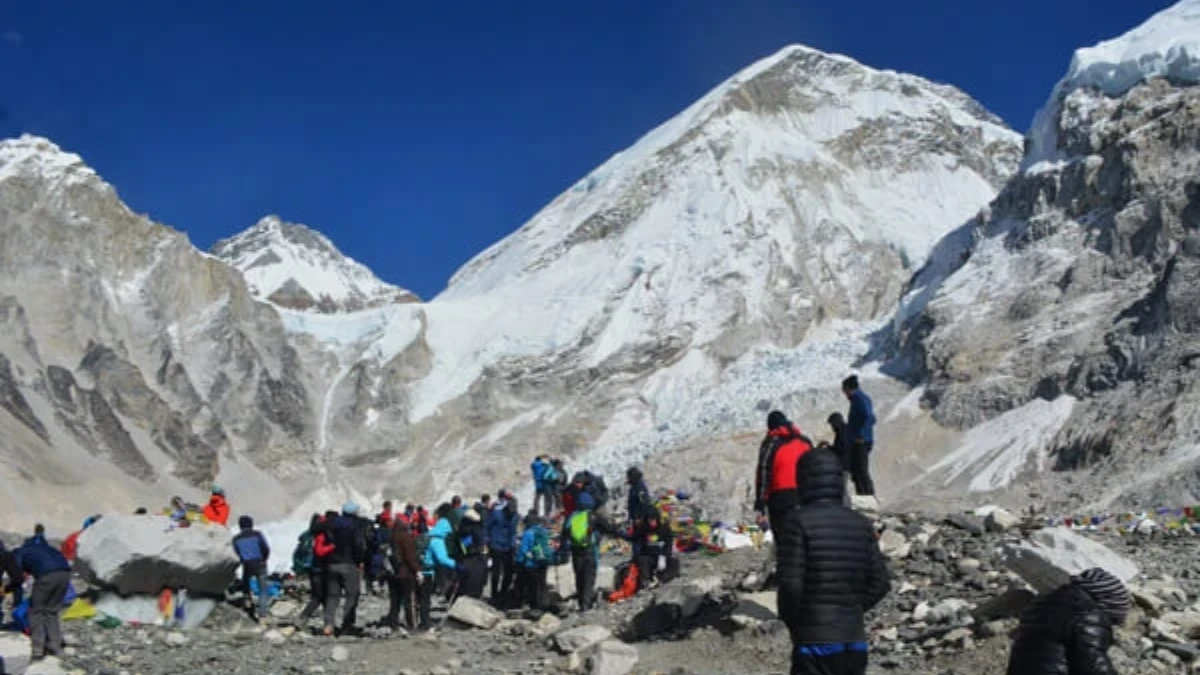
This guide covers everything a beginner needs to know: which treks suit you, what "moderate" actually means, how to train, what to pack, what NOT to worry about, and how our guides make first-timers feel completely at home on the trail.
Which Nepal Treks Are Best for First-Time Trekkers?
Poon Hill Trek: 5 Days (Easiest Trek in Nepal)
This is where most beginners start, and for good reason. Five days of walking through charming Gurung villages, rhododendron forests, and stone staircases to a viewpoint at 3,210m where you watch the sunrise over Annapurna and Dhaulagiri. The trail is wide, well-maintained, and busy with other trekkers. Teahouses are excellent quality: hot showers, proper beds, decent food.
Daily walking: 4-6 hours
Maximum altitude: 3,210m
Difficulty: Easy
Fitness required: Able to walk 4-5 hours on hilly terrain
Best for: Absolute beginners, anyone testing whether they enjoy trekking
If you can walk up four flights of stairs without stopping, you can do Poon Hill. It's that straightforward.
View Poon Hill itinerary and book
Mardi Himal Trek: 7 Days (Quiet Beginner Option)
Nepal's newest trekking trail. A ridgeline walk with close-up views of Machhapuchhre (Fishtail) that feels like a private adventure. One step up from Poon Hill in terms of altitude but still very manageable for beginners. The trail sees far fewer trekkers, so it's ideal if you prefer peace and quiet.
Daily walking: 5-6 hours
Maximum altitude: 4,500m
Difficulty: Easy to Moderate
Fitness required: Able to walk 5-6 hours on uneven terrain
Best for: Beginners who want something slightly more adventurous than Poon Hill
View Mardi Himal itinerary and book
Ghorepani Poon Hill with Australian Camp: 6 Days
This is the Poon Hill trek with an extra day at the beginning, starting from Australian Camp (2,060m). Australian Camp is a gentle introduction: a short 2-3 hour walk from the road to a viewpoint with 180-degree Annapurna panoramas. It eases you into trekking before the main trail begins. Think of it as a warm-up day.
Daily walking: 3-6 hours
Maximum altitude: 3,210m
Difficulty: Easy
Best for: Very nervous beginners who want the gentlest possible introduction
Langtang Valley Trek: 8 Days (Beginner-Friendly with More Depth)
If you want a longer trek but aren't ready for EBC or Annapurna, Langtang is your answer. Eight days through beautiful Tamang villages with cheese factories, prayer wheels, and views of Langtang Lirung (7,227m). The maximum altitude of 4,984m (Kyanjin Ri) is optional: you can enjoy the valley without pushing to the highest point.
Daily walking: 5-7 hours
Maximum altitude: 3,870m (Kyanjin Gompa) or 4,984m (Kyanjin Ri, optional)
Difficulty: Moderate
Fitness required: Able to walk 5-7 hours daily for 8 consecutive days
Best for: Beginners who want a longer adventure with cultural depth
View Langtang itinerary and book
Annapurna Base Camp Trek: 9 Days (First Big Challenge)
ABC is the classic first "big trek" for many beginners. Nine days through rice paddies, bamboo forests, and alpine meadows to the amphitheatre of Annapurna (8,091m). The trail is well-maintained with excellent teahouse infrastructure. It's harder than Poon Hill, but thousands of first-time trekkers complete it every year.
Daily walking: 5-7 hours
Maximum altitude: 4,130m
Difficulty: Moderate
Fitness required: Good general fitness, able to walk 6-7 hours on steep terrain
Best for: Beginners with reasonable fitness who want a proper achievement
View ABC itinerary and book Related: Langtang Valley vs Poon Hill: Which Beginner Trek Should You Choose?
What "Moderate Difficulty" Actually Means
Trekking companies (including us) rate treks as Easy, Moderate, or Challenging. But what does "Moderate" actually feel like? Here's the honest truth:
- Walking hours: Typically 5-7 hours per day, with breaks every 60-90 minutes
- Terrain: Mix of stone steps, dirt paths, rocky trails, and some steep climbs. Nothing technical: no ropes, no scrambling, no exposed ridges
- Elevation gain: Usually 500-800m of climbing per day (roughly equivalent to climbing a 50-80 storey building, spread over several hours)
- Pace: Slow. Much slower than you'd walk on a flat pavement. Your guide sets the pace and it will feel easy: deliberately so. This is not a race
- How it feels: Your legs will be tired by mid-afternoon. Your lungs might work harder at altitude. You'll sleep like a log. By Day 3, your body adapts and it gets easier
- Teahouse every night: You're not camping. Every night you sleep in a lodge with a bed, a blanket, food, and usually hot drinks. Some have hot showers. None require you to carry a tent
The key point: trekking in Nepal is not mountaineering. You don't need special skills, special equipment, or a special body type. You need reasonable fitness, a good pair of boots, and the willingness to put one foot in front of the other for several hours a day.
How do I train for my first Nepal trek?
You don't need a gym membership or a personal trainer. Here's a simple plan that works:
Weeks 1-2: Build a Walking Habit
- Walk 30-45 minutes daily, preferably on hilly terrain
- Take the stairs instead of the lift: every time
- Aim for 8,000-10,000 steps per day
Weeks 3-4: Increase Duration and Elevation
- One long walk per week: 2-3 hours on hilly terrain or trails
- Walk with a light backpack (3-5kg) to get used to carrying weight
- Add stair climbing: 10-15 minutes of continuous stair walking, 3 times per week
Weeks 5-6: Simulate Trek Conditions
- One long walk per week: 4-5 hours on the hilliest terrain you can find
- Walk back-to-back days (Saturday and Sunday) to test recovery
- Increase backpack weight to 5-7kg
- Break in your trekking boots: wear them on every training walk
Weeks 7-8: Final Preparation
- One final long walk: 5-6 hours with your full day pack
- Taper down in the last 4-5 days before your flight: rest, don't train
- Focus on sleep, hydration, and eating well
The honest truth: If you can walk for 5 hours on a hilly path without needing to stop every 10 minutes, you're fit enough for Poon Hill and Mardi Himal. For ABC or Langtang, aim for 6-7 hours. You don't need to be able to run a marathon. You just need legs that are used to walking.
Common Fears: Addressed Honestly
Fear: "I'm not fit enough"
Reality: If you can walk up 4 flights of stairs, you can do Poon Hill. If you can walk 5-6 hours on a hilly trail, you can do ABC. Most "unfit" beginners are surprised by how well they manage: because trekking is walking, not running, and the pace is deliberately gentle. Your guide matches your speed, not the other way round.
Fear: "Altitude sickness could kill me"
Reality: Altitude sickness is real but manageable. Our guides carry pulse oximeters and check your oxygen levels twice daily above 3,000m. We build acclimatisation days into every itinerary. The key is going slowly and staying hydrated: and our guides are experts at both. Fatal altitude sickness on guided treks in Nepal is extremely rare. If serious symptoms appear, we descend immediately and coordinate helicopter evacuation if needed.
Fear: "The food will be terrible"
Reality: Dal bhat (rice, lentils, vegetables, pickle) is the staple on the trail, and it's genuinely delicious. Unlimited refills at most teahouses. You'll also find egg dishes, noodles, momos (Nepali dumplings), pancakes, porridge, and Tibetan bread. Vegetarian options are available everywhere. The food is simple, filling, and tasty. Most beginners are pleasantly surprised.
Fear: "The toilets will be horrific"
Reality: At lower elevations, many teahouses have Western-style flush toilets. As you climb higher, you'll encounter squat toilets: basic but clean enough. The Luxury tier guarantees the best available bathroom facilities, including attached bathrooms at lower elevations. Bring your own toilet paper and hand sanitiser. After the first day, you stop thinking about it.
Fear: "I'll slow everyone down"
Reality: There is no "everyone." Your trek is private: just you, your guide, and your porter. There is no group to slow down. Your guide walks at your pace, takes breaks when you want them, and has zero judgement about speed. Many of our guides have walked these trails hundreds of times. They genuinely enjoy going slowly and showing you things you'd miss if you rushed.
Fear: "I'll need expensive equipment"
Reality: You need good boots, a warm jacket, and a few layers. That's the core of it. Everything else, sleeping bag, trekking poles, down jacket, can be rented cheaply in Kathmandu or Pokhara. Don't buy a full set of gear before you've tried trekking. Rent first, buy later if you love it.
Fear: "What if I want to quit mid-trek?"
Reality: You can stop at any time. Your guide will arrange transport back to the nearest town. We never pressure anyone to continue. It's your trek, your decision. That said, almost every beginner who feels like quitting on Day 2 is glad they kept going by Day 4. The body adapts remarkably fast.
What to Pack: Beginner Essentials
- Trekking boots: Ankle-high, waterproof, broken in. This is the one item worth investing in. Blisters ruin treks; good boots prevent them
- Daypack (25-35L): Carries your water, snacks, camera, and layers. Your porter carries your main bag
- Layers: Base layer (moisture-wicking), mid-layer (fleece), outer layer (waterproof jacket). Layering lets you adjust as temperature changes throughout the day
- Down jacket: Essential above 3,000m. Can be rented in Kathmandu for $1-2/day
- Trekking trousers: Quick-dry, lightweight. Two pairs is enough (wear one, wash one)
- Warm hat and gloves: For mornings and evenings at altitude
- Sunglasses and sunscreen: UV at altitude is intense. Don't skip this
- Water bottle (1L minimum): Hydration is your best defence against altitude sickness
- Headlamp: Teahouse corridors are dark at night. Essential for pre-dawn starts
- Portable charger: 20,000mAh keeps your phone alive for 5-7 days
- Trekking poles: Optional but recommended for descents. Save your knees. Can be rented cheaply
- Basic first aid: Painkillers, plasters, diarrhoea tablets, rehydration salts
What NOT to pack: Don't bring a tent, sleeping mat, cooking equipment, or more than 2-3 changes of clothes. You're sleeping in teahouses, eating in teahouses, and your porter is limited to 20kg. Pack light. If in doubt, leave it out.
How do guides help first-time trekkers in Nepal?
Our guides have walked with hundreds of first-timers. They know the fears, the doubts, and the moments when you want to give up. Here's how they help:
- No judgement, ever: Ask any question, no matter how basic. Need to stop every 30 minutes? Fine. Scared of heights on a suspension bridge? They'll walk right beside you. Feeling emotional at altitude? Completely normal. Nothing surprises them.
- Your pace, not theirs: Our guides deliberately walk slower than they could. A good guide reads your breathing and adjusts speed before you even notice you're struggling.
- Daily health checks. Above 3,000m, your guide checks your pulse oximetry and asks about headaches, appetite, and sleep. This isn't optional, it's how we keep you safe.
- Trail education: Your guide points out birds, flowers, medicinal plants, mountains, and cultural sites. They tell stories about the villages and the people. A good guide turns a walk into an education.
- Teahouse management: Your guide handles all logistics: room bookings, food ordering, porter coordination, permit checks. You don't need to worry about anything except walking and enjoying yourself.
- Emergency training: Every guide carries a first aid kit and pulse oximeter. They're trained in altitude sickness recognition, basic first aid, and emergency evacuation coordination. You're in experienced hands.
Pricing: All Treks, Three Tiers
All prices are per person in USD. Permits, licensed guide, accommodation and ground transport are included in every tier. Porter support varies: Budget has no porter (you carry your own pack), Standard includes one porter per two trekkers, Luxury includes one porter per trekker. Standard and Luxury also include all meals on the trail.
| Trek | Duration | Budget | Standard | Luxury |
|---|---|---|---|---|
| Poon Hill | 6 Days | $499 | $749 | $1,235 |
| Mardi Himal | 7 Days | $454 | $849 | $1,111 |
| Langtang Valley | 8 Days | $490 | $1,050 | $1,800 |
| Annapurna Base Camp | 9 Days | $725 ($1,250 solo) | $1,310 ($1,725 solo) | $2,095 ($3,465 solo) |
| Everest Base Camp | 12 Days | $1,399 | $2,785 | $4,999 |
| Manaslu Circuit | 12 Days | $799 | $1,599 | $2,099 |
Beginner recommendation: Start with the Standard tier. All meals are included (so you don't worry about food costs on the trail), rooms are pre-booked, and the quality of teahouses is noticeably better. The Budget tier is fine if you're watching every penny, but Standard removes most of the logistical stress that beginners don't need on their first trek.
Book with just a 10% deposit. Balance due before your trek starts.
What's Included in Every Trek
- All trekking permits (TIMS card, national park entry, conservation area permit)
- Licensed English-speaking guide
- Porter (1 porter per 2 trekkers, max 20kg per porter, 10kg each)
- All teahouse accommodation (twin-share rooms)
- All meals during the trek (Standard and Luxury tiers)
- Ground transport from Kathmandu to trailhead and back
- Airport transfers in Kathmandu
- First aid kit and pulse oximeter
- Emergency evacuation coordination
About The Everest Holiday
We are a Himalayan family company. Our family has three generations of guiding in the Himalayas, and our grandfather Hari Lal Simkhada arranged logistics for Himalayan expeditions. Our father Ganesh Prasad Simkhada has held senior positions at the Nepal Tourism Board and Nepal Mountaineering Association. Today, Shreejan Simkhada and Shamjhana Basukala run The Everest Holiday with 80+ guides and staff.
- TAAN Member #1586: Nepal's official trekking agency association
- Tourism Licence 2838/072: Government of Nepal
- Over 300 reviews on TripAdvisor (4.9 stars), Google (4.9 stars) and Trustpilot (4.7 stars)
- Secure online payment through Himalayan Bank Limited: a 10 percent deposit by card confirms your trek and the balance is paid in Kathmandu.
Our charity, the Nagarjun Learning Center
A portion of every booking supports the Nagarjun Learning Center, founded by our family. We provide free education and hot meals to 70 children across 7 learning centres in rural Nepal, free medical care to 600+ people, and empowerment programmes for 275+ women. The centre is verified and listed on the UN Partner Portal.
Your first trek doesn't just change your life: it changes theirs.
Frequently Asked Questions: Beginner Trekkers
Do I need any trekking experience?
No. Zero. None. Thousands of people with no trekking experience walk Nepal's trails every year. If you can walk for 4-5 hours on a hilly path, you can do Poon Hill. For longer treks like ABC, you need reasonable fitness but no technical skills. We'll recommend the right trek for your fitness level.
How do I know which trek is right for me?
WhatsApp Shreejan on +977 9810351300 and tell him your fitness level, how many days you have, and what you want from the experience. He'll recommend the perfect trek for you. No pressure, no upselling: just honest advice from someone who's walked every trail in Nepal.
Do I need to be young?
Absolutely not. We've guided trekkers in their 60s and 70s on Poon Hill and ABC. Age is less important than fitness. If you walk regularly and have no serious mobility issues, you can trek in Nepal. There is no upper age limit for Everest Base Camp.
Is altitude sickness dangerous?
It can be if ignored, but our guides are trained to prevent it. We build acclimatisation days into every itinerary. Your guide checks your oxygen levels twice daily above 3,000m. The key is drinking plenty of water, walking slowly, and listening to your body. If serious symptoms appear, we descend immediately. Fatal altitude sickness on guided treks is extremely rare.
What if I can't keep up?
Keep up with whom? Your trek is private. There's no group. Your guide walks at your pace, takes breaks when you need them, and has zero expectations about speed. The only schedule is reaching the next teahouse before dark: and the days are planned so that's never a problem.
Can I do a short trek to test if I like it?
Yes: that's exactly what Poon Hill is for. Five days, easy difficulty, incredible payoff. If you love it, come back for a longer trek. If trekking isn't for you, you've only committed five days and a few hundred dollars. Many of our clients started with Poon Hill and came back for EBC the following year.
Do I need travel insurance?
Yes: mandatory. Your policy must cover helicopter evacuation and medical treatment at altitude (up to 6,000m for EBC treks). We require confirmation before departure. Adventure travel insurance typically costs $50-150 for two weeks, depending on your home country.
What's the weather like?
October-November is the best season: clear skies, stable weather, comfortable temperatures. March-May is also excellent with warmer weather and rhododendrons in bloom. Daytime temperatures at lower elevations are pleasant (15-25°C); at altitude they drop significantly (0 to -15°C at night above 4,000m). Your guide will brief you on expected conditions for your specific dates.
Can I trek solo or do I need a group?
All our treks are private. You can book as a solo trekker, a couple, a family, or a group of friends: it's always just your party, your guide, and your porter. Minimum 1 person, maximum 20. Solo beginners are very welcome.
How do I book?
Choose your trek, pick your tier (Budget/Standard/Luxury), and pay a 10% deposit through our secure Himalayan Bank payment gateway. Or WhatsApp Shreejan directly: he'll plan everything with you, answer all your questions, and you won't pay a penny until you're ready.
How do I book my first Nepal trek?
Every experienced trekker was once a beginner. Every person who's stood at Annapurna Base Camp or watched the sunrise at Poon Hill started exactly where you are now: wondering if they could do it. They could. And so can you.
WhatsApp:+977 9810351300 (Shreejan responds within 30 minutes during Nepal business hours)
Email:[email protected]
Website:theeverestholiday.com
Three generations. One family. Your Himalayas.
First Himalayan trek? Poon Hill is the right entry point. Our Ghorepani Poon Hill Trek (6 Days) is private (your group only, no strangers), 2027 dates open, From USD $499. WhatsApp us for tailored 2027 dates and current departures.
Still deciding which trail to start with? Our Nepal Trekking Holidays 2027 guide sets out every route by difficulty, cost and season, so you can choose your first trek with confidence.
 Chat with Shreejan