The complete Nepal food guide. Dal bhat, momos, sel roti, gundruk, tongba, and 10 more dishes you must try. What to eat on the trek and in Kathmandu.
Govt Regd. No.: 147653/072/073
Travel Agency Licence: 2838/072
Nepal Food Guide: 15 Dishes You Must Try Beyond Dal Bhat

Short answer: Nepali food is much more than dal bhat. Try momo dumplings, sel roti rice bread, beaten rice with yoghurt, Newar dishes in the Kathmandu Valley, thukpa noodle soup in the mountains, and Thakali dal bhat in Mustang. On a trek you will mostly eat dal bhat, because it is filling, fresh and usually comes with refills. Eat your way round on our Kathmandu and Pokhara tour.
Nepal Food Guide: 15 Dishes You Have to Try (And What You'll Actually Eat on a Trek)
By Shreejan Simkhada | April 2026
My mother makes dal bhat that could end wars. Two types of lentil, four side dishes, fresh pickle that makes your eyes water, and rice piled so high you'd think it was for three people. It's for one. And there are refills.
I grew up eating this twice a day, every day. Breakfast was different: sel roti with tea, maybe some beaten rice with yoghurt. But lunch and dinner, always dal bhat. When people ask me if I ever get bored of it, I say: do you get bored of breathing?
Nepal's food doesn't get the attention it deserves. We're stuck between Indian and Chinese cuisine in people's imaginations, and honestly, Nepali food borrows from both. But it's its own thing: shaped by altitude, seasons, ethnic diversity, and the simple fact that when you're farming rice paddies at 1,500 metres or herding yaks at 4,000, you need food that sticks.
Here are the 15 things you absolutely must eat in Nepal, plus everything you need to know about eating on a trek.
What are the best traditional Nepali dishes to try?
1. Dal Bhat: The One That Powers Everything
Rice. Lentil soup. Vegetable curry. Pickle (achaar). Greens (saag). Sometimes meat. Always refills.
This is Nepal's national dish, eaten by roughly 80% of the population twice daily. "Dal bhat power, 24 hour" is a saying you'll hear on every trail, and it's not a joke. The combination of carbohydrates, protein, fibre, and spices is nutritionally complete. It's the perfect trekking fuel because it's easily digestible, provides sustained energy, and the flavour changes with every household and teahouse that makes it.
The thing that surprises visitors: it never tastes the same twice. The lentils might be yellow (moong), red (masoor), or black (kalo). The pickle might be tomato, radish, or a fierce chilli-sesame paste. The vegetable could be potato, cauliflower, spinach, or seasonal greens you've never heard of.
At higher altitudes, dal bhat gets simpler. Less variety in the sides, smaller portions of greens (nothing grows above 4,000m). But it's still good, still filling, still the smartest thing on the menu.
Cost: NPR 400-700 ($3-5) in teahouses. NPR 200-400 ($1.50-3) in Kathmandu local restaurants. NPR 800-1,500 ($6-11) in tourist restaurants.
2. Momos: Nepal's National Obsession
Dumplings. Steamed, fried, or in soup (jhol momo). Filled with buffalo meat, chicken, vegetables, or cheese. Served with a spicy tomato-sesame dipping sauce that varies from mild to absolutely devastating.
Momos came from Tibet but Nepal adopted them with the enthusiasm of a country that was just waiting for dumplings to arrive. Every street corner in Kathmandu has a momo seller. Every restaurant has them on the menu. Every Nepali has a strong opinion about whose momos are best.
The best momos I know are at a place in Patan that doesn't have a sign. It's next to a pharmacy near the Golden Temple. The buff (buffalo) momos are hand-pinched, the wrappers are thin enough to see through, and the achaar has been the same recipe for 30 years. You'll eat 10 pieces and order another plate.
Varieties to try:
- Steam momo: The classic. Soft, juicy, simple.
- C-momo: Covered in a spicy sesame-chilli sauce. Kathmandu street food at its finest.
- Jhol momo: Served in a spicy soup broth. Perfect on cold days.
- Kothey momo: Pan-fried on one side, steamed on the other. Crispy and soft.
- Momo in soup (thukpa momo): Dumplings swimming in a noodle soup. A whole meal.
Cost: NPR 150-300 ($1-2.50) for a plate of 10 in local places. NPR 400-600 ($3-5) in tourist restaurants.
3. Sel Roti: The Ring-Shaped Festival Bread
A crispy, slightly sweet rice flour bread shaped like a ring and deep-fried. It's traditional during Dashain and Tihar festivals but sold year-round at roadside stalls and teahouses. Crunchy outside, soft inside, slightly sweet. Eaten with tea for breakfast or as a snack.
Every grandmother makes these differently. My mother's are thin and extra crispy. The ones from the stall near Swayambhunath are fat and doughy. Both are correct. Don't argue with grandmothers about sel roti.
Cost: NPR 20-40 ($0.15-0.30) each. Buy three.
4. Chatamari: "Nepali Pizza"
Calling chatamari "Nepali pizza" annoys me slightly, but I understand why people do it. It's a thin rice-flour crepe topped with minced meat, egg, vegetables, and spices. It's a Newari dish from the Kathmandu Valley, and it's nothing like pizza except that it's flat and has toppings.
It's better than pizza. There, I said it.
The best chatamari is in Bhaktapur and Patan, where Newari restaurants serve them fresh off the griddle. The egg version, with a perfectly set egg on top of spiced minced buffalo, is extraordinary.
Cost: NPR 200-400 ($1.50-3) in local Newari restaurants.
5. Gundruk: Fermented Greens
This is Nepal's most unique contribution to world cuisine, and most visitors have never heard of it. Leafy greens (mustard, radish, or cauliflower leaves) are wilted, packed into an earthen jar, and left to ferment for 2-3 weeks. The result is tangy, slightly sour, intensely flavoured, and packed with probiotics.
It's served as a side dish, in soup (gundruk ko jhol), or as a pickle. Hill communities depend on it during winter when fresh vegetables are scarce. The flavour is an acquired taste: some visitors love it immediately, others need a few tries.
Try it. It's the taste of Nepal's hills, and nothing else in the world is quite like it.
Cost: Usually included as a side dish with dal bhat. As a standalone dish, NPR 100-200 ($0.75-1.50).
6. Yomari: The Sweet Dumpling
A steamed rice-flour dumpling filled with chaku (hardened molasses) and sesame paste, shaped like a fig. This is a Newari delicacy traditionally made during Yomari Punhi festival in December, but increasingly available year-round in Kathmandu.
It's sweet, warm, slightly chewy, and utterly addictive. The molasses filling melts when you bite in. If you're in Kathmandu during December, look for the festival celebrations in Patan and Bhaktapur: every household makes them.
Cost: NPR 50-100 ($0.40-0.75) each in bakeries and Newari restaurants.
7. Thukpa: The Trekker's Best Friend
A hearty noodle soup with vegetables, meat (usually chicken or buff), and warming spices. Originally Tibetan, now thoroughly Nepali. This is what you want at 4,000 metres when it's cold and you're tired and everything seems hard. A bowl of thukpa makes it better.
On the trek, thukpa is on every teahouse menu. It's safe (boiled), warm, and filling. It's my top recommendation for evening meals at altitude because the broth keeps you hydrated and the noodles provide carbs for the next day.
Cost: NPR 300-500 ($2.50-4) in teahouses. NPR 200-350 ($1.50-2.50) in Kathmandu.
8. Chow Mein: Nepal's Adopted Child
Stir-fried noodles with vegetables and sometimes meat. It came from China but Nepal made it its own. Every teahouse, every roadside stall, every school canteen serves chow mein. It's the universal fallback when nothing else appeals.
The trekking version is basic but satisfying: noodles, cabbage, carrots, onion, soy sauce. In Kathmandu, you'll find fancier versions. But honestly, the simple teahouse chow mein at the end of a long day of walking is hard to beat.
Cost: NPR 250-450 ($2-3.50) in teahouses.
9. Buff (Buffalo Meat): Why Nepal Eats Buffalo, Not Beef
Nepal is a Hindu-majority country. Cows are sacred. Killing cows is illegal. But buffalo? Buffalo is fine. It's a different animal (technically, it is: different species), and it's Nepal's most commonly eaten red meat.
Buff tastes similar to lean beef, slightly gamier, slightly tougher, but full of flavour. You'll find it in momos, curries, choila (spiced grilled buffalo, a Newari speciality), sekuwa (barbecue), and sukuti (dried meat jerky).
Buff choila from a Newari restaurant is one of the best things you'll eat in Nepal. Grilled, chopped, mixed with chillies, ginger, garlic, and mustard oil, served at room temperature. Pair it with beaten rice (chiura) and a cold beer. That's a Nepali evening sorted.
Cost: Buff momo NPR 150-300 ($1-2.50). Buff choila NPR 250-400 ($2-3). Buff curry with dal bhat NPR 500-700 ($4-5.50).
10. Samosa: The Perfect Snack
Deep-fried pastry triangles filled with spiced potato and peas. Yes, they're originally Indian. Yes, Nepal makes them slightly differently (smaller, spicier, crunchier). They cost almost nothing and they're everywhere.
The best ones come from street vendors in the early morning, fried fresh in huge iron kadais. Eat them with the tamarind-chilli sauce. Two samosas and a cup of tea costs about $0.50. That's breakfast.
Cost: NPR 15-30 ($0.10-0.25) each from street vendors. NPR 100-200 ($0.75-1.50) for a plate in restaurants.
11. Juju Dhau: The King of Yoghurt
This is special. Juju dhau means "king of yoghurt" in Newari, and it comes from Bhaktapur. It's made with buffalo milk, set in clay pots that absorb excess moisture, and the result is the thickest, creamiest, most flavourful yoghurt you've ever tasted. It's not like Greek yoghurt or any other yoghurt you know.
It's slightly sweet (from caramelised milk, not added sugar), impossibly rich, and best eaten plain from the clay pot with a spoon. If you visit Bhaktapur, and you should, eating juju dhau in the Durbar Square is a non-negotiable experience.
Cost: NPR 60-120 ($0.50-1) per pot. Worth ten times that.
12. Masala Tea (Chiya), The Social Glue
Not a dish, but impossible to leave out. Nepali masala tea is black tea boiled with milk, sugar, and spices (cardamom, cinnamon, cloves, ginger). It's offered at every meeting, every shop visit, every trailside rest stop. Refusing tea in Nepal is almost offensive.
The tea at altitude is often the best because the water boils at a lower temperature, the brewing is longer, and the person making it has nothing to rush for. I've had tea at 4,500 metres that was better than anything in Kathmandu.
On the trek, tea is your constant companion. Morning tea, mid-morning tea, lunch tea, afternoon tea, evening tea. Your guide will drink six cups a day minimum. Join them.
Cost: NPR 30-80 ($0.25-0.60) in Kathmandu. NPR 80-200 ($0.60-1.50) in teahouses (price rises with altitude).
13. Tongba, Millet Beer for Cold Nights
Fermented millet served in a wooden or metal container with a bamboo straw. You pour hot water over the fermented millet, wait a few minutes, and sip through the straw. The alcohol content is low (3-5%) and the taste is warm, slightly sweet, slightly sour, and wonderfully warming.
Tongba is traditional in the eastern hills and is the drink of the Limbu and Rai communities. You'll find it in teahouses throughout the Everest region. On a freezing evening at 3,500 metres, sharing a tongba with your guide is one of the great pleasures of trekking in Nepal.
Warning: It's deceptively easy to drink. The hot water keeps getting added to the same millet, and you keep sipping, and before you know it, you've had the equivalent of several beers. At altitude, where dehydration is already a risk, go easy.
Cost: NPR 200-400 ($1.50-3) per vessel.
14. Raksi, Rice Wine with Character
Clear, strong, home-distilled rice or millet wine. Raksi ranges from smooth and pleasant to paint-thinner rough, depending entirely on who made it. The good stuff is genuinely excellent, clean, slightly sweet, warming. The bad stuff will make you question your life choices the next morning.
It's traditional to offer raksi to guests, and refusing it in a village home is difficult without causing offence. Take a small sip, make appreciative noises, and pace yourself. The alcohol content varies wildly (anywhere from 15-45%) because there's no standardisation. Nobody has a hydrometer in their kitchen.
Cost: NPR 100-300 ($0.75-2.50) per glass. Sometimes free if a teahouse owner is feeling generous.
15. Chhyang, The Beer of the Mountains
A milky, slightly sour rice beer common throughout the Himalayan regions. It's lower in alcohol than raksi (around 5-8%), more refreshing, and deeply traditional. In Sherpa communities, chhyang is part of every celebration, every offering, every gathering.
You probably won't seek it out, it's an acquired taste. But if it's offered, try it. It's a window into mountain culture that tourist restaurants can't replicate.
Cost: NPR 100-200 ($0.75-1.50) per glass.
Eating on the Trek: What You'll Actually Get
Forget everything you've read about "limited menus" and "basic food." Teahouse food in Nepal is better than it has any right to be, considering it's cooked by kerosene stove at 4,000 metres with ingredients carried up on someone's back.
Here's what a typical teahouse menu looks like:
Breakfast:
- Tibetan bread with honey or jam
- Chapati (flatbread) with eggs
- Porridge (oatmeal)
- Pancakes (thick, filling, not fluffy American-style)
- Eggs (fried, scrambled, omelette)
- Muesli with milk (powdered milk above Namche)
- Toast with peanut butter
- Tea, coffee, hot chocolate
Lunch and Dinner:
- Dal bhat (always available, always the best value)
- Fried rice (vegetable, egg, or chicken)
- Fried noodles / chow mein
- Thukpa (noodle soup)
- Momos (at lower altitudes)
- Pizza (don't expect Naples)
- Spaghetti (with tomato sauce or vegetables)
- Soup (tomato, garlic, mushroom, mixed vegetable)
- Spring rolls
- Sherpa stew (hearty vegetable and noodle stew)
What You'll Eat Day by Day on a Trek
Let's take the Everest Base Camp trek as an example. Here's what eating actually looks like:
Days 1-3 (Lukla to Namche, 2,860-3,440m): The menus are extensive. You'll get fresh vegetables, eggs, even some meat dishes. Dal bhat is excellent with multiple side dishes. Bakeries in Lukla and Namche sell fresh cinnamon rolls, apple pie, and brownies that are genuinely good. Coffee is real, not instant. This is the honeymoon phase of trekking food.
Days 4-6 (Namche to Tengboche to Dingboche, 3,440-4,410m): Menus start to narrow. Meat becomes less common (or you're wise to avoid it, cold storage doesn't exist, and that chicken was carried up on a porter's back two days ago). Vegetable dishes are safer. Dal bhat remains reliable. Garlic soup becomes your friend, garlic is believed to help with altitude, and the soup is warming and hydrating. Prices creep up. A cup of tea that was NPR 80 in Namche is now NPR 150.
Days 7-9 (Dingboche to Lobuche to Gorak Shep, 4,410-5,164m): Menus get shorter. Portions get smaller, though not dramatically. Dal bhat is still available. Soups and noodle dishes dominate. Everything costs more because everything was carried here by human beings. Your appetite might decrease (this is normal at altitude), but force yourself to eat. Your body needs the fuel. Snickers bars appear on menus at astonishing prices (NPR 300-400 for a single bar). Bring your own snacks from Namche.
Days 10-12 (Return journey): You're going downhill and your appetite comes roaring back. The food gets better with every step down. By the time you're back in Namche, you'll eat a dal bhat so large it looks comic, followed by apple pie and coffee, and still want more. The return appetite is one of trekking's great pleasures.
Is it safe to eat food in Nepal?
About a third of trekkers experience some stomach trouble during their trip. It's usually mild, a day of discomfort, maybe diarrhoea. Rarely anything serious. Here's how to minimise risk:
- Never drink tap water. Not in Kathmandu, not on the trail, not anywhere. Use purification tablets, a SteriPEN, or buy treated water.
- Eat cooked food above 3,000m. Salads are washed in local water. At altitude, raw vegetables are a gamble.
- Choose vegetarian above 4,000m. Meat above this altitude hasn't been refrigerated. Stick with dal bhat, fried rice, noodles, soups.
- Wash your hands. Properly. With soap. Before every meal. Altitude and cold make this inconvenient, which is exactly why people skip it and then get sick.
- Dal bhat is the safest option. It's freshly cooked, served hot, and the lentils and rice are boiled. It's also the most nutritious thing on the menu.
Bring Imodium, rehydration salts, and Ciprofloxacin (ask your doctor for a prescription before you travel). Most stomach issues resolve within 24-48 hours. If symptoms persist or you see blood, tell your guide immediately.
Where are the best places to eat in Kathmandu?
Kathmandu's food scene is far more interesting than most travellers realise. Here's where to eat beyond the tourist-trap restaurants in Thamel:
Thamel
Yes, it's touristy. But some Thamel restaurants are genuinely good. The key is avoiding the ones with massive menus offering "Italian, Mexican, Thai, Japanese, Indian, and Nepali", a restaurant that claims to cook everything cooks nothing well. Look for places specialising in one cuisine.
Patan (Lalitpur)
Better food than Thamel, lower prices, more authentic. The Newari restaurants around Patan Durbar Square serve chatamari, choila, bara (lentil patties), and other traditional dishes that you simply won't find cooked this well in Thamel. Patan is a 15-minute taxi ride from Thamel.
Bhaktapur
Worth a day trip just for the food. Juju dhau, fresh sel roti, traditional Newari feasts, and some of the best masala tea in the valley. The small restaurants around Pottery Square are run by families who've been cooking the same recipes for generations.
Local Neighbourhoods
Ason, Indrachowk, New Road area, these are where Kathmandu eats. Street food stalls serving samosas, pakoras, pani puri, and chaat. Small restaurants with four tables and one cook making the best dal bhat in the city. No English menus. No tourist prices. Point at what looks good and eat it.
Can you eat vegetarian or vegan food in Nepal?
Vegetarian
Nepal is one of the easiest countries in Asia for vegetarians. Dal bhat is inherently vegetarian (you choose to add meat or not). Vegetable momos are everywhere. Most teahouse menus have more vegetarian options than meat options. You'll eat brilliantly.
Vegan
Possible but requires attention. Dal bhat without ghee (clarified butter) is the base. Skip the dairy-based drinks (tea with milk, etc.). Let teahouses know in advance and they'll accommodate. The main challenge is above 3,500m where options narrow and everything might be cooked in butter or ghee by default. Tell your guide at the start of the trek and they'll communicate with each teahouse.
Gluten-Free
Rice-based meals are your friend. Dal bhat is naturally gluten-free (rice, lentils, vegetables). Fried rice, rice noodle soups, and egg dishes work. Avoid bread, chapati, noodles (wheat-based), and anything fried in shared oil with battered items. It's manageable but takes awareness.
Food Allergies
This needs advance planning. Cross-contamination is a risk in small teahouse kitchens. Severe nut allergies are particularly difficult because peanuts and tree nuts are used widely and may not be visible in dishes. Carry your EpiPen and brief your guide thoroughly.
What are the eating customs and etiquette in Nepal?
A few things to know so you don't accidentally offend anyone:
- Eat with your right hand. The left hand is considered unclean. If you're using cutlery (which is fine for foreigners), this doesn't apply. But if you're eating dal bhat the traditional way, mixing rice and dal with your fingers, use your right hand.
- Don't touch shared food with your eating hand. Use a serving spoon to take food from communal dishes, not the hand you're eating with.
- Jutho: Once food has touched your mouth or your eating hand, it's jutho (polluted). Don't offer someone food from your plate, don't share a water bottle by putting your lips on it (pour it into your mouth), and don't put bitten food back on a shared plate.
- Shoes off. In traditional homes, remove your shoes before entering the dining area.
- Accept food graciously. If someone offers you food or tea in their home, it's polite to accept at least a small amount. Refusing outright can be seen as disrespectful.
Nobody will be offended if you get these wrong. Nepalis are understanding with visitors. But getting them right earns genuine respect and warmer interactions.
The Best Food Advice I Can Give You
Eat the dal bhat. Eat it twice a day if you want. It's the best trekking food ever invented, it's safe, it's nutritious, it comes with refills, and after 12 days on the trail, you'll miss it when you get home.
Try everything else at least once. The momos, the thukpa, the sel roti at dawn, the garlic soup at 4,500 metres, the juju dhau in Bhaktapur. Some of it you'll love. Some of it you'll merely like. None of it will be boring.
And if you're visiting on one of our treks, the Everest Base Camp trek, the Kathmandu-Pokhara Tour, or any of our other trips, your guide will show you where locals eat. That's always better than where guidebooks point you.
Plan your trip at theeverestholiday.com/plan-your-trip.
WhatsApp: +977 9810351300
Email: [email protected]
Shreejan Simkhada is the CEO of The Everest Holiday and a third-generation Himalayan guide. TAAN Member #1586.
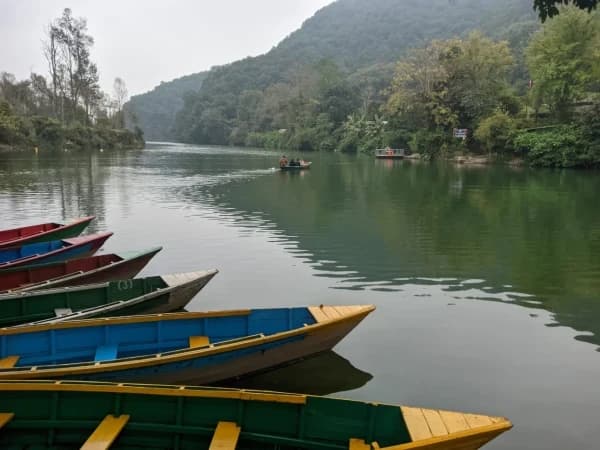
Try Nepal's food on our Kathmandu-Pokhara cultural tour. Our Kathmandu & Pokhara Tour (7 Days) is private (your group only, no strangers), 2027 dates open, From USD $749. WhatsApp us for tailored 2027 dates and current departures.
Planning a trip to Nepal?
Drop us your details and tell us what you have in mind. We will put together a personalised plan and get back to you.
Not sure which Nepal trek is right for you?
Take our free 2-minute quiz and get personalised recommendations based on your fitness, experience, and travel style.
Find Your Perfect Trek →Need Help? Call Us+977 9810351300orChat with us on WhatsApp
Related Trek Packages
 US$749
7 DaysMax 20
Latest Travel Blogs
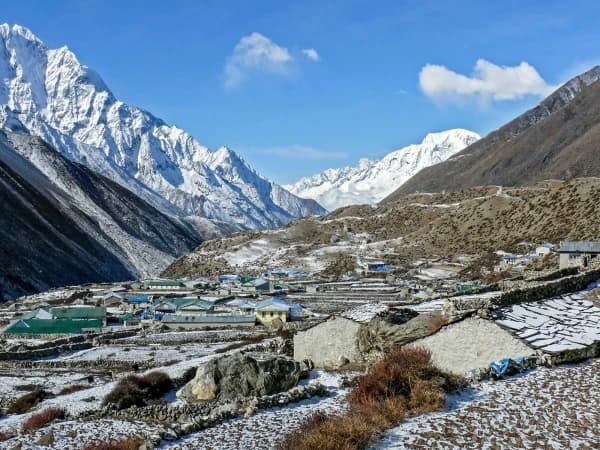
Thamdanda and Surke: The Road Head for Everest Base Camp by Road
Thamdanda is the road head where our Everest Base Camp trek by road starts and ends on foot. How to get there from Phaplu and what the first walk to Paiya is like.
Read More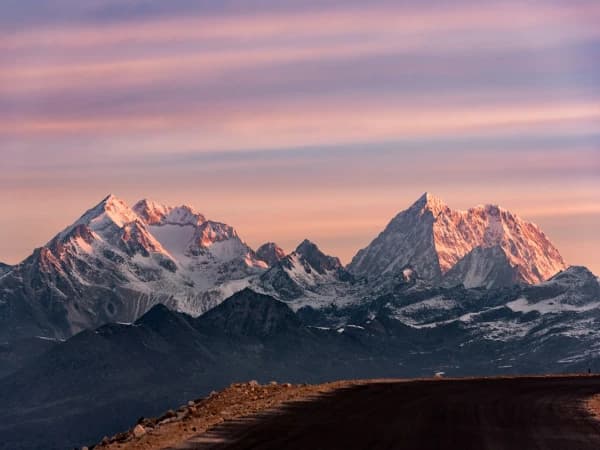
Poon Hill Trek Permits 2027: ACAP, TIMS, Cost and What You Need
Poon Hill needs two permits: ACAP at NPR 3,000 and a TIMS card at NPR 2,000. Who arranges them, where they are checked, SAARC rates and the 2027 trek prices.
Read More
Mera Peak Climbing Itinerary 2027: 14 Days, Day by Day
Mera Peak in 14 days, night by night. The Hinku valley, a full rest day at Khare, Mera High Camp at 5,780 m, summit day, 2027 prices and the best months.
Read More Chat with Shreejan