

What Makes Nagarkot Worth Visiting?
Short answer: Nagarkot is a hill station at about 2,175 m, 32 km east of central Kathmandu and 1 to 1.5 hours by road. It has one of the best mountain views you can reach by car, strongest from October to December, and sunrise is the reason to go. Stay one night if you can. For a guided option, see our Nagarkot Sunrise and Bhaktapur Day Tour, from USD 110 per person.
If you've only got a day or two spare in Kathmandu and you want to see the Himalayas without lacing up trekking boots, Nagarkot is where you go. It's that simple.
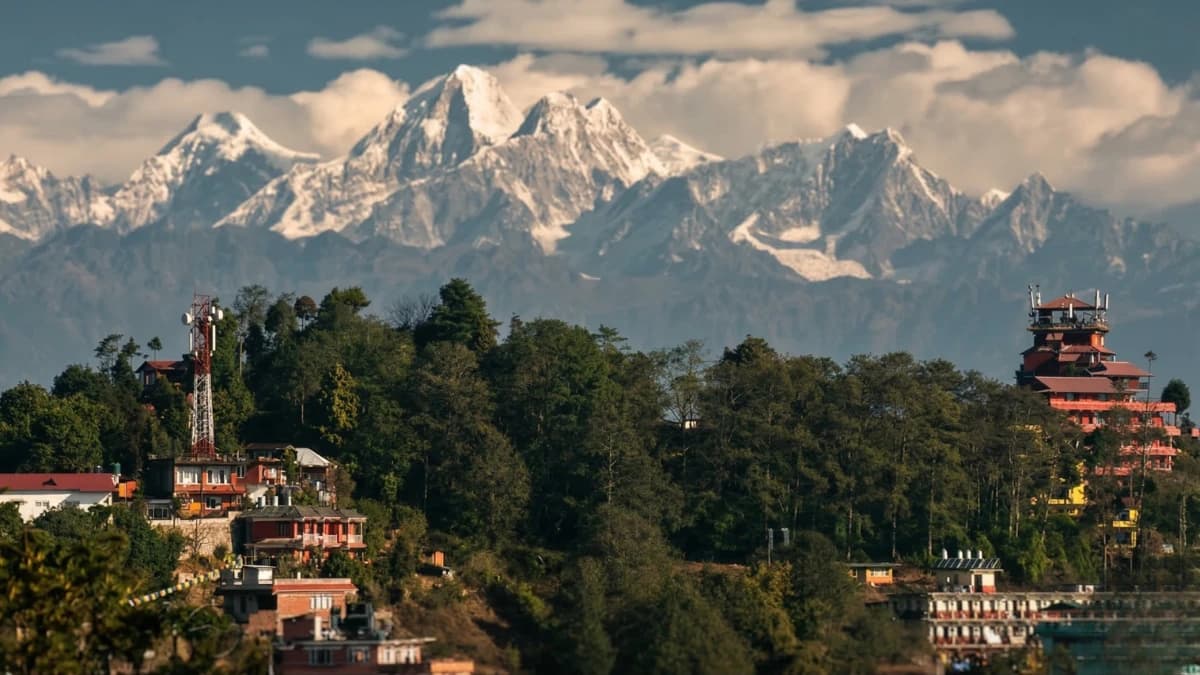
Sitting at 2,175 metres on the eastern rim of the Kathmandu Valley, this small hill station is just 32 kilometres from the capital, roughly an hour and a half by car, depending on traffic and how adventurous your driver is feeling. From up here, on a clear morning, you can see a sweep of snow-capped peaks stretching from Mount Everest in the east all the way to Dhaulagiri in the west. That's over 300 kilometres of the Himalayan range laid out in front of you like a painting, and you didn't have to walk a single step uphill to see it.
I've been bringing visitors to Nagarkot for years, and it never gets old. There's something about watching the first light hit those peaks (the way the snow turns from grey to pink to blinding white in the space of twenty minutes) that reminds you why people travel halfway around the world to come to Nepal.
Nagarkot isn't a trek destination. It's not a challenge. It's a place to breathe, to look, and to understand what the Himalayas actually are before you head into them. For many of our guests, it's also the moment they decide they're definitely coming back for a proper trek.
The Himalayan Panorama
Let's talk about what you're actually looking at from Nagarkot, because the view deserves more than "it's nice."
On a clear day, and I'll get to when those clear days happen, you can see peaks from eight of the thirteen Himalayan ranges visible from Nepal. Starting from the east and scanning west, here's what you'll pick out:
- Mount Everest (8,849m), Yes, you can see it from here. It's not towering above everything the way you might imagine. From this distance, Everest appears as a dark pyramid poking above the ridge line. But knowing what you're looking at makes it special. Your guide will point it out, don't be embarrassed to ask, because first-timers almost always look in the wrong direction.
- Langtang Range, These peaks sit almost due north of Kathmandu and are among the closest to the valley. Langtang Lirung (7,227m) is the big one, and on sharp mornings it feels close enough to touch.
- Ganesh Himal, A beautiful cluster of peaks named after the Hindu deity. They catch the early light wonderfully.
- Manaslu (8,163m), The eighth highest mountain in the world, visible on the clearest days as a broad white dome to the northwest.
- Annapurna Range, Further west, you'll spot the Annapurna massif if conditions are right. Annapurna I stands at 8,091 metres.
- Dhaulagiri (8,167m), The western anchor of your view. At 8,167 metres, it's the seventh highest peak on earth, and seeing it from the same viewpoint as Everest gives you a real sense of the scale of the Himalayan chain.
The best viewing spot is the Nagarkot View Tower, a short walk above the main village. There's also an old army lookout point that offers an unobstructed 360-degree panorama. Most lodges have rooftop terraces oriented towards the mountains, so you don't even need to leave your breakfast table.
A quick word of honest advice: you won't see all of this every day. Cloud, haze, and dust can obscure the view, especially in the warmer months. But when it's clear, and during October, November, and early December it's clear more often than not, it's genuinely one of the finest mountain views accessible by road anywhere in the world.
Sunrise and Sunset
Nagarkot is famous for sunrise, and rightly so. The peaks face roughly east to north, which means the morning sun lights them up directly while you watch from the ridge.
Here's what a typical sunrise morning looks like. You'll set your alarm for around 5:00 to 5:30 am depending on the season. It's cold, bring a fleece or down jacket even in spring. You walk or drive up to the view tower in the dark, and you wait. The sky starts to lighten behind the hills to the east. Then the highest peaks, Everest, Lhotse, Makalu, catch the first rays. They glow orange-pink against a sky that's still deep blue. Over the next fifteen to twenty minutes the light creeps down the mountains and across the foothills until the whole range is lit up and the valley below is still in shadow.
It's worth setting an alarm for, I promise you.
Sunset is less famous but honestly just as beautiful, especially if you position yourself on the western side of the ridge. The light turns warm and golden, the Kathmandu Valley fills with a soft haze, and the peaks to the west, Ganesh Himal, Manaslu, the Annapurnas, glow amber before fading to silhouettes. Fewer tourists bother with sunset, so you'll often have the viewpoint to yourself.
My personal recommendation: arrive in the afternoon, watch sunset that evening, then get up for sunrise the next morning. That way you get both, and you're not rushing.
Nagarkot sunrise times by month
These are approximate sunrise times for the Kathmandu Valley on the 15th of each month, in Nepal time. They are calculated for the valley, so the sun clears the eastern hills a little later than listed. Be at the viewpoint about 30 minutes before the time shown.
| Month | Approximate sunrise | Alarm for the viewpoint |
|---|---|---|
| January | 6:55 am | 6:10 am |
| February | 6:40 am | 6:00 am |
| March | 6:15 am | 5:30 am |
| April | 5:40 am | 5:00 am |
| May | 5:15 am | 4:30 am |
| June | 5:05 am | 4:20 am |
| July | 5:15 am | 4:30 am |
| August | 5:35 am | 4:50 am |
| September | 5:45 am | 5:00 am |
| October | 6:00 am | 5:15 am |
| November | 6:25 am | 5:40 am |
| December | 6:45 am | 6:00 am |
May to September are the poorest months for views, so the early times then matter less. The best sunrise months are October to February.
Hiking Trails
Nagarkot has several walking routes that are perfect if you want a taste of Nepal's hill country without committing to a full trek. None of them are difficult, you don't need special equipment, just comfortable shoes and a water bottle.
Nagarkot to Changu Narayan (4-5 hours)
This is the classic Nagarkot hike, and it's the one I recommend most. The trail drops from Nagarkot through terraced farmland, small Tamang and Newar villages, and patches of forest before arriving at Changu Narayan, one of the oldest Hindu temples in the Kathmandu Valley and a UNESCO World Heritage Site. The temple dates back to the 4th century, and the stone carvings there are extraordinary. From Changu Narayan you can easily get a local bus or taxi back to Kathmandu or onward to Bhaktapur. It's mostly downhill, which your knees will appreciate.
Nagarkot to Dhulikhel (5-6 hours)
A longer walk that follows the ridge east towards Dhulikhel, another hill town with excellent mountain views. The trail passes through forests of rhododendron and pine, with views of the Himalayan range to the north and the Kathmandu Valley to the south. Dhulikhel has its own collection of lodges and restaurants, so you could make this a point-to-point walk and stay the night there.
Nagarkot View Tower Loop (1-2 hours)
If you just want a short walk, the loop from the village up to the view tower and back through the forest is pleasant and easy. Good for the afternoon before sunset.
Tamang Heritage Trail Extension
For those with more time, Nagarkot can be a starting point for exploring the Tamang villages in the surrounding hills. These aren't marked tourist trails, they're village paths, so having a local guide is useful. We can arrange this as a day walk or overnight trip with a homestay.
Where Should You Stay in Nagarkot?
Nagarkot has accommodation for every budget, from basic guesthouses to proper resort hotels. Here's a rough guide:
Budget (USD $15-30 per night)
Simple guesthouses with clean rooms, hot water (usually solar-heated, so mornings are best), and rooftop mountain views. The food is straightforward, dal bhat, momos, noodles, and perfectly good. You're here for the view, not the thread count.
Mid-range (USD $40-80 per night)
Several hotels in this bracket offer comfortable rooms with attached bathrooms, heating, and restaurants with proper menus. Many have dedicated sunrise terraces. Hotel Country Villa and Club Himalaya are well-known options in this range.
Upper-range (USD $100-200 per night)
A handful of resorts offer a more polished experience, spacious rooms, gardens, spa facilities, and mountain-view dining. Hotel Mystic Mountain and Fort Resort are popular choices for travellers who want comfort with their panorama.
Whichever you choose, make sure your room faces north or northeast. That's where the mountains are, and waking up to that view from your bed is half the reason for staying overnight.
A tip: book ahead during October and November. Nagarkot fills up during peak season, especially at weekends when Kathmandu residents come up to escape the city.
How Do You Get to Nagarkot from Kathmandu?
Nagarkot is 32 kilometres east of central Kathmandu. There are a few ways to get there:
| Option | Time | Cost | Good for |
|---|---|---|---|
| Private car or jeep | 1 to 1.5 hours | About USD 30 to 50 round trip, depending on waiting time | Sunrise runs, stopping at Bhaktapur |
| Taxi from Thamel | 1 to 1.5 hours | About NPR 3,000 to 4,000 one way | One-way trips, agree the price first |
| Local bus via Bhaktapur | 2 to 3 hours | Very cheap | Budget travellers, not for travel sickness |
Private car or jeep (1-1.5 hours)
This is the easiest option and the one we arrange for our guests. The drive takes you through Bhaktapur, which is worth a stop on the way up or back, and then climbs the winding hill road to Nagarkot. A private car costs roughly USD $30-50 for the round trip, depending on waiting time.
Via Bhaktapur by local bus (2-3 hours)
Catch a local bus from Kathmandu's Ratna Park bus station to Bhaktapur (about 45 minutes, costs pennies), then change to a Nagarkot-bound bus or minibus from Bhaktapur's Kamal Binayak. The road is steep and winding, and the buses are... characterful. It's an experience in itself, but not one I'd recommend if you're prone to travel sickness.
Taxi
A metered taxi from Thamel will cost around NPR 3,000-4,000 one way. Negotiate before you set off. Better yet, arrange a return trip with waiting time so you're not stranded at the top.
Day trip or overnight?
You can do Nagarkot as a day trip from Kathmandu, drive up early, catch the sunrise, walk to Changu Narayan, and be back by afternoon. But I'd recommend staying one night. The sunset-sunrise combination is worth it, and the pace of the place is part of the appeal. Rushing defeats the point. Related: Dhulikhel Guide: Himalayan Views & Namobuddha Day Hike.
When Is the Best Time to Visit Nagarkot?
This matters a lot, because Nagarkot's entire appeal depends on visibility.
October to December, Best
After the monsoon clears in late September, the air is clean and the skies are sharp. October and November are the prime months. Visibility is excellent, temperatures are comfortable during the day (10-20°C) though cold at night (dropping to 2-5°C in November and December). This is also peak tourist season, so expect company.
January to February, Cold but clear
Temperatures can drop below freezing at night, and some mornings there's frost on the ground. But the visibility remains very good, and there are far fewer visitors. Bring warm layers. If you don't mind the cold, this is a rewarding time to visit.
March to April, Spring
Rhododendrons bloom across the hillsides, a genuinely beautiful sight. Visibility is decent in the mornings but haze tends to build through the day as temperatures rise. Still a good time, especially combined with the Changu Narayan hike through flowering forests.
May to June, Hot and hazy
Pre-monsoon heat builds haze in the valley, and mountain views become unreliable. Not the best time for Nagarkot specifically, though the hills are green and the trails are quiet.
July to September, Monsoon
Heavy rain, leeches on the trails, and clouds wrapped around the ridge most of the time. The mountains are hidden. I wouldn't recommend Nagarkot during monsoon unless you're specifically interested in the dramatic cloud formations and green landscape. The odd post-rain clear sky can be extraordinary, but you'd be gambling.
What Should You Know Before Visiting Nagarkot?
- Bring layers. Even in October, mornings at 2,175 metres are chilly. A fleece, a light down jacket, and a hat will keep you comfortable during the pre-dawn sunrise vigil.
- Carry cash. ATMs in Nagarkot are unreliable. Bring enough Nepali rupees from Kathmandu to cover your stay. Most lodges accept cash only, though a few of the larger hotels now take cards.
- Charge your devices. You'll want your camera or phone fully charged for sunrise. Power cuts happen occasionally, so a portable battery bank is useful.
- Don't skip Bhaktapur. It's directly on the route to Nagarkot and it's one of the best-preserved medieval cities in Asia. Plan at least two hours there on your way up or back.
- Hire a local guide. For the hiking trails, especially the Changu Narayan and Dhulikhel routes, a guide adds context, pointing out wildlife, explaining the farming calendar, and translating conversations with villagers. We can arrange one for you.
- Altitude is not an issue here. At 2,175 metres, Nagarkot is well below the altitude where most people experience any symptoms. You won't need acclimatisation time, just a good pair of lungs for the uphill bits.
- Combine it with your trek. If you're flying into Kathmandu before an Everest Base Camp or Annapurna trek, spending your first night at Nagarkot is a brilliant way to adjust to Nepal's pace and get your first taste of the mountains. We often build it into our itineraries for exactly this reason.
Nagarkot won't give you the same feeling as standing at Everest Base Camp or crossing the Thorong La Pass. It's not that kind of place. But it'll show you what's waiting for you out there in those mountains, and it'll do it with a cup of tea in your hand and a warm bed ten steps away. For a lot of travellers, that first Nagarkot sunrise is the moment Nepal stops being a destination and starts being something personal.
If you'd like us to include Nagarkot in your Nepal itinerary, whether as a standalone day trip or as the opening chapter of a longer trek, get in touch with our team. We'll sort out the transport, the lodge, and the wake-up call.
Chat with Shreejan on WhatsApp: +977 9810351300
Email: [email protected]
Browse our treks:www.theeverestholiday.com
For those wanting more than the sunrise view, our Nagarkot to Chisapani day trek guide covers the full traverse route.
Nagarkot is a 1-night stop on our Kathmandu-Pokhara tour. Our Kathmandu & Pokhara Tour (7 Days) is private (your group only, no strangers), 2027 dates open, From USD $749. WhatsApp us for tailored 2027 dates and current departures.

 Chat with Shreejan