
How to trek Nepal with grandparents, parents, and kids together. Routes for all fitness levels, itinerary design tips, and honest challenges. Complete guide.
Govt Regd. No.: 147653/072/073
Travel Agency Licence: 2838/072
Multi-Generational Family Trekking in Nepal — Grandparents, Parents and Kids Together

Multi-Generational Family Trekking in Nepal: How Three Generations Can Share the Himalayas Together
By Shreejan Simkhada | April 2026
Last autumn, I watched a 68-year-old grandmother from Toronto high-five her 10-year-old granddaughter at the top of Poon Hill. Behind them, the entire Dhaulagiri-Annapurna range was turning gold in the sunrise. The girl's parents were crying. The grandmother was laughing. I was pretending something had blown into my eye.
That family had spent three years planning a trip that worked for all eight of them. Two grandparents in their late sixties. Two parents in their forties. Four children aged 8 to 16. Different fitness levels. Different interests. Different ideas about what counts as a comfortable bed.
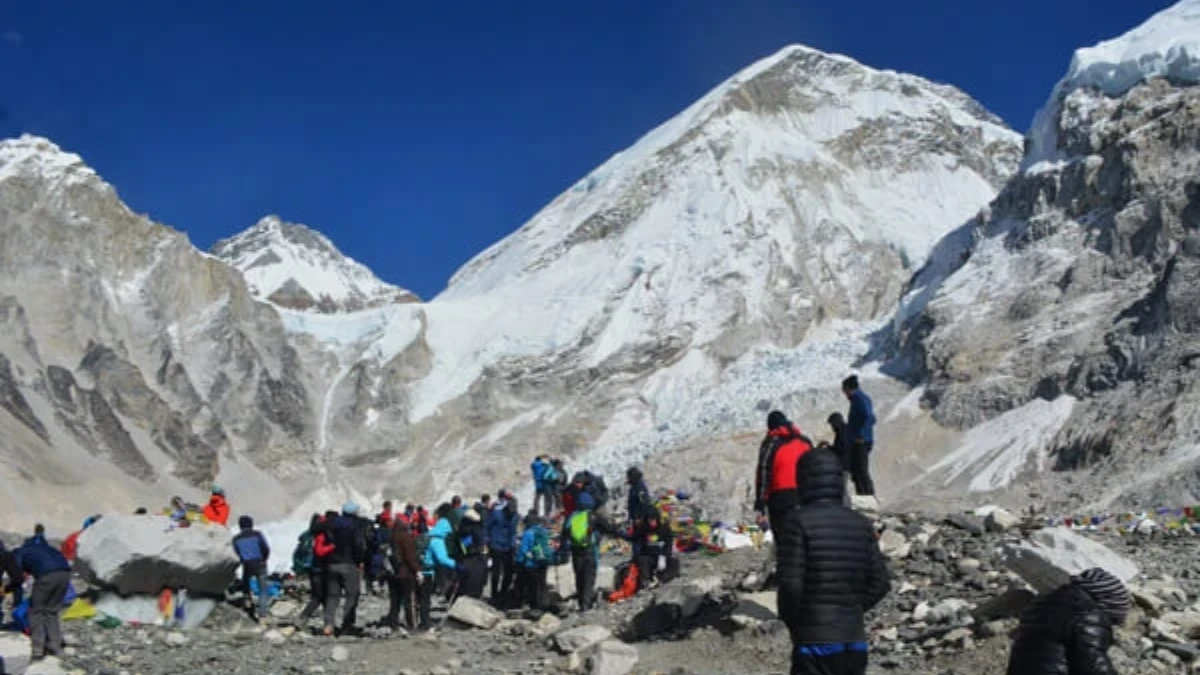
They chose Nepal. And it worked.
I'm Shreejan Simkhada, CEO of The Everest Holiday and a third-generation Himalayan guide. Over the past decade, I've watched multi-generational family travel grow from a rare request to one of our most common bookings. There's even a name for it now – the SKI holiday. Spending the Kids' Inheritance. Grandparents who'd rather share experiences with their grandchildren than leave money in a bank account.
I love this trend. But I also know it requires careful planning, because a trek that's perfect for a fit 40-year-old parent might be miserable for a 70-year-old with dodgy knees or boring for a 12-year-old who'd rather be on their phone.
So here's an honest guide to making it work. What's brilliant about family trekking in Nepal, what's genuinely challenging, and how we design itineraries that keep everyone from age 8 to 78 happy.
Why Does Nepal Work for Three-Generation Family Treks?
Most family holidays force a compromise. A beach resort keeps the grandparents happy but the teenagers bored. An adventure holiday thrills the parents but exhausts the grandparents. A city break works for adults but drives children mad within 48 hours.
Nepal is different, and here's why.
The trails are flexible, not fixed. Unlike a guided tour in Europe where everyone follows the same schedule, a Nepal trek allows groups to split during the day and reunite at the teahouse in the evening. Your fitter family members can take the longer route or add a side hike. Your grandparents can take the shorter, gentler path with a guide. Everyone sleeps under the same roof at night and shares stories over dal bhat.
The teahouse system makes logistics simple. You're not camping. You're not carrying heavy packs. Teahouses along Nepal's major trekking routes provide rooms, meals, and hot drinks. For older family members, this means a warm bed and a proper meal without the hassle of tents and sleeping mats on the ground.
Children are welcomed everywhere. Nepal is a family-oriented culture. Children aren't tolerated in teahouses – they're celebrated. Local families will feed your kids extra portions, teach them Nepali words, and show them baby goats. I've seen shy 8-year-olds come alive in Nepal because everyone they meet is genuinely delighted to see them.
The cost makes it possible. Taking a family of six to eight on an adventure holiday in New Zealand, Patagonia, or the Alps would cost a small fortune. Nepal is dramatically more affordable. A 10-day family trek with guides, porters, meals, and accommodation can cost less than a week in a European ski resort.
How do families with mixed fitness levels trek together in Nepal?
This is the secret to multi-generational trekking, and it's something most operators don't offer because it requires extra guides. Here's how it works in practice.
Each morning, the family splits into two groups based on how they're feeling that day (not a fixed assignment – people can switch groups daily). One group takes the standard trail with one guide. The other group takes a shorter or easier route with a second guide. Both groups arrive at the same teahouse by mid-afternoon.
For example, on the Poon Hill Trek, the day from Tikhedhunga to Ghorepani involves roughly 1,700 metres of climbing via stone steps. That's tough for anyone, and genuinely hard for older trekkers or younger children. The faster group pushes through in 5-6 hours. The slower group starts earlier, takes more breaks, and arrives an hour or two later. Both groups are in Ghorepani by evening, both groups wake at 4:30am the next day for the sunrise viewpoint.
The important thing is this: nobody feels like they're holding anyone back, and nobody feels like they're being held back.
We assign one guide per group, plus porters to carry bags for both. The guides communicate by phone throughout the day. If anyone in the slower group is struggling, we know immediately and can adjust.
Which Nepal treks are best for multi-generational families?
1. Poon Hill Trek – The Gold Standard for Families
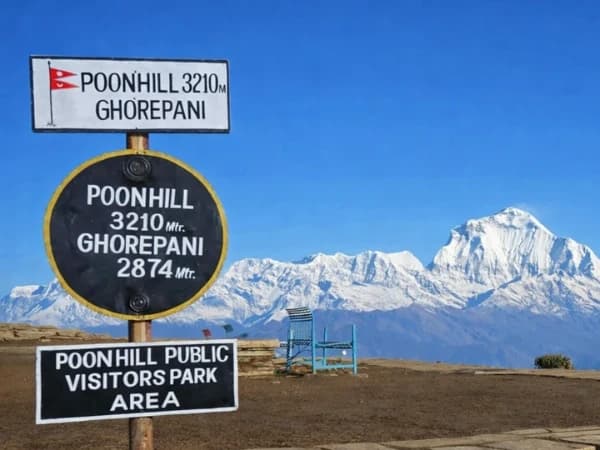
If you're taking grandparents, parents, and children on one trek, this is the one I'd recommend first. Our 6-Day Poon Hill Trek reaches a maximum altitude of 3,210 metres, which is low enough that altitude sickness is extremely unlikely for any age group.
The sunrise from Poon Hill is spectacular. You'll see Dhaulagiri, Annapurna South, Machhapuchhre (Fishtail), and on clear mornings, the entire Annapurna range stretched across the horizon. Children love the early-morning wake-up because it feels like an adventure. Grandparents love it because the viewpoint is only a 45-minute walk from Ghorepani.
The trail passes through Gurung villages where families live traditionally. You'll walk through rhododendron forests (striking in March-April when they bloom). The teahouses are among the most comfortable in Nepal because this route is well-established.
Suitable for: Children 8+, grandparents with moderate fitness, anyone who walks regularly
Daily walking: 4-6 hours (split groups can shorten to 3-4)
Price for family of 6: approximately USD $3,600-4,200 total
2. Everest View Trek – See Everest Without the Big Commitment
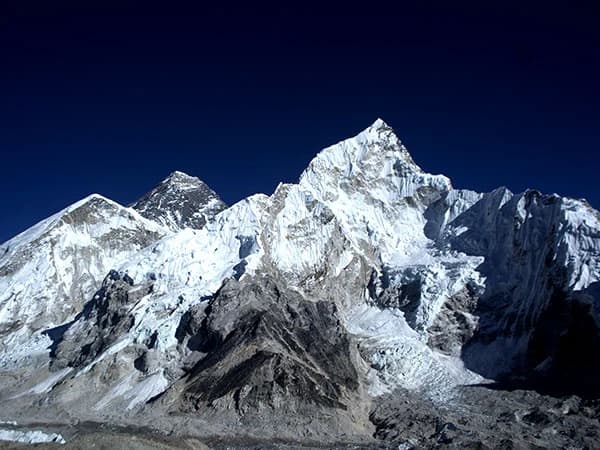
Our 7-Day Everest View Trek takes you to Namche Bazaar (3,440m) and the Everest View Hotel viewpoint (3,880m). You see Everest, Ama Dablam, and the Khumbu peaks without going anywhere near Base Camp altitude.
This is perfect for families where the grandparents want to say they've seen Everest but aren't up for two weeks of trekking. The flight to Lukla is exciting for children (short, dramatic, memorable), and Namche Bazaar is a proper town with bakeries, coffee shops, and even a small museum.
The altitude is the main consideration here. At 3,880m, some family members may feel mild headaches or breathlessness. We build in an acclimatisation day at Namche, which gives the body time to adjust.
Suitable for: Children 10+, grandparents with good fitness, altitude awareness essential
Daily walking: 4-6 hours
Price for family of 6: approximately USD $5,400-6,600 total
3. Kathmandu-Pokhara-Chitwan Tour – No Trekking Required
Not every multi-generational family wants to trek. Some grandparents genuinely can't do sustained walking. Some children are too young for trails. Our Kathmandu-Pokhara-Chitwan Tour covers Nepal's three most iconic destinations without any serious hiking.
Kathmandu for the temples, history, and chaos. Pokhara for the lake, mountain views, and paragliding (teenagers love this). Chitwan National Park for jungle safaris, elephant encounters, and crocodile spotting. It's a complete Nepal trip for all ages and all fitness levels.
Suitable for: Children 5+, grandparents of any fitness level, wheelchair users in cities
Daily walking: light, no sustained trekking
Price for family of 6: approximately USD $4,800-6,000 total
4. Kathmandu-Bandipur-Pokhara-Chitwan Tour
A longer version of the above that adds Bandipur – a hilltop medieval town that most tourists never visit. Our Kathmandu-Bandipur-Pokhara-Chitwan Tour is ideal for families who want cultural depth rather than physical challenge. Bandipur is quiet, authentic, and photogenic. Grandparents tend to love it because it feels like stepping back in time.
Suitable for: All ages, all fitness levels
Daily walking: light exploration
Price for family of 6: approximately USD $5,400-7,200 total
5. Dhulikhel-Namobuddha Day Hike – Test the Waters
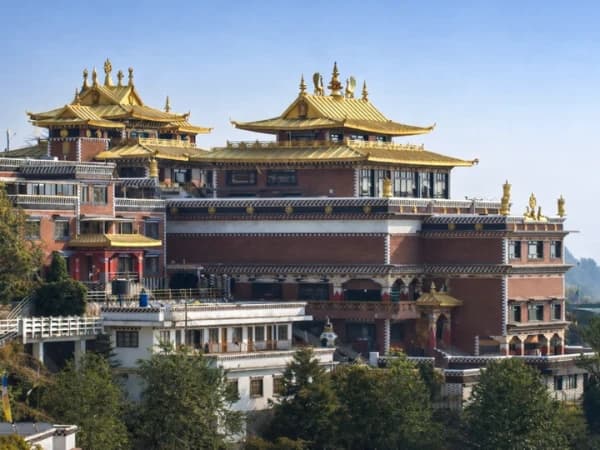
If you're not sure whether your family is ready for a multi-day trek, try our Dhulikhel-Namobuddha Day Hike first. It's just 30 minutes from Kathmandu, reaches only 1,750 metres, and involves 4-5 hours of gentle walking through farmland and forest to an ancient Buddhist monastery.
Perfect as a warm-up day before a longer trek, or as a standalone experience for families with very young children or elderly grandparents who want to taste the Himalayan walking experience without committing to multiple days on the trail.
Suitable for: Children 6+, grandparents of moderate fitness
Walking: 4-5 hours total
Price for family of 6: approximately USD $600 total
Does age affect altitude sickness when trekking in Nepal?
Here's something most trekking companies won't tell you: altitude sickness doesn't discriminate by age. A healthy 70-year-old acclimatises at roughly the same rate as a healthy 30-year-old. In some studies, older trekkers actually handle altitude marginally better because they're more willing to go slowly, stay hydrated, and listen to their guides.
The real age-related concern at altitude isn't acclimatisation. It's pre-existing conditions. High blood pressure, heart conditions, and respiratory problems are all more common in older adults, and altitude makes them worse. Any grandparent planning to trek above 3,000 metres needs a conversation with their GP first.
For children: The main risk is that younger children can't always describe their symptoms clearly. A 9-year-old with a headache might not mention it because they don't want to stop walking. Our guides are trained to check in with children regularly, not just ask "are you okay?" (every child says yes to that) but look for signs: unusual quietness, loss of appetite, pale face, stumbling.
For grandparents: The biggest practical issue isn't altitude – it's knees. Nepal's trails involve a lot of steps, both up and down. Descending is harder on joints than ascending. Trekking poles are essential, not optional. We provide them, and our guides will show anyone unfamiliar with poles how to use them properly on the first day.
For parents: You'll be fine physically. Your main challenge is managing everyone else's experience while trying to enjoy your own. Let the guides handle that. That's what we're here for.
What does a 14-day family trek itinerary in Nepal look like?
This is the itinerary I'd design for a family of eight: two grandparents (late 60s, active but not athletes), two parents (40s, fit), four children (ages 9, 12, 14, 16). It combines cultural immersions, gentle trekking, and one moderate trek, with flexibility built in.
Days 1-2: Kathmandu. Arrive, rest, explore at your own pace. Visit Boudhanath Stupa and Patan Durbar Square. The children will love the narrow streets, the prayer wheels, and the monkeys at Swayambhunath (Monkey Temple). Grandparents can take a rickshaw if walking the city is tiring.
Day 3: Dhulikhel-Namobuddha Day Hike. A gentle warm-up walk for the whole family. Test your legs, test your boots, enjoy mountain views without any altitude concern. Drive back to Kathmandu or stay overnight in Dhulikhel (recommended – the sunrise views of the Himalayas from Dhulikhel are extraordinary and often overlooked).
Days 4-9: Poon Hill Trek (6 days). Fly or drive to Pokhara, then begin the trek. The family splits into two groups each morning. Grandparents and younger children take the gentler pace. Parents and teenagers push ahead or add side hikes. Everyone reunites at the teahouse by late afternoon. The sunrise at Poon Hill on Day 4 is the trip's centrepiece.
Days 10-11: Pokhara. Rest days after the trek. Boat on Phewa Lake (everyone loves this). Paragliding for the teenagers and brave parents. The World Peace Pagoda for the grandparents. Shopping, eating, relaxing. Pokhara is Nepal's chill-out city.
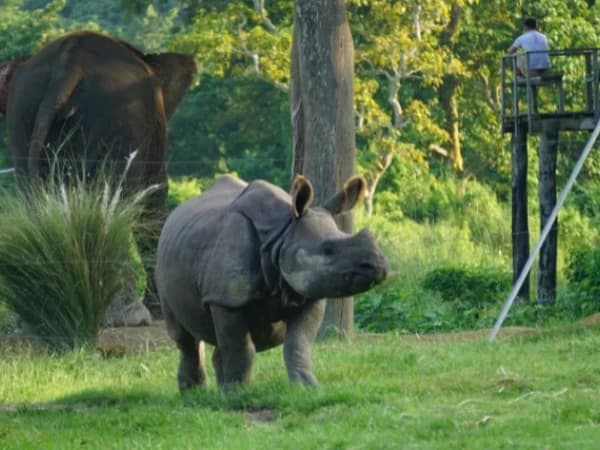
Days 12-13: Chitwan National Park. Jeep safari to spot one-horned rhinoceros and possibly tigers. Canoe ride on the Rapti River. Tharu cultural programme in the evening. This is the part of the trip where the youngest children often have their biggest adventure – seeing a wild rhino from 20 metres away is something an 8-year-old never forgets.
Day 14: Return to Kathmandu and depart. Drive or fly back. Last-minute shopping. Farewell dinner.
Estimated cost for a family of 8: USD $8,000-12,000 total (including guides, porters, accommodation, meals on trek, internal transport, park fees). That's roughly $1,000-1,500 per person for two weeks. International flights are additional.
How much does a multi-generational family trek in Nepal cost?
| Item | Family of 6 | Family of 8 |
|---|---|---|
| Poon Hill Trek (6 days, all-inclusive with 2 guides) | $3,600-4,200 | $4,800-5,600 |
| Kathmandu hotel (3 nights, 2-3 rooms) | $300-600 | $400-800 |
| Pokhara hotel (2 nights, 2-3 rooms) | $200-400 | $300-500 |
| Chitwan National Park (2 days, all-inclusive) | $600-900 | $800-1,200 |
| Internal flights (Kathmandu-Pokhara or Pokhara-Chitwan) | $600-900 | $800-1,200 |
| Guides and porters (2 guides, 3-4 porters) | Included in trek | Included in trek |
| Visas ($30 per person for 15 days) | $180 | $240 |
| Travel insurance (varies by country) | $300-600 | $400-800 |
| Total (excluding international flights) | $5,800-7,600 | $7,500-10,340 |
Compare that with a two-week family ski holiday in Europe (easily $15,000-25,000 for a family of six) and Nepal starts looking like remarkable value.
The Honest Challenges (Because I'd Rather You Know Now)
Different Pace Expectations
This is the number one source of family friction on trek. A fit 16-year-old wants to charge ahead. A 70-year-old grandmother needs frequent breaks. A 9-year-old alternates between bounding with energy and collapsing with boredom.
The split-group method solves most of this, but you still need a family conversation before the trip. Set the expectation that the trek is about being together, not about speed. The fast group waits at the teahouse. Nobody makes comments about who arrived last. This sounds obvious, but competitive families can turn trekking into a race without realising it.
Bathroom Situations
I won't sugarcoat this. Above 2,500 metres, toilets are basic. Squat toilets are common. They're clean enough, but they're not what most Western families are used to. For grandparents with mobility issues, squatting can be genuinely difficult.
Some teahouses on popular routes have Western-style flush toilets. We can prioritise booking rooms at these teahouses for families with elderly members. But we can't guarantee it every night. Bring your own toilet paper and hand sanitiser. A head torch for nighttime visits is essential.
Children adapt to this faster than adults. They'll be laughing about it by Day 2. Grandparents take a bit longer to adjust but always manage. I've never had a family abandon a trek because of the toilets.
Medical Concerns
Having three generations on a trail means three different medical risk profiles. Children can get sick quickly from contaminated water. Parents might push through pain they shouldn't ignore. Grandparents may have medications that interact with altitude.
We need a complete medical disclosure from every family member before departure. Not because we'll turn anyone away, but because our guides need to know what they're working with. A grandparent on blood thinners, a child with asthma, a parent with a recent knee surgery – all of these affect how we manage the trek day to day.
We carry a full first aid kit, a pulse oximeter, and our guides are trained in wilderness first aid. On treks above 4,000 metres, we monitor oxygen levels morning and evening for every family member, with particular attention to the oldest and youngest.
Sharing Rooms
Teahouses have limited rooms, and rooms are small. Most have twin beds. For a family of six to eight, you'll need three to four rooms per night. On busy routes in peak season (October-November), availability can be tight. We book ahead for family groups, but it's worth knowing that you won't have the space and privacy of a hotel.
Some families put children together in one room, parents in another, and grandparents in a third. Others mix it up. Either way, the walls are thin. Everyone will hear everyone else. This is either charming or maddening, depending on your family dynamics.
Screen Withdrawal
Your teenagers will panic on Day 1 when they realise WiFi above Namche Bazaar is either non-existent or painfully slow. By Day 3, they'll have stopped caring. By Day 5, they'll be voluntarily putting their phone away to watch the sunset. I've seen it happen dozens of times. Nepal has a way of reconnecting families who've been living in the same house but staring at different screens.
Tips from Families Who've Done It
After guiding multi-generational groups for years, I've collected the advice that families most often share with other families considering the same trip.
-
Let grandparents set the pace on the first day. Not the fittest person. Not the keenest person. The slowest person. If Day 1 goes well for the grandparents, the rest of the trip flows naturally.
-
Give teenagers responsibility. Ask them to photograph the trip, keep a journal, navigate with the map. Bored teenagers become difficult teenagers. Teenagers with a role become the best company on the trail.
-
Pack playing cards and a travel game. Evenings in teahouses are long. No television, limited phone signal. A family card tournament by candlelight becomes one of the trip's best memories.
-
Let children walk with the guide sometimes. Our guides are brilliant with children. They'll teach them to identify birds, count prayer flags, and say "namaste" properly. This also gives parents and grandparents time to walk together and actually talk without interruption.
-
Don't over-plan. The best multi-generational moments in Nepal happen spontaneously. A grandmother teaching a Nepali child to play cat's cradle. A teenager carrying a local farmer's basket up a hill. A grandfather and granddaughter watching the stars together because neither of them can sleep at altitude. These aren't things you can schedule.
When is the best time for a family trek in Nepal?
For multi-generational families, I recommend spring (March-May) over autumn (September-November). Spring is slightly warmer, which matters for older trekkers. The rhododendrons are blooming, which delights children. And spring is marginally less crowded on popular routes, which means better room availability for larger groups.
Autumn has clearer skies and better mountain views, so if photography is important to your family, October is the prime month. But expect busier trails and the need to book teahouse rooms further in advance.
Avoid December-February for multi-generational groups. It's cold at altitude, teahouses above 3,000 metres can be uncomfortable, and shorter days mean less walking time.
How do you plan a custom family trek in Nepal?
Every multi-generational booking starts with a conversation. I need to understand your family: who's fit, who's not, who's nervous, who's excited, who has medical conditions, who needs a Western toilet, who refuses to fly in small planes.
From that conversation, I'll design a bespoke itinerary. Not a fixed package pulled off a shelf. A trip built around your specific family, with the right trek for your collective fitness level, the right cultural immersions for your collective interests, and the right number of rest days for your collective energy.
We assign two guides for every multi-generational group (one for each pace group), plus enough porters so that nobody over 60 or under 12 carries anything heavier than a daypack.
The extra guide costs more than a standard booking. I won't pretend otherwise. But it's the difference between a family holiday that works and a family holiday that ends in an argument on Day 3 because Grandma can't keep up and feels guilty about it.
Ready to Plan Your Family's Nepal Adventure?
The best multi-generational trips I've guided all started the same way: one family member had the idea, got excited, and picked up the phone. Be that person.
Tell me about your family. Who's coming. What worries you. What excites you. I'll design something that works for all of you – not just the fittest or the youngest, but everyone.
Got questions? I answer every message personally.
WhatsApp: +977 9810351300
Email: [email protected]
Shreejan Simkhada is the CEO of The Everest Holiday and a third-generation Himalayan guide. TAAN Member #1586.
Multi-generational EBC? We do private departures only. Our Everest Base Camp Trek (12 Days) is private (your group only, no strangers), 2026 dates open, From USD $1399. WhatsApp us for tailored 2026 dates and current departures.
Planning a trip to Nepal?
Drop us your details and tell us what you have in mind. We will put together a personalised plan and get back to you.
Not sure which Nepal trek is right for you?
Take our free 2-minute quiz and get personalised recommendations based on your fitness, experience, and travel style.
Find Your Perfect Trek →Need Help? Call Us+977 9810351300orChat with us on WhatsApp
Related Trek Packages
 US$1,062
7 DaysMax 20
Everest View Trek - 7 Days Itinerary & Costs
Starts From
ExploreUS$1,062
 US$949
8 DaysMax 20
 US$150
1 DayMax 20
Latest Travel Blogs
Can You Trek Manaslu Solo in 2026? The Permit Rule That Changed, and What It Really Costs
Nepal now issues a Manaslu restricted-area permit to a single trekker. What that means, what it does not mean, and what it costs.
Read More
Everest Base Camp Trek Cost From France: The Real All-In Numbers in Euros for 2026 and 2027
What the Everest Base Camp trek really costs from France, all in and in euros, with the arithmetic shown.
Read More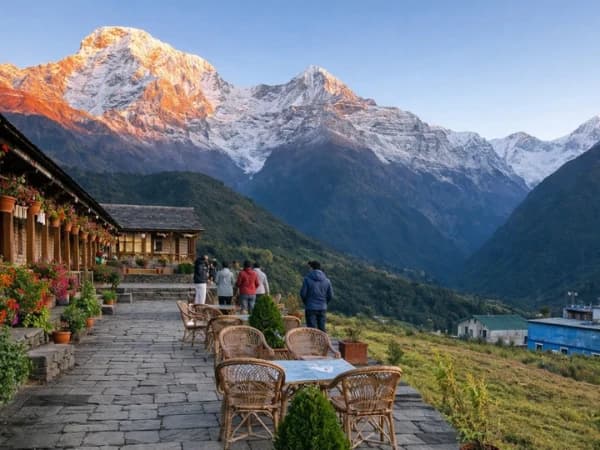
Kimrong Khola landslide: which Annapurna trails are not safe right now (September 2026)
A landslide has blocked the Kimrong Khola in Kaski and residents of Nayapul and Birethanti have been asked to move to safe ground. Which Annapurna treks are on hold, which are open, and what to do if you are booked.
Read More Chat with Shreejan