Whitewashed houses, apple orchards, and the best brandy in Nepal. Marpha is the Annapurna Circuit village nobody wants to leave. Here's why.
Apr 10, 2026By Shreejan

Whitewashed houses, apple orchards, and the best brandy in Nepal. Marpha is the Annapurna Circuit village nobody wants to leave. Here's why.
Every trekker on the Annapurna Circuit hits a point where they forget about the pass. Where the blisters, the altitude headaches, and the relentless uphill fade into background noise. For most people, that moment arrives in Marpha.
It happened to me the first time I walked through its main gate at age fourteen, trailing behind my father on one of his guiding trips. I remember the flagstones — smooth, even, almost polished. The whitewashed walls on both sides. And somewhere ahead, the sharp, sweet scent of something fermenting. My father smiled. "Welcome to Nepal's apple capital," he said.
Sitting at 2,670 metres in the Kali Gandaki Valley, Marpha is technically just another stop on the circuit. But nobody treats it that way. Trekkers who planned to stay one night stay two. Some stay three. A few never quite make it to Upper Mustang at all because they're too busy sampling apple brandy on a sunny rooftop terrace.
This guide covers everything you need to know about visiting Marpha — whether you're passing through on the Annapurna Circuit, making a detour from Jomsom, or building it into a broader Nepal itinerary.
Marpha sits in the Mustang District of Gandaki Province, on the western bank of the Kali Gandaki River. It's roughly 8 kilometres south of Jomsom (the district headquarters) and about 2 hours' walk along a relatively flat trail.
| Detail | Information |
|---|---|
| Elevation | 2,670 metres (8,760 feet) |
| District | Mustang |
| Nearest airstrip | Jomsom (8 km north) |
| Walking time from Jomsom | 1.5–2 hours |
| Walking time from Tukuche | 45 minutes |
| Population | Approximately 1,500 |
| Best months to visit | March–May, September–November |
For trekkers heading south on the Annapurna Circuit with Tilicho Lake, Marpha usually falls on day 10 or 11 of the trek. If you're flying into Jomsom from Pokhara for a shorter trip, you can reach Marpha before lunch.
Marpha has held the unofficial title of Nepal's cleanest village for decades. And when you walk in, you understand why nobody disputes it.
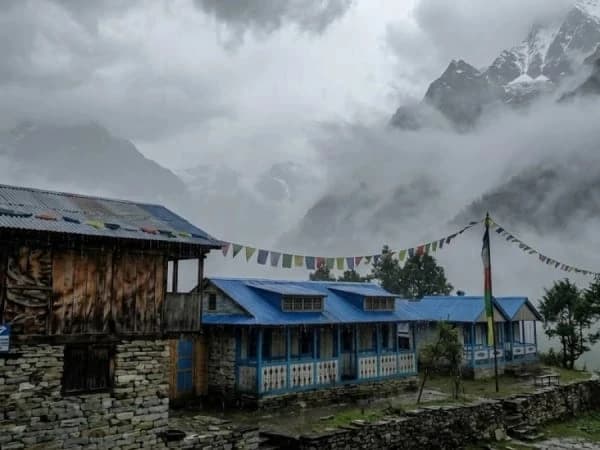
The main street is paved with flat flagstones, flanked by whitewashed buildings with flat roofs and dark timber window frames. Underground drainage channels run beneath the street — a system the Thakali people engineered centuries before anyone was talking about sustainable tourism. There's no litter. No open drains. No chaotic tangle of electrical wires.
"I've been to forty countries and I've never seen a village this clean anywhere in Asia. It felt like walking into a different century." — Martina, 34, Berlin, trekking the Annapurna Circuit in October 2025
The Thakali community takes enormous pride in this. Every morning, families sweep the stones in front of their homes. It's not performative. It's cultural. My colleague Dawa, who has guided the circuit over sixty times, puts it simply: "The Thakali don't clean for tourists. They clean because that's who they are."
Wandering the narrow alleys beyond the main street rewards you with hidden courtyards, prayer wheels set into walls, and the occasional glimpse of an elderly woman spinning wool on a rooftop with Dhaulagiri filling the sky behind her.
Let's address the real reason half the trekkers reading this clicked on the link.
Marpha produces the best apple brandy in Nepal. Full stop. The government-run Marpha Horticulture Farm, established in 1966, introduced apple cultivation to the region. Today, the orchards produce several varieties, and the brandy distilled from them has become the stuff of trekker legend.
"We ordered a bottle of apple brandy to share between four of us. Three hours later we'd ordered a second. I regret nothing except the walk to Jomsom the next morning." — Sam, 28, Melbourne, March 2025
The Marpha Horticulture Farm sits at the northern edge of the village. It's open to visitors and worth a short stop. You can walk through the orchards, see the distillery where brandy is produced, and buy bottles directly. A 500ml bottle costs around NPR 600–800 here, which is cheaper than you'll find anywhere else on the trail.
The farm also grows walnuts, apricots, and plums. In September and October, the harvest is in full swing and the air smells extraordinary.
Marpha isn't a place for ticking off attractions. It's a place for slowing down. But if you want structure, here's what a good day looks like.
Wake early and walk to the rooftop of your lodge. On a clear morning, the sunrise lights up Dhaulagiri (8,167 metres) and the peaks flanking the Kali Gandaki Valley. No hiking required.
After breakfast, visit the Marpha Gompa. This small Tibetan Buddhist monastery sits on a rocky outcrop above the village. The prayer hall contains old thangka paintings and a peaceful courtyard. Monks are usually welcoming; just ask before photographing.
Walk through the apple orchards south of town. In spring (March–April), the apple blossoms are a sight against the dry mountain backdrop. In autumn, the trees are heavy with fruit.
Thakali culture is fascinating and distinct from the Sherpa, Gurung, and Tamang communities you'll meet elsewhere in Nepal. The Thakalis were historically traders on the salt route between Tibet and India, and their food, architecture, and business sense reflect that heritage. Many of the best lodges and restaurants in the Annapurna region are Thakali-owned.
Walk down to the river. The Kali Gandaki Valley is one of the deepest gorges in the world, and the wind that howls up it every afternoon is famous. Mornings are calm. By midday, the gusts pick up. By 2 PM, the wind can be strong enough to knock you sideways.
Look for shaligrams — black ammonite fossils found in the riverbed. These fossils are over 100 million years old, evidence that this valley was once an ocean floor. They're sacred to Hindus, who consider them representations of Lord Vishnu.
Eat Thakali dal bhat. It's different from the standard trekking lodge version. Thakali cuisine is known for its variety of side dishes (achar, gundruk, timur), and Marpha lodges serve some of the best food on the entire circuit.
Then settle in with that apple brandy. You've earned it.
Marpha has several good lodges. Accommodation is simple but clean. Most places offer rooms for NPR 300–1,000 per night, with the expectation that you'll eat at the lodge's restaurant.
Hot showers are available at most lodges for an extra NPR 200–400. Wi-Fi exists but don't count on it for video calls.
Most trekkers reach Marpha from the north, having crossed Thorong La Pass (5,416 metres) and descended through Muktinath and Jomsom. From Jomsom, it's a straightforward walk south along the Kali Gandaki.
Fly Pokhara to Jomsom (20 minutes, around USD 120 one-way). The flight operates in the early morning before the valley winds pick up. From Jomsom airstrip, walk or hire a jeep to Marpha.
Alternatively, drive from Pokhara to Jomsom via Beni (10–12 hours by jeep on a rough road). This option is cheaper but punishing on the body.
If you're walking the circuit counter-clockwise (less common but possible), you'll approach Marpha from Ghasa and Tukuche. The scenery from this direction , deep valley walls, waterfalls, pine forests , is magnificent.
Marpha works best as part of a larger Annapurna itinerary. Here's how it fits into the most popular routes.
| Route | Marpha Day | Duration |
|---|---|---|
| Annapurna Circuit Trek | Day 10–12 | 14–18 days |
| Annapurna Circuit with Tilicho Lake | Day 12–14 | 18–21 days |
| Upper Mustang Trek | Day 1 or final day | 14–16 days |
| Lower Mustang Motorbike Tour | Day 2 | 5–7 days |
If you're not trekking the full circuit, pairing Marpha with a Ghorepani Poon Hill Trek or Annapurna Base Camp Trek makes for an excellent two-week Nepal trip. Fly Jomsom to Pokhara, spend a night, then head into the Annapurna Sanctuary or up to Poon Hill.
For first-time visitors building a broader Nepal itinerary, the Kathmandu Pokhara Chitwan Lumbini Tour covers the cultural highlights before or after your trek.
I've taken groups through Marpha more times than I can count. And what strikes me every time is how the village changes people's pace.
Trekkers arrive from Jomsom with their heads down, focused on kilometres, altitude gains, the next pass. Marpha slows them down. They start noticing things. The carved wooden doorways. The way light falls through apple trees into courtyards. The sound of water moving through those underground channels.
"Our guide Pemba told us to just wander with no plan. Best advice of the whole trek. We found a tiny courtyard where a grandmother was pressing apples. She gave us each a glass of fresh juice and wouldn't take any money." . Joanna, 41, Edinburgh, trekking with The Everest Holiday in November 2025
This is what I mean when I tell clients that Nepal isn't just mountains. The Mardi Himal Trek gives you rhododendrons and ridge walking. Everest Base Camp gives you the world's highest peak. But Marpha gives you something harder to find , a place that feels unhurried and real, even with trekkers passing through daily.
If you're spending two nights, use the spare day for one of these walks.
These short hikes also serve as warm-ups if you're heading into the Manaslu Circuit Trek, the Langtang Valley Trek, or planning a longer expedition later in your trip.
Marpha sits in one of the most geologically significant valleys on earth. The Kali Gandaki has carved a gorge between Dhaulagiri (8,167m) and Annapurna I (8,091m) that some geographers call the deepest in the world. The river predates the Himalayas themselves , it was flowing south before these mountains rose, and it cut through them as they grew.
For trekkers, this means the descent from Thorong La into the Kali Gandaki Valley is unlike any other section of any trek in Nepal. You go from arctic conditions at 5,416 metres to apple orchards at 2,670 metres in a matter of days. The ecological zones shift beneath your feet. The air thickens. The food improves. And by the time you reach Marpha, the high pass feels like a distant memory.
Both work. If you're trekking the Annapurna Circuit, Marpha is a natural stop. But it's also worth a standalone visit via the Jomsom flight from Pokhara. You could spend 2–3 days in the Marpha-Jomsom-Kagbeni area and get a genuine taste of the Kali Gandaki without a full trek. Pair it with the Mustang Mountain Bike Tour for a more active experience.
October and November offer the clearest skies and best mountain views. March to May brings apple blossoms and warmer temperatures but occasional afternoon clouds. December to February is cold but quiet, with few trekkers. Avoid June to August , monsoon rains make the trails muddy and flights to Jomsom are frequently cancelled.
Very safe. The trail between Jomsom and Marpha is well-marked, flat, and busy with other trekkers during peak season. The village itself is welcoming and secure. That said, we always recommend having a guide for the broader Annapurna Circuit, particularly for the Thorong La crossing.
You can buy bottles in Marpha and carry them through the trek. Many trekkers strap a bottle to their pack. Be aware of airline liquid restrictions for your international flight home. Duty-free shops in Kathmandu's Tribhuvan Airport occasionally stock Marpha brandy, but supply is inconsistent.
Low. At 2,670 metres, most healthy adults have no issues. If you've flown directly to Jomsom from Pokhara (which is at around 800 metres), you've gained nearly 2,000 metres in twenty minutes, so take it easy the first afternoon. Drink water, avoid heavy meals, skip the brandy until evening. If you're descending from Thorong La, you've already acclimatised well above this altitude.
Marpha is one of those places that reminds you why you came to Nepal in the first place. Not just for the mountains, though Dhaulagiri towering above the valley is hard to forget. For the people. The culture. The food. And yes, the brandy.
We build our Annapurna Circuit itineraries with a two-night stop in Marpha because we know what happens when clients arrive. They exhale. They explore. They come back to the lodge with apple juice stains on their fingers and stories about a grandmother who invited them in for tea.
That's the kind of moment that makes a trek worth remembering. And it's exactly what we aim for on every trip.
Ready to plan your Annapurna Circuit?
Written by Shreejan Simkhada, third-generation Himalayan guide and founder of The Everest Holiday. TAAN Licensed Trek Operator #1586. Over 20 years of experience in the Nepal Himalayas.
Drop us your details and tell us what you have in mind. We will put together a personalised plan and get back to you.