At 3,540m on the Annapurna Circuit, Manang is where you acclimatise, explore ice lakes, and meet yak herders. Here's what to do on your rest day.
Apr 10, 2026By Shreejan

At 3,540m on the Annapurna Circuit, Manang is where you acclimatise, explore ice lakes, and meet yak herders. Here's what to do on your rest day.
Most trekkers arrive in Manang tired. They've been walking for five or six days from Besisahar, climbing steadily from 760 metres to 3,540 metres. Their legs ache. Their lungs are working harder than usual. The altitude is starting to make itself known.
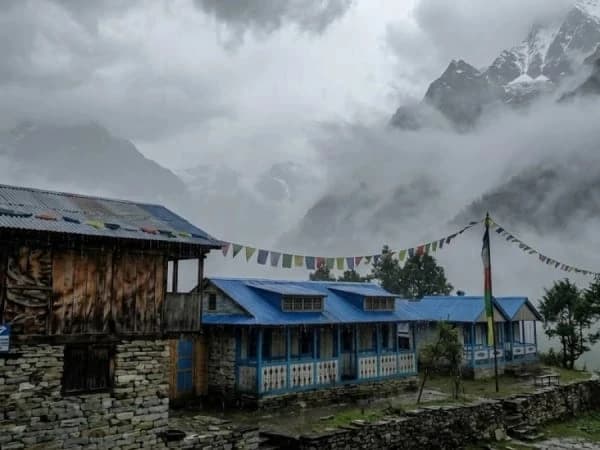
Then they step out of the teahouse the next morning, look up, and see Annapurna III filling the entire northern sky. Gangapurna glacier glitters blue-white below it. Prayer flags snap in the wind above stone walls. A yak train passes through the village, bells clanking. And suddenly, nobody wants to leave.
Manang is the mandatory acclimatisation stop on the Annapurna Circuit Trek. You're supposed to spend one full rest day here before climbing higher toward Thorong La pass. What the itinerary doesn't tell you is that Manang often becomes the emotional centre of the entire trek. It's where you slow down, where conversations with fellow trekkers go deeper, and where the mountains feel close enough to touch.
I've stopped in Manang more times than I can count, and I still look forward to it every single trip. Here's everything you need to know.
Manang sits at 3,540 metres in the Manang District of northern Nepal. It occupies a wide, flat section of the Marsyangdi river valley, surrounded by peaks over 7,000 metres on three sides. Annapurna III (7,555m) dominates the view to the south. Gangapurna (7,455m) and its glacier sit to the southwest. Chulu peaks rise to the north.
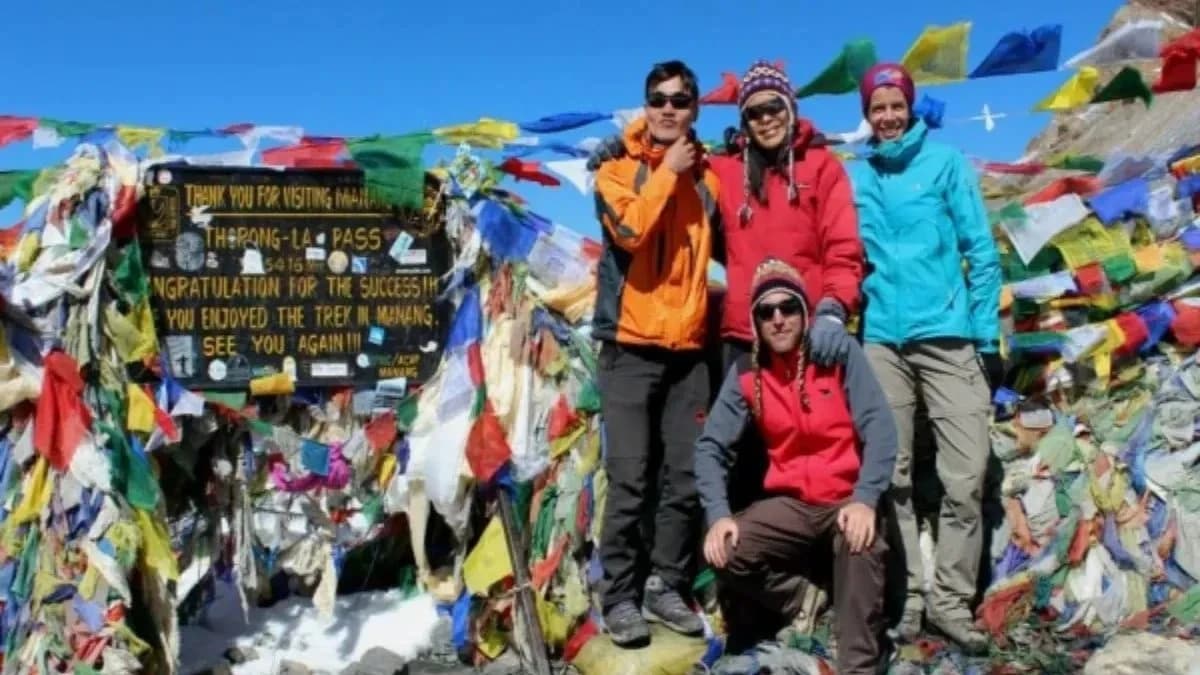
On the Annapurna Circuit, Manang falls roughly at the halfway point. Trekkers typically arrive on Day 5 or 6 from Besisahar and spend Day 7 acclimatising here before continuing toward Yak Kharka, Thorong Phedi, and eventually Thorong La pass at 5,416 metres.
The village itself is compact. About 500 people live here year-round, though the population swells during the October-November trekking season. Stone houses with flat roofs line narrow lanes. The architecture is distinctly Tibetan — Manang sits in a rain shadow, and the dry, high-altitude landscape feels more like Ladakh or Mustang than the green valleys to the south.
This isn't optional. It's medical.
At 3,540 metres, your body is adjusting to significantly less oxygen. Altitude sickness can strike anyone, regardless of fitness. The golden rule of high-altitude trekking is "climb high, sleep low" — and Manang is where you put that rule into practice.
On your rest day, you hike to a higher point (usually 4,000-4,500m), let your body adapt, then descend to sleep at 3,540m. This process stimulates your red blood cell production and reduces your risk of serious altitude illness when you push above 5,000m at Thorong La two days later.
Our guides carry pulse oximeters and check blood oxygen levels every morning in Manang. Normal sea-level SpO2 is 95-100%. At 3,540m, we expect 85-92%. Below 80% with symptoms means we don't go higher until levels improve. This simple check has prevented dozens of altitude emergencies over the years.
"I was frustrated about the rest day. I felt fine. Why waste a day? Then Shreejan's guide took us to Gangapurna Lake, and we climbed to a viewpoint at 4,200m. By the time we got back, two people in our group had headaches — including me. That rest day probably saved us from turning back at Thorong La." — Alex, Dublin, trekked October 2024
The easiest and most popular acclimatisation walk. Gangapurna Lake sits about 30 minutes above Manang at the foot of the Gangapurna glacier. The water is an extraordinary milky blue-green from glacial sediment. Icebergs sometimes float in the lake during late autumn.
The trail is well-marked and gentle. You gain about 130 metres, which is enough to stimulate acclimatisation without exhausting yourself. Allow 1.5-2 hours for the round trip, including time to sit and stare at the glacier.
This is the serious acclimatisation hike. Ice Lake sits at 4,620 metres, a full 1,080 metres above Manang. The trail climbs steeply through scrub and scree before opening onto a high alpine plateau with views across the entire Annapurna range.
The lake itself is often partially frozen, even in October. The views from the ridge above it are among the finest on the Annapurna Circuit. You can see Annapurna II, III, and IV, Gangapurna, Tilicho Peak, and on clear days, Dhaulagiri in the distance.
Budget 5-7 hours for the round trip. Start early (6:30-7:00 AM) to avoid afternoon clouds. Bring warm layers — it's significantly colder at 4,620m than in Manang — plus water, snacks, and sunscreen. This hike is strenuous but hugely rewarding.
A small Buddhist monastery perched on a cliff above Manang village. The hike takes about 30-45 minutes each way and offers one of the best elevated views of Manang with the Annapurna massif behind it. The gompa itself is modest but atmospheric — a few rooms with painted walls, butter lamps, and a resident monk who may offer you tea.
Manang rewards slow exploration. Walk the stone lanes. Watch women weaving on traditional looms in doorways. Visit the small gompa in the village centre, where prayer wheels line the outer wall. Check the community noticeboard for Himalayan Rescue Association altitude lectures (free, usually at 3:00 PM during peak season).
The Himalayan Rescue Association (HRA) runs a small medical post in Manang during the trekking season. Staffed by volunteer doctors, it provides free altitude sickness consultations. Even if you feel fine, attending the afternoon lecture is worth your time. The doctors explain acclimatisation clearly and answer questions honestly.
Manang's teahouses serve the usual trekking menu — dal bhat, fried rice, pasta, pancakes. But a few local specialities stand out:
"The yak cheese in Manang changed my understanding of cheese. It's nothing like what we get at home. Dense, sharp, almost smoky. I bought four blocks and rationed them all the way to Muktinath." — Tomoko, Osaka, trekked November 2025
The Manangba people have one of the most fascinating histories of any Himalayan community. In the 18th century, the King of Nepal granted Manangi traders special rights to travel and trade internationally without tax. While most Nepali communities farmed, the Manangba became international merchants.
They traded in gems, electronic goods, and clothing across Southeast Asia, Hong Kong, and beyond. Many became wealthy. The large, well-built stone houses in Manang reflect this trading prosperity. Today, younger Manangba have moved to Kathmandu or abroad, but the older generation still lives here, and you'll see their influence in the village's relative sophistication compared to other settlements at this altitude.
Our guide Lakpa, who has led treks through Manang for fifteen years, once told me about an elderly Manangba woman who'd been to Singapore more times than Kathmandu. "She showed me photos from the 1980s — her in a business suit in Hong Kong, negotiating gem prices. Now she sits outside her house spinning wool and watching trekkers pass. She says the mountains are better company than the cities ever were."
| Month | Conditions in Manang | Recommendation |
|---|---|---|
| March-April | Cold mornings (-5 to 5°C), mild days (10-15°C). Snow possible. | Good. Quieter trails. Spring flowers on lower sections. |
| May | Warmer. Pre-monsoon haze can limit views. | Decent. Last chance before monsoon. |
| June-August | Monsoon. Rain on lower sections, but Manang is relatively dry (rain shadow). | Possible but risky. Trails below can be dangerous. |
| September | Late monsoon clearing. Lush landscape. Fewer trekkers. | Good from mid-September onward. |
| October-November | Peak season. Clear skies, cold nights (-10 to 0°C), warm days (10-18°C). | Best. Busiest. Book teahouses ahead. |
| December-February | Very cold (-15 to -5°C). Thorong La may be closed by snow. | Risky. Only for experienced winter trekkers. |
October is the most popular month. The trails are busy, especially the stretch from Manang to Thorong La. If you prefer fewer crowds, late September or late November offers similar views with about half the foot traffic.
Manang has roughly 15-20 teahouses ranging from basic to surprisingly comfortable. During peak October season, popular places fill up by early afternoon. Our guides always send a porter ahead to secure rooms.
Expect shared bathrooms, limited hot water (solar-heated, so better in the afternoon), and charging facilities for a fee (NPR 200-500 per device). Wi-Fi is available at most teahouses for a fee, though speeds are slow and unreliable.
Rooms cost NPR 500-1,000 per night, with the understanding that you'll eat at the teahouse. Meals range from NPR 400-800 for a main dish. Prices increase the higher you go — Manang is mid-range by Annapurna Circuit standards.
Manang is the gateway to the high-altitude section of the Annapurna Circuit. After your rest day, the trail climbs through Yak Kharka (4,018m), Ledar (4,200m), and Thorong Phedi (4,525m) before the big push over Thorong La pass (5,416m) — one of the highest trekking passes in the world.
Our Annapurna Circuit Trek builds in a proper rest day at Manang and carefully manages the altitude gain from here onward. If you're also interested in the high-altitude lake detour, our Annapurna Circuit with Tilicho Lake itinerary adds a side trip to Tilicho Lake (4,919m), which branches off from just above Manang.
For trekkers who'd rather stay on the southern side of the Annapurna range, the Annapurna Base Camp Trek offers a completely different experience , lush forests, the Annapurna Sanctuary, and a base camp surrounded by peaks on all sides. And for a shorter option that still delivers huge views, the Ghorepani Poon Hill Trek takes just 4-5 days.
There are two ways to reach Manang:
Most trekkers walk from Besisahar (760m) or Dharapani (1,943m), reaching Manang in 4-6 days depending on pace and itinerary. The trail follows the Marsyangdi river valley, climbing through subtropical forest, terraced farmland, and pine forests before opening into the dry, wide upper valley where Manang sits.
The daily walking stages are typically: Besisahar to Chamje, Chamje to Dharapani, Dharapani to Chame, Chame to Upper Pisang, Upper Pisang to Manang. Each day involves 5-7 hours of walking with 500-800 metres of altitude gain.
A rough jeep road now reaches Manang from Besisahar, completed in recent years. The drive takes 8-10 hours and is uncomfortable, dusty, and occasionally frightening on narrow mountain roads. Some trekkers use the jeep to skip the lower sections and start walking from Chame or Pisang, saving 2-3 days.
I generally recommend against the full jeep ride to Manang. Arriving at 3,540m without walking from a lower altitude dramatically increases your altitude sickness risk. If you must shorten the trek, drive only to Chame (2,670m) and walk from there. This gives you two days of gradual altitude gain before reaching Manang.
If Manang and the Annapurna region appeal to you, here are related options:
For something beyond the Annapurna region entirely, the Everest Base Camp Trek remains the most iconic walk in Nepal. The Langtang Valley Trek is the closest major trek to Kathmandu and one of the most underrated. And if you want to see Nepal's cultural highlights without the high altitude, our Kathmandu Pokhara Chitwan Lumbini Tour covers temples, lakes, jungles, and the birthplace of the Buddha.
For those with less time, the Everest Base Camp by Road Trip offers the classic EBC experience without the Lukla flight, saving both money and the weather-delay anxiety.
One is essential. Two is ideal if you have the time. On day one, hike to Gangapurna Lake (easy) or Ice Lake (strenuous). On day two, explore the village, attend the HRA lecture, and let your body fully adjust. Trekkers who spend two rest days at Manang have a significantly higher Thorong La success rate.
Yes. At 3,540m, mild symptoms , headache, poor appetite, disturbed sleep , are common. This is your body adapting. Stay hydrated (3-4 litres per day), avoid alcohol, and don't push through worsening symptoms. If headaches don't improve with paracetamol and rest, talk to your guide or visit the HRA clinic.
Yes, though it's patchy. Ncell and NTC both have coverage in Manang village. Data speeds are slow. Wi-Fi at teahouses costs NPR 200-500 and is generally adequate for messaging but not for video calls or uploads.
You can jeep to Manang, but we strongly advise against it for altitude safety reasons. There's no airstrip in Manang. The closest airstrip is in Humde (3,280m), about an hour's walk below Manang, but scheduled flights are rare and unreliable. Walking from at least Chame (2,670m) is the safest approach.
For the Ice Lake hike: warm layers (down jacket, fleece, gloves), sunscreen, sunglasses, 2 litres of water, snacks, and trekking poles if you use them. For a village day: comfortable clothes, a book, and a camera. Manang has basic shops selling snacks, batteries, and toiletries at inflated prices , bring what you need from Kathmandu.
Manang is just one stop on the Annapurna Circuit, but it's the one most trekkers remember most fondly. If you want to experience it with a team that knows every teahouse, every acclimatisation trail, and every shortcut to the best viewpoints, talk to us.
WhatsApp: +977 9810351300
Email: info@theeverestholiday.com
Written by Shreejan Simkhada, third-generation Himalayan guide and founder of The Everest Holiday. TAAN Licence #1586. Born in Nepal, raised on the trails.
Drop us your details and tell us what you have in mind. We will put together a personalised plan and get back to you.