In the flat, humid plains of southern Nepal — a landscape of rice paddies, water buffalo, and a heat that presses down on you like a warm hand — there is a garden. The garden contains a temple. The temple marks a spot. And the spot, according to a tradition that stretches back over two and a half thousand years, is the exact location where, in approximately 563 BCE, Queen Mayadevi gave birth to a child named Siddhartha Gautama, who would become the Buddha.
Lumbini is not a mountain destination. It shares nothing with the Himalayan treks that bring most visitors to Nepal — no altitude, no thin air, no snow-capped peaks visible from the garden. It sits at seventy-five metres above sea level in the Rupandehi District, twenty-seven kilometres from the Indian border, in a part of Nepal that most trekking-focused tourists never visit. And yet Lumbini is, for hundreds of millions of Buddhists worldwide, the holiest site on earth — the place where the story of Buddhism begins, where the historical event of the Buddha's birth is marked not by mythology but by archaeology, and where the sacred garden that Emperor Ashoka visited in 249 BCE still exists, still green, still quiet, still receiving pilgrims from every Buddhist tradition on the planet.
The Sacred Garden
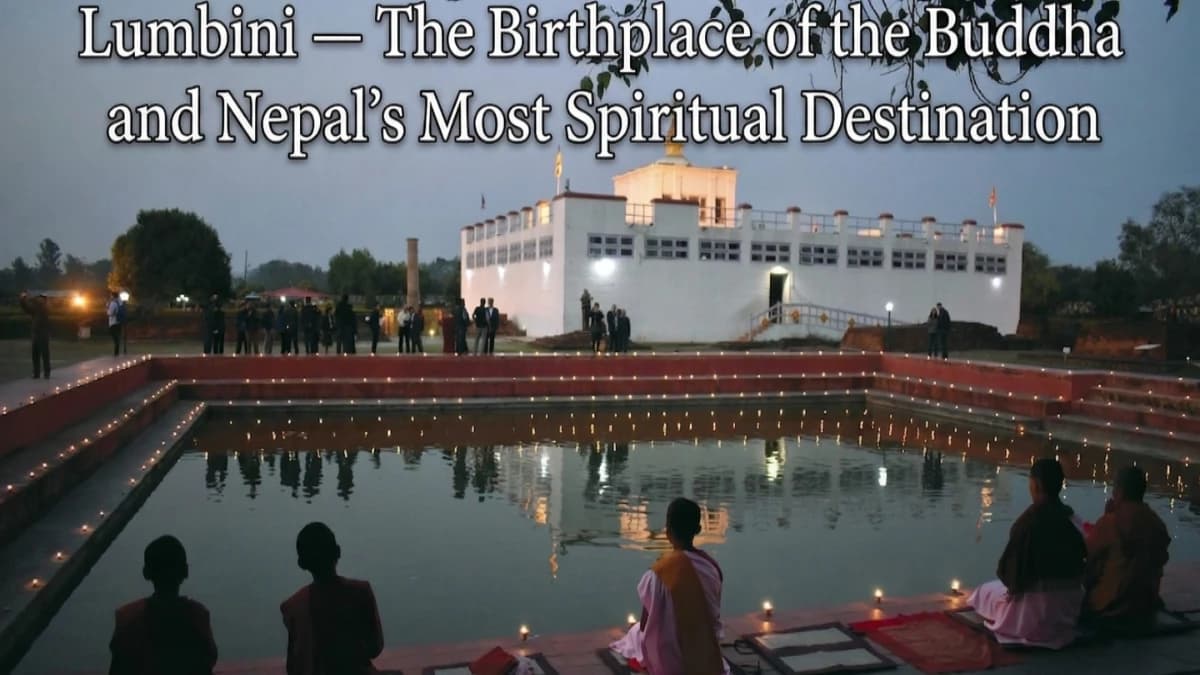
The Mayadevi Temple sits at the centre of the sacred garden. The current structure — a white, modernist building that replaced an older temple, protects the archaeological remains beneath it, including a marker stone that is believed to indicate the exact birthplace of the Buddha. The marker stone was identified during excavations in 1996 and dates to the third century BCE or earlier.
Adjacent to the temple is the Ashoka Pillar, a stone column erected by Emperor Ashoka of India in 249 BCE during his pilgrimage to Lumbini. The pillar's inscription, in Brahmi script, reads: "Here the Buddha, the Sage of the Shakyas, was born." This inscription is the archaeological cornerstone of Lumbini's claim, it is the oldest physical evidence confirming the site as the Buddha's birthplace, dating to within 300 years of the event itself.
The sacred garden also contains the Puskarni pond, the pool where, according to tradition, Queen Mayadevi bathed before giving birth. The pond is surrounded by ancient trees, and in the morning light, its still surface reflects the white temple and the Ashoka Pillar in a composition that photographers find irresistible and pilgrims find sacred.
The atmosphere in the sacred garden is distinctive. It is quiet, not the silence of emptiness but the silence of intention. Monks from Thailand, Sri Lanka, Myanmar, Japan, Korea, and Tibet sit in meditation among the roots of ancient trees. Families from Nepal's Buddhist communities make offerings at the temple. Tourists walk slowly, their usual pace involuntarily reduced by the gravity of the place. There is no pressure. No sales pitch. No hawkers. The garden exists to be quiet, and it succeeds.
The Monastic Zone
Surrounding the sacred garden, the Lumbini Development Zone, designed by Japanese architect Kenzo Tange in 1978, extends over seven square kilometres in a carefully planned sacred landscape. The centrepiece of the Development Zone is the Monastic Zone, divided into an Eastern Monastic Zone (Theravada tradition) and a Western Monastic Zone (Mahayana and Vajrayana traditions).
Each zone contains monasteries built by Buddhist nations from around the world, each in the architectural style of its home country. The result is an extraordinary architectural walk through global Buddhism:
The Myanmar Golden Temple, gilded, pagoda-roofed, gleaming in the subtropical sun. The Chinese Zhonghwa Buddhist Monastery, a vast complex in classical Chinese style with multiple halls and a meditation centre. The Korean Dae Sung Shakya Temple, elegant and austere, reflecting Korean Buddhist aesthetics. The Thai Royal Monastery, ornate, colourful, unmistakably Thai. The German Meditation Centre, clean-lined and contemplative. The Cambodian Monastery, the Sri Lankan Monastery, the Vietnamese Temple, the French Buddhist Monastery, each one a national expression of a universal tradition, each one open to visitors of all faiths and none.
Walking through the Monastic Zone takes three to four hours at a comfortable pace. The monasteries are connected by a central canal and tree-lined walkways. Many monasteries welcome visitors for meditation sessions, and some offer short courses or talks on Buddhist philosophy and practice. The experience is both architectural and spiritual, a tour of world cultures through the lens of a shared religion, set in the place where that religion began.
The Eternal Flame
At the centre of the Lumbini Development Zone, the World Peace Pagoda (Shanti Stupa) rises above the landscape, a white dome built by the Japanese Nipponzan Myohoji order, visible from kilometres away across the flat Terai plain. Near the pagoda, the Eternal Peace Flame, lit using fire brought from various sacred sites around the world, burns continuously as a symbol of the peace that the Buddha's teachings advocate.
The flame is tended by monks. It has burned continuously since it was lit in 1986. The commitment to maintaining it, through monsoon rain, through political upheaval, through the practical challenges of keeping a flame lit in a subtropical climate, reflects the broader Lumbini ethos: patient, persistent dedication to a purpose that transcends the immediate.
Getting to Lumbini
Lumbini is accessible from Kathmandu by domestic flight to Bhairahawa (Siddharthanagar), approximately thirty minutes, followed by a forty-five-minute drive. Alternatively, tourist buses from Kathmandu take seven to eight hours, and buses from Pokhara take five to six hours. The road from Pokhara descends from the mid-hills to the Terai plain, passing through progressively warmer and flatter terrain.
GPS coordinates: 27.4685°N, 83.2763°E.
From the Indian border at Sunauli/Belahiya, Lumbini is approximately twenty-seven kilometres, an easy day trip for travellers crossing between Nepal and India.
When to Visit
October to March: The best months. The Terai heat is manageable (daytime temperatures of twenty to thirty degrees), the skies are clear, and the sacred garden is at its most pleasant. November and February are particularly comfortable.
April to June: Hot. Daytime temperatures reach thirty-five to forty-two degrees. The heat in the Terai is intense and makes extended outdoor exploration uncomfortable. Early mornings (before 9 AM) and late afternoons (after 4 PM) are the only comfortable visiting hours.
July to September: Monsoon. Heavy rain, flooding, and humidity. The sacred garden can be waterlogged. Not recommended for tourism, though the landscape is lush and green.
Buddha Jayanti (May, full moon): The birthday of the Buddha, celebrated with special ceremonies, processions, and gatherings at Lumbini. The most significant religious event of the year at the site. If your visit coincides with Buddha Jayanti, expect large crowds of pilgrims and a festival atmosphere.
What to See and Do
Mayadevi Temple and Sacred Garden: Allow two to three hours. Early morning is best, fewer visitors, cooler temperatures, better light for photography, and a contemplative atmosphere. Entry requires shoes to be removed.
Monastic Zone walk: Three to four hours for a comprehensive walk through both Eastern and Western zones. Bicycles are available for rent within the development zone and are an efficient way to cover the seven-kilometre area.
Lumbini Museum: Contains archaeological finds from the Lumbini excavations, Buddhist art and artefacts, and historical documentation of the site's significance. A useful starting point for understanding the history before visiting the garden.
World Peace Pagoda: The white stupa is visible from throughout the development zone. Worth visiting for the architecture and the views across the Terai to the Himalayan foothills on clear days.
Meditation: Several monasteries offer meditation sessions for visitors. The Korean Temple and the Thai Monastery are particularly welcoming to beginners. No prior experience required, just the willingness to sit quietly, which Lumbini makes easier than most places on earth.
Kapilvastu: Twenty-seven kilometres west of Lumbini, the ruins of Tilaurakot are identified as the ancient city of Kapilvastu, where Siddhartha Gautama grew up as a prince before renouncing his palace life. The site is partially excavated and includes palace foundations, gates, and a museum. A half-day trip from Lumbini.
Combining Lumbini With Trekking
Lumbini works as a pre-trek or post-trek addition to any Nepal itinerary. The most common combinations:
Lumbini + Pokhara + Annapurna trek: Fly from Kathmandu to Bhairahawa, visit Lumbini for one to two days, drive to Pokhara (five to six hours), begin your Annapurna trek. This sequence works particularly well because the Lumbini visit provides a cultural counterpoint to the mountain experience.
Lumbini + Chitwan + Kathmandu: Combine the spiritual experience of Lumbini with the wildlife experience of Chitwan National Park (four to five hours' drive from Lumbini) for a Terai circuit that covers both culture and nature.
Post-trek Lumbini: After the physical intensity of a Himalayan trek, Lumbini's gentle, contemplative pace provides a restorative conclusion. Walk slowly. Sit in the garden. Watch monks meditate. Let the altitude headache and the trail fatigue dissolve in the warm, flat, sacred calm of the Terai plains.
The Quiet Power
Lumbini does not overwhelm. It does not have the dramatic impact of standing at Everest Base Camp or the visceral beauty of the Annapurna Sanctuary at sunrise. Its power is quieter and slower, the power of a place that has been considered sacred for over two thousand years, that has drawn pilgrims since before the Roman Empire existed, and that continues to draw them now with no more advertisement than its history and its peace.
The garden is small. The temple is modest. The Ashoka Pillar is just a column of stone. But the weight of what they represent, the birth of a philosophy that shaped the lives of billions, that spread from this patch of Terai farmland to every continent on earth, that continues to offer a path to understanding suffering and its cessation, makes Lumbini feel larger than its physical dimensions.
You do not need to be Buddhist to feel this. You do not need to be religious. You need only to sit under a tree in a garden where monks have been sitting for twenty-five centuries, to listen to the specific quality of silence that only sacred places possess, and to acknowledge, whatever your beliefs, that something happened here that changed the human story. The garden remembers. The pillar confirms. And the quiet, steady stream of monks, nuns, and ordinary seekers from every country with a Buddhist tradition confirms it again, every day, by the simple act of arriving, sitting, and being still.
In a country famous for its heights, Lumbini offers depth. In a country celebrated for its mountains, Lumbini celebrates what lies in the valleys, the plains, the heat, the rice paddies, and the small, sacred garden where the story of the Buddha began and where, two and a half thousand years later, it continues.